
Political Courage and the Fight for Reproductive Healthcare
Navigating partisan pressures to defend essential reproductive health programs.
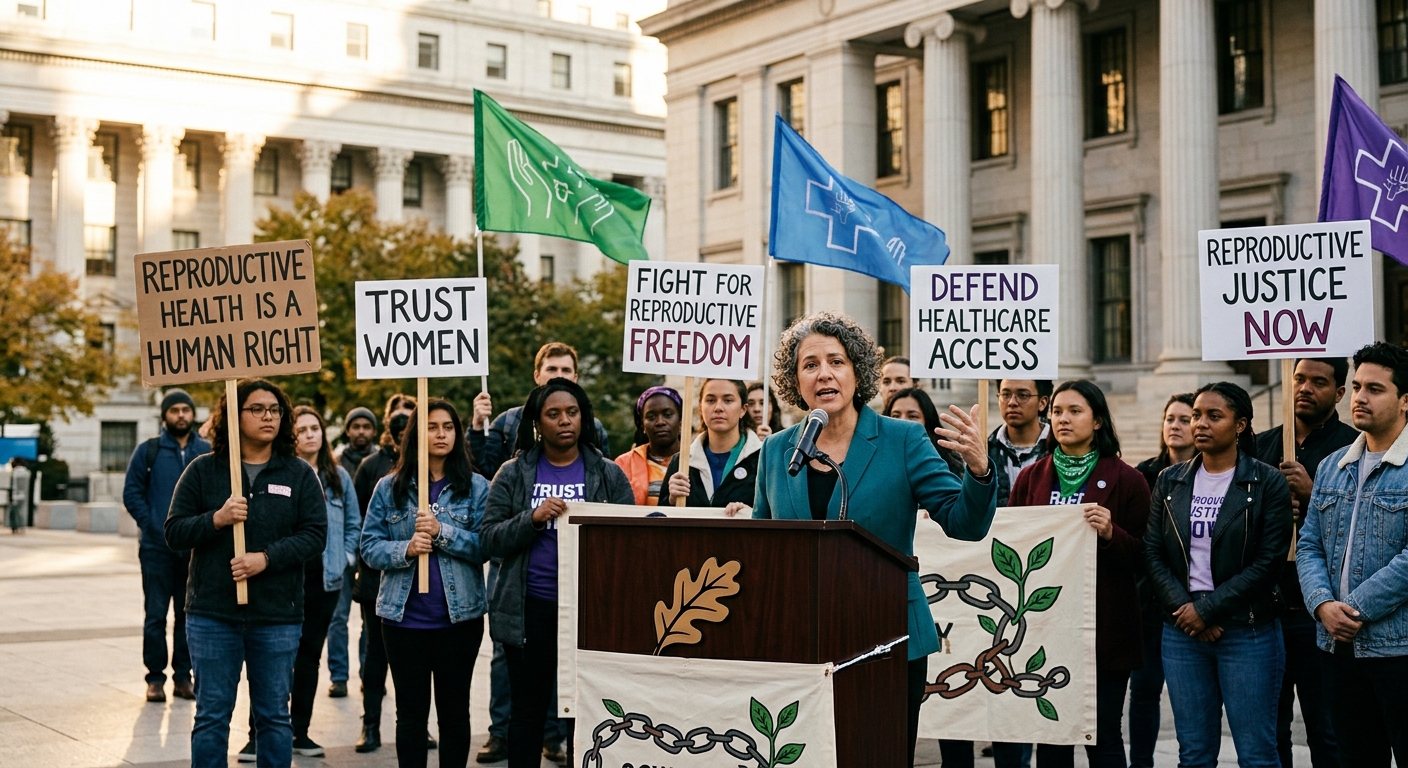
Introduction: The Anatomy of Political Courage
In the complex theater of modern politics, few acts resonate more powerfully than a representative voting against the grain of their own political party to protect a vulnerable constituency. Political courage is often defined not by the speeches delivered during safe campaign stops, but by the quiet, resolute decisions made when partisan pressures demand strict compliance. Historically, this dynamic has been starkly illuminated during legislative debates surrounding reproductive healthcare and family planning services. When lawmakers possess personal experiences that align with the struggles of marginalized communities—such as surviving childhood trauma or sexual abuse—the public frequently looks to them to act as a bridge between rigid political ideology and compassionate policymaking.
The expectation from the electorate is simple yet profound: personal vulnerability and lived experience should translate into policy that protects the most at-risk members of society. In the United States, one of the most consistent battlegrounds for this test of courage has been the funding of reproductive health programs. Lawmakers are repeatedly forced to choose between appeasing hardline political factions and preserving fundamental safety nets. Analyzing these pivotal legislative moments reveals the profound impact that a single vote can have on millions of lives, particularly for individuals whose only access to medical care relies on federally funded family planning initiatives. This article explores the vital importance of protecting these healthcare safety nets, the unique needs of trauma survivors accessing care, and the indispensable role of independent political courage in safeguarding reproductive freedom.
Understanding Title X: The Backbone of Family Planning
To fully grasp the stakes of reproductive healthcare legislation, one must first understand the foundational role of the federal family planning program. Enacted in 1970 with overwhelming, bipartisan support, the program was designed to ensure that no individual would be denied access to family planning assistance due to economic hardship. For over five decades, it has served as the sole federal grant program entirely dedicated to providing comprehensive family planning and related preventive health services in the United States.
The scope of the services provided by this initiative extends far beyond basic contraception. Clinics funded through this network offer critical, life-saving preventive care. These essential services include:
- Cancer Screenings: Routine breast and cervical cancer screenings that frequently catch abnormalities before they become life-threatening.
- Infectious Disease Testing: Comprehensive screening and treatment for sexually transmitted infections (STIs), as well as HIV testing, education, and counseling.
- Educational Outreach: Culturally responsive education on sexual health, family planning, and relationship safety tailored to local communities.
- Basic Infertility Services: Diagnostic counseling and initial treatments for individuals and couples struggling to conceive.
- Wellness Exams: General reproductive health exams that act as the primary healthcare entry point for millions of uninsured or underinsured Americans.
In recent years, the program has provided care to approximately 2.8 million individuals annually, with a vast majority of those patients living at or below the federal poverty level. For a significant portion of this population, the federally subsidized clinic in their community is the only medical facility they visit all year. Consequently, when lawmakers propose defunding these essential clinics to score political points, they are not merely debating abstract fiscal policy; they are actively threatening the fundamental healthcare infrastructure that millions of low-income families rely on to survive.
The Intersection of Trauma and Reproductive Health
One of the least discussed, yet most crucial, demographics relying on accessible family planning services are survivors of emotional, physical, and sexual abuse. The relationship between experiencing severe trauma and accessing traditional healthcare is fraught with systemic and psychological barriers. For many survivors, the standard healthcare system can be an intimidating, triggering, and inaccessible environment that fails to accommodate their unique vulnerabilities.
Why Confidentiality is Critical for Survivors
Survivors of intimate partner violence or sexual assault often require highly specialized, trauma-informed care. Clinics that operate under federal family planning grants are explicitly mandated to provide confidential, voluntary services to all patients. This confidentiality is not just a bureaucratic preference; it is a matter of immediate physical safety. If a survivor is attempting to manage their reproductive health while living with an abusive partner, accessing birth control or STI testing without the abuser’s knowledge can be lifesaving. Specialized clinics often train their medical and administrative staff to recognize the subtle signs of abuse, offering discreet avenues for patients to receive help, specialized counseling, and direct referrals to domestic violence shelters.
Furthermore, the trauma of sexual abuse can leave deep psychological scars that make routine medical exams intensely distressing. Trauma-informed care emphasizes patient autonomy, clear communication, and creating a safe environment where the patient retains total control over the examination process. When politicians who have themselves survived abuse are faced with votes that could dismantle these confidential clinics, the hypocrisy of toeing a party line that harms fellow survivors becomes glaringly apparent. It requires immense bravery to publicly acknowledge one’s own traumatic past, but it requires even more fortitude to translate that acknowledgment into protective legislative action that shields others.
Breaking Down Barriers to Care
Financial vulnerability is inextricably linked to higher rates of sexual violence. Marginalized survivors frequently lack the financial independence, stable employment, or insurance coverage needed to visit private physicians. Consequently, community health centers become their only viable option for necessary medical attention following an assault. These clinics provide essential testing for STIs that may have been transmitted during an assault, as well as affordable access to emergency contraception. Removing funding from these clinics disproportionately punishes survivors who are already navigating a complex labyrinth of psychological and economic hurdles.
Partisan Pressures vs. Compassionate Policy
Despite the clear public health benefits and the high demand for subsidized family planning services, reproductive healthcare remains a highly volatile partisan battlefield in the United States. The weaponization of medical access has led to a political climate where moderate lawmakers are routinely subjected to intense pressure to conform to extreme ideological agendas, regardless of the consequences for their constituents.
The Threat of Defunding Essential Services
Over the past decade, numerous legislative attempts have been made to strip funding from organizations that provide comprehensive reproductive care, often specifically targeting broad healthcare networks. These aggressive efforts are typically framed as moral or fiscal imperatives by their proponents, yet they consistently ignore the cascading public health disasters that inevitably follow clinic closures. When a major community provider loses its funding and is forced to shut its doors, the remaining local healthcare infrastructure is rarely equipped to absorb the sudden influx of displaced patients. The empirical result is a measurable increase in unintended pregnancies, undetected cancers, and untreated STIs within the affected communities.
The Litmus Test of Party Purity
In modern legislative chambers, reproductive rights are frequently used as a strict “litmus test” for party purity. Lawmakers who might personally support access to contraception and preventative care, or who campaigned as independent, pro-choice moderates, find themselves cornered by powerful party leadership. They are threatened with primary election challenges, the loss of prestigious committee assignments, or the withdrawal of critical campaign funding if they dare to cross the aisle to vote their conscience.
This environment of fear-mongering and strict partisanship stifles genuine legislative debate and forces elected officials to prioritize their political survival over the tangible well-being of their constituents. True political courage involves rejecting this false dichotomy. It requires a representative to look at the empirical data—which overwhelmingly supports the efficacy of funded family planning—and stand up to the prevailing winds of their own party. When a politician promises their voters that they will be an independent thinker, the electorate rightfully expects them to fulfill that promise when the stakes are highest.
The Real-World Impact of Ideological Votes
The consequences of legislative cowardice are not confined to the halls of government; they play out in the daily lives of citizens across the country. When extreme amendments or defunding measures pass, the ripple effects are immediate and devastating. Wait times for basic medical appointments stretch from a few days into several months. Teenagers lose access to vital educational resources that help prevent unwanted pregnancies and the spread of disease. Low-income parents are forced to make agonizing choices between purchasing groceries, paying rent, and paying out-of-pocket for essential medications.
Moreover, the economic argument against funding these programs is fundamentally flawed and short-sighted. Preventive healthcare is exponentially more cost-effective than managing the long-term, acute consequences of untreated medical conditions. Every dollar invested in publicly funded family planning saves taxpayers significantly more in future health-related costs down the line. Thus, a vote to protect these essential services is not only a profound moral imperative but also an incredibly sound fiscal decision. Politicians who recognize this reality and stand firm against partisan tides demonstrate the precise type of leadership that actually serves the broader public interest.
Frequently Asked Questions (FAQs)
What is the federal family planning program and why is it important?
Often referred to as Title X, it is a federal grant program established in 1970 dedicated exclusively to providing comprehensive family planning and preventive health services. It is fundamentally crucial because it ensures that low-income, uninsured, and underinsured individuals have reliable access to affordable reproductive healthcare, including contraception, vital cancer screenings, and STI testing.
How does political partisanship affect reproductive healthcare?
Partisanship frequently turns essential healthcare into a highly contentious political weapon. Lawmakers often face intense pressure from their party leadership to vote for defunding measures or restrictive amendments to prove their ideological purity. This behavior can lead directly to the closure of community clinics and a severe reduction in healthcare access for marginalized and vulnerable communities.
Why do trauma and abuse survivors specifically rely on these clinics?
Survivors of abuse often face significant financial, physical, and psychological barriers to care. Federally funded family planning clinics are mandated by law to offer confidential, voluntary, and often trauma-informed services. This secure environment allows survivors to seek medical attention, STI testing, and birth control safely, without the knowledge or interference of an abusive partner.
What happens when community family planning clinics are defunded?
When clinics lose their federal or state funding and are forced to close, the surrounding community experiences a drastic loss of primary preventative care. Historically, this leads to higher rates of unintended pregnancies, delayed diagnoses of severe conditions like cervical and breast cancers, and the unchecked spread of sexually transmitted infections. The resulting burden disproportionately falls on low-income and rural populations.
What does “political courage” mean in the context of reproductive rights?
In this specific context, political courage refers to an elected official’s willingness to vote according to their deeply held conscience, the empirical public health data, and the actual needs of their vulnerable constituents, even when doing so blatantly defies their party’s leadership, platform, or the threats of political retaliation.
Conclusion
The ongoing legislative debate over reproductive freedom and healthcare access is ultimately a profound test of our society’s fundamental values. It actively challenges elected officials to decide whether they are true public servants committed to the well-being of their constituents or mere extensions of a rigid partisan machine. Protecting federal family planning funding is not a radical or extreme act; it is the vital preservation of a necessary safety net that has historically enjoyed broad, bipartisan support. For survivors of abuse, low-income families, and uninsured individuals, these community clinics represent autonomy, safety, and essential health. The electorate must continue to demand that their representatives exhibit the political courage necessary to look beyond the next election cycle, prioritize compassionate, evidence-based policy, and consistently do what is right for the people they were elected to serve.
References
- 2023 Title X Family Planning Annual Report — HHS Office of Population Affairs. 2024-10-01. https://opa.hhs.gov/sites/default/files/2024-10/fpar-2023-national-summary.pdf
- Approaching 4 Decades of Legislation in the National Family Planning Program — National Institutes of Health (PMC). 2009. https://www.ncbi.nlm.nih.gov/pmc/articles/PMC2661448/ (This source remains a foundational academic analysis of the program’s legislative history since 1970.)
- Navigating Uncertainty: The Latest Challenge to the Title X Family Planning Safety Net — KFF. 2026-03-16. https://www.kff.org/womens-health-policy/issue-brief/navigating-uncertainty-the-latest-challenge-to-the-title-x-family-planning-safety-net/
- Sexual Assault and Abuse and STIs – STI Treatment Guidelines — Centers for Disease Control and Prevention (CDC). 2021-07-22. https://www.cdc.gov/std/treatment-guidelines/sexual-assault.htm
Similar Articles








Read full bio of Sneha Tete


