
Pennsylvania Estate Planning: Bypassing Probate
Essential strategies for Pennsylvania residents to streamline estate transfer and protect family assets from probate delays.
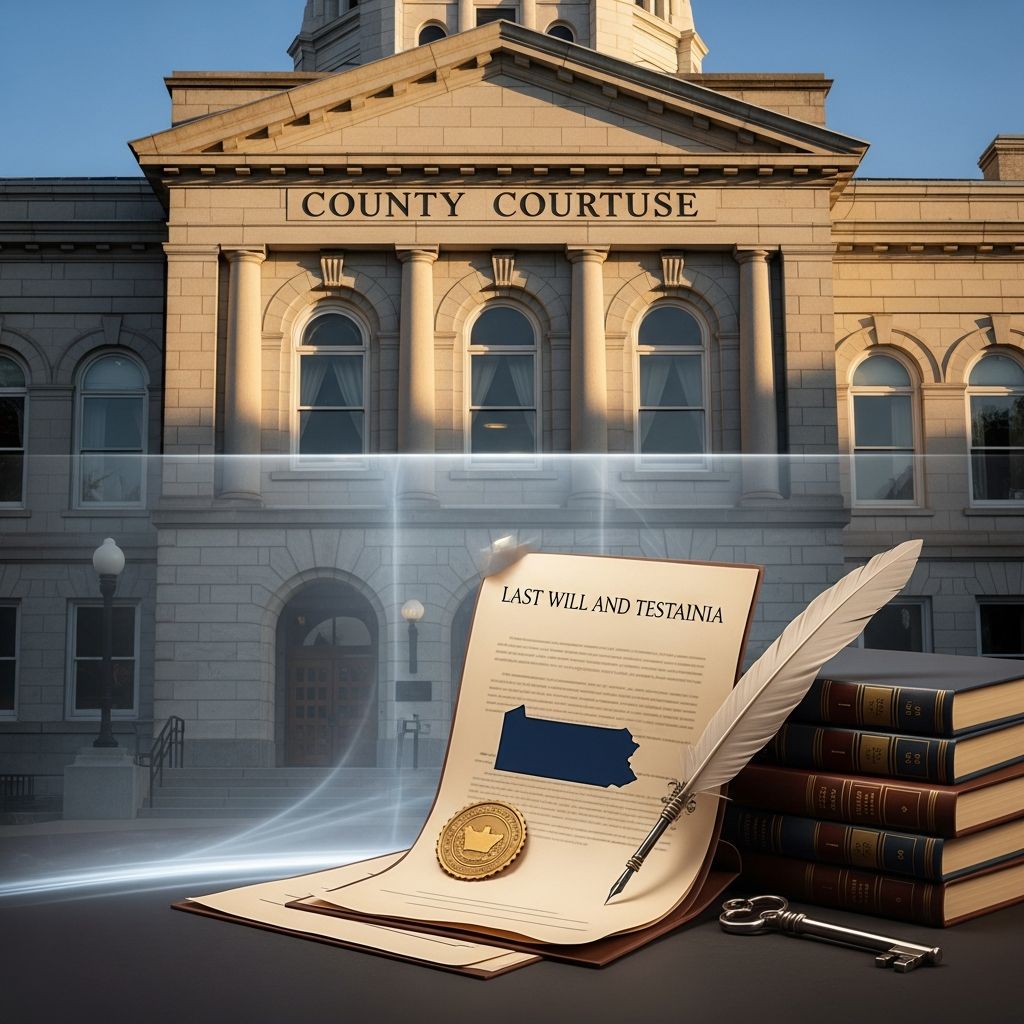
Understanding Probate and Why You Should Avoid It
Probate is the legal process through which a deceased person’s estate is settled and their property is distributed to heirs. In Pennsylvania, this court-supervised process can be lengthy, expensive, and emotionally draining for families already grieving the loss of a loved one. The probate process involves multiple steps: filing the will with the county Register of Wills, appointing a personal representative, identifying and valuing the estate’s assets, paying debts and taxes, and finally distributing remaining property to beneficiaries. Throughout this entire process, the estate’s assets remain frozen, and families may wait months or even years before receiving their inheritance.
The financial costs associated with probate can significantly diminish an estate’s value. Court fees, attorney fees, executor compensation, and appraisal costs all accumulate during the probate process. Additionally, probate is a matter of public record, meaning anyone can access information about your estate, its value, and how assets are distributed—a concern for families who value privacy.
Fortunately, Pennsylvania law provides multiple mechanisms for individuals to transfer assets to their heirs without going through the probate court system. By implementing a comprehensive estate plan using these tools, you can ensure your loved ones receive their inheritance quickly, privately, and affordably.
The Living Trust: Your Foundation for Avoiding Probate
A living trust is one of the most powerful tools available to Pennsylvania residents who want to avoid probate. This legal arrangement allows you to place your assets under the control of a trustee—typically yourself during your lifetime—who manages them for your benefit and eventually distributes them according to your wishes.
Creating a living trust requires preparing a trust document that outlines your wishes for asset distribution, names beneficiaries, and designates a successor trustee who will take over management after your death. The critical step that many people overlook is transferring ownership of your property into the trust’s name. This transfer must be done during your lifetime and applies to virtually any asset you own: real estate, bank accounts, investment portfolios, vehicles, and personal property. Once assets are titled in the trust’s name, they are no longer considered part of your probate estate.
When you pass away, your successor trustee can distribute trust assets directly to beneficiaries without any court involvement or public disclosure. This process typically takes weeks rather than months or years. Living trusts offer additional advantages beyond probate avoidance: they remain private documents (unlike wills, which become public record), they provide continuity if you become incapacitated, and they allow you to maintain full control and flexibility during your lifetime. You can modify or revoke the trust at any time, and you can use trust income for any purpose without restriction.
Joint Ownership: Automatic Transfer at Death
Another straightforward method to bypass probate involves structuring property ownership so that assets automatically transfer to surviving owners upon death. This approach is particularly popular for married couples and works well for real estate, bank accounts, investment accounts, and vehicles.
Pennsylvania recognizes several forms of joint ownership with survivorship rights. When property is held as joint tenants with rights of survivorship, both owners have equal rights to the property during their lifetimes. Upon one owner’s death, the surviving owner automatically becomes the sole owner without any probate proceedings. Similarly, tenancy by the entirety—available only to married couples in Pennsylvania—provides survivorship rights along with additional legal protections.
The mechanics of joint ownership are simple: when one owner passes away, the surviving owner presents the death certificate to the relevant institution (bank, county recorder’s office, etc.), and ownership transfers immediately. No court approval is necessary, and the transfer occurs quickly and inexpensively.
However, joint ownership requires careful consideration. Before establishing joint ownership, consult with an estate planning attorney to understand potential tax implications, creditor protection issues, and unintended consequences. For example, adding someone’s name to real estate might trigger reassessment for property tax purposes, or it could complicate matters if the co-owner has creditors or goes through a divorce.
Payable-on-Death and Transfer-on-Death Designations
Pennsylvania law allows account holders to designate beneficiaries for specific types of assets, which then transfer directly to those beneficiaries outside of probate. These designations are straightforward to establish and cost nothing.
Payable-on-death (POD) designations are available for bank accounts, including savings accounts, checking accounts, and certificates of deposit. You maintain complete control and ownership of these accounts during your lifetime, and you can spend the funds without any restrictions. Upon your death, the account balance transfers automatically to the named beneficiary or beneficiaries, bypassing probate entirely. The beneficiary has no access to the funds until after your death and cannot make changes to the account while you’re alive.
Transfer-on-death (TOD) designations work similarly for investment accounts and securities. You can register stocks and bonds with TOD designations, allowing them to transfer directly to named beneficiaries at your death. Pennsylvania recognizes TOD registrations for securities, though it does not currently permit TOD deeds for real estate or vehicle titles.
These designations are remarkably flexible. You can change beneficiaries at any time without going through probate or modifying your will. It’s essential to review these designations periodically to ensure they reflect your current wishes, especially after major life events such as marriage, divorce, or the birth of children.
Beneficiary Designations for Retirement and Insurance Accounts
Retirement accounts and life insurance policies are governed by their own beneficiary designation forms, which supersede instructions in your will. When you establish a 401(k), 403(b), IRA, or similar retirement account, you name primary and contingent beneficiaries. Upon your death, the financial institution distributes the account balance directly to these named beneficiaries without probate involvement.
Life insurance policies operate identically. The death benefit passes directly to whomever you designate as beneficiary, regardless of what your will states. This direct transfer occurs outside of probate and often within days of providing proof of death to the insurance company.
Many people fail to review beneficiary designations after significant life changes, leading to unintended consequences. For instance, if you divorce but forget to update your retirement account beneficiary, your ex-spouse might still inherit funds intended for your children. Similarly, if you name a minor child as beneficiary, they cannot legally receive the inheritance until reaching adulthood, and no legal guardian is automatically appointed to manage the funds. Updating beneficiary designations is quick and free—most institutions allow changes online or with a simple form—yet it remains one of the most overlooked aspects of estate planning.
Gifting Strategies for Estate Reduction
Another approach to avoiding probate involves reducing your estate’s size during your lifetime by giving assets to intended beneficiaries. This strategy serves dual purposes: it transfers assets outside the probate system and can reduce your taxable estate.
Pennsylvania residents can give gifts of any value without restriction during their lifetimes. Federal gift tax does not apply to gifts within the annual exclusion amount (currently $18,000 per person per year, though this may change), and married couples can combine their exclusions to give up to $36,000 annually to each beneficiary tax-free. Gifts exceeding these limits don’t result in immediate taxes but do count against your lifetime gift and estate tax exemption.
Gifting can be particularly effective for younger beneficiaries, as assets gifted during your lifetime can appreciate significantly over time, with that appreciation occurring outside your taxable estate. Additionally, parents often appreciate receiving gifts that help them during their lifetimes—funding a child’s education, helping with a home purchase, or providing medical care—rather than waiting until death for an inheritance.
The primary consideration with gifting is ensuring the strategy aligns with your overall financial plan. You must retain sufficient assets for your own needs and unexpected expenses. Consult with an estate planning attorney to develop a gifting strategy that maximizes tax benefits while protecting your financial security.
Comparative Analysis of Probate Avoidance Methods
| Method | Asset Types | Control During Lifetime | Privacy | Cost to Establish |
|---|---|---|---|---|
| Living Trust | Any asset | Complete | Private | Moderate |
| Joint Ownership | Real estate, bank accounts, vehicles | Shared | Limited | Minimal |
| POD/TOD Designations | Bank accounts, securities | Complete | Private | None |
| Beneficiary Designations | Retirement accounts, life insurance | Complete | Private | None |
| Lifetime Gifting | Any asset | Reduced | Private | None |
Building Your Comprehensive Estate Plan
Most Pennsylvania residents benefit from combining multiple probate-avoidance strategies rather than relying on a single method. An effective estate plan might include a living trust for real estate and investment accounts, POD designations for bank accounts, properly named beneficiaries on retirement accounts and life insurance, and strategic gifting for certain assets.
The specific combination depends on your family situation, the nature and value of your assets, your tax situation, and your goals for wealth transfer. Blended families may require trusts with specific distribution provisions. Individuals with significant assets might prioritize tax-efficient strategies. Parents of minor children need to ensure proper guardianship and property management provisions.
Implementation is crucial. Estate planning documents are only effective if assets are actually transferred into trusts, accounts are properly retitled, and beneficiary designations are current. Many people create comprehensive plans but fail to complete the transfer process, leaving assets still subject to probate.
Key Benefits of Avoiding Probate
- Speed: Asset distribution typically occurs within weeks rather than months or years
- Cost savings: Avoid court fees, attorney fees, and executor compensation associated with probate
- Privacy: Keep estate details confidential rather than exposing them in public court records
- Reduced conflict: Clear instructions minimize disputes among family members
- Continuity: Living trusts allow property management if you become incapacitated
- Flexibility: Modify or revoke arrangements if circumstances change
- Control: Maintain authority over asset distribution rather than leaving it to probate court
Frequently Asked Questions
Q: Is a living trust necessary if I have a small estate?
A: Pennsylvania does provide small estate procedures that streamline probate for modest estates, potentially avoiding the need for a full probate process. However, a living trust still offers advantages like privacy and incapacity planning even for small estates. Consult an attorney to determine whether a small estate procedure or a living trust better serves your situation.
Q: Can I modify a living trust after establishing it?
A: Yes, a revocable living trust can be amended or revoked at any time during your lifetime. You maintain complete flexibility and control. Once you pass away, the trust becomes irrevocable, and the successor trustee must follow its terms.
Q: What happens if I forget to transfer property into my living trust?
A: Any property not transferred to the trust’s title will be subject to probate. This is why proper implementation—actually retitling assets in the trust’s name—is critical to probate avoidance. Many people create trusts but fail to complete the transfer process.
Q: Are there tax disadvantages to joint ownership?
A: Joint ownership can have tax implications, particularly for non-spousal joint ownership. Depending on how title is held and property value, the surviving owner might owe estate or gift taxes. Consult a tax professional or estate planning attorney before establishing joint ownership.
Q: How often should I review my beneficiary designations?
A: Review beneficiary designations at least every three to five years, and immediately after major life events such as marriage, divorce, the birth of children, or significant changes in circumstances. Outdated designations are a common source of unintended consequences.
Q: Does Pennsylvania allow transfer-on-death deeds for real estate?
A: No, Pennsylvania does not currently permit transfer-on-death deeds for real estate. However, real estate can be placed in a living trust or held in joint ownership with survivorship rights to avoid probate.
Q: Should I consult an attorney before implementing these strategies?
A: Absolutely. Estate planning laws vary by state and individual circumstances differ significantly. An experienced estate planning attorney can help you choose the best strategies for your situation, ensure proper implementation, and address tax and legal considerations specific to your circumstances.
References
- How to Avoid Probate in Pennsylvania — Petrelli Previtera, LLC. 2025. https://www.petrellilaw.com/how-to-avoid-probate-in-pennsylvania/
- How to Avoid Probate in Pennsylvania: Key Strategies for Protecting Your Assets — Attorney DeLuca. 2025. https://www.attorneydeluca.com/how-to-avoid-probate-in-pennsylvania-key-strategies-for-protecting-your-assets
- Avoiding Probate in Pennsylvania and Probate Disputes — Pennsylvania Estate Lawyer 365. 2025. https://www.pennsylvaniaestatelawyer365.com/practice-areas/pennsylvania-will-probate/avoiding-probate-in-pennsylvania-and-probate-disputes/
- How to Avoid Probate in Pennsylvania: Mistakes to Avoid — Russell Legal. 2025. https://russell.legal/blog/how-to-avoid-probate-in-pennsylvania-mistakes-to-avoid/
- Understanding and Avoiding Probate in Pennsylvania — MPL Law Firm. 2025. https://mpl-law.com/understanding-avoiding-probate-pennsylvania/
- Avoiding Probate in Pennsylvania — Nolo. 2025. https://www.nolo.com/legal-encyclopedia/pennsylvania-avoiding-probate-31689.html
Similar Articles








Read full bio of medha deb


