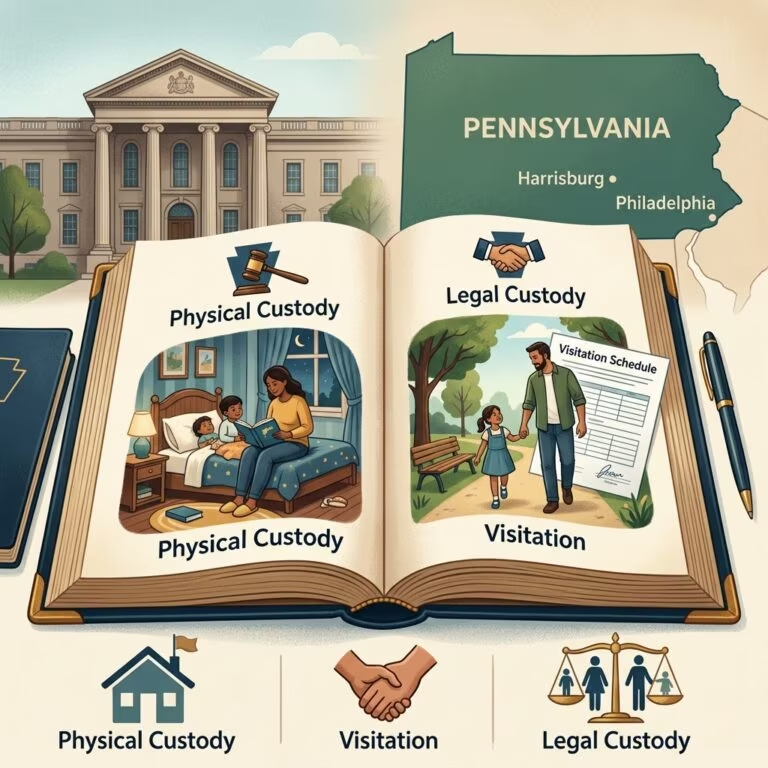
Understanding the Modern Framework of Paternal Legal Rights
The legal system has undergone substantial transformation in how it approaches fathers’ rights within family law matters. Historical biases that automatically favored mothers in custody arrangements have been replaced with a more balanced approach that recognizes both parents as equally capable guardians. The cornerstone of modern family law is the principle that custody and visitation decisions must prioritize the child’s best interests, regardless of the parent’s gender.
For fathers seeking to exercise their rights, understanding the legal pathways available is essential. Whether a father is married to the child’s mother, in a committed relationship, or separated, the law provides mechanisms to establish paternal rights and pursue custody or visitation arrangements. This guide explores the critical steps fathers must take and the various rights available to them under current family law.
Establishing Legal Paternity: The Foundation of All Rights
Before a father can exercise any legal rights regarding his child, he must first establish legal paternity. This foundational step transforms biological parenthood into a legally recognized relationship with associated rights and responsibilities. Paternity establishment is particularly critical for fathers who were not married to the child’s mother at the time of birth.
Methods of Paternity Establishment
The law recognizes several pathways through which a father can establish legal paternity:
Presumed Paternity
In many jurisdictions, paternity is presumed automatically under specific circumstances. When a child is born to a married couple, the husband is presumed to be the biological father. Additionally, if a child is born within a certain timeframe after the termination of a marriage—whether through divorce, death, or annulment—the former spouse may be presumed to be the father.
Voluntary Declaration
When both parents acknowledge the father-child relationship and agree on paternity, they can execute a voluntary declaration document. This can occur at the hospital following birth or at any subsequent time. This streamlined process avoids court involvement when both parties are in agreement.
Adjudication Through the Courts
In situations where paternity is disputed or uncertain, the court system provides a mechanism for resolution. Genetic testing, typically through DNA analysis, can definitively establish biological paternity. Once genetic evidence confirms the relationship, a court order formalizes the legal paternity status.
Equitable Estoppel Doctrine
In some cases, a man may establish paternal rights by demonstrating that he has consistently held himself out as the child’s father and provided care and financial support. This doctrine recognizes that parental relationships can be established through conduct and commitment beyond biological ties.
The Distinction Between Different Types of Custody
Once paternity is established, fathers gain access to various custody arrangements. Understanding the distinctions between these arrangements is crucial for navigating family law proceedings.
Legal Custody Arrangements
Legal custody pertains to the authority to make significant decisions affecting the child’s life trajectory. These decisions encompass educational choices, medical treatment determinations, religious upbringing, and other major life decisions. Courts frequently award joint legal custody, ensuring that both parents participate in these consequential decisions.
Physical Custody Arrangements
Physical custody determines where the child primarily resides. This can take multiple forms depending on the family circumstances and the court’s assessment of the child’s needs.
| Custody Type | Description | Key Characteristics |
|---|---|---|
| Sole Physical Custody | Child resides exclusively with one parent | Other parent receives scheduled visitation rights; primary parent makes day-to-day decisions |
| Joint Physical Custody | Child divides time living with both parents | Does not require exact 50/50 split; allows substantial contact with both parents; flexible scheduling |
| Primary Custody | One parent designated as primary for school and legal purposes | Child may still split time; one parent designated for administrative purposes |
Visitation Rights and Access
Even when a father does not retain physical custody, the legal system recognizes his fundamental right to meaningful contact with his child through visitation arrangements. Modern family law operates under the premise that children benefit significantly from maintaining strong relationships with both parents.
Standard Visitation Schedules
Courts typically establish visitation schedules that accommodate both the child’s needs and the father’s availability. These arrangements can vary considerably based on individual circumstances, work schedules, geographical proximity, and the child’s age and developmental stage.
Supervised Visitation
In certain circumstances, courts may impose restrictions on visitation, including requiring that visits occur under supervision. These restrictions are implemented when there exists credible evidence that unsupervised contact could jeopardize the child’s safety or well-being. Common situations warranting supervised visitation include documented substance abuse, untreated mental health conditions, or a history of domestic violence.
Virtual and Remote Visitation
Recognizing modern realities, courts increasingly incorporate technological solutions into visitation arrangements. Video calls, virtual visits, and other remote contact methods supplement in-person visitation, particularly when geographical distance or other logistical factors complicate regular physical meetings.
Factors Courts Consider in Custody Determinations
When fathers pursue custody or seek to modify existing arrangements, courts apply a standardized framework to evaluate which arrangement best serves the child’s interests. Understanding these factors allows fathers to present stronger cases and courts to make well-informed decisions.
Parental Involvement and Historical Participation
Courts examine each parent’s historical involvement in the child’s life, including attendance at school events, participation in medical appointments, involvement in extracurricular activities, and overall engagement in daily parenting responsibilities. A father who has consistently demonstrated active participation in his child’s life presents a compelling case for custody or expanded visitation.
Emotional Bonds and Relationships
The existing emotional connections between the child and each parent carry significant weight in custody decisions. Courts recognize that strong parent-child bonds are vital to the child’s emotional development and well-being. A father’s demonstrated affection, responsiveness to the child’s emotional needs, and capacity to provide emotional support all factor into custody evaluations.
Stability and Living Environment
Courts assess each parent’s ability to provide a stable, safe, and nurturing home environment. This evaluation includes examination of housing stability, neighborhood safety, availability of appropriate sleeping arrangements, access to schools and medical facilities, and the overall quality of the living situation.
Physical and Mental Health Considerations
A parent’s physical and mental health status influences custody determinations. Courts consider whether either parent has chronic health conditions that might impact caregiving capacity, untreated psychiatric disorders, or other health-related factors affecting their ability to meet the child’s needs.
Preferences and Wishes of the Child
Depending on the child’s age and maturity level, courts may consider the child’s expressed preferences regarding custody arrangements. However, the weight given to a child’s wishes varies by jurisdiction and the child’s age. Older adolescents typically have greater input than younger children, though no child’s preference is determinative on its own.
History of Abuse or Neglect
Courts scrutinize any history of domestic violence, child abuse, substance abuse problems, neglect, or attempts by one parent to alienate the child from the other parent. These factors can substantially impact custody determinations and may result in restricted or supervised visitation arrangements.
Child Support Obligations
Paternity establishment carries not only rights but also financial responsibilities. Fathers who establish paternal rights simultaneously assume the obligation to provide financial support for their children. Child support calculations typically consider both parents’ incomes, the custody arrangement, the child’s needs, and other relevant economic factors.
These support obligations exist independently of custody arrangements. A father without custody still bears responsibility for financial support, while a father with custody may receive support payments from the other parent. Court-ordered support ensures that children receive necessary financial resources from both parents regardless of their living situation.
Modifying Existing Custody and Visitation Orders
Circumstances change over time, and the family law system recognizes that custody and visitation arrangements may require modification. Fathers seeking to adjust existing orders must demonstrate that a material and substantial change in circumstances has occurred that warrants modification.
Common grounds for modification include relocation of either parent, changes in the child’s needs or preferences, changes in either parent’s employment or financial situation, or changed circumstances affecting the child’s welfare. The modified arrangement must still prioritize the child’s best interests and reflect current family circumstances.
Frequently Asked Questions About Paternal Rights
Q: Do fathers have equal rights to mothers in custody matters?
A: Yes, modern family law treats both parents equally in custody determinations. Courts cannot favor one parent based on gender. The focus remains solely on which arrangement best serves the child’s interests.
Q: What if the mother refuses to allow visitation?
A: Violating court-ordered visitation is a serious matter subject to legal consequences. Mothers who prevent lawful visitation can face contempt of court charges. Fathers should work with attorneys to enforce their visitation rights through the court system.
Q: Can a father gain custody if he was not married to the mother?
A: Yes, marital status does not prevent fathers from establishing paternity and pursuing custody. Unmarried fathers have the same legal pathways and rights as married fathers once paternity is established.
Q: How long does establishing paternity typically take?
A: The timeline varies depending on whether paternity is voluntarily acknowledged or contested. Voluntary declarations can be finalized quickly, while disputed paternity involving genetic testing may take several months.
Q: What happens to child support if custody is shared equally?
A: Even in equal custody arrangements, child support obligations typically continue based on income differences between parents. Courts ensure that the child’s financial needs are met regardless of the custody split.
Q: Can grandparents interfere with a father’s visitation rights?
A: Grandparents cannot override court-ordered custody or visitation arrangements. However, grandparents may pursue their own visitation rights through separate legal proceedings if the father’s presence is deemed harmful to the child.
Q: What documentation does a father need to establish paternity?
A: Documentation requirements vary by jurisdiction but typically include birth certificates, voluntary declarations, or court orders from paternity proceedings. Biological ties can be confirmed through genetic testing.
References
- Father’s Rights Under Child Custody Law — Justia. Accessed December 2025. https://www.justia.com/family/child-custody-and-support/child-custody/fathers-rights/
- What Are Father’s Rights in California? — Hepner & Pagan, LLP. Accessed December 2025. https://www.hepnerpagan.com/what-are-fathers-rights-in-california/
- Differentiating ‘Paternal Rights’ from ‘Parental Rights’ in California — CSY Family Law. Accessed December 2025. https://www.csyfamilylaw.com/differentiating-paternal-rights-from-parental-rights-in-california/
- Fathers Custody Rights — LegalMatch. Accessed December 2025. https://www.legalmatch.com/law-library/article/custody-rights-for-fathers.html
- Child Custody and Parenting Time — California Courts Self Help Guide. Accessed December 2025. https://selfhelp.courts.ca.gov/child-custody