
Opposing Premature Exits in Michigan Child Welfare Oversight
Analyzing the legal fight over Michigan's child welfare federal oversight.
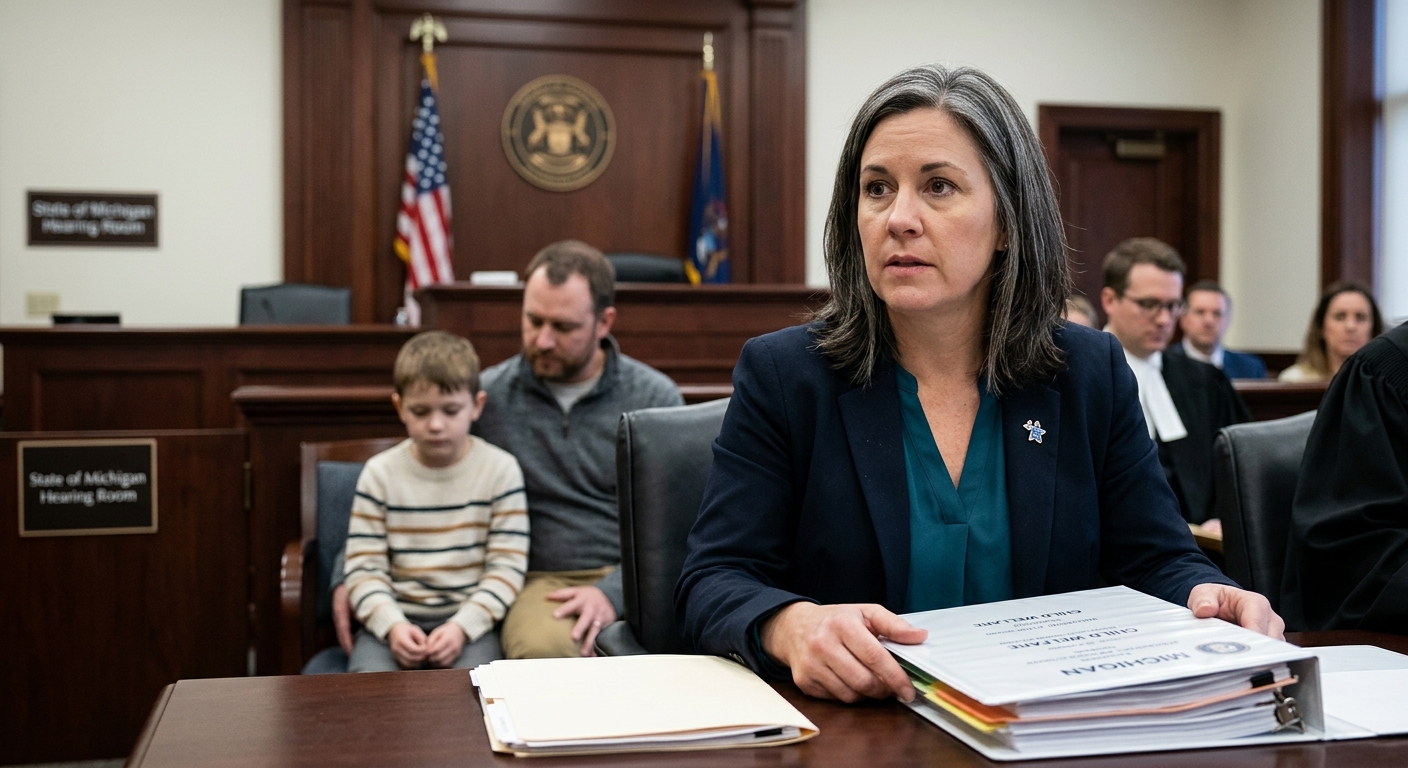
Institutional reform litigation is a cornerstone of civil rights advocacy in the United States, particularly when it comes to protecting the most vulnerable populations. Among the most complex and protracted legal battles are those concerning state-run child welfare systems. When a state agency fails to protect the children in its custody, federal courts often intervene, establishing legally binding agreements known as consent decrees to enforce sweeping systemic changes. However, these agreements inevitably lead to friction. As states invest resources and begin to see marginal improvements, they frequently file legal motions to dissolve federal oversight, arguing that the heavy hand of the court is no longer necessary. In response, child advocacy groups stringently oppose these motions, arguing that premature exits from federal oversight threaten to undo fragile progress and plunge vulnerable children back into dangerous, poorly managed systems.
To fully grasp the magnitude of this legal tug-of-war, one must examine long-standing legal battles such as the landmark litigation against the State of Michigan’s child welfare system. Known legally under various iterations depending on the sitting governor—starting in 2006 and evolving through subsequent administrations—this class-action lawsuit highlights the rigorous standards required to prove that a state has achieved sustainable, durable reform. The tension between a state’s desire for operational autonomy and the constitutional rights of dependent youth forms the crux of the ongoing legal arguments.
The Origins of Federal Oversight in Child Welfare
The origins of intensive federal oversight in foster care systems usually stem from horrific systemic failures. In the mid-2000s, Michigan’s foster care system, which managed nearly 19,000 dependent children, was beset by severe operational deficiencies. Advocates filed a federal class-action lawsuit alleging that the state was violating the U.S. Constitution’s First, Ninth, and Fourteenth Amendments, alongside federal mandates such as the Adoption Assistance and Child Welfare Act of 1980.
The foundational legal argument rested on the Fourteenth Amendment’s substantive due process clause, which dictates that when a state assumes custody of an individual—removing a child from their parents—the state assumes a non-delegable duty to provide for their basic needs and ensure their safety. The original complaint documented systemic failures that breached this duty, including severe caseworker shortages, excessive placements and disruptions, an overreliance on unlicensed caregivers, and the tragic reality of children suffering further abuse while under the protective custody of the state.
To avoid a lengthy trial, the state and the plaintiffs eventually entered into a comprehensive settlement agreement. This court-enforceable mandate required the state to completely overhaul its child welfare division. Key requirements included establishing a dedicated Children’s Services Administration, capping caseworker caseloads, standardizing social worker education requirements (mandating bachelor’s degrees for specific roles), and heavily investing in data tracking systems to monitor abuse in care. An independent court-appointed monitor was instituted to provide regular, objective reports on the state’s progress toward dozens of rigorous benchmarks.
The State’s Push for Autonomy: Motions to Dissolve Oversight
As years pass and millions of state taxpayer dollars are injected into compliance efforts, state departments of human services eventually seek an exit strategy. In institutional reform litigation, states typically rely on Federal Rule of Civil Procedure 60(b), which allows a party to seek relief from a final judgment or order. States argue that once the primary constitutional violations have been addressed, federal courts must return control to state authorities.
In the context of the Michigan litigation, the state has periodically moved to dissolve or substantially modify the injunction. The core of the state’s argument often hinges on Supreme Court precedent regarding institutional reform. Specifically, states lean heavily on cases like Horne v. Flores, 557 U.S. 433 (2009), where the Supreme Court noted that federal court decrees exceed their appropriate limits if they aim to eliminate conditions that do not explicitly violate federal law. The state’s legal teams argue that if a “durable remedy” has been implemented, continued enforcement of a federal court order is improper and an overstep into state sovereignty.
State agencies frequently highlight substantial milestones to bolster these motions. For instance, they may present data showing that they have achieved compliance with a vast majority of the consent decree’s provisions. Common claims include:
- Improved Caseload Ratios: Meeting strict targets for Child Protective Services (CPS) investigators, ongoing case staff, and child welfare supervisors.
- Educational Upgrades: Ensuring that all newly hired caseworkers possess specialized degrees in social work or related human services fields.
- Timely Permanency: Exceeding specific state fiscal year targets for finalizing adoptions and reducing the backlog of children awaiting permanent placement.
- Data Infrastructure: Implementing modern, comprehensive child welfare data and tracking systems to account for vulnerable children.
The Advocacy Pushback: Why Premature Exits are Opposed
Despite the state’s claims of monumental progress, child advocacy organizations frequently file rigorous legal oppositions to motions seeking an end to federal oversight. The fundamental premise of their opposition is that “partial compliance” or “fleeting success” does not equate to sustainable, institutionalized reform. Advocates argue that lifting the consent decree before structural changes are deeply embedded will result in an immediate regression to the dangerous conditions that prompted the lawsuit in the first place.
Legal teams representing the class of foster children meticulously dissect the state’s data. They highlight that achieving a benchmark in a single reporting quarter does not prove durability. Their oppositions focus on the remaining unfulfilled commitments—the “last mile” of reform—which often encompass the most difficult and critical metrics of child safety and well-being. Advocates point to continuous failures in specific, high-stakes areas, arguing that the system remains unconstitutionally unsafe.
Areas of Contention in Compliance Monitoring
When drafting an opposition, advocates typically hone in on several critical metrics where the state continues to fall short of the agreed-upon standards. These metrics are often complex and require deep systemic coordination:
| Compliance Area | State’s Typical Argument | Advocates’ Opposition Argument |
|---|---|---|
| Maltreatment in Care | Overall abuse rates have dropped significantly compared to the pre-lawsuit baseline. | Any systemic failure to prevent abuse in state-licensed or unlicensed relative homes remains a direct constitutional violation that requires ongoing oversight. |
| Placement Stability | The average number of moves per child has decreased, and high-risk cases are monitored. | Too many children still experience three or more placements within a 12-month period, exacerbating trauma and disrupting education. |
| Mental & Dental Health | Initial medical screenings upon entry into foster care have improved drastically. | Ongoing psychiatric care, timely dental exams, and access to “flexible funds” for specialized services remain dangerously inaccessible for children with complex needs. |
| Older Youth Outcomes | Programs have been implemented to assist youth aging out of the system. | The state overuses APPLA-E (Another Planned Permanent Living Arrangement – Emancipation) designations, effectively giving up on finding permanent legal families for older teens. |
The Role of the Modified Implementation, Sustainability and Exit Plan (MISEP)
To bridge the gap between complete federal control and total state autonomy, federal judges often encourage the creation of transition agreements. In Michigan, this took the form of the Modified Implementation, Sustainability and Exit Plan (MISEP). Submitted jointly by the state and the plaintiffs, a MISEP establishes a rigorous, step-by-step path toward ending court supervision.
The MISEP approach recognizes that abrupt termination of a consent decree is detrimental. Instead, it categorizes reforms into distinct performance standards. The state must not only achieve these standards but maintain them over consecutive monitoring periods. This prevents a “yo-yo” effect where a state ramps up funding just long enough to pass a monitor’s audit, only to slash budgets the moment the federal judge dismisses the case. By tying the exit strategy to sustained, measurable data validated by a neutral monitor, advocates ensure that the structural changes outlast shifting political administrations.
The Broader National Landscape of Child Welfare Litigation
The legal friction witnessed in Michigan is not an isolated phenomenon. Institutional reform litigation has been a pivotal tool used nationwide to force the reform of government agencies, from law enforcement to mental health facilities to education systems. Class-action lawsuits targeting child welfare systems have been filed across numerous states, creating a complex web of federal jurisprudence regarding children’s rights.
These national cases demonstrate a shared reality: transforming a massive, bureaucratic state agency takes decades, not years. States consistently underestimate the financial investment and cultural shift required to fundamentally change how child protection investigations are conducted, how foster parents are recruited and retained, and how trauma-informed care is administered. When states file premature motions to dissolve oversight, they are often motivated by the immense financial and political pressure of maintaining compliance. However, from the perspective of civil rights attorneys and the children they represent, political expediency cannot supersede constitutional guarantees of safety.
Conclusion
The opposition to a state’s motion to end federal child welfare oversight is much more than a routine procedural dispute; it is a battle over the definition of “reform.” While state agencies naturally desire relief from the rigid mandates and public scrutiny of a federal consent decree, child advocates serve as a vital counterbalance, ensuring that the finish line is not moved prematurely. Until a state can unequivocally prove that its foster care system reliably, safely, and permanently houses the children it removes from their families, advocacy groups will continue to wield federal litigation as a necessary shield for the most vulnerable members of society.
Frequently Asked Questions (FAQs)
What is a consent decree in child welfare litigation?
A consent decree is a legally binding agreement approved by a federal judge that resolves a lawsuit. In child welfare, it mandates specific, systemic changes a state must make to its foster care and child protection systems to resolve alleged constitutional violations. It operates under the ongoing jurisdiction and oversight of the court.
Why do states want to end federal oversight?
Federal oversight requires significant state expenditures, rigid compliance reporting, and submission to an external, court-appointed monitor. States often seek to end this oversight to regain operational autonomy, reduce administrative burdens, and claim political victory over fixing a broken system.
What role does a court-appointed monitor play?
A court-appointed monitor is a neutral, third-party expert or team of experts tasked with evaluating the state’s compliance with the consent decree. They review case files, analyze state data, interview staff, and publish regular reports detailing exactly where the state is succeeding and where it is failing.
What happens if a state violates a consent decree?
If a state continually fails to meet the required benchmarks, the plaintiffs (advocacy groups) can file motions for contempt of court. A federal judge can then order stricter mandates, impose financial penalties, or force the state to allocate specific funds to remedy the ongoing violations.
What does APPLA-E mean in foster care?
APPLA-E stands for Another Planned Permanent Living Arrangement – Emancipation. It is a permanency goal used for older youth (usually 16 and older) when the state determines that adoption, reunification, or guardianship are not viable. Advocates heavily scrutinize this goal because it often means the youth will exit the foster care system without a permanent, legal family structure.
References
- Case: Dwayne B. v. Snyder — Civil Rights Litigation Clearinghouse, University of Michigan Law School. 2025-03-25. https://clearinghouse.net/case/10547/
- Motion to Dissolve or Modify the Modified Settlement Agreement (MSA) Injunction (Doc #241) — State of Michigan / United States District Court Eastern District of Michigan. 2014-12-02. https://www.michigan.gov/mdhhs/-/media/Project/Websites/mdhhs/Folder1/Folder44/Defendants_Motion_to_Dissolve_or_Modify_the_MSA_Injunction.pdf
- Progress of the Michigan Department of Health and Human Services (Period 21 Report) — State of Michigan. 2022-09-06. https://www.michigan.gov/mdhhs/-/media/Project/Websites/mdhhs/Folder1/Folder44/Period_21_MISEP_Report.pdf
- What is a summary of child welfare class-action litigation? — Casey Family Programs. 2019-10-31. https://www.casey.org/class-action-litigation/
Similar Articles








Read full bio of Sneha Tete


