
NC Foster Care Lawsuit: Advocates Expose Youth Warehousing
A federal lawsuit exposes the systemic warehousing of disabled youth in North Carolina's child welfare system.
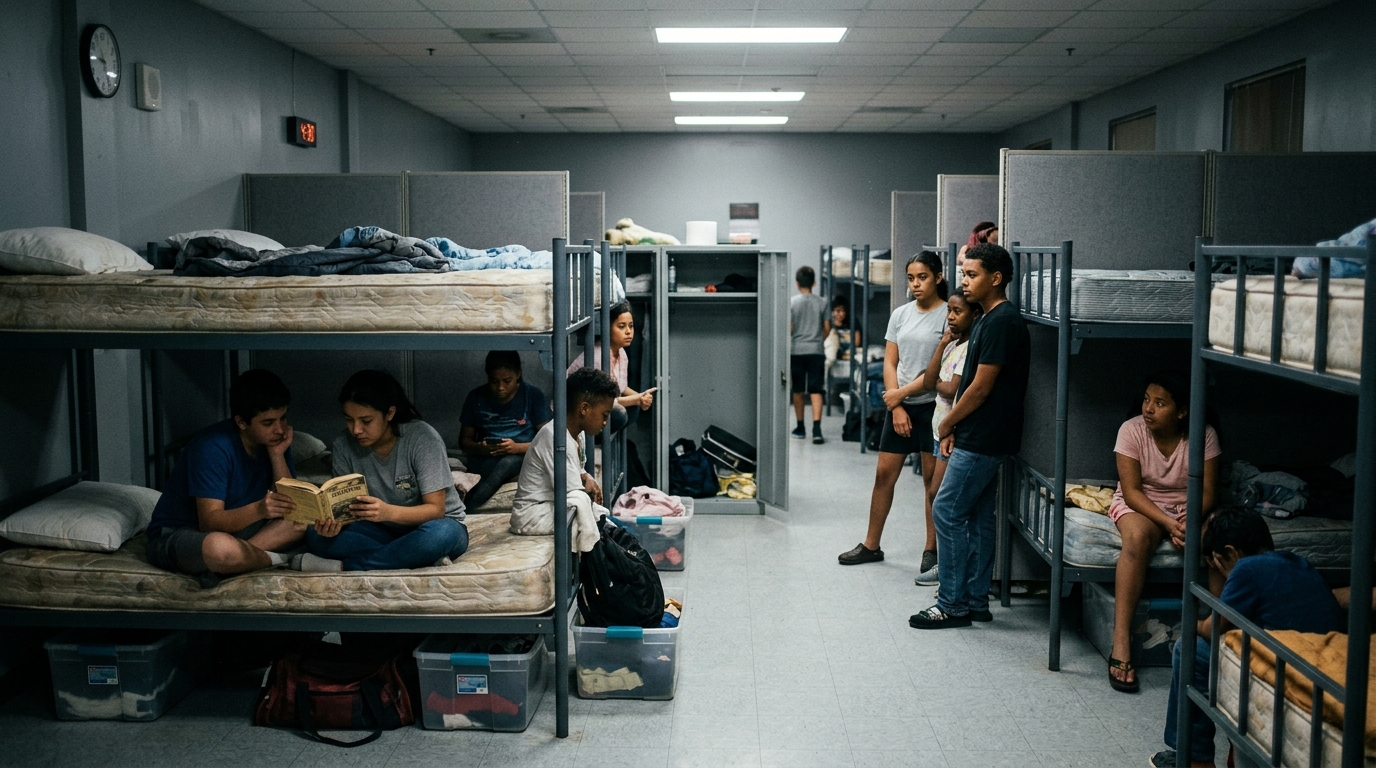
The Fight for Vulnerable Youth: Exposing Systemic Failures in Child Welfare
Every child deserves a safe, nurturing, and family-like environment to grow, heal, and thrive. When a child is removed from their home and placed into state custody, the government assumes a profound legal and moral obligation to protect their well-being. However, a landmark federal lawsuit filed against the North Carolina Department of Health and Human Services (NC DHHS) alleges that the state has fundamentally betrayed this obligation. The lawsuit, Timothy B. v. Kinsley, was brought forward by a powerful coalition of advocates, including Disability Rights North Carolina (DRNC), the North Carolina Chapter of the NAACP, the national advocacy organization Children’s Rights, and the law firm Moore & Van Allen [1, 2].
At the center of this legal battle is the accusation that North Carolina operates a child welfare system that systematically discriminates against children with disabilities. Instead of providing these vulnerable youth with the community-based care and therapeutic support they are legally entitled to receive, the state is allegedly “warehousing” them in locked, prison-like psychiatric institutions . This practice not only violates federal disability rights laws but also inflicts profound trauma on children who have already experienced the heartbreak of family separation. This article delves into the core allegations of the lawsuit, the horrific conditions reported inside these facilities, the disproportionate impact on youth of color, and the broader legal and financial implications of institutionalizing America’s foster children.
Understanding the Core Allegations: The Warehousing of Disabled Youth
The term “warehousing” paints a bleak picture of the child welfare system’s reliance on institutionalization over individualized care. According to the federal complaint, North Carolina unnecessarily confines more than 500 children with mental and behavioral health needs every year in Psychiatric Residential Treatment Facilities (PRTFs) [1, 2]. These are highly restrictive, locked facilities that are clinically intended to provide short-term stabilization for youth in acute psychiatric distress. However, in North Carolina, these facilities have allegedly become long-term dumping grounds for disabled foster children.
The lawsuit asserts that the state uses PRTFs not out of medical necessity, but out of administrative convenience and a chronic failure to develop adequate community-based placement options . Children with emotional, psychological, or cognitive disabilities require specialized support. When the state fails to recruit therapeutic foster families or fund intensive in-home wraparound services, social workers are left with few options. Consequently, children are funneled into institutional settings where they remain trapped for months or even years, isolated from their communities, schools, and extended families.
Advocates argue that this over-reliance on institutional care directly contravenes the integration mandate of the Americans with Disabilities Act (ADA). Title II of the ADA requires public entities to administer services, programs, and activities in the most integrated setting appropriate to the needs of qualified individuals with disabilities. This mandate was famously upheld by the Supreme Court in the 1999 Olmstead v. L.C. decision, which declared that unjustified institutional isolation of people with disabilities is a form of unlawful discrimination . By failing to provide community-based alternatives, North Carolina is accused of actively violating these federal protections.
A Cycle of Trauma: Inside Psychiatric Residential Treatment Facilities
The allegations detailed in the lawsuit regarding the conditions inside North Carolina’s PRTFs are harrowing. Rather than receiving therapeutic care designed to heal psychological wounds, children confined in these facilities allegedly face an environment rife with danger, neglect, and abuse [1, 3]. The institutional nature of PRTFs inherently strips children of their autonomy, substituting the warmth of a family home with rigid schedules, sterile environments, and punitive behavioral management tactics.
According to the legal complaint and testimony from disability rights advocates, youth in these facilities routinely suffer from severe physical injuries, including broken bones, sprains, and extensive bruising [1, 3]. These injuries are often the result of dangerous physical restraints utilized by staff who are either improperly trained or overwhelmed by the demands of the environment. Furthermore, advocates claim that children are subjected to “chemical restraints”—the inappropriate administration of strong cocktails of psychotropic medications used to sedate and control behavior rather than to treat underlying psychiatric conditions [1, 3].
Beyond physical harm, the psychological toll of institutionalization is profound. Children in PRTFs frequently endure bullying, sexual abuse, and hate speech perpetrated by both peers and staff . The lack of consistent, evidence-based therapeutic intervention means that children often leave these facilities in a worse mental state than when they arrived. For a foster child who has already experienced the trauma of abuse, neglect, or removal from their primary caregivers, being locked in a dangerous institution exacerbates feelings of abandonment and hopelessness, perpetuating a vicious cycle of trauma.
The Racial Divide: Disproportionate Impact on Children of Color
One of the most critical aspects of the Timothy B. v. Kinsley lawsuit is the active involvement of the North Carolina State Conference of the NAACP. Their participation highlights the inescapable intersection of disability discrimination and systemic racism within the child welfare system. The harmful practices alleged in the lawsuit do not affect all populations equally; they fall disproportionately and devastatingly on Black and Brown children .
The pipeline to institutionalization begins with deep-seated racial disparities at the front door of the child welfare system. Families of color are disproportionately reported to child protective services, investigated, and subjected to family separation. Once thrust into the foster care system, implicit biases continue to influence decision-making regarding placements and diagnoses. Behaviors that might be viewed as trauma responses in white children are often pathologized or criminalized in children of color, leading to more restrictive placements.
The statistics surrounding this disparity are alarming. According to data cited by the plaintiffs, while Black and Brown children make up a significant portion of the general foster care population, they represent over 40% of the children on Medicaid who are confined to PRTFs in North Carolina [2, 3]. This means that youth of color are bearing the brunt of the state’s failure to build community-based support systems. The NAACP’s involvement underscores the assertion that fighting for disability rights in the foster care system is fundamentally a racial justice issue, demanding a comprehensive overhaul to eradicate these systemic inequities.
Comparing Care Models: Institutional vs. Community-Based Services
To fully grasp what is at stake in this litigation, it is vital to understand the stark differences between the current institutional model and the community-based care model advocated for by the plaintiffs. The table below outlines the key distinctions between Psychiatric Residential Treatment Facilities (PRTFs) and Home and Community-Based Services (HCBS).
| Feature | Psychiatric Residential Treatment Facilities (PRTFs) | Home and Community-Based Services (HCBS) |
|---|---|---|
| Setting | Locked, institutional, heavily restricted environments detached from the broader community. | Family homes, therapeutic foster homes, or small group homes fully integrated into local neighborhoods. |
| Social Integration | Children are isolated from peers, attend on-site institutional schools, and have limited contact with family. | Children attend local public schools, participate in community activities, and maintain familial connections. |
| Treatment Approach | Often relies on behavioral compliance, physical restraints, and heavy reliance on psychotropic medications. | Focuses on individualized wraparound services, trauma-informed therapy, and mobile crisis intervention. |
| Cost and Efficiency | Extremely expensive; North Carolina spends an estimated $100 million annually on PRTF placements. | More cost-effective long-term; funds are directed toward sustaining families and community infrastructure. |
The Financial Cost of a Broken System
Beyond the devastating human toll, the lawsuit exposes a profound misallocation of taxpayer resources. The institutionalization of youth is not only legally questionable and morally fraught, but it is also an extraordinary drain on state finances. Disability Rights NC and its co-counsel have highlighted that the North Carolina Department of Health and Human Services spends approximately $100 million annually on PRTF placements . This astronomical figure represents funds that are being funneled into private, often for-profit, institutional facilities that continually fail to produce positive outcomes for youth.
Advocates argue that this funding model represents a catastrophic financial mismanagement. If even a fraction of that $100 million were redirected toward building a robust network of community-based services, the state could dramatically alter the trajectory of thousands of lives. The development of therapeutic foster homes, the hiring of specialized in-home care providers, the expansion of mobile psychiatric crisis units, and the implementation of robust family preservation programs are all significantly more cost-effective than locking children in PRTFs. By investing in the community, the state would not only comply with federal law but also foster long-term stability and economic savings.
Seeking Justice: The Path Forward and Demand for Reform
The ultimate goal of the Timothy B. v. Kinsley lawsuit is to force systemic, sweeping reform across North Carolina’s child welfare and mental health systems. The plaintiffs are not seeking monetary damages for the youth; rather, they are pursuing injunctive relief. This means they are asking a federal judge to issue legally binding orders that would compel the state to fundamentally change how it operates.
The advocates are demanding that NC DHHS cease its reliance on the unnecessary institutionalization of disabled foster youth. To achieve this, the state must be forced to rapidly expand its capacity for home and community-based services. This includes aggressively recruiting and training specialized foster families capable of caring for children with complex behavioral needs, ensuring access to timely psychiatric care within the community, and implementing strict oversight mechanisms to prevent the automatic funneling of children into PRTFs.
Recently, a federal judge provided a significant victory for the plaintiffs by rejecting the state’s attempts to dismiss the case, ensuring that the children and their advocates will have their day in court . This ruling signals that the judiciary recognizes the gravity of the allegations and the plausible violation of the ADA. The outcome of this case could set a powerful legal precedent, not just for North Carolina, but for child welfare systems across the entire United States, reaffirming that a child’s disability is not a justification for institutional confinement.
Frequently Asked Questions (FAQs)
What is a Psychiatric Residential Treatment Facility (PRTF)?
A PRTF is a non-hospital, heavily restricted, and often locked facility intended to provide inpatient psychiatric treatment to individuals under the age of 21. While designed for acute, short-term stabilization, they are frequently misused by child welfare systems as long-term housing solutions for children with complex needs when community placements are unavailable.
Why is the North Carolina NAACP involved in this disability rights lawsuit?
The NAACP is a co-plaintiff because the practice of warehousing disabled foster children in locked facilities disproportionately harms Black and Brown youth. Data shows that youth of color are overrepresented in both the foster care system and in highly restrictive PRTF placements, making this a critical issue of racial justice and civil rights equity.
How does the Americans with Disabilities Act (ADA) protect foster children?
Title II of the ADA requires that state and local governments provide services to individuals with disabilities in the “most integrated setting appropriate.” In the context of foster care, this means the state must make reasonable modifications to support a disabled child in a community or family setting rather than automatically defaulting to institutional segregation.
What are advocates asking the court to do?
Advocates are seeking injunctive relief, which is a court order demanding the state of North Carolina stop unnecessarily institutionalizing children. They want the court to compel the state to redirect its funding and resources toward developing a robust system of home- and community-based mental health services and therapeutic foster placements.
Conclusion
The lawsuit against North Carolina’s Department of Health and Human Services serves as a glaring indictment of a child welfare system that has lost sight of its primary mission: to care for and protect vulnerable youth. The warehousing of children with disabilities in locked psychiatric facilities represents a severe violation of civil rights, disproportionately punishing youth of color and perpetuating cycles of trauma. As advocates, legal experts, and civil rights organizations continue to press for judicial intervention, the case stands as a critical turning point. It challenges not only North Carolina but the entire nation to dismantle harmful institutional models and invest in the community-based, family-centric care that every child inherently deserves.
References
- Timothy B. Litigation — Disability Rights North Carolina. 2022-12-06. https://disabilityrightsnc.org/cases/timothy-b-litigation/
- NC Timothy B. v. Kinsley — Children’s Rights. 2024-04-11. https://www.childrensrights.org/class_action/nc-timothy-b-v-kinsley/
- DRNC Testimony on PRTFs for US Senate Finance Committee — Disability Rights North Carolina. 2024-06-12. https://disabilityrightsnc.org/news/drnc-testimony-on-prtfs-for-us-senate-finance-committee/
- Olmstead: Community Integration for Everyone — U.S. Department of Justice, Civil Rights Division. 2023-11-28. https://www.ada.gov/olmstead/
Similar Articles








Read full bio of medha deb


