
The Legal Fight for Native Families: The Future of ICWA
Understanding ICWA's history and Supreme Court survival.
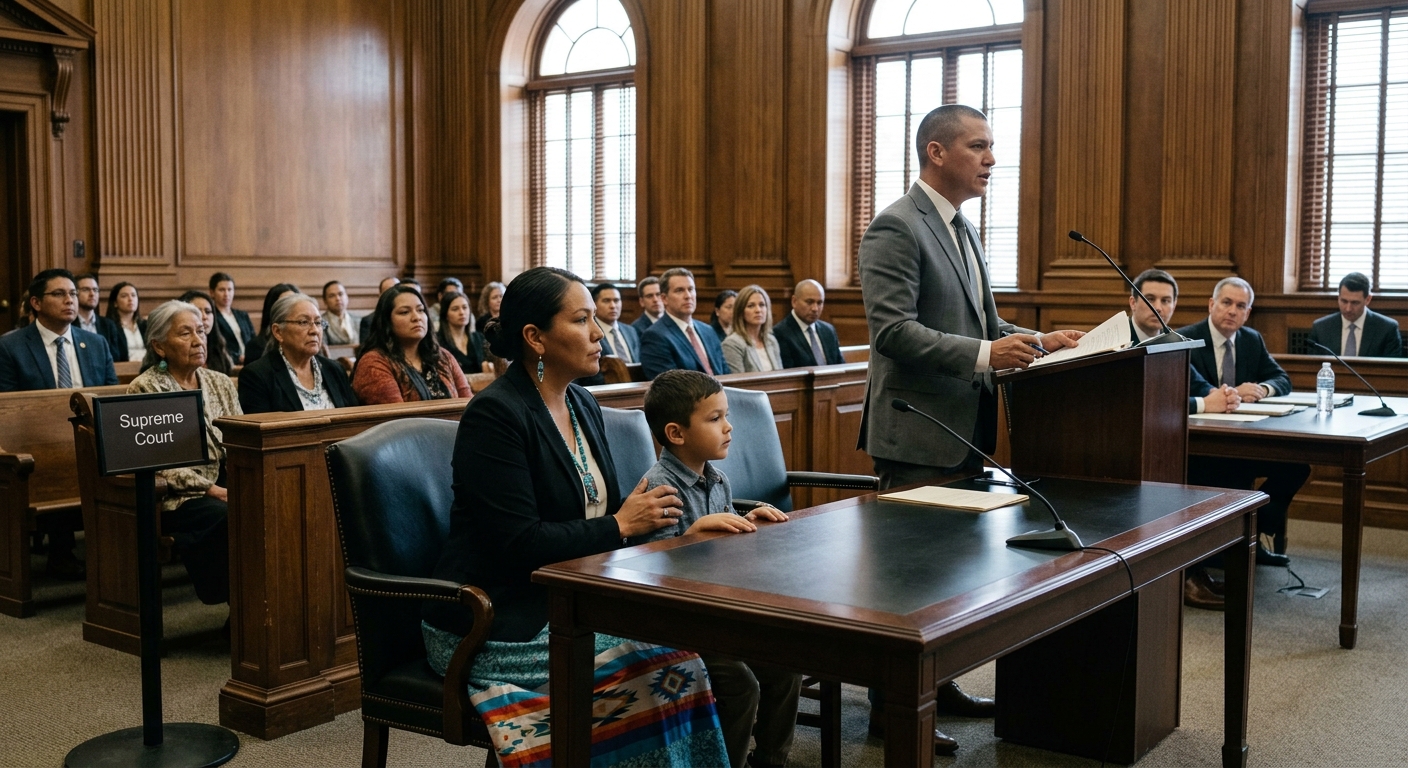
The Foundation of Tribal Sovereignty and Family Preservation
Family is the foundational building block of human society. For Native American communities, the concept of family extends far beyond the nuclear unit, encompassing extended relatives, elders, and an interconnected community network. This expanded kinship structure is the absolute lifeblood of tribal continuity and inherent sovereignty. Under United States law, recognized Native American tribes are considered sovereign entities—domestic dependent nations maintaining a unique government-to-government relationship with the federal government. Children are the most vital resource for these sovereign nations. Without the preservation of its youth, a tribe faces the literal extinction of its government, language, and cultural heritage.
Recognizing the critical importance of these intergenerational bonds, Congress enacted the Indian Child Welfare Act (ICWA) in 1978. This federal legislation stands as a powerful legal bulwark against the unwarranted removal of Indigenous children, ensuring that Native youth remain inextricably tethered to their communities and political identity as tribal citizens. Despite its documented success and the broad endorsement of mainstream child welfare experts, this foundational legislation recently faced one of the most perilous legal challenges in its history. To fully comprehend these contemporary legal battles, one must first confront the devastating historical context that made such a law a moral and constitutional necessity.
A Tragic History: Assimilation, Boarding Schools, and Mass Separations
The passage of the Indian Child Welfare Act was a necessary, desperate response to a century of state-sanctioned devastation. Long before modern child welfare systems were formalized, the United States government utilized systemic policies aimed at the cultural assimilation and eradication of Native identity. Beginning in the mid-19th century, the federal government established and funded boarding schools under the explicit philosophy of “kill the Indian, save the man.” Native children were forcibly removed, stripped of traditional clothing, physically punished for speaking their native languages, and subjected to harsh, institutionalized conditions that severed their connection to their families. The forced relocation separated families by thousands of miles, intentionally severing ancestral languages, religious practices, and generational knowledge. This deep-seated federal interference laid the tragic groundwork for the child welfare crisis that followed. The intergenerational trauma inflicted by this era continues to reverberate through Indigenous communities today.
When the overt boarding school era eventually waned, the assimilationist agenda did not vanish; it found a new, highly effective vehicle in state child welfare departments and private adoption agencies. During the 1950s and 1960s, initiatives like the federal “Indian Adoption Project” actively facilitated the removal of Indigenous youth from their communities to be placed with non-Native families.
Investigations by advocacy groups presented horrifying, undeniable data to Congress in the 1970s:
- Astounding Removal Rates: Between 25% and 35% of all Native American children in the United States were being systematically removed from their biological families.
- Out-of-Culture Placements: Of those removed, an estimated 85% were placed entirely outside of their tribes, primarily into white, non-Native households or institutional care facilities.
- Systemic Bias: State social workers, completely lacking an understanding of Native extended-family rearing practices, frequently cited “neglect” based purely on community poverty or cultural differences rather than actual abuse.
This systematic drain of youth threatened the demographic survival of tribal nations, making decisive federal intervention an absolute necessity.
The Anatomy of the Indian Child Welfare Act: How It Works
Enacted in 1978, ICWA fundamentally altered the legal landscape by establishing minimum federal standards for the removal and out-of-home placement of Native children. It codified the recognition that tribes have an inherent jurisdictional right over their own citizens, particularly their vulnerable dependents.
The law’s operational mechanics are meticulously designed to keep Native families intact. When a child welfare proceeding involves an “Indian child”—defined under the statute as an unmarried person under 18 who is either a member of a federally recognized tribe or eligible for membership and the biological child of a member—specific rigorous protocols are triggered.
First, tribes are granted exclusive jurisdiction over child custody proceedings that originate on a reservation. For off-reservation cases, state courts are generally required to transfer the proceedings to tribal courts upon the request of the parent or the tribe.
Second, the law dramatically raises the standard of care required from social service agencies. Agencies handling Native cases must demonstrate they have made “active efforts.” This requires caseworkers to take affirmative, hands-on steps to provide remedial services preventing family breakup, rather than standard, passive “reasonable efforts.” The requirement of a “Qualified Expert Witness” is another cornerstone of the law. State courts are legally prohibited from removing a Native child without the sworn testimony of an expert intimately familiar with the child’s specific tribal culture and child-rearing customs, ensuring cultural context is never ignored.
Finally, if out-of-home placement is absolutely necessary, the law dictates a clear, binding hierarchy of placement preferences. Priority must be given first to extended family, then to other members of the child’s specific tribe, and subsequently to other Native American families.
| Era / Framework | Guiding Philosophy | Primary Placement Priority | Tribal Government Role |
|---|---|---|---|
| Pre-1978 Practices | Assimilation and cultural erasure | Institutional boarding schools, non-Native adoptive homes | Actively marginalized or completely ignored |
| Post-1978 Standards | Family integrity and cultural preservation | Extended kin, tribal citizens, other Native households | Sovereign right to intervene and assume legal jurisdiction |
The Existential Threat: Haaland v. Brackeen
Despite its documented success in reducing arbitrary family separations, the legislation has frequently drawn the ire of private adoption agencies and select states claiming federal overreach. These simmering tensions culminated in Haaland v. Brackeen, a landmark legal challenge that sought to strike down the entirety of the legislative framework. The plaintiffs, including the states of Texas, Indiana, Louisiana, and several non-Native adoptive couples, attacked the constitutional foundation of federal Indian law.
The Equal Protection Argument
The most widely publicized argument asserted that the law violates the Equal Protection Clause of the Fourteenth Amendment. Plaintiffs argued the placement preferences explicitly discriminated against non-Native adoptive parents on the basis of race. However, this argument fundamentally misunderstands tribal sovereignty. Since the seminal 1974 Supreme Court case Morton v. Mancari, the legal system has recognized that classifications based on tribal membership are political, not racial. Federally recognized tribes are sovereign political entities that predate the United States. Striking down this law on racial grounds would have triggered a catastrophic domino effect, potentially invalidating treaties, tribal gaming compacts, and specialized healthcare funding.
The Tenth Amendment and Anti-Commandeering
The plaintiffs also deployed a robust state’s rights argument utilizing the Tenth Amendment. They argued the federal government was violating the “anti-commandeering” doctrine by actively forcing state family courts and child welfare workers to enforce federal policies. In essence, they claimed Congress was unconstitutionally shifting the administrative, legal, and financial burdens of a federal mandate onto localized state systems.
The Supreme Court’s Verdict: A Resounding Affirmation
The anticipation surrounding the Supreme Court’s ruling was incredibly tense across Indian Country. Tribal leaders and legal scholars braced for a decision that could rewrite centuries of established federal Indian law. In June 2023, the Court delivered its decision in a resounding 7-2 victory for tribal sovereignty, authored by Justice Amy Coney Barrett.
The majority opinion unequivocally upheld the constitutionality of the federal statute. The Court systematically dismantled the anti-commandeering arguments, firmly affirming that Congress possesses plenary and exclusive power to legislate in matters concerning Native American affairs under Article I of the Constitution. Regarding the highly contested Equal Protection claim, the Court determined that the plaintiffs lacked the proper legal standing to challenge the placement preferences in this procedural posture. By rejecting the case on standing, the Court effectively left the established precedent of the political classification entirely intact.
Furthermore, Justice Neil Gorsuch authored a powerful concurring opinion tracing the tragic, centuries-long history of Indigenous family separation, reinforcing the notion that the legislation is a deeply necessary constitutional remedy to past state and federal abuses.
Why the Law is the “Gold Standard” for All Child Welfare
Beyond the highly specialized sphere of federal Indian law, the core principles embedded within this legislation are widely celebrated by child development experts nationwide. Organizations such as the American Academy of Pediatrics and the Child Welfare League of America have collectively dubbed it the absolute “gold standard” of child welfare practice.
The underlying psychological rationale is remarkably straightforward: arbitrarily institutionalizing children or placing them with strangers inflicts deep, often irreversible developmental trauma. Children thrive and develop profound resilience when they maintain a secure sense of identity, belonging, and connection to their biological and cultural roots. The law’s strict prioritization of kinship care—ensuring placement with grandparents, aunts, or uncles is exhausted before seeking foster care—aligns perfectly with contemporary trauma-informed care models. By demanding intensive “active efforts” to rehabilitate struggling parents rather than rushing toward the permanent termination of parental rights, the law provides a holistic model that experts argue should be the operational baseline for all families in crisis.
Ongoing Challenges: The Fight is Far From Over
While the monumental Supreme Court victory secured the federal constitutional framework, the on-the-ground reality for Native youth remains undeniably challenging. State compliance with the federal mandate is notoriously inconsistent across the country. Proper implementation is frequently hindered by chronic underfunding, insufficient specialized training for state-level social workers, and entrenched, systemic biases within county family courts. Consequently, current data indicates that Native American children are still approximately four times more likely to be removed by state child welfare systems than their non-Native peers.
Recognizing the inherent vulnerability of relying solely on shifting federal court interpretations, numerous states have taken proactive steps to formally codify these vital protections directly into their own state statutes. States including Michigan, California, Oregon, and New Mexico have passed robust state-level Indian Family Preservation Acts. These localized laws add an indispensable secondary layer of protection, ensuring that even if the federal statute faces unexpected future hurdles, the core principles of tribal sovereignty and kinship placement hierarchies will remain firmly enshrined in state jurisprudence. The ongoing mission is not merely legal defense at the highest appellate levels, but aggressive, grassroots education and systemic reform at the local county levels to ensure the spirit of the law is genuinely honored.
Frequently Asked Questions (FAQs)
What is the primary purpose of the Indian Child Welfare Act?
Enacted in 1978, it is a comprehensive federal law establishing minimum federal standards for the removal and out-of-home placement of Native American children. Its primary goal is to preserve Native families and protect the political and cultural relationship between Native children and their respective sovereign tribes.
Who legally qualifies as an “Indian child” under this framework?
The legal definition is strictly politically based. It applies to any unmarried individual under the age of 18 who is either a fully enrolled member of a federally recognized Native American tribe, or who is eligible for tribal membership and is the biological child of a current tribal member. It does not apply based merely on racial ancestry.
Why was this specific child welfare legislation necessary?
Prior to its passage, systemic bias, abusive child welfare practices, and aggressive federal assimilation policies resulted in the unwarranted removal of roughly 25% to 35% of all Native American children from their families. The vast majority were purposefully placed in non-Native homes, causing devastating cultural erasure.
What were the core legal issues in the Haaland v. Brackeen case?
This landmark Supreme Court case directly challenged the constitutionality of the federal law. Plaintiffs argued the legislation violated the Tenth Amendment by unlawfully forcing state agencies to carry out federal directives, and violated the Equal Protection Clause by allegedly prioritizing race in child placements. The Supreme Court decisively rejected these arguments in 2023.
Are Native American tribes considered racial groups or political entities?
Under established United States constitutional law, federally recognized tribes are strictly considered sovereign political entities, not racial groups. Therefore, legislation that pertains specifically to tribal citizens is legally based on a unique government-to-government political relationship. This critical distinction protects laws concerning Native Americans from standard Equal Protection racial discrimination claims.
References
- 21-376 Haaland v. Brackeen (06/15/2023) — Supreme Court of the United States. 2023-06-15. https://www.supremecourt.gov/opinions/22pdf/21-376_7l48.pdf
- Indian Child Welfare Act (ICWA) — U.S. Department of the Interior – Indian Affairs. 2023. https://www.bia.gov/bia/ois/dhs/icwa
- Factors Associated with Child Removal Among American Indian and Alaska Native People — National Institutes of Health (PMC). 2022-04-18. https://www.ncbi.nlm.nih.gov/pmc/articles/PMC10156847/
- The Harm of Child Removal — ScholarWorks, University of Baltimore Law Review. 2019. https://scholarworks.law.ubalt.edu/ublr/vol48/iss3/3/
Similar Articles








Read full bio of medha deb


