
Redefining Child Protection: NAACP’s Civil Rights Challenge
How a landmark Title VI complaint is challenging systemic bias in child welfare.
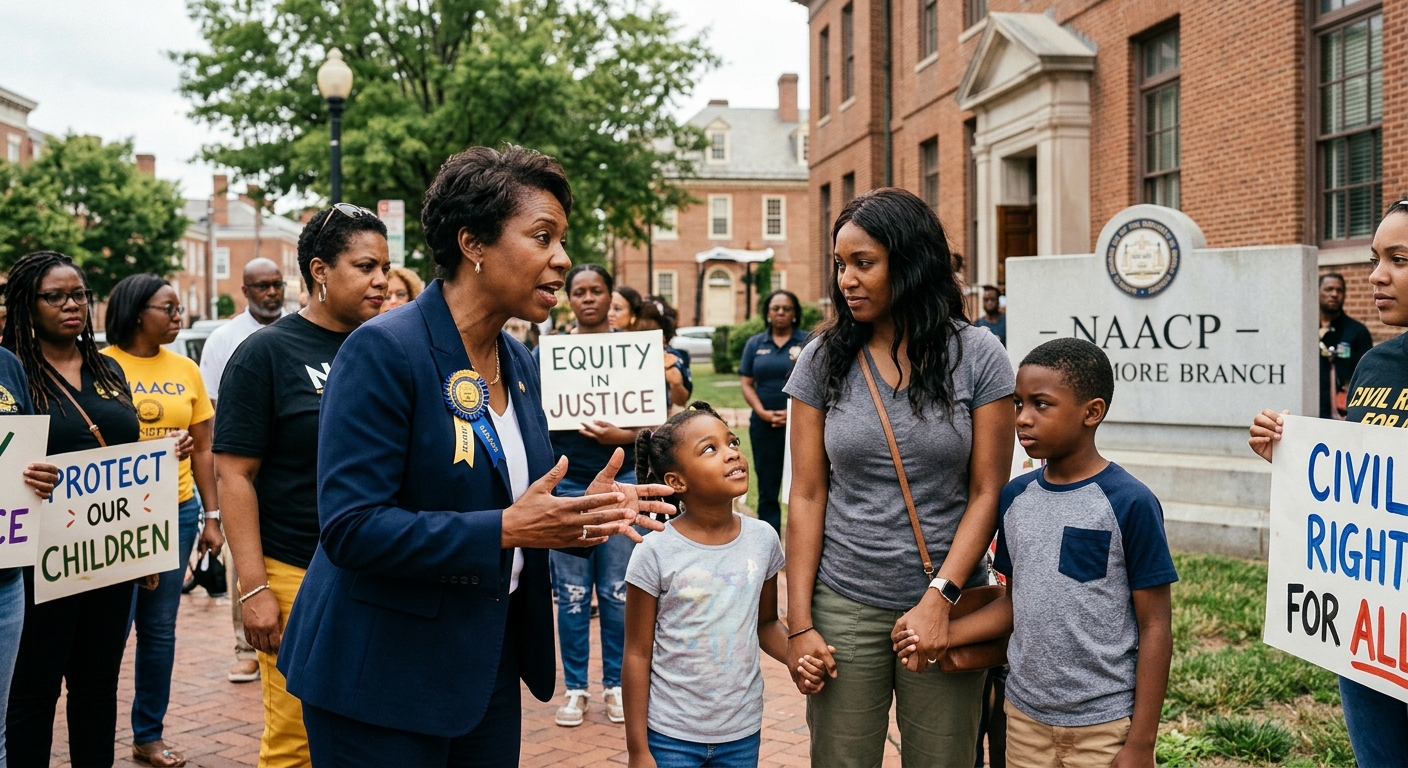
The Intersection of Civil Rights and Child Protection
The institution of child welfare in the United States was historically established to serve as a critical safety net, designed to shield vulnerable children from physical abuse, severe neglect, and exploitation. Yet, beneath the surface of this protective mandate lies a highly complex and often deeply flawed bureaucratic apparatus. Across the nation, a rising coalition of civil rights advocates, legal scholars, and directly impacted communities are challenging the foundational operations of these systems. They argue that in far too many jurisdictions, child protection agencies function less as bastions of family support and more as mechanisms of invasive surveillance and unwarranted separation. This long-simmering national discourse has recently catalyzed a historic legal strategy in the American Midwest.
In a landmark maneuver linking family preservation with fundamental constitutional protections, the Minneapolis chapter of the NAACP, acting with the national legal advocacy organization Children’s Rights, initiated a formal grievance against the State of Minnesota. Filed in early March 2024, this complaint transcends typical state-level policy debates by elevating systemic child welfare disparities to the level of federal civil rights violations. By demanding immediate scrutiny from federal regulators, the coalition seeks to fundamentally alter the legal landscape. This strategy represents a paradigm shift: rather than merely petitioning state legislators for incremental reform, advocates are now utilizing the formidable weight of federal civil rights law to force immediate, institutional accountability and to halt the allegedly discriminatory application of child welfare policies.
Deconstructing the Minnesota Grievance
To comprehend the magnitude of this civil rights complaint, one must examine the specific allegations levied against Minnesota’s governmental framework. The formal grievance was submitted directly to the U.S. Department of Health and Human Services Office for Civil Rights (HHS-OCR). The core argument posits that Minnesota—and specifically its two most populous jurisdictions, Hennepin and Ramsey counties—has engaged in a sustained pattern of racial discrimination. The advocates assert that the state has weaponized its child protection authority, leading to the disproportionate targeting, investigation, and disruption of Black families.
The complaint relies heavily on statistical disparities to paint a stark picture of systemic bias. According to the data presented to federal regulators, Black children in these counties represent a significantly inflated percentage of all child maltreatment reports compared to their demographic footprint in the general population. Crucially, the overwhelming majority of these reports do not stem from allegations of intentional physical or sexual abuse. Instead, they are often rooted in subjective interpretations of “neglect,” a broad and ambiguous category heavily intertwined with conditions of poverty.
Once a family is reported, the trajectory of the case diverges dramatically based on race. The grievance details that cases involving Black children are statistically far more likely to be screened in for formal, invasive investigations than similar cases involving white children. Furthermore, these investigations culminate in child removal and family separation at vastly disproportionate rates. By compiling this rigorous data, the NAACP and Children’s Rights have constructed a narrative that moves beyond anecdotal grievances, presenting a compelling empirical case that the state’s utilization of federal funds directly bankrolls a fundamentally unequal, two-tiered system of family policing. The intervention demands not just a cessation of these practices, but an overhaul of the criteria used to judge parental fitness in marginalized communities.
Harnessing Title VI for Institutional Accountability
The legal architecture supporting this unprecedented complaint rests on Title VI of the Civil Rights Act of 1964. This cornerstone piece of civil rights legislation unequivocally prohibits discrimination on the basis of race, color, or national origin in any program or activity that receives federal financial assistance. Because state child welfare systems are heavily subsidized by federal dollars—primarily through Title IV-E and Title IV-B of the Social Security Act, as well as various HHS grants—they are legally bound by the anti-discrimination mandates of Title VI.
Historically, Title VI has been successfully deployed to combat segregation in public education, housing, and healthcare. However, its application as a mechanism to constrain the overreach of child protection agencies is a relatively novel and highly strategic frontier. By invoking this statute, the NAACP is effectively arguing that federal taxpayers are unknowingly subsidizing systemic racism. If the HHS Office for Civil Rights determines that Minnesota’s child welfare system is operating in violation of Title VI, the consequences could be catastrophic for the state’s budget. The federal government possesses the authority to withhold, suspend, or completely terminate funding to state agencies that refuse to comply with civil rights mandates.
This threat of financial divestment is the ultimate lever of accountability. State child protection systems are chronically underfunded; losing millions in federal subsidies would cripple their daily operations. Consequently, utilizing Title VI shifts the power dynamic. It bypasses the often sluggish state legislative process and forces administrative leaders to immediately address the racially disparate impacts of their policies or risk administrative ruin. This approach signals a robust new era of legal advocacy where civil rights law is actively utilized to dismantle the structural inequities deeply embedded within local government institutions.
Beyond the State: A National Crisis of Disproportionality
While Minnesota currently finds itself under the intense glare of federal scrutiny, the conditions detailed in the complaint are symptomatic of a pervasive national crisis. The U.S. Administration for Children and Families (ACF), operating under the HHS, has repeatedly acknowledged the phenomenon of “disproportionality” and “disparate outcomes” within the national child welfare apparatus. Across the United States, minority populations—particularly Black and Indigenous children—are drastically overrepresented at every critical juncture, from initial hotline reports to permanent termination of parental rights.
This national disparity is frequently exacerbated by “mandated reporter” laws. These statutes require professionals like teachers and social workers to report suspicions of child abuse. While originally designed to ensure no child slips through the cracks, implicit biases often infect this reporting process. Cultural misunderstandings and the conflation of poverty with neglect routinely lead to hyper-surveillance of minority families. A white family struggling with food insecurity might be offered community resources; a Black family facing the exact same economic hardship is statistically more likely to be reported to a hotline.
Federal agencies have previously issued guidance identifying systemic racism as a core driver of these unbalanced outcomes. Data unequivocally demonstrates that the child welfare system actively compounds existing societal inequalities. This pipeline funnels marginalized youth into a foster care network that frequently fails to provide adequate stability, ultimately perpetuating a tragic cycle of generational disenfranchisement and trauma.
The Collateral Damage of Unwarranted Surveillance
The statistics and legal frameworks, while crucial for initiating reform, often obscure the profound human cost of systemic child welfare intervention. The collateral damage inflicted upon Black families subjected to unwarranted surveillance and forced separation is immense and enduring. When a child protection agency opens an investigation, the immediate psychological impact on a family is characterized by terror, humiliation, and a deep sense of powerlessness. Parents are forced to navigate a labyrinthine bureaucracy where their most intimate domestic choices are scrutinized by state agents holding the unilateral power to remove their children.
For the children involved, the trauma of separation cannot be overstated. Decades of developmental psychology research confirm that removing a child from their primary caregivers—even in situations where the home environment is less than ideal—inflicts deep emotional and psychological wounds. Children placed in foster care frequently experience severe disruptions to their education, face higher rates of mental health disorders, and are significantly more likely to interface with the juvenile justice system.
Furthermore, the omnipresent threat of child removal creates a chilling effect within minority communities. Families in distress often avoid seeking necessary social services, medical care, or mental health treatment out of a justified fear that asking for help will trigger a maltreatment investigation. This paradox means that the very system ostensibly designed to support and protect children actively deters vulnerable parents from accessing the resources that could keep their families safe and intact.
Redefining the Future of Child and Family Well-Being
The coalition behind the Minnesota complaint is not merely demanding an end to discriminatory practices; they are calling for a fundamental reimagining of child and family well-being. The ultimate objective is to divest from a punitive, reactive model of family policing and to heavily invest in proactive, community-based support structures. True child welfare reform necessitates untangling the deep-seated confusion between poverty and neglect.
Advocates argue that the billions of federal and state dollars currently allocated to maintaining the sprawling foster care infrastructure should be redirected directly into the hands of struggling families. Direct cash assistance, subsidized housing, comprehensive maternal healthcare, and accessible childcare have been proven to dramatically reduce the stressors that precipitate child welfare involvement.
Furthermore, there is a growing movement to reform mandated reporting laws, shifting the responsibility of professionals from mandatory reporting to mandatory supporting. By eliminating the punitive threat of the child abuse hotline for issues rooted solely in economic deprivation, communities can build genuine networks of care. The complaint filed against Minnesota is more than just a legal grievance; it is a vital catalyst for a nationwide reckoning. It challenges the conscience of the public and demands that state agencies finally align their practices with the unyielding principles of civil rights, ensuring that no family is torn apart simply because of the color of their skin or the balance in their bank account.
Frequently Asked Questions (FAQ)
- What sparked the recent civil rights complaint in Minnesota?
The formal complaint was initiated by the Minneapolis branch of the NAACP and the legal group Children’s Rights due to overwhelming data indicating severe racial disparities within the state’s child welfare system. Advocates compiled evidence showing that Black families in Hennepin and Ramsey counties are disproportionately reported, investigated, and separated compared to their white counterparts, prompting demands for federal intervention. - How does Title VI apply to child protection agencies?
Title VI of the Civil Rights Act of 1964 prohibits discrimination on the basis of race, color, or national origin in any program receiving federal financial assistance. Because state child welfare departments rely heavily on federal funding to operate, they are legally obligated to ensure their policies and practices do not result in racially discriminatory outcomes. - What are the potential outcomes of an HHS-OCR investigation?
If the U.S. Department of Health and Human Services Office for Civil Rights (HHS-OCR) opens an investigation and finds the state in violation of Title VI, it can mandate sweeping systemic reforms, enforce compliance agreements, or, in the most severe cases, suspend or terminate the state’s federal child welfare funding. - Is this issue isolated to the State of Minnesota?
No. While the current complaint focuses specifically on Minnesota, the overrepresentation of Black and Indigenous children in the child welfare system is a well-documented national crisis. Federal agencies have acknowledged that structural biases and subjective interpretations of neglect contribute to these disparities nationwide.
References
- Title VI of the Civil Rights Act of 1964 — U.S. Department of Health and Human Services (HHS). 2013-07-26. https://www.hhs.gov/civil-rights/for-individuals/race/index.html
- Complaint Under Title VI of the Civil Rights Act of 1964, 42 U.S.C. § 2000d — NAACP Minneapolis Branch and Children’s Rights. 2024-03-01. https://www.childrensrights.org/wp-content/uploads/2024/03/2024.03.01-NAACP_-Childrens-Rights_MN-OCR-Complaint37.pdf
- NAACP Files Civil Rights Complaint Over Minnesota’s Child Welfare Practices — United Press International (UPI). 2024-03-04. https://www.upi.com/
- Child Welfare and Racial Disparities: Disproportionate Representation — Administration for Children and Families (ACF), Children’s Bureau. 2003-04-05. https://www.acf.hhs.gov/
Similar Articles








Read full bio of Sneha Tete


