
Creating a Legally Valid Will in Missouri
Master Missouri's will requirements: eligibility, documentation, witnesses, and modern digital options.
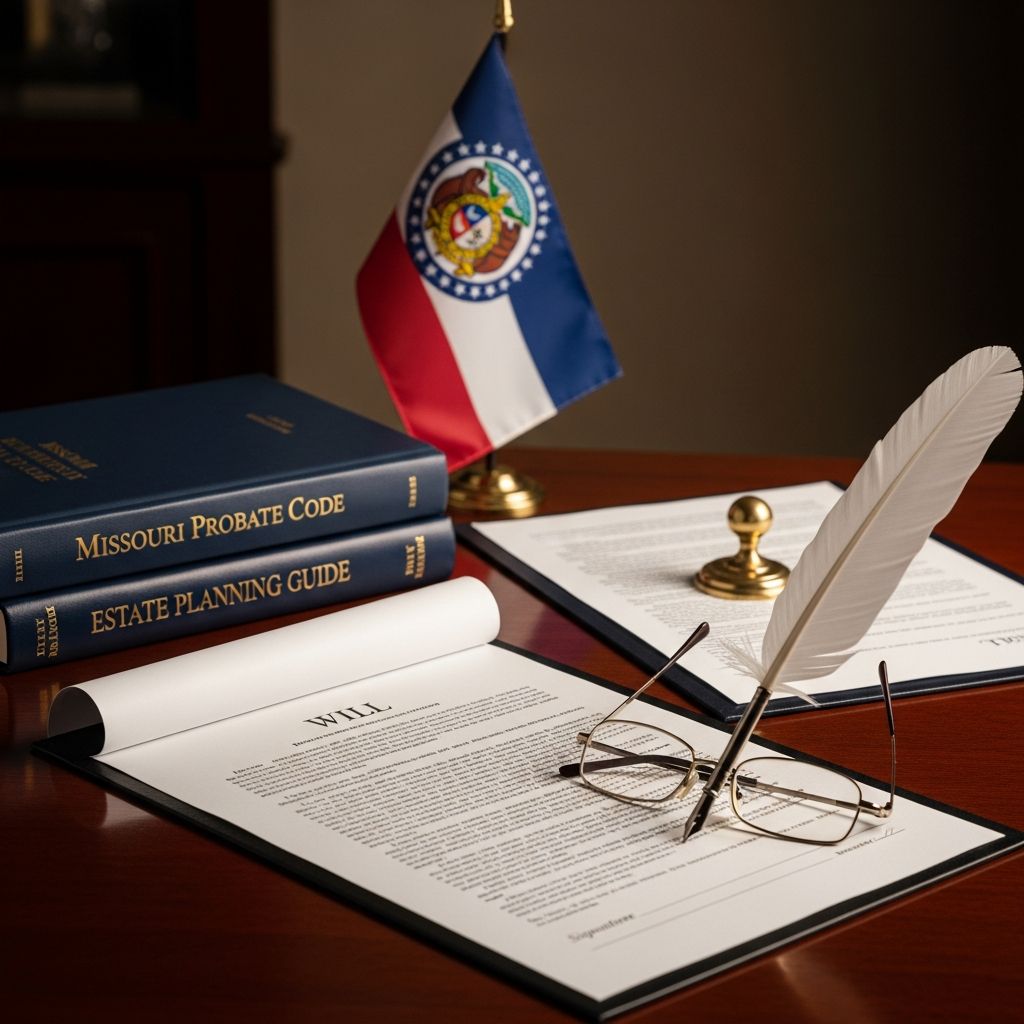
Understanding Will Creation in Missouri: A Comprehensive Legal Framework
Estate planning remains one of the most important financial decisions individuals make, yet many put it off indefinitely. In Missouri, creating a will that actually holds legal weight requires understanding specific statutory requirements. The state maintains clear standards for who can create a will, what form it must take, and the procedural safeguards that ensure your wishes carry legal authority. Failing to meet these requirements means your intentions become irrelevant—Missouri’s intestacy laws will dictate how your estate is distributed instead.
Who Has the Legal Capacity to Create a Will in Missouri
Missouri sets relatively modest eligibility requirements for will creation, but these prerequisites remain non-negotiable. To execute a valid will in Missouri, you must be at least 18 years old and possess testamentary capacity at the moment of signing. The legal concept of “testamentary capacity” does not demand exceptional intelligence or perfect health. Rather, it requires that you understand three fundamental matters: the nature and extent of your property, the practical effect of creating a will, and who your family members and natural beneficiaries are.
Advanced age or existing medical conditions do not automatically disqualify someone from creating a will. What matters is your mental state at the precise moment you sign the document. Someone in declining health can execute a perfectly valid will if they demonstrate clarity of mind regarding their assets and intentions. Conversely, someone physically healthy but mentally incapacitated cannot create a binding will, regardless of appearance.
Essential Written Format and Documentation Standards
Missouri requires wills to exist in written form—either typed or handwritten. This foundational requirement eliminates any ambiguity about whether oral statements or unwritten expressions of intent carry legal weight. Courts rarely recognize oral wills except in extraordinarily narrow circumstances involving imminent death or similar emergencies. For nearly all situations, you must commit your wishes to paper.
The medium of writing is flexible. You may use a computer and printer, or you may handwrite your entire will in your own handwriting. What matters is that the words appear in permanent written form. Digital documents that exist only on computers, tablets, or cloud storage do not satisfy traditional Missouri requirements—though this changed significantly in 2025, as discussed below.
Your signature serves as the critical authentication element. You must personally sign the will, demonstrating your affirmation of its contents. However, Missouri recognizes that physical limitations might prevent you from signing yourself. If you cannot physically sign due to disability or illness, another person may sign your name at your direction and in your presence. This surrogate signature maintains legal validity because it occurs under your explicit authorization and supervision.
The Witness Requirement: A Critical Component
Perhaps the most commonly overlooked requirement involves witnesses. Missouri mandates that two competent adults must witness your signing of the will. Both witnesses must be present at the same time you sign, and both must then affix their own signatures to the document. This two-witness standard cannot be reduced to one and remains inflexible.
The term “competent” carries specific meaning in this context. Witnesses must be adults (at least 18 years old) with adequate mental capacity to understand what they are witnessing. Additionally, witnesses should ideally be “disinterested”—meaning they do not inherit anything from your estate. While Missouri technically allows interested witnesses in some circumstances, their involvement invites legal challenges and complications during probate. Best practice dictates selecting witnesses who have no financial stake in your estate’s distribution.
The presence requirement is strict. Both witnesses must observe you sign, or they must hear you explicitly acknowledge that the document is your will. They cannot sign based on your later assurance that you signed it. They cannot sign at a different location or time. The entire signing ceremony must occur with everyone present, creating a clear record of proper execution.
Handwritten Wills: Limited Recognition Without Witnesses
Some states recognize holographic (entirely handwritten) wills without requiring witnesses. Missouri does not. Even if you write your entire will in your own handwriting, you still need two competent witnesses who must sign before notaries and the court will accept it. The handwriting itself provides no substitute for the witness requirement. Courts will reject a handwritten will lacking proper witness signatures, regardless of how clearly you expressed your intent.
Electronic and Digital Wills: Missouri’s 2025 Game-Changing Reform
The Missouri landscape for will creation transformed dramatically when the Electronic Wills and Electronic Estate Planning Documents Act took effect in August 2025. This progressive legislation—among the most comprehensive in the nation—permits residents to create, sign, and execute wills entirely online through secure video technology. Digital wills created under this framework carry identical legal weight to traditional paper documents.
The electronic wills option represents a fundamental modernization of Missouri probate law. Residents no longer face the necessity of coordinating in-person meetings with witnesses and notaries to execute valid estate planning documents. Rural residents, individuals with mobility limitations, and those seeking convenience now have a legally sanctioned pathway to create binding wills through remote technology.
Documents Eligible for Electronic Creation
The electronic wills law extends beyond simple last wills and testaments. Missourians may now execute the following documents entirely online:
- Last wills and testaments
- Revocable living trusts
- Powers of attorney (both financial and healthcare)
- Healthcare directives and living wills
- Do-not-resuscitate orders and other medical directives
Electronic Will Execution Process
Creating an electronic will in Missouri follows a structured protocol designed to maintain security and legal validity. The process begins with identity verification through government-issued photo identification presented via video conference. Knowledge-based authentication questions further confirm your identity, with biometric verification available when technology permits.
Electronic wills still require two disinterested witnesses present via live video during the signing ceremony. These witnesses must verify their own identities, attest to your testamentary capacity and voluntary execution, and electronically sign in real-time alongside you. A notary public must also participate in the signing ceremony through secure video conferencing. The entire proceeding is recorded and preserved as documentation of proper execution.
Electronic signatures carry equal legal force as traditional handwritten signatures under Missouri law. A digital will executed through proper channels satisfies all statutory requirements and holds full validity in Missouri probate courts.
Self-Proving Affidavits: Simplifying Future Probate Administration
Missouri offers a valuable procedural shortcut through self-proving affidavits. When you create your will, you, both witnesses, and a notary can execute a sworn affidavit certifying that all legal requirements were followed. This affidavit must be prepared contemporaneously with the will itself. Once executed, the self-proving affidavit allows Missouri probate courts to accept your will automatically upon your death without requiring testimony from witnesses or court challenges regarding execution.
The notary’s involvement is technically optional for the will itself but becomes essential for the self-proving affidavit. Many individuals skip this step to save time or expense, yet this decision frequently burdens their heirs with unnecessary probate complications later. Executors may spend significant time locating and convincing elderly or relocated witnesses to testify, or they may face legal contests regarding whether the will was properly executed. A self-proving affidavit eliminates such friction.
Modifying and Revoking Wills: Your Continued Authority
Your will remains subject to modification throughout your lifetime, as long as you retain testamentary capacity. You possess complete authority to revoke, replace, or amend your will at any point before death. Revocation can occur through physical destruction—tearing, burning, or otherwise obliterating the document with clear intent to revoke it. Alternatively, you may execute a new will that explicitly states it supersedes all previous wills.
For partial modifications, Missouri recognizes formal amendments called codicils. A codicil functions as an official supplement to your existing will and must comply with identical execution requirements: your signature, two witnesses, and notarization if you desire a self-proving affidavit. Courts will reject casual amendments such as handwritten notes in margins or crossed-out provisions on a signed will. All changes must follow proper legal procedure to carry weight.
Selecting Your Executor and Designating Guardians
Your will should identify the person you trust to serve as executor—the individual responsible for managing your estate, paying debts, and distributing property according to your wishes. Missouri courts almost universally honor this selection provided the proposed executor is at least 18 years old, possesses sound mind, and has not been convicted of a felony. The court’s deference to your choice respects your understanding of who can reliably carry out your intentions.
If your will names a guardian for minor children, courts give this designation substantial weight. However, judges retain authority to override your choice if evidence demonstrates that the appointed guardian would not serve the children’s best interests. Courts conduct independent inquiries into proposed guardians’ suitability, financial stability, and ability to provide appropriate care. Your will’s guardian designation provides important guidance, but courts retain ultimate responsibility for child welfare determinations.
Common Mistakes That Invalidate Wills in Missouri
The most frequent will execution failure involves inadequate witness involvement. Individuals often forget the witness requirement entirely, create wills without proper witnesses present, or use only one witness instead of the mandatory two. Each of these errors renders the will invalid in Missouri courts. No amount of eloquent language or clear expression of intent can cure the absence of required witnesses.
Witness conflicts represent another category of problems. If an interested party—someone who inherits under your will—also serves as a witness, the will faces legal vulnerability. While Missouri law permits interested witnesses in some circumstances, their participation invites objections and court scrutiny. Choosing disinterested witnesses eliminates this risk entirely.
Informal amendments create additional complications. Individuals frequently attempt to modify signed wills through handwritten notations, crossed-out provisions, or marginal additions. Missouri courts uniformly ignore such informal changes. All modifications require either a properly executed codicil or a new will.
Consequences of Dying Without a Valid Will
Individuals who die without executing a valid will—whether intentionally or through failure to meet legal requirements—trigger Missouri’s intestacy statutes. These laws establish a predetermined distribution hierarchy that bypasses your preferences entirely. The state allocates your estate first to spouses and children, then to other relatives in a prescribed order. If no identifiable relatives exist, the entire estate escheats to the state.
Intestacy eliminates your authority over numerous critical decisions. The court appoints a guardian for minor children based on state standards rather than your preferences. The state determines who manages your estate, regardless of your trusted relationships. Charitable causes you cared about receive nothing. The financial and emotional burdens on your family multiply substantially when the law, rather than your instructions, controls the disposition of your life’s accumulated assets.
Estate Planning Considerations for 2026
Missouri residents planning estates in 2026 should note significant developments in federal tax law. Beginning January 1, 2026, the federal estate tax exemption amounts permanently increase to $15 million per person or $30 million for married couples. This increase affects planning strategies for individuals with substantial estates, potentially altering decisions about trust structures and gifting strategies.
The availability of electronic wills represents another 2026 consideration. With the Electronic Wills Act fully operational, individuals seeking modern, convenient execution methods now have a legally sound option. Rural residents or those with mobility challenges can access professional will-creation services without traveling for in-person meetings.
Frequently Asked Questions
Q: Can I handwrite my will and have it be legally valid in Missouri without witnesses?
A: No. Missouri requires all wills, including handwritten ones, to be signed by you and witnessed by two competent adults who also sign the document. Handwritten wills receive no special exemption from witness requirements.
Q: Are electronic wills truly legal in Missouri as of 2026?
A: Yes. The Electronic Wills Act took effect in August 2025, making digital wills fully legal in Missouri. They carry identical legal weight as paper wills when executed through approved secure video conferencing platforms with proper witness and notary participation.
Q: What happens if one of my witnesses inherits property under my will?
A: While Missouri technically permits interested witnesses, their involvement creates legal vulnerability. Courts may scrutinize the will more carefully, and the interested witness’s inheritance might be challenged. Best practice requires selecting disinterested witnesses.
Q: Can I change my will by crossing out provisions and writing in changes?
A: No. Missouri courts ignore informal amendments. All changes require either a properly executed codicil with two witness signatures or a completely new will.
Q: If I cannot physically sign my name, can someone else sign for me?
A: Yes. If physical disability prevents you from signing, another person may sign your name at your explicit direction and in your presence. This surrogate signature maintains legal validity.
Q: What is a self-proving affidavit and should I create one?
A: A self-proving affidavit is a notarized sworn statement confirming that your will was executed properly. Creating one allows Missouri courts to accept your will automatically upon your death without requiring witness testimony, saving your heirs significant probate time and expense.
Q: What happens to my property if I die without a valid will?
A: Missouri’s intestacy laws control distribution. The state allocates your estate to spouses and children first, then other relatives in a prescribed order, completely ignoring your preferences. If no relatives exist, the state inherits everything.
References
- Missouri Will Requirements: What Actually Counts as a Valid Will? — Nemo Legal. Accessed 2026-01-17. https://nemolegal.com/missouri-will-requirements/
- Electronic Wills and Estate Planning in Missouri — Schnurbusch Law. 2025-07-17. https://schnurbuschlaw.com/2025/07/17/electronic-wills-and-estate-planning-in-missouri/
- Estate Planning Checklist for Seniors in Missouri (2026 Update) — Mid-America Law. 2026-01-17. https://midamericalaw.com/blog/estate-planning-checklist-for-seniors-in-missouri-2026/
- Why 2026 is the Year to Update Your Missouri Estate Plan — Polaris Plans. 2026-01-17. https://polarisplans.com/wills-vs-trusts-in-missouri-empty-nesters-2026/
- Missouri Estate Planning Guide — Attorney Cox. 2026-01-17. https://attorneycox.com/wp-content/Missouri-Estate-Planning-Guide.pdf
Similar Articles








Read full bio of Sneha Tete


