
Streamlined Probate Options in Minnesota
Discover expedited probate pathways and simplified estate settlement methods available in Minnesota.
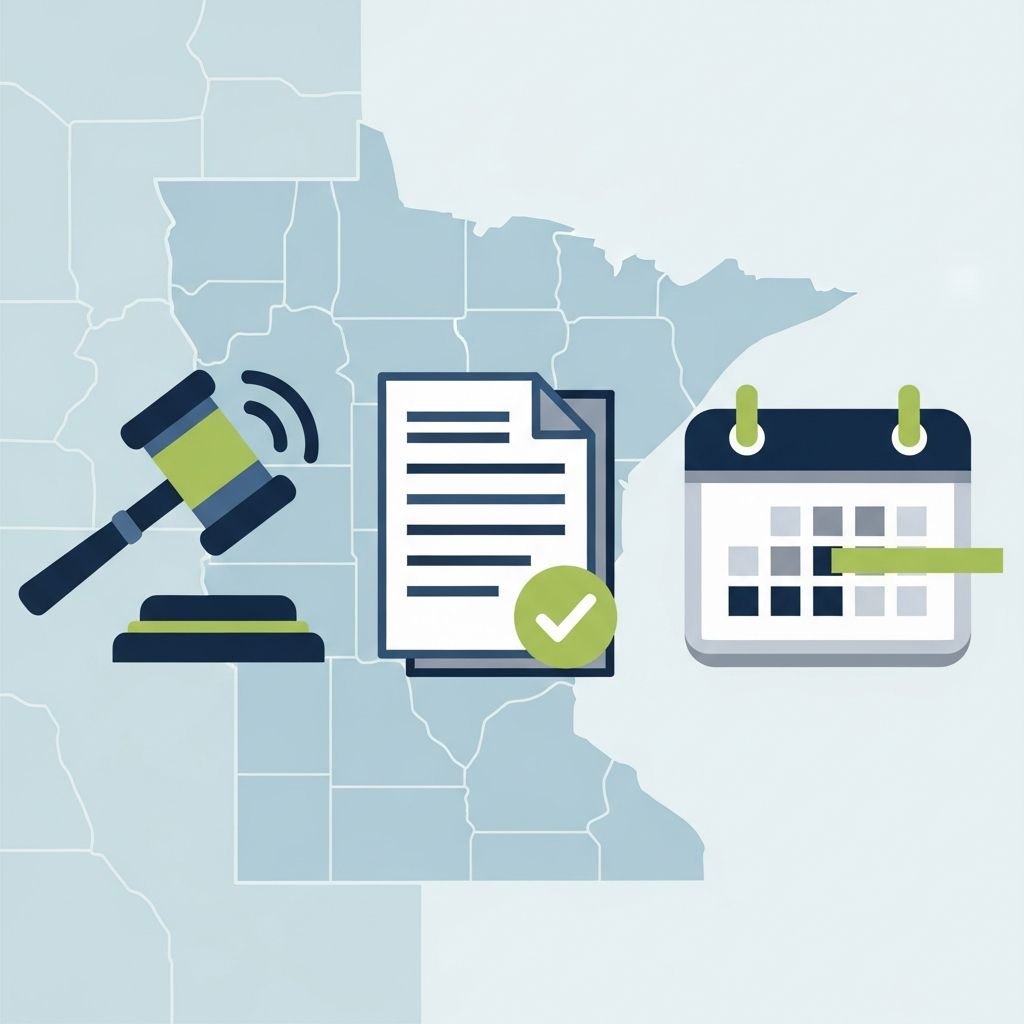
Overview of Minnesota’s Expedited Estate Administration Pathways
When a person passes away in Minnesota, their assets typically go through a legal process called probate. However, not all estates require the lengthy, formal court procedures that many people associate with probate. Minnesota recognizes that smaller estates or those without significant disputes can be settled through more efficient routes. Understanding these alternatives can save families considerable time, expense, and emotional burden during an already difficult period.
The state has established several streamlined mechanisms specifically designed to expedite estate settlement when circumstances permit. These pathways acknowledge that a one-size-fits-all approach to probate does not serve the interests of smaller estates or families facing straightforward inheritance situations. By knowing which options apply to your situation, you can potentially avoid prolonged court involvement while still ensuring that all legal requirements are met.
Distinguishing Between Full and Simplified Probate Procedures
Minnesota’s probate system offers flexibility through two primary administration tracks: formal and informal probate. Understanding the differences between these approaches is essential for determining which path your estate should follow.
Formal probate represents the more comprehensive approach to estate administration. This method involves active court supervision throughout the settlement process. A judge oversees major decisions, including the appointment of the personal representative and the resolution of any disputes regarding the will’s validity, asset distribution, or creditor claims. Formal probate is necessary when heirs dispute the will’s terms, disagree about who should serve as personal representative, or when creditors file competing claims against the estate. While this thorough approach provides legal protections and clear authority for resolving conflicts, it typically extends the settlement timeline and increases administrative costs.
Informal probate operates under a fundamentally different model. Rather than continuous court oversight, a probate registrar—an administrative official rather than a judge—reviews and approves the initial documentation. Once the registrar determines that the application is complete and valid, the personal representative may proceed with administering the estate with minimal court involvement. This streamlined approach works well when there are no contested issues, all heirs agree on the will’s terms, and creditors do not challenge their claims. The informal process typically costs less and concludes faster than formal probate.
Small Estate Settlement Without Traditional Probate
Minnesota law provides a particularly valuable shortcut for estates below a certain asset threshold. When a decedent leaves behind modest assets and no real property, the estate may qualify for settlement through a simplified procedure that bypasses probate entirely.
Asset limitations for simplified settlement: An estate qualifies for this streamlined process if the total value of probate assets does not exceed $75,000. Additionally, the decedent’s property holdings must not include any real estate (land, houses, or other real property interests). This threshold covers a significant portion of estates, making this alternative particularly valuable for families with modest means.
Documentation requirements: Settling a small estate requires obtaining certified copies of the death certificate and creating an affidavit that documents the estate’s assets, debts, heirs, and the applicant’s authority to collect and distribute assets. This affidavit serves as the primary legal document authorizing the transfer of the decedent’s property.
Asset collection and distribution: Once the affidavit is prepared and executed, heirs or other applicants can present it to banks, investment firms, employers, and other entities holding the decedent’s assets. These institutions typically release funds and property upon receiving the affidavit, without requiring full probate court involvement. This direct collection method can significantly accelerate access to the deceased’s financial accounts and personal property.
Timeline advantages: Small estate settlement typically concludes within weeks or a few months, compared to the 6 to 18 months required for full probate proceedings. This rapid resolution allows surviving family members to address urgent financial needs and move forward with their lives more quickly.
The Informal Probate Process and Its Advantages
For estates that exceed the small asset threshold but remain uncontested, informal probate provides a middle ground between full court supervision and no probate at all. This approach combines legal validity with administrative efficiency.
Initiating informal probate: The process begins when an authorized person files an application with the probate registrar in the county where the decedent resided at the time of death. Required documentation includes the death certificate, the original will (if one exists), and a completed application form specifying the applicant’s interest in the estate. The probate registrar reviews these materials to ensure they are complete and meet all statutory requirements.
Registrar approval and personal representative appointment: If the probate registrar determines that all requirements are satisfied, they issue a statement of probate and formally appoint the personal representative. This appointment occurs through administrative action rather than a court hearing, expediting the process considerably. The personal representative then receives the authority to access the decedent’s financial accounts, gather assets, and begin administering the estate.
Estate administration without court supervision: Once appointed, the personal representative proceeds to identify and collect the estate’s assets, pay creditors and taxes, and distribute remaining property to beneficiaries. Notably, this occurs without ongoing court oversight. The personal representative must still comply with all state law requirements regarding creditor notification, tax filing, and accounting, but the court does not review these actions unless disputes arise.
Cost efficiency: Informal probate typically costs significantly less than formal proceedings because it eliminates the expense of court hearings, judges’ time, and the formal petition and notice procedures required in supervised administration. This cost savings can be substantial for moderately sized estates.
Timeline for informal probate: Most informal probate administrations complete within 6 to 12 months. The creditor claim period—a mandatory 4-month window during which creditors may file claims against the estate—often represents the longest component of the timeline. Once this period expires and the personal representative has paid debts and taxes, distribution to beneficiaries can occur relatively quickly.
Key Procedural Steps and Deadlines in Streamlined Settlement
Successfully navigating Minnesota’s simplified probate procedures requires understanding critical timelines and procedural requirements.
- Initiating the process: Probate must be initiated within three years after the decedent’s death. Formal probate specifically cannot be commenced until at least 120 hours (five days) have elapsed since the death.
- Filing documentation: Initial applications or petitions must be filed in the probate court of the county where the decedent had primary residence at the time of death. If the decedent did not reside in Minnesota, the proceeding begins in any county where the decedent’s property was located.
- Creditor notification period: Once probate is opened, creditors must be formally notified and have exactly four months from the date of the first notice to file claims against the estate. This period cannot be shortened and must be observed regardless of whether the probate is formal or informal.
- Asset appraisal and inventory: The personal representative must identify, list, and appraise all estate assets. This inventory typically occurs within the first 4 to 7 months of administration and provides the foundation for determining what assets are available for distribution.
- Tax return filing: The decedent’s final federal and state income tax returns must be filed by the applicable deadlines. Estate tax returns, if the estate’s value triggers filing requirements, must also be completed and submitted to tax authorities.
- Creditor payment and debt resolution: Outstanding debts, including taxes, are paid from estate assets. This process typically requires 6 to 12 months to complete, depending on the complexity of the estate’s financial obligations.
- Final accounting and estate closure: Once all obligations are satisfied, the personal representative prepares a final accounting showing all receipts, distributions, and remaining assets. In informal probate, this accounting is filed with the registrar. Upon approval, the estate is officially closed and the personal representative is discharged from their duties.
Comparing Probate Costs and Timeline Variables
| Probate Type | Typical Duration | Estimated Cost | Court Involvement | Best For |
|---|---|---|---|---|
| Small Estate Affidavit | Weeks to 2 months | Minimal (filing fees only) | None | Assets under $75,000; no real estate |
| Informal Probate | 6–12 months | 2–3% of estate value | Administrative only | Uncontested estates of moderate size |
| Formal Probate | 12–18+ months | 3–5% of estate value | Judicial oversight | Contested estates; complex disputes |
Avoiding Probate Entirely: Property Transfer Mechanisms
Beyond simplified probate procedures, Minnesota law recognizes several mechanisms that allow property to transfer outside of probate altogether. Understanding these alternatives can further streamline estate settlement.
Joint ownership with survivorship: Property owned jointly with a right of survivorship automatically transfers to the surviving owner upon one owner’s death. This applies to joint bank accounts, joint property titles, and certain investment accounts. Because the property passes by operation of law rather than through the decedent’s estate, probate is bypassed entirely.
Beneficiary designations: Life insurance policies, retirement accounts (IRAs and 401(k)s), and certain financial accounts allow the account owner to designate beneficiaries. Upon the account owner’s death, the designated beneficiary receives the funds directly, outside of probate. These designations supersede the terms of a will, making them powerful tools for directing specific assets according to the decedent’s wishes.
Transfer-on-death designations: Minnesota permits transfer-on-death designations for certain assets, including motor vehicles and some real property interests. The owner can register a beneficiary, who automatically receives the asset upon the owner’s death without probate involvement.
Living trusts: Property placed into a revocable living trust during the creator’s lifetime passes outside of probate. Upon the creator’s death, a successor trustee distributes the trust property according to the trust’s terms. This approach provides both probate avoidance and continuity of management if the creator becomes incapacitated.
Selecting the Appropriate Probate Alternative for Your Situation
Determining which streamlined option applies depends on specific circumstances of the estate and any surviving family dynamics.
Asset value assessment: The first inquiry involves calculating the total probate estate value. If it falls below $75,000 and includes no real estate, small estate affidavit procedures become available. For larger estates, you must evaluate whether informal probate is viable.
Presence of disputes: Examine whether any heirs contest the will’s terms, disagree about personal representative selection, or whether creditors are likely to dispute their claims. Unanimous agreement among beneficiaries strongly supports choosing informal probate. Significant disagreement necessitates formal probate with judicial intervention.
Estate complexity: Consider the number and nature of assets, the existence of business interests, whether real property is located in multiple states, and whether estate tax implications exist. More complex situations generally require formal probate’s structured procedures.
Timeline priorities: If rapid asset distribution is critical—such as when family members face immediate financial needs—small estate procedures or informal probate are preferable. Formal probate’s extended timeline may not suit these circumstances.
Professional guidance: Consulting with a Minnesota probate attorney can clarify which options apply and help navigate the procedural requirements. This investment in legal guidance often saves money and stress compared to proceeding without professional assistance.
Frequently Asked Questions About Minnesota Probate Shortcuts
Q: Can I use the small estate affidavit procedure if the estate includes a house or other real property?
A: No. The small estate affidavit procedure in Minnesota is available only when the estate contains no real property. If real estate is involved, you must use either informal or formal probate, regardless of the estate’s total value.
Q: What happens if creditors file claims during the probate process?
A: Creditors have four months from notice to file claims against the estate. Valid creditor claims must be paid before assets are distributed to beneficiaries. If the estate’s assets are insufficient to pay all debts, beneficiaries may receive nothing, or distributions may be reduced proportionally.
Q: Is an attorney required for informal probate in Minnesota?
A: While not strictly required, many personal representatives benefit from attorney assistance, particularly for tax compliance and ensuring all procedural requirements are met. Some counties and probate registrars provide guidance for self-represented applicants.
Q: How long do I have to initiate probate after someone’s death?
A: Probate must be initiated within three years of the decedent’s death. However, formal probate cannot begin until at least five days have passed. It is advisable to begin the process promptly to avoid complications and ensure creditor claims are timely resolved.
Q: What is the difference between informal probate and unsupervised formal probate?
A: Informal probate is initiated with a probate registrar and involves minimal court involvement. Unsupervised formal probate is initiated through the court but, once the personal representative is appointed, proceeds with limited ongoing judicial oversight. Unsupervised formal probate may be appropriate when disputes existed initially but were resolved, or when beneficiaries prefer court involvement for protection.
Q: Can property with a beneficiary designation be part of the small estate affidavit procedure?
A: Property with valid beneficiary designations—such as life insurance proceeds or retirement accounts—passes outside of probate to the named beneficiary and should not be included in the probate estate calculation. Only probate assets count toward the $75,000 threshold.
References
- Understanding Minnesota’s Probate Process — Andrew M. Ayers, P.C. 2024. https://www.andrewmayers.com/blog/understanding-minnesotas-probate-process.cfm
- How the Probate Process Works — Minnesota Department of Human Services. 2024. https://www.dhs.state.mn.us/main/idcplg?IdcService=GET_DYNAMIC_CONVERSION&RevisionSelectionMethod=LatestReleased&dDocName=SRU-020501
- Probate and Planning — Minnesota Attorney General. 2024. https://www.ag.state.mn.us/consumer/handbooks/probate/CH2.asp
- Steps in Estate Settlement — University of Minnesota Extension. 2024. https://extension.umn.edu/transfer-and-estate-planning/steps-estate-settlement
- Understanding Minnesota Probate: What Executors Need to Know — PHB Law Office. 2024. https://www.phblawoffice.com/understanding-minnesota-probate-and-what-executors-need-to-know/
- Probate and the Collection Process — Minnesota Department of Revenue. 2024. https://www.revenue.state.mn.us/probate-and-collection-process
Similar Articles








Read full bio of medha deb


