
Michigan’s Historic Foster Care Reform and Federal Lawsuit
How a federal lawsuit sparked Michigan's foster care reform.
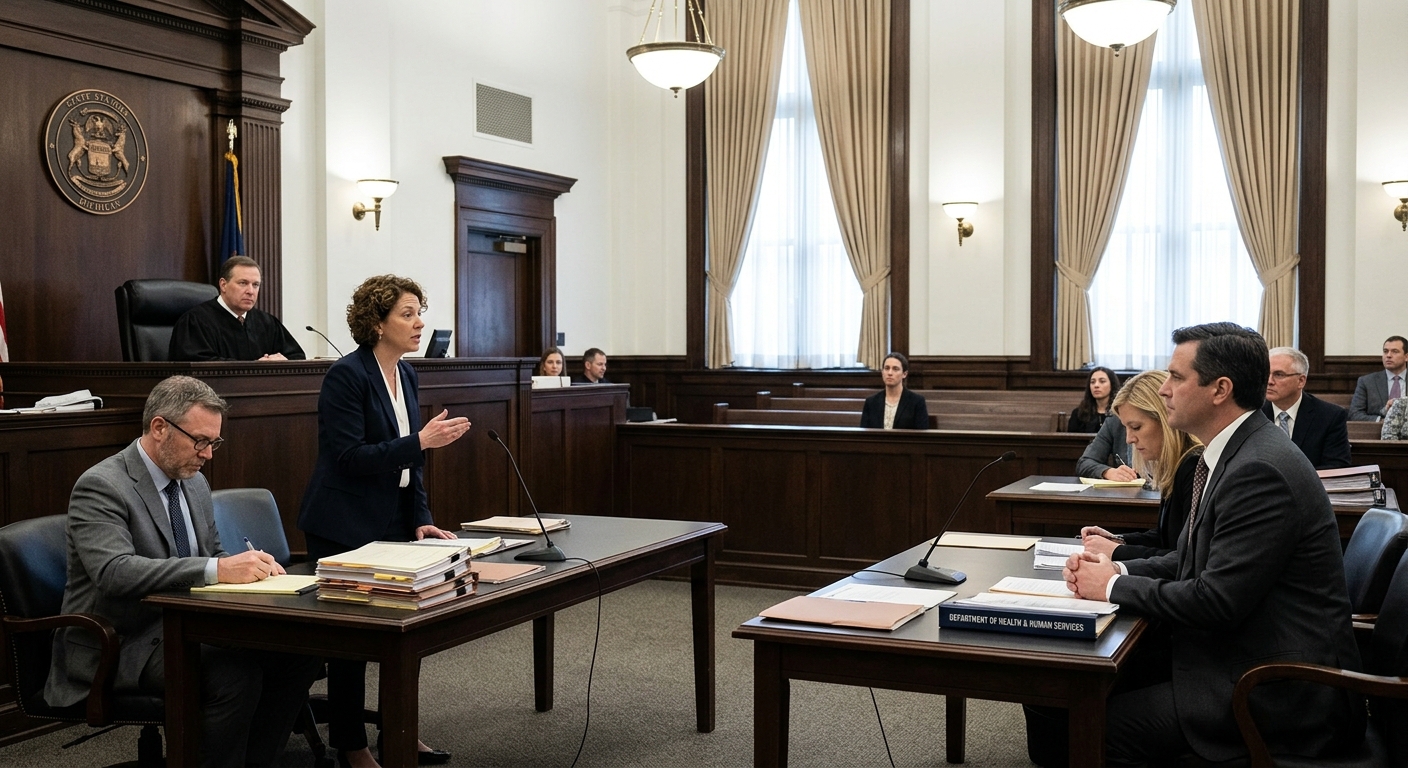
The landscape of child welfare in the United States is often fraught with complex bureaucratic hurdles, chronic underfunding, and devastating human consequences. In August 2006, the state of Michigan found itself at the center of this national crisis. Facing a massive federal class-action lawsuit filed by a prominent national advocacy organization, the state was confronted with stark allegations concerning the abuse, neglect, and systemic mismanagement of nearly 19,000 children entrusted to its care. However, instead of digging in its heels and preparing for a protracted, multimillion-dollar legal battle—a strategy frequently employed by other state governments—Michigan made a pivotal, unprecedented decision. The state immediately agreed to enter into formal settlement negotiations.
This decisive moment not only reshaped the trajectory of Michigan’s Department of Human Services but also established a compelling precedent for how states can collaboratively address catastrophic failures in their child welfare systems. The swift move toward mediation underscored a rare acknowledgment from state leaders that the status quo was fundamentally broken, and that the physical and emotional welfare of vulnerable youth had to supersede political defensiveness or institutional pride.
The Breaking Point: Why Legal Action Became Inevitable
For years leading up to the litigation, local child advocates, social workers, and legal watchdogs had been sounding the alarm regarding Michigan’s deteriorating foster care infrastructure. The system was ostensibly designed to provide a safe haven for minors who had already endured unimaginable trauma, abuse, and neglect in their biological homes. Tragically, the very institution meant to serve as their ultimate protector had morphed into a secondary source of trauma. The federal complaint painted a harrowing picture of a deeply fractured system where basic safety standards were routinely ignored.
Advocates argued that these issues were not isolated incidents stemming from a few negligent caregivers, but rather the inevitable symptoms of a long-standing, systemic paralysis. The sheer volume of youth requiring placement had drastically outpaced the state’s capacity to safely house, monitor, and comprehensively support them. It became unmistakably clear that without external legal pressure and the threat of court-enforced mandates, the internal bureaucratic machinery of Michigan’s child welfare department lacked the resources and the political leverage necessary to enact meaningful, sweeping reforms.
The Psychological Toll of Systemic Neglect
Children in the foster system require extreme stability to recover from past traumas. Instead, the lawsuit alleged that youth were suffering further physical and emotional harm while in state custody. The constant environment of uncertainty profoundly stunted the educational progress and psychological well-being of thousands of wards. Rather than finding a therapeutic environment, these children were thrust into a chaotic bureaucratic maze where their voices and fundamental needs were entirely overlooked by the people legally designated to protect them.
Uncovering the Systemic Failures Outlined in the Complaint
To truly comprehend the magnitude of the crisis, one must examine the specific systemic failures outlined in the 2006 federal complaint. The allegations brought forth were grounded in devastating statistical realities and documented institutional shortcomings. The lawsuit charged that the state’s safety net had disintegrated across multiple critical domains, highlighting several core areas of failure:
- The Crisis of Unlicensed Placements: According to the data presented in the lawsuit, approximately 40 percent of Michigan’s foster youth were languishing in unlicensed environments. This staggering statistic meant that nearly half of the state’s vulnerable children were living in homes stripped of the essential regulatory oversight designed to prevent maltreatment.
- Severe Healthcare Deficits: Foster youth, many of whom required specialized psychological interventions and consistent pediatric care due to prior neglect, were routinely denied basic medical, dental, and mental health services.
- Caseworker Burnout and Instability: The system was plagued by an alarming turnover rate among social workers. Caseworkers were drowning under impossible caseloads, resulting in poor monitoring of child safety. This dynamic created a relentless cycle of instability, forcing children to endure the traumatic ordeal of being moved repeatedly from one temporary placement to another.
The Adoption Bottleneck and Financial Mismanagement
Beyond the immediate day-to-day safety concerns, the lawsuit highlighted egregious failures in permanency planning and financial administration. At the time of the filing, an estimated 6,300 children in the Michigan system were legally free for adoption, meaning the parental rights of their biological parents had been officially terminated by the courts. Yet, instead of being promptly matched with loving, permanent adoptive families, these thousands of children were growing up as permanent wards of the state, indefinitely trapped in an institutional limbo.
This permanency bottleneck was exacerbated by severe financial mismanagement. Despite boasting the seventh-largest population of foster children in the entire nation, Michigan shockingly ranked in the bottom twelve states concerning the ratio of state and local funds utilized to secure federal matching dollars. Advocates forcefully pointed out that the state was effectively leaving millions of available federal foster care dollars on the table due to administrative incompetence and an unwillingness to make necessary upfront financial investments. Furthermore, the state was providing grossly inadequate payments to foster care providers, particularly relatives who stepped in to care for family members without receiving state support.
A Surprising Strategy: Michigan’s Collaborative Pivot
Historically, when state governments are sued over institutional failures, the initial reflex is highly defensive. States often deploy vast legal resources, spending millions of taxpayer dollars over several years to fight class-action lawsuits, delay discovery processes, and contest jurisdictional claims. This combative approach typically leaves the vulnerable populations waiting years for court-ordered relief. Michigan’s response, orchestrated under the leadership of then-Governor Jennifer Granholm and Department of Human Services Director Marianne Udow, dramatically deviated from this established norm.
Recognizing the irrefutable reality of the systemic shortcomings, state leadership immediately expressed a willingness to enter into mediator-led settlement negotiations with the plaintiffs. They recognized that a protracted legal war would only drain resources that could be better spent on the children. This collaborative pivot was monumental. By acknowledging that the systemic problems were long-standing and required urgent intervention, the state bypassed the adversarial toxicity that usually accompanies such high-stakes civil rights litigation.
The Genesis of the Consent Decree
The immediate talks spurred by the 2006 lawsuit eventually culminated in a historic, court-approved settlement agreement. By 2008, a comprehensive Consent Decree was signed and entered into the federal court record. This legal mechanism was far more than a mere promise to do better; it was a rigorous, highly detailed operational roadmap backed by the authority of the federal judiciary. The Consent Decree instituted mandatory, measurable benchmarks across virtually every facet of the child welfare system.
It demanded immediate reductions in caseworker-to-child ratios, stipulating that investigators and foster care workers could not be saddled with unmanageable case counts. It mandated aggressive timelines for the commencement of abuse investigations and required sweeping overhauls in how foster homes were recruited, licensed, and compensated. Most importantly, it shifted the state’s internal culture from one of reactive crisis management to proactive child advocacy.
The Crucial Role of Independent Court Monitors and Data Tracking
A defining element of Michigan’s successful reform journey has been its commitment to transparent, data-driven accountability, facilitated by independent federal court monitors. Prior to the lawsuit, the state’s internal data collection mechanisms were often fragmented, making it nearly impossible to accurately track a child’s trajectory through the system or assess the efficacy of interventions. The settlement mandated the creation of robust, statewide data systems capable of tracking key performance indicators in real-time.
Monitors conducted exhaustive periodic reviews, analyzing everything from caseworker visit frequencies to the percentage of youth placed with relatives rather than in institutional settings. This rigorous external auditing prevented the state from backsliding into old habits when political administrations changed or budget revenues fluctuated. By forcing the department to publicly report its successes and failures, the Consent Decree fostered a vital culture of continuous quality improvement.
Sustained Progress and the Shift to MDHHS
Over the ensuing decade and a half, the enforcement of the Consent Decree compelled Michigan to completely reimagine its child welfare infrastructure. The journey was not without its hurdles; early monitoring reports frequently highlighted areas where the state struggled to meet ambitious legal targets. However, the sustained pressure of federal oversight, coupled with strategic reorganizations—including the eventual consolidation of departments to form the Michigan Department of Health and Human Services (MDHHS)—yielded truly transformative results.
The state actively prioritized reducing its reliance on congregate care facilities, recognizing the vast body of evidence proving that children thrive best in family-like environments. Substantial investments were funneled into caseworker training and retention programs. Slowly but surely, the metrics shifted. The number of youth languishing in the system began to steadily decline, and the rate of finalized adoptions surged as the bureaucracy finally began prioritizing permanent family connections over temporary institutional housing.
Recent Milestones: Scaling Back Federal Oversight
The ultimate testament to the effectiveness of the lawsuit and the subsequent collaborative reform effort is the tangible data reflecting recent milestones. In early 2024, recognizing the massive, sustained progress achieved by MDHHS, a federal judge approved a stipulated order to significantly scale back the remaining requirements of the decades-old agreement. The court eliminated dozens of provisions from active monitoring because the state had consistently demonstrated substantial compliance.
Critical safety benchmarks were not just being met; they were being actively exceeded. For instance, reports indicated that an overwhelming majority of child abuse investigations were commencing on time, and compliance with the strict caseworker caseload limits had reached exceptional, sustained levels. Furthermore, the state dramatically improved its delivery of initial medical and mental health examinations, ensuring that children entering foster care received vital physical and psychological assessments within the first 30 days. This partial release from federal oversight is a monumental achievement, signaling a functional, modernized system.
The National Blueprint for Collaborative Reform
The narrative of Michigan’s child welfare reform, catalyzed by the intense pressure of a 2006 federal lawsuit, serves as a vital blueprint for other jurisdictions across the United States. It forcefully demonstrates that advocacy litigation need not end in a scorched-earth legal war. When state leaders possess the political courage to acknowledge systemic failures and invite advocates to the negotiating table, the true beneficiaries are the vulnerable children who desperately need immediate intervention. Today, Michigan’s foster care system stands fundamentally reformed—a far cry from the overwhelmed and dangerous bureaucracy that prompted advocates to file suit nearly two decades ago.
Frequently Asked Questions (FAQ)
What was the primary goal of the 2006 federal lawsuit against Michigan’s foster care system?
The primary goal of the class-action lawsuit was to force the state of Michigan to address severe, systemic deficiencies in its child welfare infrastructure. Advocates aimed to legally mandate improvements in caseworker caseloads, eliminate the heavy reliance on unlicensed foster homes, ensure prompt medical and mental health care for youth, and expedite the adoption process for children languishing as permanent state wards.
Why did Michigan agree to immediate negotiations instead of fighting the lawsuit in court?
Unlike many states that spend years and millions of taxpayer dollars fighting reform litigation, Michigan’s leadership—then Governor Jennifer Granholm and DHS Director Marianne Udow—acknowledged the undeniable reality that the system was fundamentally broken. They recognized that immediate mediation and the creation of a legally enforceable reform plan was the fastest and most ethical way to begin protecting the nearly 19,000 children in state care.
How did the resulting Consent Decree impact caseworker caseloads?
The federal Consent Decree imposed strict, enforceable limits on the number of cases a single social worker could manage. By legally capping the caseworker-to-child ratio, the mandate reduced extreme worker burnout, reduced turnover, and ensured that caseworkers actually had the time and resources to safely monitor the children assigned to their care.
What is the current status of Michigan’s child welfare reform under the federal court?
As of early 2024, Michigan has made such significant and sustained progress that a federal judge agreed to substantially scale back the active monitoring requirements. The state’s Department of Health and Human Services (MDHHS) successfully met or exceeded critical safety, placement, and medical examination metrics, moving the state significantly closer to ending federal oversight entirely.
References
- Federal court agreement scaled back due to Michigan’s progress in keeping children safe — Michigan Department of Health and Human Services (MDHHS). 2024-01-29. https://www.michigan.gov/mdhhs/inside-mdhhs/newsroom/2024/01/29/federal-court-agreement-scaled-back
- Faced With Lawsuit on Abused and Neglected Foster Children, Michigan Agrees to Immediate Talks — Children’s Rights. 2006-08-08. https://www.childrensrights.org/news-voices/faced-with-lawsuit-on-abused-and-neglected-foster-children-michigan-agrees-to-immediate-talks
- MDHHS shares latest MISEP update demonstrating strong progress and improvements made in keeping children safe — Detroit Legal News. 2026-02-04. http://www.legalnews.com/macomb
Similar Articles








Read full bio of medha deb


