
Michigan Must End Juvenile Life Without Parole
Aligning Michigan youth sentencing with global human rights and brain science.
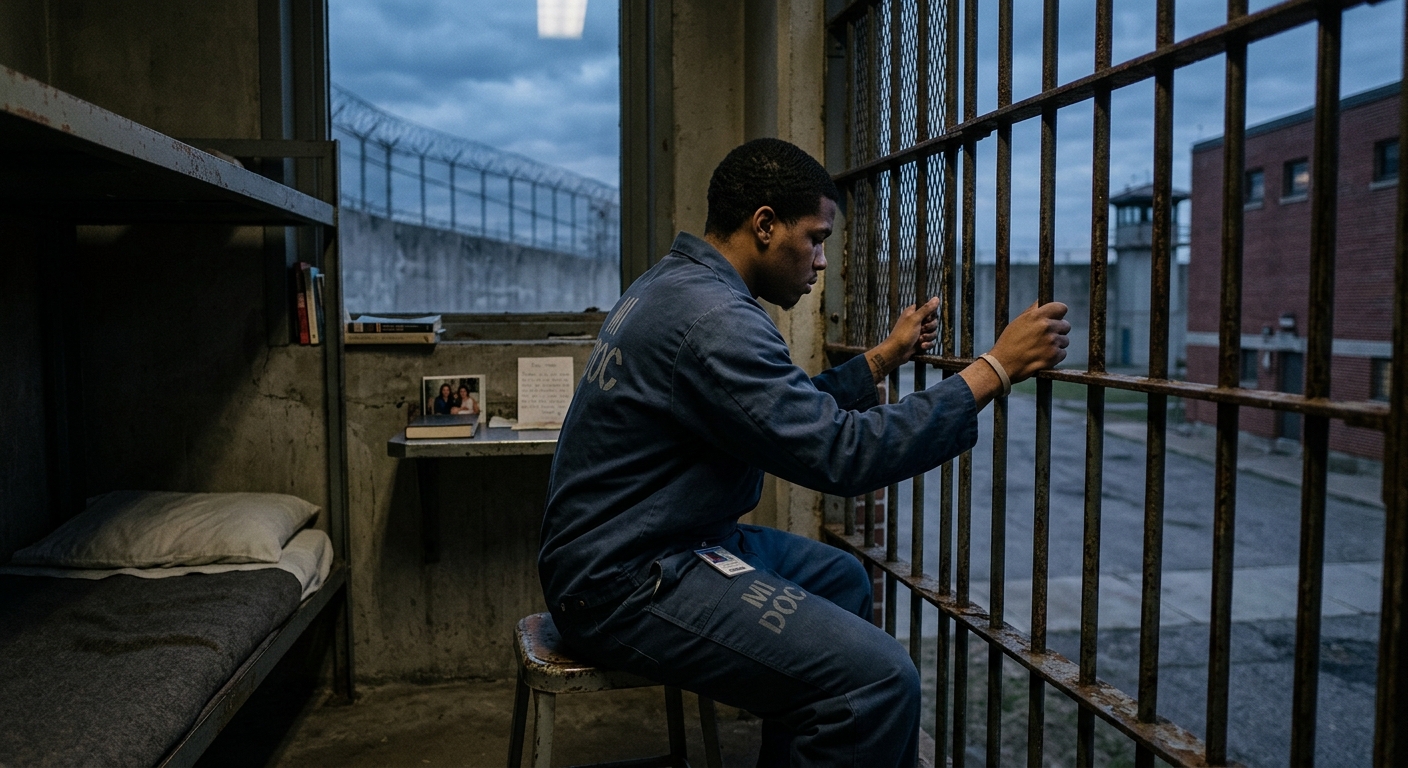
The Harsh Reality of Youth Sentencing in America
For decades, the American criminal justice system operated under a highly punitive philosophy that frequently blurred the crucial lines between adult accountability and adolescent impulsivity. At the absolute extreme end of this punitive spectrum lies the sentence of Juvenile Life Without Parole (JLWOP)—a judicial mandate that condemns a child to die behind prison walls, permanently disregarding their innate capacity for rehabilitation. While this draconian practice has faced increasing legal and moral scrutiny across the United States in recent years, it remains a heavily debated legislative and judicial issue in several jurisdictions.
Michigan stands at a critical historical juncture. Historically home to one of the largest populations of youth serving natural life sentences in the country, the state is currently wrestling with comprehensive legislative proposals aimed at transforming youth sentencing. Lawmakers are being urgently pressed by civil rights advocates, legal scholars, and human rights organizations to join a growing national and global consensus. The core argument is simple yet profound: children are biologically and psychologically distinct from adults, and the legal penalties they face must reflect their unique vulnerability and unparalleled capacity for profound behavioral change.
A Stark Contrast: The Global Consensus Against Permanent Incarceration
To fully grasp the severity and isolation of juvenile life without parole policies, one must look beyond domestic borders. The United States holds the sobering distinction of being the only recognized nation in the world that continues to routinely sentence minors to life in prison without any possibility of release. The broader global community has long recognized that condemning a youth to a permanent loss of freedom constitutes a fundamental violation of human rights.
The United Nations Convention on the Rights of the Child (CRC), which remains the most widely ratified human rights treaty in recorded history, explicitly and unambiguously prohibits the imposition of capital punishment and life imprisonment without the possibility of release for offenses committed by persons below eighteen years of age. This international consensus is deeply rooted in a shared, cross-cultural understanding of human dignity, mercy, and developmental psychology. While ensuring accountability for serious crimes is universally acknowledged as a necessity for public safety, the international community balances this accountability with the overarching, primary goal of youth rehabilitation.
When a state strips away any hope of future freedom, it effectively declares a developing youth to be irreparably corrupt and beyond redemption. By clinging to JLWOP, individual states isolate themselves from globally accepted human rights standards. Proponents of reform in Michigan argue that aligning the state’s penal code with these global norms is not merely an exercise in international diplomacy, but a profound moral imperative necessary for the soul of the justice system.
The Neuroscience of Adolescent Development: Why Kids Are Different
The escalating push to abolish juvenile life without parole is not solely driven by philosophical or moral arguments; it is firmly anchored in objective scientific evidence. Over the past twenty years, rapid advancements in neurobiology and developmental psychology have completely revolutionized the medical understanding of the adolescent brain.
Extensive magnetic resonance imaging (MRI) studies consistently demonstrate that the prefrontal cortex—the specific region of the brain responsible for impulse control, strategic long-term planning, risk assessment, and foreseeing the complex consequences of one’s actions—is not fully developed until an individual reaches their mid-twenties. Concurrently, the limbic system, particularly the amygdala, which processes immediate emotional responses and rewards, is hyper-active during the teenage years.
This biological developmental mismatch makes adolescents inherently more prone to reckless behavior, highly susceptible to negative peer influences, and significantly less capable of extricating themselves from high-stakes, dangerous situations. The medical consensus on this adolescent development profile has been formally recognized by major professional organizations. The American Academy of Child & Adolescent Psychiatry formally opposes JLWOP, emphasizing that brain maturation continues well into adulthood and that a teenager’s neural pathways are highly malleable. Because a youth’s personality is still in a state of formation, criminal actions are far more likely to be the result of “transient immaturity” rather than permanent malice. Acknowledging this scientific reality does not excuse violent harm, but it mandates a legal sentencing structure that leaves room for the eventual emergence of mature, reformed adults.
The Legal Evolution: Landmark Supreme Court Rulings
The landscape of youth justice began to shift significantly at the federal level over the last two decades, driven heavily by the aforementioned scientific revelations. The United States Supreme Court has issued several landmark rulings that progressively restricted the harshest penalties for juvenile offenders.
- Roper v. Simmons (2005): The Supreme Court abolished the death penalty for individuals who committed crimes while under the age of 18, citing that adolescents’ lack of maturity and susceptibility to negative influences made the ultimate punishment unconstitutionally cruel.
- Graham v. Florida (2010): The Court ruled that sentencing a juvenile to life without parole for non-homicide offenses violates the Eighth Amendment’s ban on cruel and unusual punishment.
- Miller v. Alabama (2012): In a sweeping decision, the Court banned mandatory life without parole sentences for juveniles convicted of homicide, requiring judges to consider the offender’s youth and attendant characteristics before imposing such a severe penalty.
While these rulings were monumental, they did not categorically abolish discretionary juvenile life without parole. They merely stated it should be reserved for the “rare” youth whose crimes reflect “irreparable corruption.” This legal gray area has left states like Michigan to navigate the complex realities of resentencing hundreds of aging inmates, highlighting the desperate need for state-level legislative clarity.
Michigan’s Legislative Crossroads: A Call for Second Chances
Michigan’s specific history with juvenile sentencing is fraught with systemic inequalities. During the “tough on crime” political era, aggressive legislative shifts established automatic mechanisms to transfer youth into the adult criminal justice system. Consequently, mandatory life sentences without parole were routinely handed down to teenagers, entirely stripping judicial authorities of the discretion to consider the child’s age, traumatic background, or peripheral level of participation in the offense.
Relying solely on an overburdened court system to litigate historical juvenile life sentences on a slow, case-by-case basis has proven to be an inefficient and frequently unjust strategy. Recognizing this critical bottleneck, Michigan lawmakers have recently introduced comprehensive legislative packages aimed at categorically banning the practice. Proposals such as the bipartisan House Bills 4160 through 4164 seek to fundamentally reform the state’s penal code. The core objective of these bills is to guarantee that any individual convicted of a crime committed before their 19th birthday will possess a meaningful, legal opportunity for a parole review after serving a baseline number of years in custody.
It is crucial to accurately define what these legislative reforms entail. Ending juvenile life without parole does not equate to a blanket pardon, nor does it guarantee immediate release. Instead, it transitions the state toward a model of reviewable justice. After a youth offender has served a significant, statutorily defined portion of their sentence (such as 10 or more years), they are granted a rigorous hearing before an independent parole board. This board meticulously evaluates the individual’s disciplinary record, educational and vocational achievements, psychological stability, and demonstrated remorse to definitively determine if they pose a continuing threat to public safety.
The Economic and Societal Benefits of Meaningful Reform
Beyond the compelling ethical and scientific arguments, ending JLWOP in Michigan presents a profound economic and societal advantage. The long-term financial burden of continuously incarcerating an individual for the entirety of their natural life is staggering. As inmates age into their senior years, the state assumes exorbitant costs for geriatric healthcare and specialized housing.
| Sentencing Philosophy | Financial Impact | Societal & Community Impact | Focus on Recidivism |
|---|---|---|---|
| Life Without Parole (JLWOP) | Exceptionally high cost (averaging $2.5M+ per individual over a lifetime) | Fractures communities permanently; ignores the potential for human rehabilitation. | None. Relies entirely on punitive permanent isolation. |
| Rehabilitative Parole Review | Substantially lower long-term housing and medical incarceration costs. | Incentivizes behavioral growth; allows rehabilitated individuals to contribute to society. | High. Release is strictly contingent on proven, measurable rehabilitation. |
By modernizing these sentencing laws, Michigan could realize massive financial savings. These taxpayer funds could then be strategically reinvested into proactive initiatives that tangibly enhance public safety. Redirecting funds toward early intervention youth programs, robust community mental health resources, and comprehensive victim compensation services provides a holistic approach to crime prevention rather than merely managing the aftermath of tragedy.
Embracing a System Rooted in Rehabilitation
True justice demands a delicate, nuanced balance between holding individuals accountable for their severe actions and officially acknowledging their undeniable capacity for redemption. When a state sentences a child to securely die in prison, it effectively abandons the foundational tenet of the modern correctional system: rehabilitation. The growing momentum in Michigan to categorically abolish juvenile life without parole represents a broader cultural paradigm shift toward restorative justice.
Michigan possesses the legislative opportunity to rectify historical wrongs, systematically reduce glaring racial disparities embedded in excessive sentencing, and officially acknowledge the inherent, scientifically proven human capacity for change. Ending juvenile life without parole is a critical, overdue step toward building a justice system that is not just tough, but exceptionally smart, equitable, and profoundly humane.
Frequently Asked Questions
Does ending juvenile life without parole mean violent offenders go free immediately?
No. Abolishing life without parole for youth simply means replacing an automatic death-in-prison sentence with an eventual opportunity for a parole board review. The individual must serve a minimum number of years and rigorously prove to a parole board that they are rehabilitated, genuinely remorseful, and no longer a danger to society before release is ever considered.
Why is the United States the only country that utilizes this sentence?
Most global nations are signatories to international treaties, such as the UN Convention on the Rights of the Child, which explicitly ban sentencing minors to life without parole. The global consensus recognizes that youth are still developing psychologically and neurologically, making permanent sentences a violation of basic human rights.
How does brain science influence youth sentencing laws?
Modern neuroscience proves that the adolescent brain, particularly the prefrontal cortex responsible for impulse control and risk assessment, does not fully develop until the mid-20s. Consequently, youths are more susceptible to peer pressure and impulsive decisions, meaning their crimes generally reflect transient immaturity rather than permanent criminal intent.
What did the Supreme Court decide in Miller v. Alabama?
In 2012, the U.S. Supreme Court ruled in Miller v. Alabama that mandatory life without parole sentences for juveniles violate the Eighth Amendment. The Court mandated that judges must be allowed to consider a youth’s age, environment, and circumstances before imposing life in prison, setting off a wave of resentencing across states like Michigan.
References
- Convention on the Rights of the Child — United Nations Human Rights Office of the High Commissioner. 1989-11-20. https://www.ohchr.org/en/instruments-mechanisms/instruments/convention-rights-child
- Juvenile Life Without Parole: An Overview — The Sentencing Project. 2023-04-07. https://www.sentencingproject.org/reports/juvenile-life-without-parole-an-overview/
- House Bill 4160 (2023) — Michigan Legislature. 2023-08-15. https://www.legislature.mi.gov/Bills/Bill?ObjectName=2023-HB-4160
- A state-by-state look at juvenile life without parole — Associated Press News. 2017-07-31. https://apnews.com/article/9debc3bdc7034ad2a68e62911fba0d85
- Life Without Parole for Juvenile Offenders — American Academy of Child & Adolescent Psychiatry. 2009-06-01. https://www.aacap.org/AACAP/Policy_Statements/2009/Life_Without_Parole_for_Juvenile_Offenders.aspx
Similar Articles








Read full bio of Sneha Tete


