
Michigan’s Child Welfare Overhaul: Inside the Lawsuit
Exploring the legal battle reforming Michigan foster care.
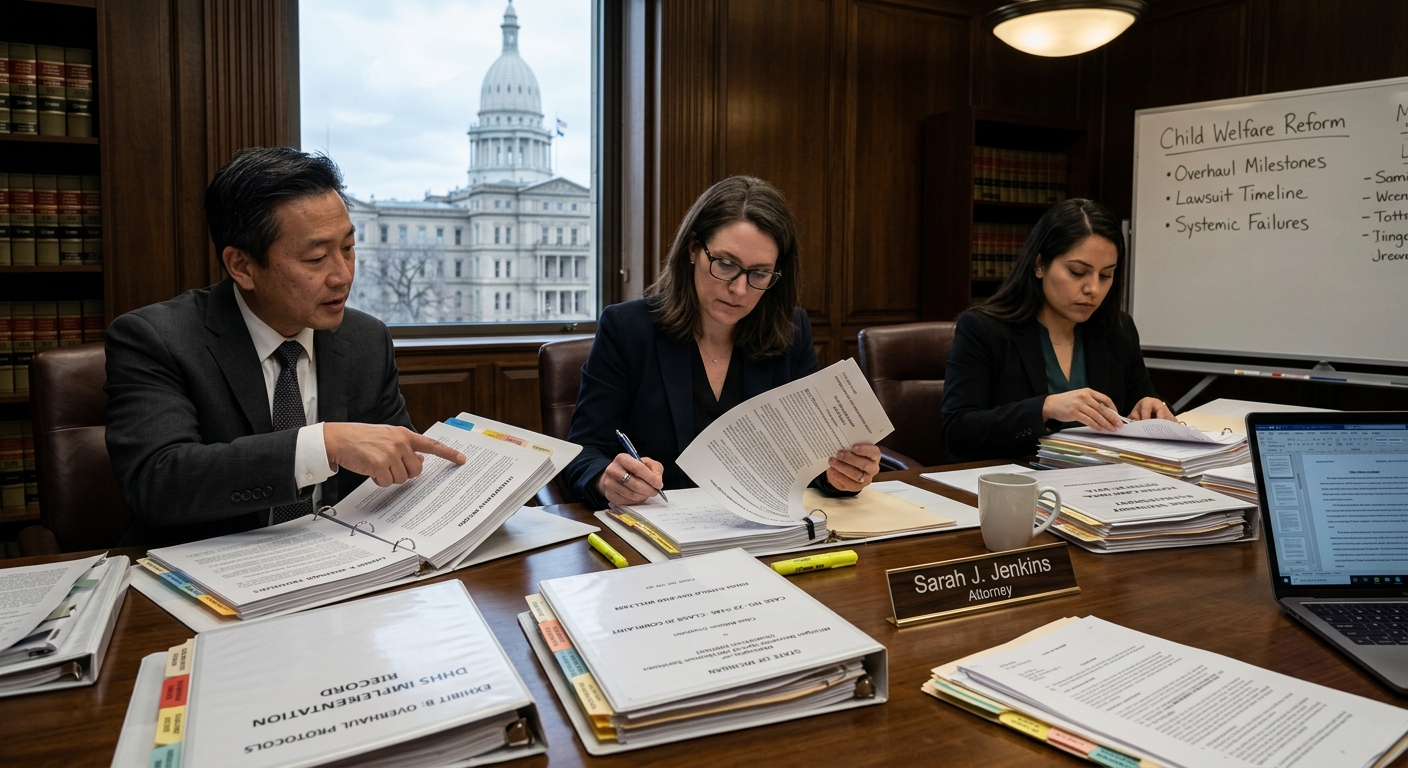
Introduction: A System in Crisis
Child welfare systems represent the ultimate safety net for society’s most vulnerable members: children removed from their homes due to abuse or neglect. When this safety net fails, the consequences can be catastrophic and generational. In the state of Michigan, a historic reckoning has been unfolding over the last two decades. Triggered by systemic failures and an inability to protect the youths in its custody, Michigan’s foster care apparatus became the subject of one of the most significant child welfare reform lawsuits in modern United States history, initially filed as Dwayne B. v. Granholm and later known as Dwayne B. v. Snyder and Dwayne B. v. Whitmer to reflect changing state administrations. This landmark litigation laid bare the deeply rooted inadequacies of the state’s Department of Human Services. The resulting settlement agreements have not merely served as punitive measures; rather, they have functioned as an extensive blueprint aimed at overhauling a failing infrastructure. Through rigorous court monitoring, targeted investments in workforce development, and sweeping policy changes, Michigan has been forced to fundamentally reevaluate how it cares for its foster youth. This article delves into the origins of the lawsuit, the core components of the settlement agreements, the progress achieved thus far, and the persistent hurdles that continue to challenge child welfare advocates and state officials alike.
The Catalyst for Change: Inside the Historic Dwayne B. Lawsuit
The origins of Michigan’s child welfare overhaul can be traced back to August 2006, when a massive class-action lawsuit was filed in the U.S. District Court for the Eastern District of Michigan. The plaintiffs, representing all children who were then or would be in the state’s foster care custody, alleged egregious violations of their fundamental civil and human rights. Spearheaded by national advocacy groups, the complaint painted a grim and urgent picture of a governmental system in profound crisis.
The lawsuit asserted that Michigan was actively violating the constitutional rights of foster youth under the First, Ninth, and Fourteenth Amendments, alongside severe breaches of the federal Adoption Assistance and Child Welfare Act of 1980. Rather than providing a sanctuary for traumatized children, the state’s child welfare system was allegedly exacerbating their trauma. The plaintiffs documented how children were languishing in care for excessive periods without achieving permanency—either through safe reunification with their biological families or through adoption. Instead of swift interventions, youth were subjected to a labyrinthine bureaucracy that offered little stability and even less hope. The litigation served as a definitive wake-up call, signaling that incremental policy tweaks would no longer suffice; a comprehensive, federally mandated overhaul was the only viable path forward to protect the state’s most defenseless residents and ensure their constitutional rights were upheld.
Unpacking the Allegations: Where the System Failed
To comprehend the magnitude of the settlement agreements that followed, one must first examine the specific failures outlined in the litigation. The allegations levied against the state of Michigan highlighted pervasive, systemic dysfunctions that touched nearly every aspect of the foster care journey.
First and foremost was the issue of basic safety and maltreatment while in state custody. The fundamental premise of child protective services is to remove children from dangerous environments. However, the lawsuit revealed that many children were being placed into foster homes and institutional settings where they suffered further neglect, emotional abuse, or physical harm. The state’s inability to rigorously vet, monitor, and support foster placements resulted in a devastating betrayal of trust for those youth.
Secondly, the litigation highlighted a severe lack of basic medical and mental health services. Children entering foster care often arrive with complex trauma, chronic health conditions, and acute psychological needs. The failure to provide timely medical screenings, consistent therapeutic interventions, and psychiatric support meant that these urgent health needs were routinely ignored, compounding the trauma of family separation.
Another critical failure involved placement instability and the heartbreaking separation of siblings. Foster youth were frequently bounced from one placement to another, a practice that severely disrupted their educational progress, emotional development, and ability to form secure attachments. Furthermore, siblings were routinely separated due to a lack of available homes willing to take multiple children. Underpinning all of these issues was a catastrophic workforce crisis, where caseworkers were burdened with unmanageable caseloads that rendered effective social work nearly impossible.
The Blueprint for Reform: Anatomy of the Settlement Agreements
In 2008, recognizing the indefensibility of the status quo, the state of Michigan opted to settle the litigation, embarking on a long and arduous path toward systemic reform. This initial agreement was subsequently modified and strengthened, leading to the approval of a Modified Settlement Agreement and Consent Order in 2011, and later, the Modified Implementation, Sustainability, and Exit Plan (MISEP).
These legally binding agreements were highly prescriptive operational manuals designed to rebuild the state’s child welfare infrastructure from the ground up. The overarching goal was to shift the system from a reactive, crisis-driven model to a proactive, child-centered framework. The MISEP established rigorous, data-driven benchmarks that the state was required to meet. These benchmarks covered a wide array of operational metrics, including the rapid initiation of maltreatment investigations, the frequency and quality of caseworker visits, and the timely provision of comprehensive medical and dental care. Crucially, the agreements mandated a strict cap on caseworker caseloads, ensuring that social workers had the time and bandwidth necessary to give each child the individualized attention they desperately required. Furthermore, the settlement demanded a complete overhaul of the state’s licensing and oversight procedures for private agencies.
Key Benchmarks of the Reform Efforts
To provide a clear understanding of the specific targets mandated by the federal court, the following table outlines several critical benchmarks established under the modified settlement agreements:
| Metric | Requirement | Rationale | Anticipated Impact |
|---|---|---|---|
| Caseload Limits | Maximum of 15 cases per child welfare worker | Ensure adequate time and attention for each case | Better decision-making and safer permanent placements |
| Worker Qualifications | Bachelor’s degree in social work or related field for new hires | Elevate the professionalism of the child welfare workforce | Improved quality of care and intervention strategies |
| Medical Screenings | Comprehensive exams within 30 days of placement | Address historical medical and dental neglect | Enhanced overall physical and mental well-being |
| Sibling Placement | Keep sibling groups together whenever safely possible | Mitigate the trauma of family separation | Maintenance of vital familial bonds and emotional support |
Measurable Progress: Steps Toward a Safer Foster Care Environment
Despite the immense challenges inherent in turning around a sprawling state bureaucracy, the pressure of federal litigation and independent monitoring has yielded tangible, measurable improvements in Michigan’s child welfare system. One of the most significant triumphs has been the professionalization and stabilization of the child welfare workforce. Following the implementation of the settlement agreements, the state aggressively overhauled its hiring and training practices.
- Enhanced Qualifications: Data from early monitoring periods demonstrated that a vast majority of newly hired caseworkers possessed the required bachelor’s degrees in social work or related human services fields, dramatically elevating the baseline expertise within the department.
- Streamlined Training: The state successfully modernized its pre-service training programs, ensuring that new workers completed comprehensive educational modules before taking on independent caseloads.
- Improved Data Tracking: Prior to the litigation, systemic blind spots prevented officials from accurately assessing child well-being metrics. Today, modernized administrative data systems allow for real-time tracking of placements, enabling leaders to identify bottlenecks and deploy resources more effectively.
By reducing caseloads and providing better training, the state has fostered an environment where social workers can engage in more substantive, meaningful interactions with foster families and youth. This structural shift has directly contributed to lowering the turnover rates among specialized child welfare personnel.
Enduring Challenges and The Long Road to Compliance
While the narrative of Michigan’s child welfare reform contains chapters of undeniable progress, it is equally defined by enduring challenges and institutional inertia. Transforming a culture of triage into a culture of excellence requires sustained political will and immense financial investment, resources that frequently fluctuate with changing legislative administrations.
Court-appointed monitors continue to identify critical areas where the state falls short of its legal and moral obligations. Recent monitoring reports have highlighted persistent, deeply concerning practices related to child safety. Specifically, monitors have documented repeated failures by state officials to conduct prompt and thorough investigations into allegations of maltreatment within foster homes and residential facilities. When abuse allegations are mishandled, deprioritized, or delayed, children are left languishing in potentially dangerous environments, directly contravening the core mission of the child welfare agency.
Furthermore, the state continues to struggle with the consistent evaluation and oversight of private child-placing agencies. Michigan relies heavily on a privatized network to manage foster care cases and recruit foster families. Ensuring that these disparate corporate and non-profit entities adhere to uniform safety standards and operational protocols remains a significant logistical and administrative hurdle. The widespread shortage of available, high-quality foster homes continues to drive placement instability, forcing the state to sometimes rely on less ideal institutional settings for youth with complex needs.
The Role of Independent Monitoring and Public Accountability
The engine driving Michigan’s ongoing reform is the mechanism of independent, court-appointed monitoring. Without continuous, objective oversight, bureaucratic entities often default to the path of least resistance. Organizations tasked with monitoring the settlement act as the eyes and ears of the federal court, conducting exhaustive analyses of state administrative data, reviewing extensive case files, and interviewing key stakeholders on the ground.
These monitors provide regular, public reports that assess the state’s compliance with the settlement benchmarks. This transparency is vital for true public accountability. It empowers child advocacy groups, legislators, and the media to hold state leaders directly responsible for the safety and well-being of foster youth. The independent monitoring process ensures that the focus remains steadfastly on positive outcomes—such as placement stability, educational continuity, and child safety—rather than mere procedural compliance. It is a grueling, highly iterative process, but it remains one of the most proven methods for compelling long-term, systemic change in troubled public welfare agencies across the country.
Frequently Asked Questions (FAQs)
What is the primary focus of the Dwayne B. lawsuit?
The lawsuit is a federal class-action case filed on behalf of children in Michigan’s foster care system. It focuses on the state’s historical failure to protect children, alleging a severe lack of basic medical care, excessive lengths of stay in foster care, and unacceptably high rates of maltreatment in state custody.
What does a Modified Settlement Agreement (MSA) entail?
An MSA is a legally binding contract negotiated between the plaintiffs (representing the foster youth) and the state defendants, which is then approved by a federal judge. It dictates specific, measurable reforms the state must implement—such as strict caseload limits, advanced training standards, and rapid safety protocols—to resolve the constitutional violations alleged in the lawsuit.
Has the foster care system in Michigan actually improved?
Yes, there have been substantial structural improvements, particularly in the professionalization of the caseworker workforce, the reduction of unmanageable caseloads, and the implementation of superior tracking systems. However, independent court monitors continue to report ongoing challenges, especially concerning the timely investigation of maltreatment allegations.
Why is federal court monitoring necessary?
Federal oversight becomes necessary when a state agency demonstrates a long-standing inability to correct systemic constitutional violations on its own. Court-appointed monitors provide objective, independent assessments to ensure the state actively follows through on its legally binding commitments to protect vulnerable children.
Conclusion: A Continuing Commitment to Child Safety
The protracted legal battle over Michigan’s child welfare system serves as both a powerful cautionary tale and an actionable blueprint for systemic revitalization. The federal litigation stripped away the bureaucratic veneer, exposing an infrastructure that had fundamentally failed the state’s most vulnerable youth. While the resulting settlement agreements have catalyzed crucial, life-saving reforms—elevating caseworker qualifications, enforcing critical caseload caps, and improving data tracking—the journey is far from complete. The enduring challenges of conducting timely maltreatment investigations and ensuring placement stability underscore the reality that true reform is not achieved through court orders alone, but through an unwavering, day-to-day commitment to child safety. As Michigan continues its arduous path toward full compliance, the overarching lesson remains resoundingly clear: the welfare of children must permanently reside at the absolute forefront of public policy, backed by transparent accountability and sustained financial investments.
References
- Case: Dwayne B. v. Snyder — Civil Rights Litigation Clearinghouse, University of Michigan Law School. 2025-03-25. https://clearinghouse.net/case/9848/
- Child Welfare Reform – Modified Settlement Agreement — State of Michigan Department of Health and Human Services. 2025-09-27. https://www.michigan.gov/mdhhs/adult-child-serv/childrenfamilies/child-welfare-reform
- Summary of child welfare class action litigation — New Mexico Legislature. 2025-02-18. https://www.nmlegis.gov/handouts/LHHS%20102615%20Item%201%20Summary%20of%20Child%20Welfare%20Class%20Action%20Litigation.pdf
- New Report Reveals Ongoing Safety Concerns in Michigan’s Child Welfare System — Children’s Rights. 2026-05-28. https://www.childrensrights.org/news-voices/new-report-reveals-ongoing-safety-concerns-in-michigans-child-welfare-system-advocates-call-on-gov-whitmer-to-improve-conditions
Similar Articles








Read full bio of medha deb


