
M.B. v. Howard: Inside the Kansas Foster Lawsuit
An in-depth analysis of the landmark lawsuit demanding Kansas foster care reform.
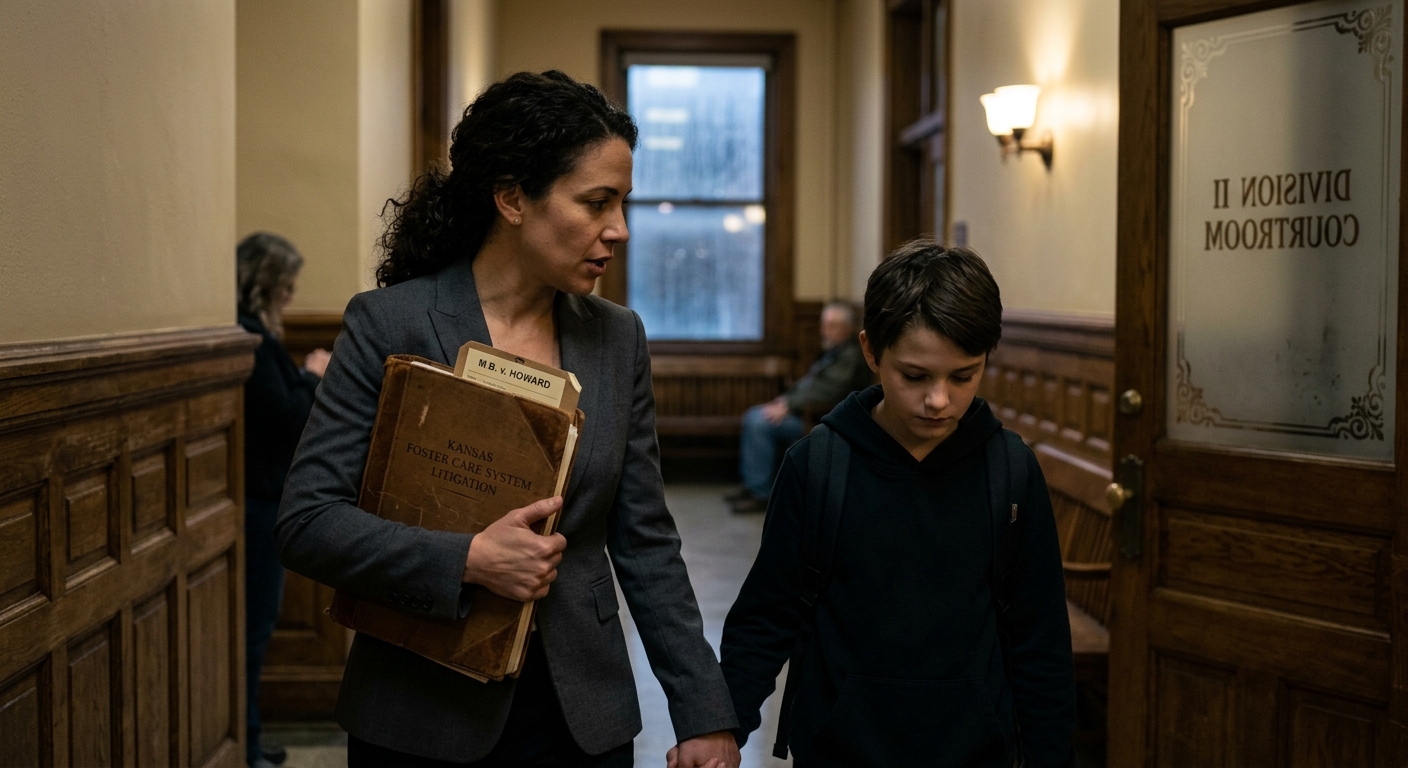
Introduction to the Kansas Foster Care Crisis
When a state assumes custody of an abused or neglected child, it takes on a profound constitutional and moral duty to ensure their safety and well-being. The core objective of any child welfare framework is to establish a secure, stable, and nurturing environment for youths who have been forcibly removed from their primary caregivers due to emergencies or severe neglect. Sadly, systemic dysfunction often replaces one form of trauma with another. This grim reality was meticulously exposed in the landmark federal class-action lawsuit originally known as M.B. v. Colyer, which was later renamed M.B. v. Howard.
Filed in November 2018, this monumental legal challenge brought urgent national attention to the deep-seated crises plaguing the child welfare infrastructure in Kansas, a system that, at the time, was responsible for the lives of approximately 7,600 vulnerable children. For years prior to the filing, advocates had consistently warned that the state’s foster care apparatus was operating at a dangerous deficit. Instead of finding safe, permanent homes, thousands of youth were thrust into a bureaucratic nightmare characterized by chronic housing instability and an egregious lack of necessary mental health support. The lawsuit became a crucial turning point, ultimately forcing state agencies to confront their institutional failures and agree to legally binding, structural reforms. This comprehensive overview delves into the mechanics of the M.B. v. Howard case, the horrific administrative practices it sought to dismantle, the resulting settlement agreement, and the ongoing struggle to achieve genuine compliance.
The Core Grievance: Extreme Placement Instability and “Churning”
The cornerstone of the plaintiffs’ legal complaint was a deeply harmful administrative practice colloquially known within the system as “churning.” In child welfare terminology, churning refers to the endless cycling of children through short-term, emergency placements because the state lacks adequate long-term foster homes or specialized therapeutic facilities. The lawsuit alleged that children in the custody of the Kansas Department for Children and Families (DCF) were frequently subjected to 20, 50, or even upward of 100 different placement moves during their time in state care.
This extreme level of placement instability rendered many youths effectively homeless, despite being recognized wards of the state. Social workers, completely overwhelmed by a lack of available beds, were routinely forced to rely on “night-to-night” housing strategies. In these highly distressing scenarios, children would be dropped off at a temporary bed late in the evening and picked up early the next morning, only to spend the entirety of their day sitting in a child welfare agency office while workers scrambled to find them a place to sleep the following night. The process reduced children to logistical burdens rather than recognizing their urgent need for stability.
The consequences of this continuous displacement were catastrophic. Churning abruptly disconnected youth from their schools, communities, friends, and vital support networks. Furthermore, the physical and emotional dangers of office sleepovers were thrown into sharp, undeniable relief in May 2018, when a 13-year-old girl was reportedly assaulted while sleeping overnight in a child welfare office in Olathe, Kansas. This tragic incident underscored the fundamental argument of the litigation: housing instability does not merely inconvenience foster youth; it actively exposes them to severe trauma, psychological harm, and direct physical danger.
The Severe Mental Health Care Deficit
Alongside extreme housing disruption, the M.B. v. Howard litigation spotlighted the state’s ongoing failure to provide adequate, consistent, and timely mental health services to youths in its care. Children entering the foster system have almost universally experienced significant trauma, including physical abuse, severe neglect, or the sudden and shocking loss of their family unit. Consequently, comprehensive psychological assessments and robust therapeutic interventions are not optional luxuries; they are fundamental medical necessities that allow these children to process their experiences and begin healing.
According to the 2018 federal complaint, Kansas officials routinely failed to screen youth for mental health needs within any clinically reasonable timeframe. Even when acute needs were accurately identified, bureaucratic bottlenecks, a persistent shortage of licensed psychiatric providers, and the constant shuffling of children between different geographical jurisdictions meant that therapeutic interventions were constantly interrupted or entirely denied. For youths requiring specialized inpatient or behavioral health care, the state frequently failed to provide appropriate placement facilities. In many cases, these unaddressed mental health crises pushed youths into the juvenile justice system or deeply inappropriate institutional settings. By denying essential trauma-informed care, the state violated the youths’ federal rights and exacerbated behavioral issues, creating a vicious cycle that further fueled their placement instability.
Building the Legal Coalition: Plaintiffs and Defendants
The sheer magnitude of the systemic failure in Kansas necessitated a formidable, well-coordinated legal response. The class-action lawsuit was filed in the U.S. District Court for the District of Kansas by a powerful coalition of public interest attorneys, national non-profits, and child welfare advocates. This highly skilled legal team included Children’s Rights, a national advocacy organization with a history of reforming child welfare systems; the National Center for Youth Law (NCYL); the Kansas Appleseed Center for Law and Justice; the global law firm DLA Piper; and prominent local Kansas City child welfare attorney Lori Burns-Bucklew.
Named as defendants in the suit were the highest-ranking state officials responsible for the state’s child welfare and health apparatus. Originally naming then-Governor Jeff Colyer (which gave the case its original moniker, M.B. v. Colyer), the legal action was eventually updated to focus on Laura Howard, the Secretary of the Kansas Department for Children and Families (DCF). The suit also named the heads of the Kansas Department of Health and Environment (KDHE) and the Kansas Department for Aging and Disability Services (KDADS). By targeting multiple state departments simultaneously, the lawsuit correctly identified that the foster care crisis was a complex, multi-agency failure that required a coordinated, inter-departmental resolution.
Timeline of Major Legal Milestones
To better understand the complex progression of this litigation and the subsequent oversight, the following table outlines the critical dates and milestones in the push for statewide accountability.
| Date | Event | Significance |
|---|---|---|
| November 2018 | Initial Lawsuit Filed | Plaintiffs filed the formal federal complaint citing widespread constitutional and statutory violations. |
| July 2020 | Settlement Agreement Reached | State officials and legal advocates mutually agreed to a comprehensive, multi-year reform plan. |
| January 2021 | Federal Court Approval | A federal judge officially approved the settlement, making the agreed-upon reform terms legally binding. |
| September 2024 | Independent Compliance Report | Neutral evaluators released a report noting significant declines in state performance and ongoing non-compliance. |
The Settlement Agreement: A Blueprint for Overhaul
After years of intense litigation, fact-finding, and complex negotiations, the opposing parties reached a landmark settlement agreement in July 2020. This settlement received its final, formal approval from a federal judge in January 2021. Rather than issuing individual financial payouts to the plaintiffs, the settlement demanded transformative, structural changes to the state’s child welfare operations. The primary objective was to force Kansas to abandon its dangerous crisis-management tactics in favor of sustainable, trauma-informed, and medically sound care.
The legally binding agreement mandated strict compliance across multiple specific practice areas. Most notably, the state was ordered to permanently end the horrific practice of housing foster youth in administrative offices, motels, hotels, or other unlicensed, inappropriate facilities. The agreement also explicitly prohibited the use of short-term, “night-to-night” placements that directly caused the state’s churning crisis. To ensure environments were safe and conducive to healing, the settlement included provisions to prevent foster homes and congregate care facilities from becoming dangerously overcrowded, instituting hard caps on the number of children that could be housed in a single location.
Regarding medical and therapeutic care, the state was formally required to establish robust statewide crisis intervention services and completely eliminate systemic delays in providing specialized mental health treatments. To successfully exit federal court oversight, Kansas was required to achieve a designated, high standard of performance across these metrics for 12 consecutive months (known as the “hit” phase) and strictly sustain that success for another 12 continuous months (the “hold” phase).
Independent Oversight and Ongoing Compliance Struggles
A crucial and non-negotiable element of the M.B. v. Howard settlement was the appointment of an independent, neutral monitor to ensure the state actually adhered to its legal promises. The Center for the Study of Social Policy (CSSP), a highly respected policy and research group, was tasked with auditing the state’s data, verifying compliance, and publishing periodic public progress reports. Furthermore, the settlement mandated the creation of an independent advisory group made up of external stakeholders to provide ongoing recommendations to state agencies.
Unfortunately, sweeping legal victories do not instantly translate to frictionless on-the-ground realities. While the Kansas DCF initially reported optimistic drops in the number of children sleeping in agency offices shortly after the settlement’s approval, subsequent long-term assessments have painted a far more troubling picture. In September 2024, the CSSP released a highly critical report indicating that the state and its various privatized contractors were largely failing to meet their structural obligations. The independent evaluation found that placement stability had actually degraded in several areas compared to prior years, with young people still facing inappropriate short-term placements, dangerous housing disruptions, and severe delays in securing mental health care. This lack of compliance serves as a stark reminder that judicial intervention, while absolutely necessary, must be aggressively paired with relentless public pressure, transparent reporting, and sufficient legislative funding to dismantle decades of systemic neglect.
The Broader Impact on Child Welfare Policy
The M.B. v. Howard litigation extends its influence far beyond the geographical borders of Kansas. It serves as a critical case study in the broader national movement for child welfare transparency and legal accountability. The legal framework of the case relied heavily on the 14th Amendment’s Due Process Clause, which guarantees that individuals held in state custody are legally entitled to basic safety, shelter, and adequate medical care. When the state removes a child from their parents, it assumes the strict role of in loco parentis (in the place of a parent), and it cannot constitutionally place youths in conditions that are more dangerous than the ones they were removed from.
For decades, many state governments have utilized unchecked privatization and emergency housing loopholes to mask severe funding and resource deficits. By successfully achieving a federal settlement that strictly bans night-to-night placements and office sleepovers, advocates have carved out a legal precedent that can be powerfully leveraged against similar bureaucratic practices in other jurisdictions across the United States. The lawsuit firmly establishes that constitutional protections regarding physical safety and access to life-saving behavioral healthcare apply to all foster youth, unequivocally superseding a state’s budgetary constraints or administrative challenges.
Frequently Asked Questions (FAQ)
- Who exactly were the plaintiffs in M.B. v. Howard?
The plaintiffs represented a certified class of all children and youths who were, or would be, in the custody of the Kansas foster care system. Because they were minors, they were formally represented in court by “next friends” (adult advocates acting on their legal behalf) alongside a consortium of legal organizations like Children’s Rights and the National Center for Youth Law.
- What does the term “churning” mean in the context of child welfare?
Churning refers to the incredibly damaging administrative practice of constantly moving a child from one short-term, emergency placement to another. In Kansas, youths were sometimes moved dozens or even over a hundred times. This extreme instability actively prevents children from forming secure attachments, attending school consistently, and receiving ongoing, uninterrupted medical and therapeutic care.
- Did the lawsuit involve financial compensation for the foster children?
No. This federal class-action lawsuit was entirely focused on securing “injunctive relief.” This means the plaintiffs sought a mandatory court order to force the state government to fundamentally alter its policies, daily practices, and infrastructure, rather than seeking retroactive monetary damages or payouts for individual children.
- Why was the name of the case changed from M.B. v. Colyer to M.B. v. Howard?
Lawsuits attempting to reform state systems generally name high-ranking government officials in their official, rather than personal, capacity. Jeff Colyer was the Governor of Kansas when the suit was initially filed in November 2018. The case name was later updated to reflect Laura Howard, the Secretary of the Kansas Department for Children and Families, directly reflecting administrative changes in state leadership.
- Is the state of Kansas currently meeting the requirements outlined in the settlement?
As of late 2024, independent evaluations conducted by the Center for the Study of Social Policy (CSSP) indicate that Kansas is struggling significantly to meet the legally mandated benchmarks. Reports show critical failures and even regression in specific areas, particularly regarding placement stability, ending inappropriate housing usage, and delivering prompt mental health care interventions.
References
- M.B. v. Howard (formerly known as M.B. v. Colyer) — Children’s Rights. 2018-11-16. https://www.childrensrights.org/in-the-courts/ks-m-b-v-howard-formerly-known-as-m-b-v-colyer
- Foster Care Lawsuit — Kansas Appleseed. 2020-07-08. https://www.kansasappleseed.org/foster-care-lawsuit
- M.B. v. Howard — National Center for Youth Law. 2023-08-17. https://youthlaw.org/cases/mb-v-howard
- Federal Judge Approves Child Welfare Settlement Agreement — Kansas Department for Children and Families. 2021-01-28. http://www.dcf.ks.gov/Newsroom/Pages/Federal-Judge-Approves-Child-Welfare-Settlement-Agreement.aspx
Similar Articles








Read full bio of medha deb


