
Maternal Care Crisis: Childbirth in the U.S. Penal System
Examining the systemic failures affecting pregnant individuals in U.S. jails.
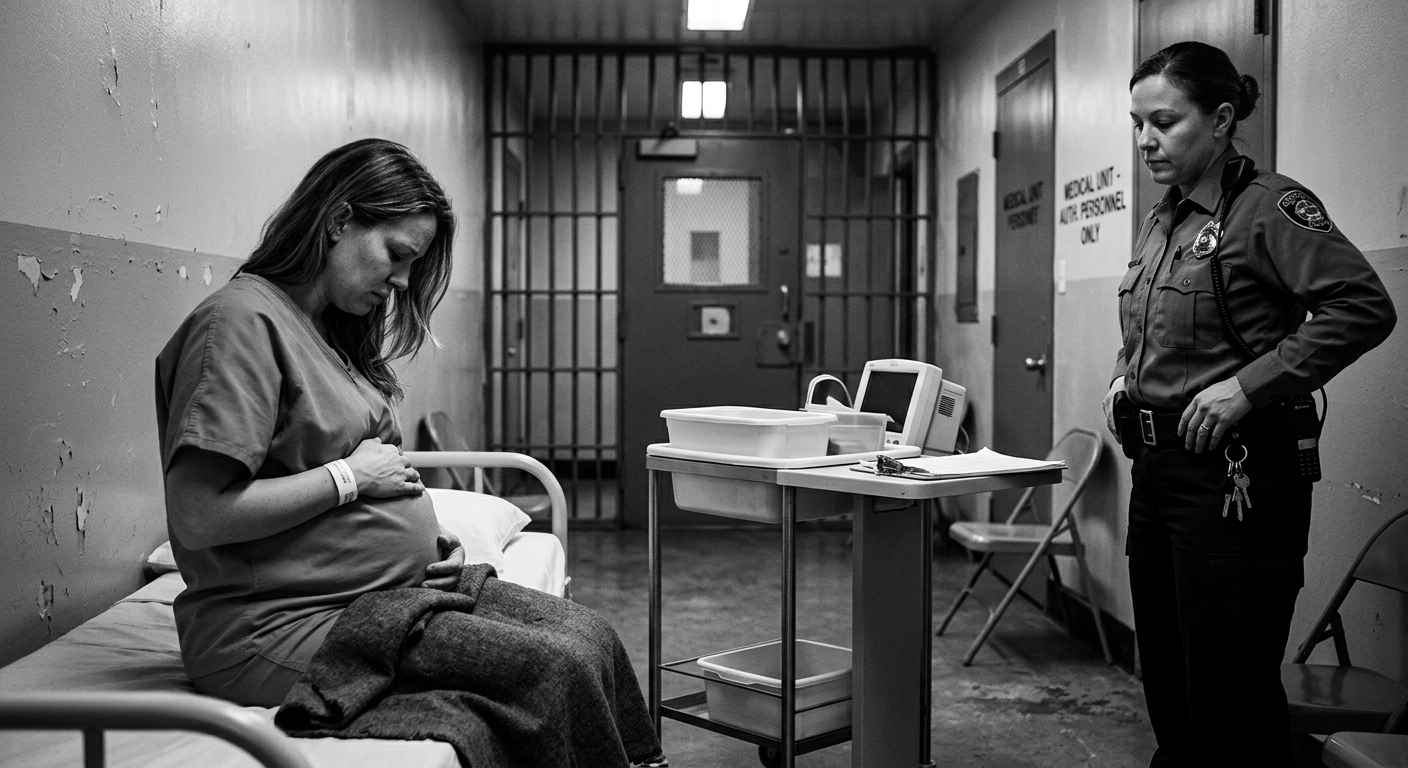
The notion of giving birth on a cold, unsterile concrete floor without medical assistance is a horrifying scenario that defies modern medical standards. Yet, for a notable percentage of pregnant individuals navigating the United States carceral system, this nightmare has become a grim reality. While the vast majority of jails and prisons have protocols mandating the transfer of laboring inmates to external hospitals, a distressing pattern of systemic neglect frequently overrides these policies. Pregnant inmates who vocalize their labor pains are too often met with skepticism, delay, or outright indifference by correctional staff. This article delves into the intersection of civil rights, maternal health, and criminal justice, exploring how structural failures within penal institutions routinely endanger the lives of pregnant individuals and their newborns.
The fundamental right to basic healthcare does not evaporate upon incarceration. However, the unique vulnerabilities of pregnant people are consistently marginalized in environments designed for containment rather than care. When society confines an individual, it assumes absolute responsibility for their medical well-being—a pact that is shattered every time someone delivers a child in solitary confinement. By examining the legal thresholds of medical neglect, the physical dangers of unassisted delivery, and the urgent calls for sweeping legislative reform, we can better understand the immense magnitude of this human rights crisis.
The Expanding Demographic of Incarcerated Pregnancies
The United States holds the highest incarceration rate of women globally, a demographic that has seen an exponential increase over the last several decades. Driven largely by punitive drug policies and socioeconomic disparities, the population of incarcerated women has skyrocketed by more than 700% since the early 1980s. Consequently, the intersection of incarceration and pregnancy has broadened. Data regarding the exact number of individuals who enter the penal system pregnant remains historically fragmented, yet conservative estimates suggest that between 4% and 5% of women admitted to state prisons and local jails are pregnant at the time of their intake.
It is crucial to distinguish between state prisons and local county jails when evaluating this demographic. State prisons typically house individuals serving long-term sentences, allowing for a degree of medical continuity, albeit often inadequate. Local jails, on the other hand, are highly transient environments designed primarily for pretrial detention. Individuals cycling through jails are often experiencing acute crises, including untreated substance use disorders, mental health emergencies, or severe poverty. This rapid turnover creates a chaotic intake environment where early pregnancy identification is frequently missed, and comprehensive prenatal care is virtually nonexistent. Despite federal grant programs intended to support maternal health in these facilities, a 2024 report by the Government Accountability Office (GAO) emphasized that comprehensive national data on the health outcomes of pregnant inmates is glaringly absent, masking the true scale of perinatal emergencies behind bars.
The Legal Framework: Eighth Amendment and Deliberate Indifference
When a pregnant individual is denied medical assistance during labor, the legal implications escalate rapidly to constitutional violations. The rights of incarcerated individuals are anchored in the U.S. Constitution, specifically the Eighth Amendment, which prohibits “cruel and unusual punishment,” and the Fourteenth Amendment, which affords equivalent protections to pretrial detainees. However, proving that a facility violated these rights is a notoriously steep legal climb.
The prevailing standard for determining unconstitutional medical neglect is known as “deliberate indifference,” a legal precedent firmly established by the Supreme Court in Estelle v. Gamble (1976). To successfully argue that an inmate’s civil rights were violated under this standard, a plaintiff must prove two distinct elements:
- Objective Severity: The medical need must be objectively serious, meaning that the deprivation of care poses a substantial risk of serious harm or death. Active labor and childbirth unequivocally meet this threshold.
- Subjective Recklessness: The correctional or medical staff must have possessed actual knowledge of the severe risk and consciously chosen to disregard it.
This subjective element is where many civil rights claims encounter severe friction. Correctional officers are not medical professionals, and attorneys defending jails frequently argue that guards simply failed to recognize the signs of active labor, categorizing their inaction as mere negligence rather than deliberate indifference. Guards may claim they mistook labor contractions for opioid withdrawal symptoms, gastrointestinal distress, or manipulative behavior designed to secure a hospital trip. Consequently, victims of unassisted jail births must often demonstrate a pattern of ignored pleas, unanswered grievances, or blatant refusal to summon the facility’s medical personnel to meet the rigorous “deliberate indifference” benchmark.
The Severe Medical Perils of Unassisted Jail Childbirth
Childbirth is an inherently unpredictable biological process that requires sterile environments and the immediate availability of specialized medical intervention. When a delivery occurs on the concrete floor of a jail cell, both the mother and the infant are thrust into a zone of extreme, preventable peril. The American College of Obstetricians and Gynecologists (ACOG) strongly advocates for comprehensive perinatal care for incarcerated individuals, warning against the severe health risks posed by substandard carceral environments.
The physical hazards of unassisted carceral birth are immense:
- Hemorrhaging and Blood Loss: Postpartum hemorrhage is a leading cause of maternal mortality. In a hospital setting, immediate pharmacological and surgical interventions are available to stop severe bleeding. In a jail cell, an individual can bleed to death in a matter of minutes while waiting for an ambulance to be cleared through security checkpoints.
- Infection and Sepsis: Jail cells are notoriously unsanitary, frequently harboring dangerous pathogens. Delivering an infant near an open cell toilet, on an unsterilized mattress, or directly on the floor exponentially increases the risk of maternal and neonatal sepsis. Furthermore, newborns cannot regulate their body temperature; being born onto a freezing concrete floor can quickly lead to lethal hypothermia. There are also no sterilized instruments available to safely clamp or cut the umbilical cord.
- Fetal Distress and Complications: Without electronic fetal heart rate monitoring, there is no way to detect if a baby is experiencing oxygen deprivation. Complications such as shoulder dystocia (where the baby’s shoulder becomes stuck behind the mother’s pelvic bone), umbilical cord prolapse, or breech presentations require immediate, life-saving maneuvers by trained obstetricians. A solitary inmate has no capability to navigate these lethal emergencies.
Beyond the immediate delivery, the postpartum period in a jail cell is fraught with danger. The lack of hygienic sanitary pads, clean clothing, and access to hot water strips the individual of basic human dignity while inviting severe postpartum infections.
The Psychological Toll on Mothers and Infants
The trauma endured during a solitary, unassisted birth extends far beyond the physical event, leaving deep psychological scars that can last a lifetime. Childbirth is already an incredibly vulnerable experience; undergoing it while locked in a cage, crying out for help, and being systematically ignored constitutes a profound psychological violation.
Individuals who endure this trauma frequently develop severe Posttraumatic Stress Disorder (PTSD), characterized by debilitating flashbacks, nightmares, and severe anxiety. The psychological distress is compounded by the standard carceral practice of abruptly separating the newborn from the mother shortly after birth. In most jurisdictions, infants born to incarcerated mothers are removed within 24 to 48 hours and placed into the foster care system or given to a designated family member. When the birth occurs inside the facility due to staff negligence, this separation is often immediate and chaotic.
This traumatic severing of the maternal-infant bond completely derails the vital early stages of attachment and breastfeeding, both of which are critical for the long-term psychological and physical health of the child. Furthermore, the lack of mental health support in carceral facilities means that individuals suffering from profound postpartum depression and trauma are often left untreated, sometimes even placed in solitary confinement for “medical observation,” which only exacerbates their psychological deterioration.
Systemic Failures: Why Jails Are Unfit for Perinatal Care
The recurring tragedy of cell block births is not merely the result of a few negligent guards; it is the inevitable byproduct of a systemic failure within the carceral state. Jails and prisons are inherently designed for security and punitive isolation, not for the delivery of complex medical care.
One of the primary drivers of this crisis is the privatization of carceral healthcare. Many counties contract their jail medical services out to for-profit healthcare corporations. These companies often operate on fixed budgets, meaning that every external hospital transfer directly cuts into their profit margins. This financial disincentive fosters a culture of medical minimization, where on-site staff are subtly pressured to delay sending inmates to the emergency room until a situation becomes undeniably critical. By the time a laboring inmate is finally approved for transport, it is often too late.
Additionally, the prevailing “culture of disbelief” within correctional facilities plays a massive role in these tragedies. Correctional officers are trained to view inmates through a lens of suspicion and behavioral control. When a pregnant inmate reports intense pain or fluid leakage, the default assumption among staff is often that the inmate is lying, exaggerating, or attempting to manipulate the system for a temporary reprieve from their cell. Coupled with chronic understaffing and exceptionally high turnover rates among guards—meaning staff often lack institutional knowledge of emergency protocols—pregnant inmates are frequently left unsupervised in housing units for hours at a time.
Legislative Action and Policy Reforms
Eradicating the practice of forcing inmates to give birth in jail cells requires aggressive legislative intervention and independent oversight. While some states have made progress by passing anti-shackling laws—which prohibit the use of physical restraints on pregnant inmates during labor and delivery—these laws do not solve the broader issue of medical neglect.
Advocates and lawmakers are increasingly pushing for comprehensive federal and state mandates that prioritize maternal health. Proposed solutions include:
- Mandatory Data Collection: Enacting bipartisan legislation to require states to report all custodial births and pregnancy outcomes to the Department of Justice, threatening the reduction of federal funding for non-compliance.
- Alternatives to Incarceration: Expanding diversion programs that allow pregnant individuals facing non-violent charges to serve their sentences in community-based residential treatment centers rather than county jails, ensuring uninterrupted access to prenatal and delivery care.
- Independent Medical Oversight: Stripping the authority to approve hospital transfers away from correctional officers and placing it entirely in the hands of independent, on-site medical professionals who are not incentivized to reduce hospital trips.
- Emergency Response Protocols: Implementing strict, unalterable timelines that require immediate hospital transport the moment a pregnant inmate reports contractions, fluid loss, or bleeding, with severe penalties for staff who fail to comply.
Frequently Asked Questions (FAQs)
Do incarcerated individuals have a constitutional right to medical care?
Yes. Under the Eighth Amendment of the U.S. Constitution (and the Fourteenth Amendment for pretrial detainees), the government has a strict legal obligation to provide adequate medical care to those it incarcerates. Failure to do so can be considered cruel and unusual punishment.
What is the legal standard for proving medical neglect in a jail?
To win a civil rights lawsuit for medical neglect, a plaintiff must prove “deliberate indifference.” This requires showing that the medical need was objectively serious and that jail staff knew of the risk but consciously chose to ignore it.
Are there national standards for pregnant inmates?
While medical organizations like ACOG have clear clinical guidelines, there is currently no universally enforced federal standard dictating the exact protocols all local jails and state prisons must follow for pregnant inmates. Policies vary drastically by county and state.
Why aren’t pregnant inmates always sent to the hospital when they go into labor?
Delays often occur due to a combination of inadequate training, chronic understaffing, a culture of disbelief where guards assume inmates are faking symptoms, and financial disincentives from privatized healthcare contractors looking to minimize external hospital transport costs.
Conclusion: A Demand for Human Dignity
The phenomenon of individuals giving birth on the floors of jail cells is a stark indictment of the American carceral system. It represents a catastrophic intersection of medical neglect, systemic bias, and institutional apathy. Addressing this crisis demands more than just internal policy tweaks; it requires a fundamental shift in how society views and treats incarcerated pregnant people. By enforcing strict legal accountability, mandating transparent data collection, and prioritizing community-based alternatives to incarceration for expectant mothers, policymakers can ensure that the fundamental human right to safe and dignified medical care is never left behind bars.
References
- Pregnant Behind Bars — National Institutes of Health (NIH), PMC. 2023. https://www.ncbi.nlm.nih.gov/pmc/articles/PMC10300971/
- Pregnant Women in State Prisons and Local Jails: Federal Assistance to Support Their Care — U.S. Government Accountability Office (GAO). 2024-10-02. https://www.gao.gov/products/gao-25-106573
- Estelle v. Gamble, 429 U.S. 97 (1976) — U.S. Supreme Court. 1976-11-30. https://supreme.justia.com/cases/federal/us/429/97/
- ACOG Committee Opinion No. 511: Health Care for Pregnant and Postpartum Incarcerated Women and Adolescent Females — American College of Obstetricians and Gynecologists. 2021. https://www.acog.org/clinical/clinical-guidance/committee-opinion/articles/2011/11/health-care-for-pregnant-and-postpartum-incarcerated-women-and-adolescent-females
Similar Articles








Read full bio of medha deb


