
Legal Steps to Marriage in the United States
Understand the core legal rules, documents, and limits that apply before two people can marry anywhere in the United States.
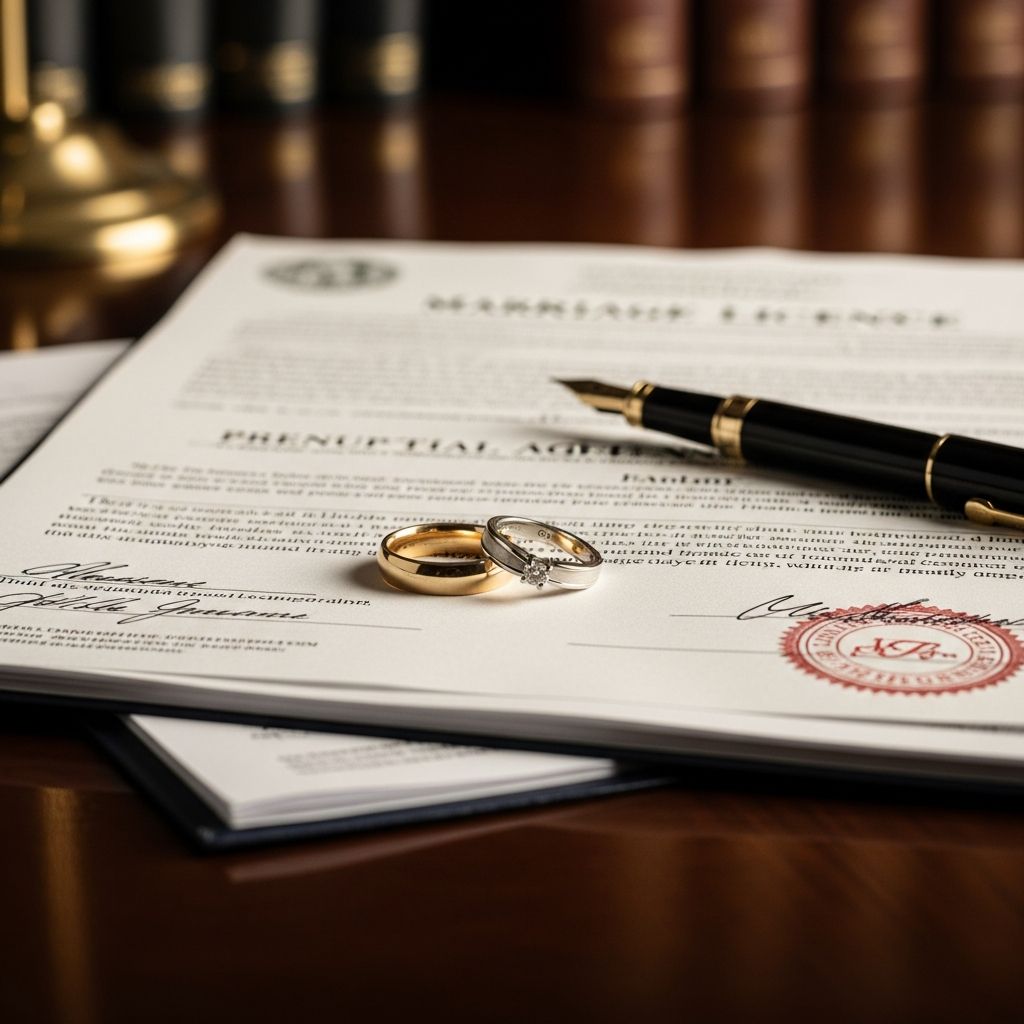
Marriage in the United States is not only a personal and cultural milestone; it is also a legally regulated status that affects property rights, taxes, immigration, inheritance, health decisions, and more. Because marriage law is primarily handled by the states, the rules you must follow depend heavily on where you marry, even though certain basic elements are similar nationwide.
This guide explains the most common legal rules that apply before and during marriage in the United States, including marriage licenses, age limits, consent, who may marry, who may officiate, and how common law marriage works in some states.
How Marriage Is Regulated in the U.S.
In the United States, marriage is largely governed by state law rather than federal law. Each state defines:
- Who is eligible to marry (age, capacity, prior marriages, relationship limits)
- What paperwork is needed (marriage license, identity documents)
- How a marriage must be performed (ceremony rules, officiants, witnesses)
- When a marriage is legally valid or void (for example, bigamy or close relatives)
At the same time, federal law decides how a valid state-law marriage is treated for purposes such as taxes, Social Security, immigration, and other federal benefits.
Core Legal Elements of a Valid Marriage
Although details differ from state to state, U.S. law typically treats a marriage as valid when three core elements are present.
- Legal capacity – Both partners are legally allowed to marry each other (for example, they are old enough, not closely related, and not already married).
- Mutual consent – Each person voluntarily agrees to marry without fraud, force, or coercion.
- Recognized formation – The couple either obtains a marriage license and holds a qualifying ceremony, or in limited states, satisfies the requirements of a common law marriage.
Marriage License Basics
For most couples, the first formal step is getting a marriage license from a local government office, usually the county clerk.
What a Marriage License Does
- Authorizes two specific people to marry within a certain time period.
- Provides legal proof that the couple met the state’s prerequisites for marriage on the date of issue.
- Becomes the basis for the official marriage record once it is signed and returned after the ceremony.
Typical License Requirements
Although rules differ, couples can usually expect to need:
- In-person application by one or both partners at the issuing office.
- Government-issued photo ID (for example, a driver’s license, passport, or state ID).
- Proof of age, often via birth certificate or passport.
- Information on prior marriages, plus proof of divorce or death if applicable.
- Payment of a fee, which can vary widely by county.
Waiting Periods and Expiration
Many states build in timing rules around the license:
- Some impose a waiting period between applying for the license and being allowed to marry (for example, 24 hours to several days).
- Licenses often have a validity window (for example, 30–90 days) within which the ceremony must occur.
- If the couple does not marry within that window, they generally must reapply and pay a new fee.
After the Ceremony
- The officiant and required witnesses sign the license during or immediately after the ceremony.
- The signed document is returned to the issuing office for official recording, often by the officiant.
- The government then issues a marriage certificate or certified copy, which serves as proof of the marriage for name changes, benefits, and other legal processes.
Legal Age to Marry and Parental Consent
Each U.S. state sets its own minimum marriage age and rules for exceptions. These rules can be more complex than they appear and have changed significantly in some states in recent years.
Standard Adult Marriage Age
- Most states set the general age for marriage as 18 years, at which point a person may normally marry without parental or court approval.
- Some states historically used slightly different ages, such as 19 or 21, but the trend has been toward 18 as the standard age of full capacity to marry.
Marriage Under Age 18
States have taken differing approaches to marriage below 18:
- Many states once allowed minors to marry with parental consent, judicial approval, or under specific conditions such as pregnancy.
- Some states now prohibit marriage under 18 entirely, with no exceptions, in an effort to reduce child marriage.
- Others still permit marriage at younger ages when both parents consent and a court approves, but such arrangements are becoming less common and more tightly regulated.
Because the rules are highly variable and periodically updated, checking the latest law in the particular state is crucial.
Who Is Allowed to Marry Whom?
States may impose certain limitations on who can marry, but those limits must comply with the U.S. Constitution and federal civil rights protections.
Prior Marriages and Bigamy
- A person generally may have only one living spouse at a time.
- If a prior marriage has not been legally ended by divorce, annulment, or death, a new marriage is typically void and may expose the person to criminal liability for bigamy in some states.
Close Family Relationships
- All states forbid marriage between very close relatives, such as a parent and child or siblings.
- Rules for more distant relatives (such as cousins) differ: some states permit first-cousin marriage, others restrict or prohibit it.
Same-Sex Marriage
Following decisions by the U.S. Supreme Court, states may not restrict marriage based on the sex of the partners.
- Marriages between two people of the same sex must be licensed and recognized on the same terms as different-sex marriages.
- For purposes of federal law, a person is considered married if the couple’s marriage is valid in the state (or place) where it was entered into.
The Marriage Ceremony and Officiants
Once a license is obtained, a marriage usually must be completed through a ceremony performed by an authorized individual in front of witnesses.
Officiants
State law defines who may legally solemnize a marriage. Commonly recognized officiants include:
- Judges and magistrates
- Court clerks in some jurisdictions
- Ordained ministers, priests, rabbis, or other recognized clergy
- Officials specifically authorized by statute (such as certain justices of the peace)
Some states also recognize officiants who are ordained through religious organizations that offer online ordination, but this is not universal and can be contested; couples should confirm eligibility in their state.
Witnesses
- Many states require one or two witnesses to sign the marriage license.
- Witnesses are typically required to be adults (often defined as 18 or older), although the exact rule can vary.
Form of the Ceremony
Substantive legal requirements for the ceremony are usually minimal. In most states:
- The couple must clearly express their present intent to marry one another.
- The officiant acknowledges and pronounces the couple as married under state law.
- All signatures required by law (couple, officiant, witnesses) are placed on the license.
Common Law Marriage
In a small number of states, couples can be considered legally married even without a license or formal ceremony if they meet the requirements of a common law marriage.
Where Common Law Marriage Exists
Only a minority of jurisdictions currently allow couples to form new common law marriages, and some states recognize only those common law marriages created before a cut-off date.
Typical Requirements
States that recognize common law marriage generally look for evidence that the couple:
- Agreed to be married (mutual intent)
- Lived together as a couple
- Held themselves out to others as married (for example, using the same last name, filing taxes as married, or referring to each other as spouses)
If a state considers the relationship to be a valid common law marriage, the couple usually has the same legal rights and responsibilities as spouses who married with a license and ceremony.
Recognition Across State Lines
Generally, when a common law marriage is validly formed in one state, other states will recognize it as a valid marriage under principles that respect marriages valid where celebrated.
Overview Table: License Marriage vs. Common Law Marriage
| Feature | Licensed/Ceremonial Marriage | Common Law Marriage (in states that allow it) |
|---|---|---|
| How created | License issued; ceremony with authorized officiant and any required witnesses | Mutual agreement to be married, cohabitation, and conduct showing the couple holds themselves out as married |
| Written record from the start | Yes, through the marriage license and certificate | Not necessarily; proof may depend on later evidence such as documents and testimony |
| Availability | All U.S. jurisdictions | Only a minority of states, often with specific conditions or historical cut-off dates |
| Legal effect once valid | Spouses have full rights and duties under state and federal law | Generally the same legal status as ceremonial spouses in jurisdictions that recognize it |
Why Legal Status Matters
Being legally married changes both partners’ rights and responsibilities in ways that can be highly significant.
- Property and inheritance – Many states grant surviving spouses inheritance rights if there is no will, and provide special treatment for marital property.
- Taxes and benefits – Federal and state tax law, Social Security, veterans’ benefits, and many employer benefits treat legally married spouses differently from unmarried partners.
- Medical decisions – Hospitals and health-care laws often give spouses priority to make decisions when a partner cannot communicate.
- Immigration – U.S. citizens and permanent residents may sponsor a foreign spouse for lawful status based on a valid marriage under governing law.
Practical Tips Before You Marry
- Research your state’s rules early – Check the website or office of your local county clerk or vital records agency for the most current license requirements and fees.
- Confirm name change procedures – If either spouse plans to change their name, verify the documents needed by the Social Security Administration, DMV, and other agencies.
- Keep certified copies – Obtain certified copies of your marriage certificate and store them securely for future legal or administrative needs.
- Consider legal planning – Wills, powers of attorney, and premarital or post-marital agreements can clarify rights and expectations beyond the default rules of your state.
Frequently Asked Questions About U.S. Marriage Requirements
Do we always need a marriage license to be legally married?
In almost every situation, yes. A marriage license followed by a qualifying ceremony is the standard method of creating a valid marriage in every U.S. jurisdiction. Only a small number of states still recognize new common law marriages, and those require specific conditions that are strictly interpreted.
Can we marry in one state and live in another?
Yes. If your marriage is valid where it was celebrated, other states generally must recognize it as valid, subject to limited exceptions. This principle applies both to ceremonial and properly formed common law marriages.
Is a religious ceremony alone enough to create a legal marriage?
Not usually. In most states, the couple must both obtain a civil marriage license and have the officiant complete and return it for the marriage to be recognized by law, even if the ceremony has religious significance. A religious rite without compliance with state requirements may not create a legal marriage.
What happens if the officiant forgets to file the license?
If the officiant fails to return the signed license to the issuing office, the marriage record may be incomplete. Some states treat the marriage as valid between the spouses if all substantive requirements were met, but fixing the paperwork may require contacting the clerk, the officiant, or, in some cases, a court. Promptly confirming that the license was recorded can help avoid future complications.
Can immigration status affect my ability to marry?
In many states, undocumented or non-citizen individuals can still obtain a marriage license as long as they meet the state’s general marriage requirements and can provide the documentation required by the issuing office. However, using a marriage to pursue immigration benefits raises additional federal rules and scrutiny concerning the good-faith nature of the relationship.
References
- Marriage in the United States — Various contributors, summarized by the Congressional Research Service and other cited authorities within. 2019-09-07 (last major update referenced). https://en.wikipedia.org/wiki/Marriage_in_the_United_States
- Getting Married in the United States: Legal Guide for Couples — DocDraft Legal Guides. 2023-06-01 (approximate last updated date indicated on page). https://www.docdraft.ai/legal-guides/getting-married
- 1 U.S. Code § 7 – Definition of “marriage” and “spouse” — U.S. House of Representatives, Office of the Law Revision Counsel. 2022-12-13. https://uscode.house.gov/view.xhtml?req=granuleid:USC-prelim-title1-section7
- Marriage — Legal Information Institute, Cornell Law School. 2020-08-15 (last updated). https://www.law.cornell.edu/wex/marriage
- How to Obtain a Marriage License — Boundless Immigration. 2022-05-10 (last updated). https://www.boundless.com/immigration-resources/how-to-obtain-marriage-license
- Common Law Marriage by State — National Conference of State Legislatures. 2023-02-15. https://www.ncsl.org/human-services/common-law-marriage-by-state
- Marriage Abroad — U.S. Department of State, Bureau of Consular Affairs. 2022-06-27. https://travel.state.gov/en/international-travel/living-abroad/marriage.html
Similar Articles








Read full bio of medha deb


