
Understanding Legal Requirements for a Valid Marriage
Learn how consent, age, mental capacity, and legal formalities determine whether a marriage is valid and enforceable under U.S. law.
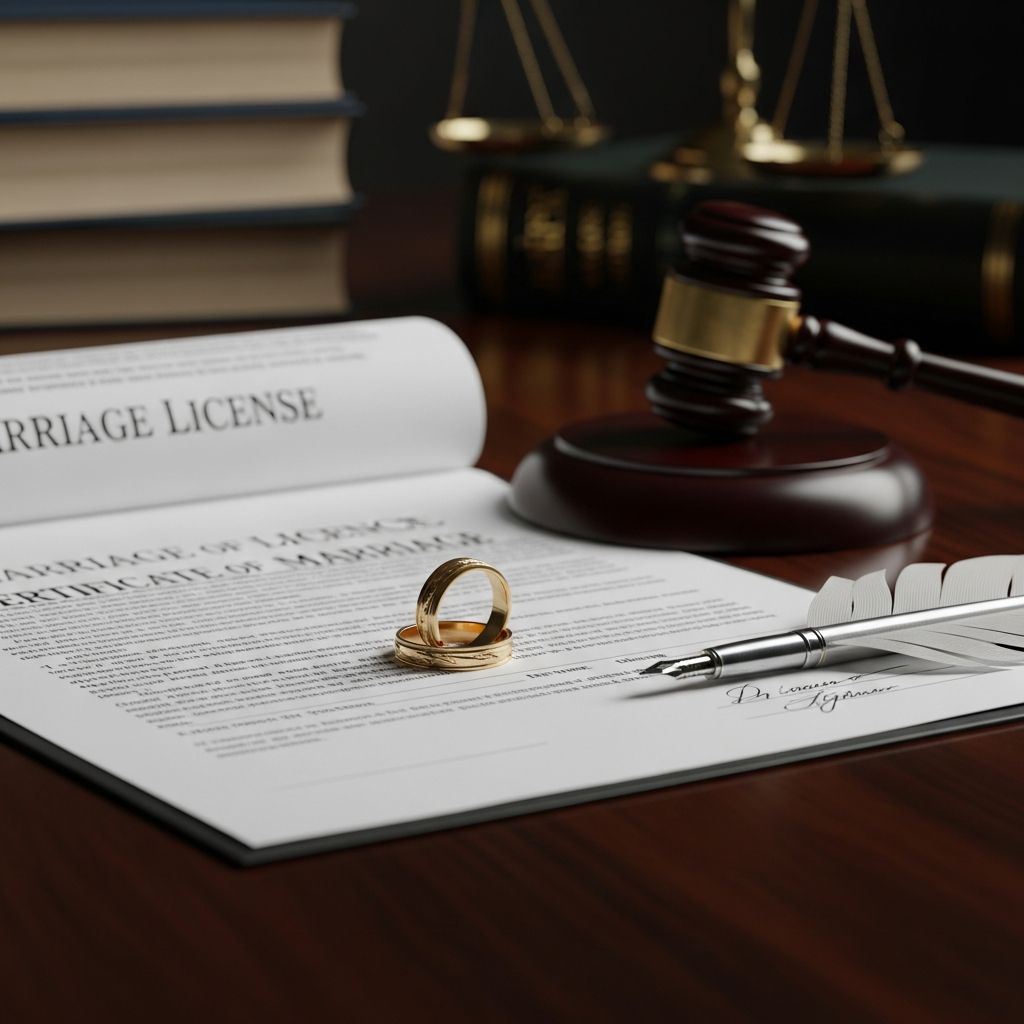
Marriage is more than a personal or religious commitment; it is a legally enforceable status that changes the rights, duties, and protections available to both partners. To be recognized by the law, a marriage must satisfy specific requirements related to consent, age, mental capacity, and formal legal procedures. This guide explains those core elements in clear, practical terms so you can understand what makes a marriage valid—and when a marriage may be void or voidable.
1. What Makes a Marriage a Legal Union?
Under U.S. law, marriage is commonly defined as a legal union between two individuals that is created by mutual consent and recognized by the state.
- Legal status: Once married, spouses gain new legal rights and obligations, including rights to property, inheritance, decision-making in medical situations, and potential support obligations.
- State regulation: Each state sets its own marriage rules, such as who may marry, minimum age, prohibited relationships, and what procedures must be followed.
- Civil right dimension: The U.S. Supreme Court has recognized marriage as a fundamental civil right, meaning states may regulate it reasonably but cannot impose arbitrary or discriminatory restrictions.
Because marriage is largely regulated at the state level, the precise rules vary. However, almost all jurisdictions require some combination of legal ability to marry, genuine consent, and compliance with licensing and ceremony procedures.
2. Core Legal Elements of a Valid Marriage
While terminology may differ between states, most laws converge around four core elements:
| Element | What It Means | Why It Matters |
|---|---|---|
| Legal capacity | The parties are old enough, mentally competent, and not otherwise legally barred from marrying. | Protects vulnerable individuals and ensures people understand the consequences of marriage. |
| Mutual consent | Both partners voluntarily agree to marry, without fraud, force, or coercion. | Ensures marriage is a genuine, voluntary union rather than a product of pressure or deception. |
| Compliance with formalities | License, ceremony, and officiant requirements are followed as required by state law. | Provides an official record and a clear legal starting point for the marital relationship. |
| Absence of legal impediments | No existing undissolved marriage, and the parties are not too closely related; other specific statutory bars may apply. | Prevents bigamy and other prohibited unions, and supports public policy concerns. |
3. Age Requirements: Minimum Age and Special Rules for Minors
Every state sets a minimum age to marry. In many jurisdictions, individuals must be at least 18 to marry without any additional approvals.
3.1 General age rules
- Most states require 18 years as the standard age to marry without parental or court involvement.
- A growing number of states have restricted or eliminated child marriage by setting firm age floors or limiting when minors can marry.
3.2 Marriage involving minors
Some states still allow minors to marry under narrow conditions, such as:
- Parental or guardian consent: One or both parents (or a legal guardian) may need to sign a consent form.
- Court approval: A judge might be required to review the circumstances and determine whether the marriage is in the minor’s best interests.
- Mandatory counseling or waiting periods: Certain jurisdictions impose counseling, interviews, or waiting periods before issuing a license to a minor.
Because marriage changes legal rights in major ways, courts typically examine factors such as maturity, education, financial stability, and potential risk of exploitation when reviewing requests involving minors.
4. Mental Capacity and Understanding the Nature of Marriage
Legal capacity is not just about age; it also includes mental competence. To marry, a person must understand the basic nature and consequences of marriage at the time the union is formed.
4.1 What mental capacity usually requires
In general, a person must be able to:
- Comprehend that marriage is a long-term commitment involving mutual duties and legal consequences.
- Recognize core obligations, such as financial support, shared decision-making, and potentially exclusive sexual fidelity.
- Make decisions free from severely impairing mental conditions that prevent reasonable judgment.
If an individual is legally determined to be of unsound mind or otherwise incapable of understanding what marriage means, the marriage may later be challenged as voidable in many states.
4.2 Temporary vs. ongoing incapacity
- Temporary issues (such as intoxication, certain medications, or a short-term mental health crisis) can be relevant if they significantly impair understanding at the time of the ceremony.
- Ongoing mental disorders may affect capacity if they interfere with the ability to grasp the nature of marriage or to give valid consent.
Courts often look at medical records, witness testimony, and behavior before and after the wedding when deciding whether someone lacked capacity.
5. Voluntary Consent: No Force, Fraud, or Coercion
Mutual, voluntary consent is at the heart of every valid marriage. Consent must be given freely, without unlawful pressure or deception.
5.1 Forms of invalid consent
Consent may be legally defective where:
- Force or threats are used to obtain agreement to marry.
- Coercion is applied through extreme psychological pressure or abuse.
- Fraud involves lying about essential facts that go to the core of the marital relationship, such that the other person would not have married if they had known the truth.
When consent is invalid, the marriage may be annulled—treated as if it never legally existed—if the injured partner acts within the time limits set by state law.
5.2 Distinguishing regret from legal invalidity
Not every bad choice or later regret is grounds to challenge a marriage. Generally, the law looks for:
- Evidence of concrete threats, serious misrepresentation, or incapacity at the time of the wedding.
- Proof that the defect directly affected the decision to marry.
Ordinary disappointment, personality conflicts, or changes in feelings after the ceremony typically lead to divorce rather than annulment.
6. Existing Marriages, Prohibited Relationships, and Other Impediments
Even if two people are old enough, mentally competent, and willing to marry, the law may still prohibit the marriage in certain situations.
6.1 Bigamy and prior marriages
- Most states allow an individual to have only one living spouse at a time.
- If someone is already married, they must end that marriage through divorce, annulment, or their spouse’s death before entering a new marriage.
- Marrying while still legally married can result in a union that is void and may expose the person to criminal bigamy charges in some jurisdictions.
6.2 Close relationships
States also restrict marriage between close relatives to protect public health and uphold long-standing policy concerns. While details vary, most jurisdictions prohibit marriages between:
- Parents and children
- Siblings (including half-siblings)
- Grandparents and grandchildren
Some states extend prohibitions to other relatives such as aunts, uncles, nieces, or nephews. The exact list of barred relationships is defined by each state’s statutes.
7. Licenses, Ceremonies, and Officiants: Procedural Steps
A marriage is not usually valid based on agreement alone. Most states require couples to follow specific procedural steps.
7.1 Obtaining a marriage license
In many jurisdictions, including California, a marriage license is a mandatory prerequisite to a valid union.
- Both parties generally must appear in person at a local clerk’s office.
- They typically must present valid identification (such as a driver’s license or passport) and disclose prior marriages or registered partnerships, if any.
- Licenses are usually time-limited—for example, California licenses are valid for 90 days from the date of issuance.
- Some states impose fees, waiting periods, or additional screening requirements.
7.2 Ceremony and officiant
Most states require a ceremony that includes:
- An authorized officiant such as a judge, justice of the peace, or religious leader, depending on state rules.
- A public exchange of consent, such as saying “I do” or a similar affirmation.
- One or more witnesses to the ceremony, according to local law.
Some states allow limited exceptions, such as recognizing self-solemnized marriages for certain religious groups, but these are tightly regulated.
7.3 Recordation and official registration
After the ceremony, the officiant and sometimes witnesses must sign the marriage license, which is then filed with the appropriate government office to create an official record.
- In many jurisdictions, the officiant is responsible for returning the completed license within a specific period (for example, within 10 days in some counties).
- Failure to register properly can create disputes later about whether a valid marriage was formed, though some states provide ways to correct procedural mistakes.
8. When a Marriage Is Void, Voidable, or Valid
Not all legal problems affect a marriage in the same way. States distinguish between void marriages, voidable marriages, and fully valid marriages.
8.1 Void marriages
A void marriage is treated as if it never legally existed. Examples commonly include:
- Bigamous marriages where one person was already lawfully married to someone else.
- Incestuous marriages between close relatives, as defined by statute.
Void marriages typically do not require a formal court order to be considered invalid, although people often seek court judgments for clarity.
8.2 Voidable marriages
A voidable marriage is valid unless and until a court annuls it. Grounds can include:
- Lack of mental capacity at the time of marriage.
- Fraud, duress, or forced consent.
- Certain types of misrepresentation regarding essential facts.
There are usually deadlines for filing an annulment action, and continued cohabitation after discovering the issue may affect the ability to seek an annulment.
8.3 Valid but flawed marriages
Sometimes a marriage may suffer from minor procedural errors—such as an administrative mistake on the license—yet still be treated as valid if the core requirements of capacity and consent were met and the couple substantially complied with the law. How courts handle such cases varies by state, and many jurisdictions recognize principles that protect innocent spouses who reasonably believed they were validly married.
9. Practical Steps for Couples Planning to Marry
Before you marry, it is wise to confirm that you and your partner meet the legal requirements in your state. Consider the following checklist:
- Verify that both partners are old enough to marry under your state’s law, or that any needed consents or court orders are in place.
- Discuss any history of mental health or cognitive issues that might affect capacity and, if necessary, seek professional guidance.
- Ensure that all prior marriages have been properly dissolved, with final divorce or annulment decrees available.
- Check your state’s rules on prohibited relationships to confirm there is no legal impediment.
- Read your local clerk’s requirements for obtaining a marriage license, including identification, fees, and timing.
- Confirm that your officiant is legally authorized to perform weddings in your jurisdiction.
- Plan for signatures and timely filing of the license after the ceremony so your marriage is properly recorded.
When in doubt, consulting a family law attorney in your state can help you avoid costly disputes later, especially if your situation involves cross-border marriages, immigration issues, or complex personal histories.
Frequently Asked Questions (FAQs)
Q1: Can we be considered married just by living together for many years?
Some states recognize common-law marriage, but most do not. Where it is recognized, the couple usually must meet specific criteria, such as living together and presenting themselves to others as married, with mutual intent to form a marital relationship. In states that do not allow common-law marriage, cohabitation alone is not enough; a valid license and ceremony are usually required.
Q2: Do we need to be U.S. citizens or residents of the state to marry there?
Many states, including California, do not require residency or U.S. citizenship to marry; out-of-state or foreign couples may obtain a marriage license and wed, provided they meet age, capacity, and other eligibility rules. However, immigration consequences and recognition in other countries can be complex, so legal advice may be beneficial.
Q3: Is a proxy marriage (where one partner is absent) valid?
Most U.S. states require both parties to be physically present at the ceremony, with limited exceptions—such as certain military situations—where specially authorized proxy marriages may be recognized. The rules are strict, so couples considering this option should seek legal guidance.
Q4: What happens if we forgot to return the signed marriage license?
In many states, the officiant must return the executed license to the appropriate office within a set time frame. Failure to file can create uncertainty, but some jurisdictions allow late filing or corrective procedures. Whether the marriage is considered valid despite the delay often depends on state law and the specific facts.
Q5: Can a marriage be annulled years later if I discover fraud?
Possibly, but there are usually time limits and specific requirements on the type of fraud that qualifies. Generally, the fraud must involve a matter going to the essence of the marriage (not just ordinary misrepresentation), and you may need to act promptly after discovering it. Laws differ by state, so an attorney’s advice is important.
References
- Marriage — Legal Information Institute, Cornell Law School. 2021-09-01. https://www.law.cornell.edu/wex/marriage
- California Marriage License General Information — California Department of Public Health. 2023-03-15. https://www.cdph.ca.gov/Programs/CHSI/Pages/California-Marriage-License-General-Information.aspx
- Eligibility Requirements — Sacramento County Clerk/Recorder. 2022-06-10. https://ccr.saccounty.net/Marriage/Pages/Eligibility.aspx
- Marriage Requirements Under California Law — Jafarieh Law. 2022-08-01. https://jafarilegal.com/marriage-requirements-under-california-law/
- What is a “Valid Marriage”? — Hoover Krepelka, LLP. 2019-04-05. https://www.sjfamilylaw.com/practice-areas/what-is-a-valid-marriage/
- California Wedding Laws — Universal Life Church. 2023-01-20. https://www.ulc.org/wedding-laws/california
Similar Articles








Read full bio of medha deb


