The Ongoing Crisis in the Kansas Foster Care System
For more than a decade, the Kansas foster care system has operated under an intense microscope, drawing severe criticism for its systemic inability to protect the state’s most vulnerable population. A horrifying narrative of extreme housing instability, systemic neglect, and a critical lack of mental health resources has emerged from the very agencies tasked with child welfare. Children who were removed from their homes for their own protection have instead been subjected to unimaginable disruptions while technically under the guardianship of the state. This widespread institutional failure ultimately culminated in a landmark class-action lawsuit, setting the stage for what advocates hoped would be a revolution in child protective services.
Known in legal circles as M.B. v. Howard (initially filed as M.B. v. Colyer and frequently referred to in monitors’ reports as McIntyre v. Howard), this federal litigation sought to force the state of Kansas to structurally reform its broken child welfare infrastructure. Despite a federally approved, legally binding settlement agreement reached in 2021, recent independent reviews and audits reveal a deeply troubling reality: Kansas is largely failing to meet its obligations. Vulnerable youth remain at immense risk, and the state’s privatized foster care system continues to struggle with the exact systemic issues it promised the federal courts it would eliminate.
The Origins of a Landmark Legal Battle
In November 2018, a powerful coalition of child welfare advocates—including the National Center for Youth Law, Children’s Rights, Kansas Appleseed, and private legal partners—filed a comprehensive class-action lawsuit against high-ranking Kansas state officials. The defendants included the top secretaries of the Kansas Department for Children and Families (DCF), the Kansas Department of Health and Environment (KDHE), and the Kansas Department for Aging and Disability Services (KDADS). The plaintiffs were young people navigating the foster care system, representing the thousands of children subjected to the state’s practices.
The initial complaint submitted to the federal court painted a grim, heartbreaking picture of the realities faced by the roughly 7,600 children navigating the state’s child welfare network. The core allegations centered on two monumental constitutional and statutory failures: extreme housing disruption and the systemic denial of critical mental and behavioral health services.
Through discovery and direct testimonies, advocates uncovered that children were routinely experiencing a traumatizing practice known as “night-to-night” placements. Instead of being placed in stable, long-term foster homes where they could establish a routine, youth were shuttled continuously from one emergency placement to the next. In the most severe and highly publicized cases, individual children were moved upwards of 50 to 100 times within a single year.
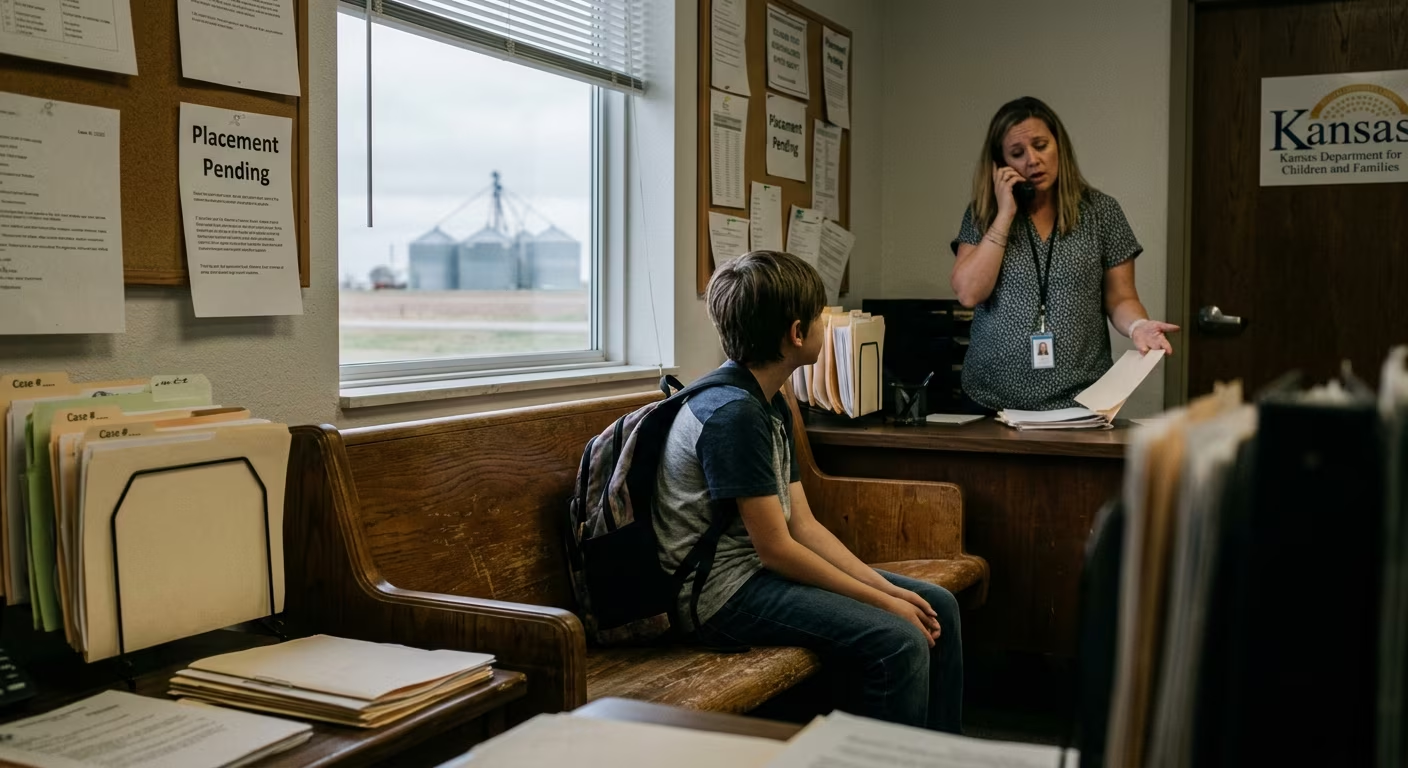
Due to a severe, statewide shortage of licensed foster homes and residential treatment facilities, children were frequently forced to sleep in child welfare agency offices. They would spend the day sitting in a cubicle with nothing to do while overwhelmed case workers scrambled to find a temporary bed for the upcoming night. This churning effect left youth effectively homeless and completely untethered from any sense of community. Furthermore, the lawsuit highlighted the state’s failure to provide adequate mental health, behavioral health, and trauma-related screening and treatment, arguing that these deprivations violated the children’s rights under the Fourteenth Amendment and the federal Medicaid Act.
The 2021 Settlement Agreement: Promises of Structural Reform
After more than two years of rigorous, contentious litigation and exhaustive negotiations, the opposing parties reached a settlement agreement in July 2020. This agreement was officially approved by a federal judge in January 2021. At the time, the settlement was hailed as a transformative victory for children’s rights. It demanded sweeping, structural changes to the Kansas foster care system, laying out a phased timeline for implementing requirements over several years.
The M.B. v. Howard settlement outlined highly specific, measurable performance goals that the state was legally obligated to achieve. These goals were divided into three primary categories: Accountability and Implementation, Practice Improvements, and Measurable Outcomes. Key components of the federal mandate included:
- Ending Unsuitable Housing: The state agreed to immediately cease the practice of housing foster children in unlicensed, inappropriate spaces, specifically prohibiting overnight stays in child welfare agency offices or commercial hotels.
- Abolishing Night-to-Night Placements: Kansas committed to ending extreme short-term placements that prevented children from establishing any sense of normalcy, aiming to drastically reduce the number of moves a child experiences per 1,000 days in care.
- Strict Capacity Limits: The state pledged to rigorously enforce licensing standards, ensuring that foster placements would not exceed their licensed capacity, thereby preventing dangerous overcrowding in existing foster homes.
- Timely Mental Health Screenings: A critical, non-negotiable component of the agreement mandated that every single child entering state care must receive a comprehensive, formalized mental health and trauma screen within their first 30 days of custody.
- Immediate Crisis Intervention Access: The state was required to develop, fund, and implement statewide crisis intervention services, ensuring children experiencing acute trauma or behavioral crises could receive immediate psychiatric support without facing housing-related delays.
Independent Monitoring and the Harsh Reality
To guarantee transparency and ensure strict compliance with the federal court’s orders, the settlement required the appointment of an independent, neutral monitor. The Center for the Study of Social Policy (CSSP), a highly respected national organization, was selected for this critical oversight role. Their mandate is to review state data, conduct independent investigations, validate state agency claims, and report annually on Kansas’s progress in achieving the stipulated performance goals.
While early, preliminary reports following the settlement showed marginal progress in certain administrative metrics—such as the creation of advisory boards and initial contracting changes—the most recent findings have painted a deeply concerning and frustrating picture. The CSSP’s annual progress reports for calendar years 2023 and 2024 definitively indicate that Kansas has substantially failed to make the agreed-upon structural improvements. In fact, in several vital areas concerning child placement stability, the state’s performance has actively declined compared to previous reporting periods.
Analyzing the Progress Reports: A System Still in Crisis
The CSSP’s recent annual progress reports highlight deeply ingrained systemic bottlenecks that continue to plague the Kansas Department for Children and Families (DCF) and the private case management providers the state relies upon to execute its welfare duties.
Placement Instability Remains Rampant: Despite the settlement’s fundamental mandate to stabilize housing, Kansas children continue to be bounced from placement to placement at alarming rates. A parallel review conducted by the federal Administration for Children and Families corroborated these findings, noting that Kansas children experience placement moves at a rate significantly higher than the national average. The state has consistently struggled to meet the settlement target of reducing placement moves to 4.4 per 1,000 days in care, instead hovering closer to a disastrous rate of over 7 moves per 1,000 days.
Night-to-Night Placements Persist: While the total volume of youth sleeping overnight in administrative offices has officially decreased, community partners and the neutral monitor have gathered extensive evidence indicating that children are still spending highly inappropriate amounts of time in agency offices during daytime hours. Because permanent placements cannot be secured, the reliance on short-term, single-night emergency housing has not been completely eradicated.
Severe Workforce Challenges: A massive, undeniable driver of these ongoing failures is a critical shortage of qualified child welfare professionals and licensed foster families. The high turnover rate among privatized social workers and case managers means that children lack consistent advocacy. A revolving door of burnt-out staff contributes directly to delayed mental health referrals, lost paperwork, and completely disrupted care plans.
Bottlenecks in Mental Health Services: While the state has shown some improvement in conducting the initial trauma screenings within the required 30-day window, the follow-through remains fundamentally broken. Identifying a child’s deep-seated trauma is only the first step; providing the necessary therapeutic intervention is where the system frequently stalls. Massive waitlists for specialized psychiatric care and residential treatment facilities leave deeply traumatized youth without the support they legally and morally deserve.
Table: Settlement Mandates vs. Current System Realities
| Settlement Mandate | State Promise | Current Reality (Based on CSSP Audits) |
|---|---|---|
| Housing in Offices/Hotels | End the use of unlicensed, unsuitable locations for housing foster youth. | Overnight stays reduced, but youth still spend excessive daytime hours in offices awaiting placement. |
| Placement Moves | Reduce placement move rate to a maximum of 4.4 per 1,000 days in care. | Rate remains significantly higher (often over 7), indicating continued extreme housing disruption. |
| Night-to-Night Placements | Abolish short-term, single-night emergency housing loops. | Ongoing struggles; the severe lack of available foster beds continues to force short-term solutions. |
| Mental Health Screening | Provide an initial, comprehensive screening within 30 days of entry into care. | Initial screening rates have improved, but severe bottlenecks exist in accessing actual follow-up treatment. |
The Devastating Impact on Vulnerable Youth
The state’s failure to meet these legal obligations is not merely an administrative or bureaucratic shortcoming; it is an ongoing human rights and public health crisis. The youth caught in this churning, unstable system suffer devastating emotional, psychological, and developmental consequences that can last a lifetime.
When a child is forcibly moved multiple times in a single year, their foundational ability to form secure, trusting attachments is profoundly damaged. According to child psychology experts, severe placement instability directly interferes with healthy adolescent brain development. Children who are bounced continuously from home to home often experience exacerbated symptoms of Post-Traumatic Stress Disorder (PTSD), severe anxiety, and clinical depression.
Furthermore, extreme housing disruption severely impacts a child’s educational trajectory. Changing school districts multiple times a semester leads to significant academic delays, the loss of earned graduation credits, and a statistically higher likelihood of dropping out of high school altogether. The lack of stability also pushes many youths to the margins of society; older children, deeply frustrated and traumatized by the system, often run away. This tragic outcome drastically increases their vulnerability to exploitation, including the grave, highly documented risk of falling victim to child sex trafficking networks.
State Responses and the Challenging Road Ahead
In response to the highly critical CSSP progress reports and public outcry, the Kansas Department for Children and Families (DCF) has publicly acknowledged its ongoing shortfalls while attempting to point to specific “bright spots” in their reform efforts. In various legislative testimonies, state welfare officials have highlighted improvements in kinship care—the practice of prioritizing placements with biological relatives rather than strangers in traditional foster homes. Currently, officials report that over half of initial placements are with relatives, which is undeniably a vital step toward maintaining family connections and reducing the initial shock of removal.
DCF has also pointed to the increased availability of mobile crisis intervention services compared to the pre-lawsuit era, arguing that the groundwork for a better system is actively being laid. However, legal advocates and child welfare organizations fiercely maintain that isolated “bright spots” do not excuse the state from meeting its legally binding federal obligations. Litigation directors and advocates from organizations like Kansas Appleseed argue that the state must be held accountable for actively breaking its promises to its most vulnerable residents.
Advocates are continuously calling for massive increases in legislative funding, far more aggressive recruitment campaigns for specialized therapeutic foster families, and a complete overhaul of the retention strategies utilized for child welfare workers. Until these structural, cultural, and financial commitments are fully realized, the children of Kansas remain at the mercy of a system that has repeatedly proven incapable of guaranteeing their basic safety.
Frequently Asked Questions (FAQs)
- What is the M.B. v. Howard lawsuit?
M.B. v. Howard (frequently referred to as McIntyre v. Howard) is a federal class-action lawsuit filed in 2018 against the State of Kansas. It was brought on behalf of thousands of children in the state’s foster care system who were subjected to extreme placement instability and systemically denied necessary mental health services. - What were the main requirements of the 2021 settlement?
The federal settlement legally mandated that Kansas end the practice of housing foster youth in administrative offices and hotels, entirely abolish night-to-night temporary placements, ensure foster homes do not exceed their licensed capacity, and provide comprehensive mental health and trauma screenings to all youth within 30 days of entering state care. - Who monitors the state’s compliance with the settlement?
The Center for the Study of Social Policy (CSSP) serves as the independent, court-appointed neutral monitor. They are strictly tasked with reviewing state agency data, conducting independent audits, and issuing highly detailed annual progress reports on Kansas’s compliance with the settlement goals. - Is the state of Kansas currently meeting its obligations under the settlement?
According to the most recent comprehensive reports from the independent monitor, Kansas is largely failing to meet its core commitments. The state continues to struggle immensely with severe placement instability, dangerously high worker turnover, and heavily delayed access to mental health treatment, leaving vulnerable children at severe risk. - How does extreme placement instability affect foster children?
Extreme placement instability causes profound emotional and psychological trauma. It actively interferes with healthy brain development, severely disrupts educational progress, destroys the ability to form secure attachments, and drastically increases the risk of youths running away or becoming victims of human trafficking.
Conclusion
The M.B. v. Howard lawsuit was intended to serve as a definitive, unyielding turning point for the Kansas child welfare system—a firm legal line in the sand declaring that extreme housing disruption and the denial of psychological care would no longer be tolerated under federal law. Yet, years after the ink dried on the historic settlement agreement, the state’s actual execution has fallen woefully short of its promises. While legislative bodies endlessly debate budget allocations and state agencies scramble to address critical staffing crises, the children in foster care continue to carry the heavy burden of these systemic failures. True, lasting reform will require significantly more than legal agreements and court orders; it demands an unwavering, fully resourced cultural commitment to prioritizing the lives, safety, and psychological well-being of Kansas’s youth over administrative convenience. Until that fundamental shift occurs, the promise of true justice for these vulnerable children remains tragically unfulfilled.
References
- M.B. v. Howard Settlement Agreement — National Center for Youth Law. 2021-01-28. https://youthlaw.org/cases/mb-v-howard
- Neutral’s Annual McIntyre v. Howard Progress Report — Center for the Study of Social Policy. 2024-12-17. https://cssp.org/wp-content/uploads/2025/09/McIntyre-v.-Howard-Neutral-Annual-Report-Period-4.pdf
- DCF Legislative Testimony — Kansas Department for Children and Families. 2024-11-13. https://www.dcf.ks.gov/services/PPS/Documents/FY2025%20DataReports/McIntyre_Testimony_2024.pdf
- Child and Family Services Reviews: Kansas Final Report — Administration for Children and Families. 2023. https://www.acf.hhs.gov/sites/default/files/documents/cb/ks-cfsr-r4-final.pdf