The Intersection of Immigration Policy and Child Welfare
The humanitarian situation at the United States-Mexico border continually poses complex challenges, intertwining logistical capabilities with profound moral and legal obligations. Recently, a significant judicial intervention brought a crucial spotlight to the treatment of the most vulnerable demographic among migrants: unaccompanied and accompanied children. A federal court decisively ruled that U.S. Customs and Border Protection (CBP) is legally obligated to expeditiously process and adequately care for migrant minors who are waiting in makeshift, open-air encampments along the California border.
This landmark decision fundamentally shifts operational expectations for border enforcement agencies. For years, the intersection of immigration enforcement and child welfare has been fraught with legal ambiguities, often leaving children in precarious situations while bureaucratic processes slowly grind forward. By affirming that these youths are entitled to fundamental protections—even before they are officially logged into the federal processing system inside brick-and-mortar facilities—the court has reinforced a baseline of human rights that cannot be bypassed due to logistical bottlenecks, resource shortages, or administrative delays.
Understanding the Flores Settlement Agreement
To fully grasp the magnitude of this federal ruling, one must understand the historical bedrock of immigrant child protections in the United States: the Flores Settlement Agreement. Established in 1997 after over a decade of rigorous litigation, this binding legal consent decree sets strict national standards for the detention, treatment, and eventual release of minors held in federal immigration custody.
The agreement fundamentally mandates that the government must house migrant children in “safe and sanitary” conditions. It emphasizes that facilities holding youth must meet specific standards regarding temperature control, access to food and water, proper sanitation, and routine medical care. Furthermore, the Flores framework dictates that children must be released from restrictive custody without unnecessary delay, ideally to family members, designated sponsors, or licensed child-care facilities capable of providing age-appropriate support.
In the context of modern border surges, government agencies have frequently argued that applying the intricate requirements of the Flores Settlement to temporary staging areas is practically impossible and outside the scope of the law. However, advocates have consistently countered that the fundamental rights enshrined in the 1997 agreement do not evaporate simply because a child is waiting in a remote desert rather than a formal processing center. This recent court order decisively aligns with the human rights interpretation, confirming that the spirit and letter of the Flores Settlement apply to all stages of federal custody, regardless of how informal the physical setting may be.
The Harsh Reality of Open-Air Encampments
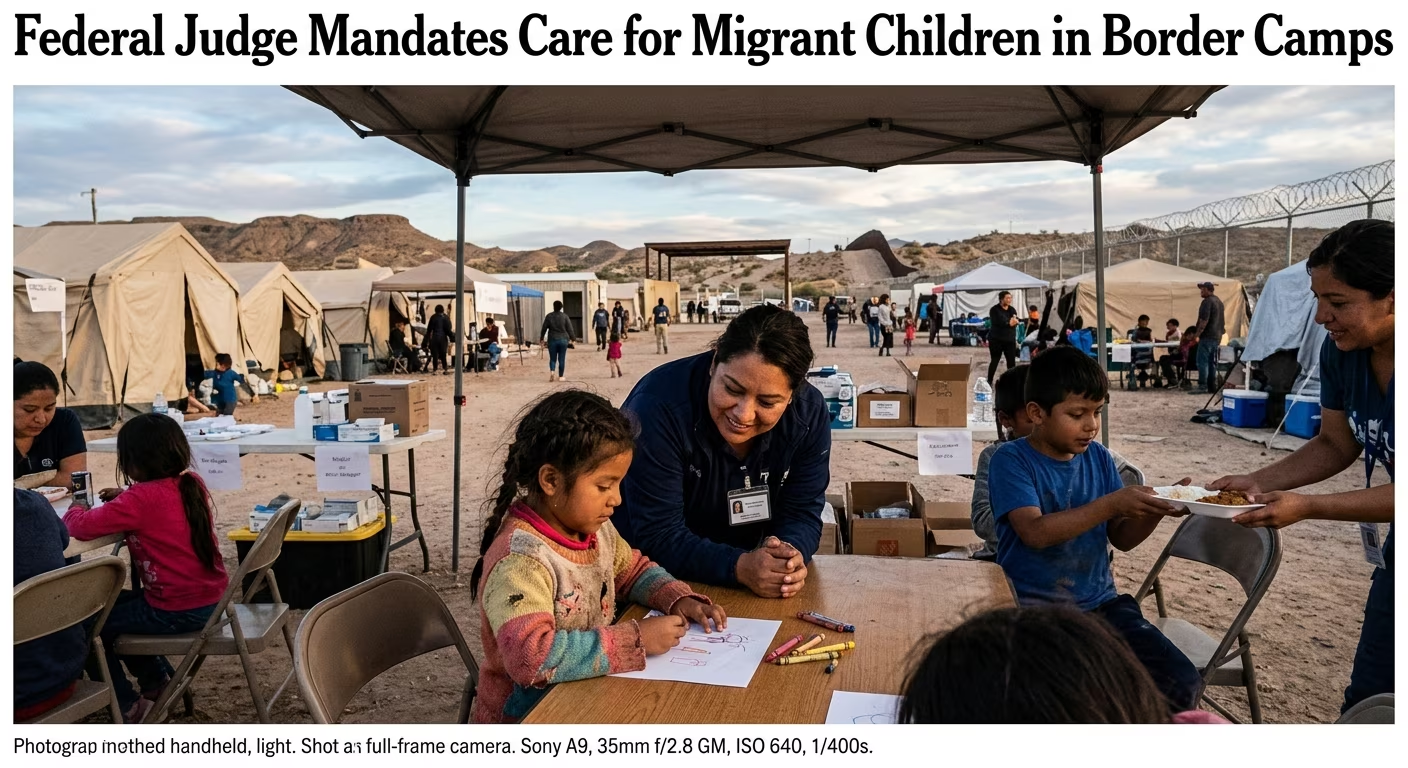
The catalyst for this recent legal battle lies in the emergence of open-air encampments in remote regions of Southern California, such as Jacumba Hot Springs and rugged areas east of San Diego. As border crossings have fluctuated, large groups of migrants—including pregnant women, toddlers, and unaccompanied teenagers—have found themselves waiting outdoors for hours, or in many cases, several days, for CBP agents to transport them to official detention centers.
These encampments are not official government facilities equipped with standard infrastructure. Instead, they are makeshift staging areas situated in harsh, unforgiving desert environments. During the day, temperatures can soar to dangerous highs, exposing waiting individuals to severe dehydration, heat exhaustion, and sunstroke. At night, the temperature often plummets, leaving vulnerable children shivering in the fierce wind without adequate shelter or thermal blankets.
Daily Struggles for Basic Necessities
Human rights observers and legal advocates who visited these open-air sites documented deeply troubling, squalid conditions. Lacking basic infrastructure, fundamental human needs were routinely ignored. Specifically, reports from the ground highlighted several critical failures:
- Severe lack of adequate nutrition: Children often received nothing more than crackers or granola bars for consecutive days, devoid of substantial caloric intake.
- Insufficient potable water: Access to clean drinking water was scarce, severely exacerbating the physical toll of the arduous journey to the border.
- Critical shortage of sanitation: The few portable toilets available were frequently overflowing, unusable, and surrounded by strewn trash, creating a dangerous biohazard and emitting foul odors.
- No structural shelter: Migrants lacked protection from sudden rain, extreme winds, or glaring sun, forcing some to seek refuge inside dumpsters or under ripped tarps.
- Inadequate medical triage: Children with pre-existing conditions or transit-related injuries were left without necessary interventions from federal health personnel.
The Legal Battle: Defining “Custody”
At the heart of the litigation was a nuanced but highly consequential legal debate regarding the exact definition of “custody.” Attorneys representing the federal government argued that the children waiting in these outdoor encampments were not formally in U.S. custody. Because they had not yet been formally apprehended, transported to a brick-and-mortar processing center, and officially logged into the agency’s computer systems, the government maintained that the rigorous, safe-and-sanitary standards of the Flores Settlement Agreement did not legally apply to them yet.
Conversely, lawyers for the detained minors presented a compelling argument centered on the concept of operational control. They pointed out that border patrol agents explicitly directed migrants to these specific staging areas, continuously monitored their presence, and implicitly or explicitly forbade them from leaving to seek help elsewhere. If a child is not free to walk away because an armed federal agent is controlling their movement and dictating their location, advocates argued, that child is indisputably in federal custody.
The presiding federal judge agreed entirely with the advocates. In her decisive ruling, she concluded that physical and operational control over the migrants constitutes de facto legal custody. The moment a child’s freedom of movement is restricted by CBP personnel, the agency instantly inherits the legal and moral obligations tied to that custody. Consequently, the failure to provide safe and sanitary conditions in these open-air sites constitutes a direct and actionable violation of the Flores Settlement Agreement.
Key Implications for Customs and Border Protection
The judicial mandate necessitates immediate and structural changes in how CBP manages migration surges along the Southern border. The ruling explicitly orders border officials to quickly process and relocate migrant children from these makeshift sites to appropriate, safe, indoor facilities.
This directive places a heavy logistical burden on an already strained federal agency. CBP must now ensure that its initial contact protocols include immediate provisions for child welfare. This means accelerating transport logistics, securing temporary shelters that meet sanitary standards, and ensuring a robust supply chain of basic necessities at the immediate point of apprehension, rather than waiting until processing occurs.
To better illustrate the necessary shifts in agency operations, the following table outlines the contrast between previous practices at open-air sites and the newly mandated requirements:
| Operational Aspect | Previous Conditions at Open-Air Sites | Court-Mandated Requirements |
|---|---|---|
| Shelter | Exposure to extreme elements; reliance on makeshift tarps or dumpsters. | Immediate relocation to safe, temperature-controlled, indoor facilities. |
| Nutrition | Sporadic distribution of basic snacks like dry crackers and occasional water. | Guaranteed access to adequate, nutritious meals and clean drinking water. |
| Sanitation | Overflowing, inadequate portable toilets; unsanitary and hazardous grounds. | Maintained, hygienic restrooms and proper waste management protocols. |
| Medical Care | Heavy reliance on volunteer medics; total lack of official agency triage. | Immediate access to emergency medical services and necessary medications. |
| Processing Time | Days spent waiting outdoors in limbo without formal identification or documentation. | Expeditious processing and swift transfer to appropriate child-focused housing. |
The Indispensable Role of Humanitarian Organizations
While the legal battles have unfolded within federal courtrooms, the day-to-day survival of many children in these open-air encampments has heavily depended on the tireless, ongoing efforts of local humanitarian organizations, community volunteers, and mutual aid groups. These dedicated individuals have operated in highly challenging and exhausting conditions to bridge the vast gap left by federal inaction.
Volunteers routinely drive into remote desert areas, traversing rough terrain to distribute thousands of bottles of water, hot meals, warm clothing, and thermal blankets to shivering families. Off-duty medical professionals have taken it upon themselves to set up makeshift triage stations, treating ailments ranging from severe dehydration and deep lacerations to respiratory infections and untreated chronic diseases that flare up under stress.
Furthermore, these grassroots organizations played a critical evidentiary role in the successful lawsuit. By meticulously documenting the squalid conditions, photographing the overflowing dumpsters, and gathering harrowing testimonies from detained families, advocates provided the court with the undeniable proof necessary to secure the judicial order. Their on-the-ground reality check effectively countered sanitized bureaucratic narratives and underscored the urgent, undeniable need for judicial intervention to save lives.
Long-term Outlook on Border Processing and Rights
Looking forward, this decisive court ruling sets a formidable precedent for the treatment of migrants at the U.S. border. It firmly establishes that sheer logistical challenges cannot be used as an acceptable excuse to bypass the constitutional, human, and statutory rights of vulnerable children. As global migration patterns continue to shift—driven largely by economic instability, political unrest, and changing climate conditions—the United States will inevitably continue to experience periodic surges of individuals seeking asylum.
Federal agencies must actively invest in humane, resilient infrastructure that can seamlessly flex with migration flows without resorting to the use of hazardous outdoor staging areas. This adaptation may involve constructing enhanced reception centers near the border, expanding the deployment of medical and child welfare professionals alongside traditional law enforcement, and streamlining the archaic administrative processes that cause dangerous physical bottlenecks.
Ultimately, the court’s decision serves as a stark reminder that immigration enforcement is not solely about physical border security; it is fundamentally intertwined with civil liberties and human rights. Ensuring that children do not suffer in squalor while awaiting bureaucratic processing is a baseline standard of human decency that the justice system has now firmly elected to protect.
Frequently Asked Questions (FAQs)
What is an open-air detention site?
An open-air detention site refers to an outdoor, makeshift encampment or staging area where migrants are held by border authorities while awaiting formal processing. Unlike traditional detention centers, these sites completely lack basic infrastructure such as permanent shelter, running water, climate control, and adequate sanitation facilities.
Why do migrant children end up waiting in these encampments?
During periods of high migration, official border processing facilities can rapidly become overcrowded. To manage the massive overflow, border enforcement agents have historically directed migrants to wait in these outdoor areas until secure transportation and space at brick-and-mortar facilities become available. Unfortunately, this wait can sometimes stretch from a few hours to several arduous days.
What is the Flores Settlement Agreement?
The Flores Settlement Agreement is a binding legal framework established in 1997 that sets strict national standards for the treatment, detention, and release of immigrant children in federal custody. It legally mandates that children must be held in “safe and sanitary” conditions and released to appropriate guardians or facilities without unnecessary delay.
How did the judge define “custody” in this specific ruling?
The federal judge ruled that because border agents were controlling the physical movement of the migrants in these open-air sites—specifically directing them where to stay and preventing them from leaving the immediate vicinity—the individuals were effectively in de facto federal custody. Therefore, they are legally entitled to the protections mandated for any other federal detainees.
What must the government do now according to the ruling?
The court mandated that border officials must expeditiously process the children waiting in these outdoor areas and quickly relocate them to safe, sanitary, and appropriate indoor facilities that strictly meet the standards outlined in the Flores Settlement Agreement. The government is also compelled to address their immediate nutritional, medical, and sanitation needs while they are in transition.
References
- Judge orders Border Patrol to quickly relocate migrant children from open-air sites in California — CBS News. 2024-04-04. https://www.cbsnews.com/news/judge-orders-border-patrol-migrant-children-california-open-air-sites/
- Codifying the Flores Settlement Agreement: Seeking to Protect Immigrant Children in U.S. Custody — Marquette Law Scholarly Commons. 2012-01-06. https://scholarship.law.marquette.edu/mulr/vol95/iss4/16
- The Detention of Families Facing Deportation Proceedings — Brennan Center for Justice. 2025-07-16. https://www.brennancenter.org/our-work/research-reports/detention-families-facing-deportation-proceedings