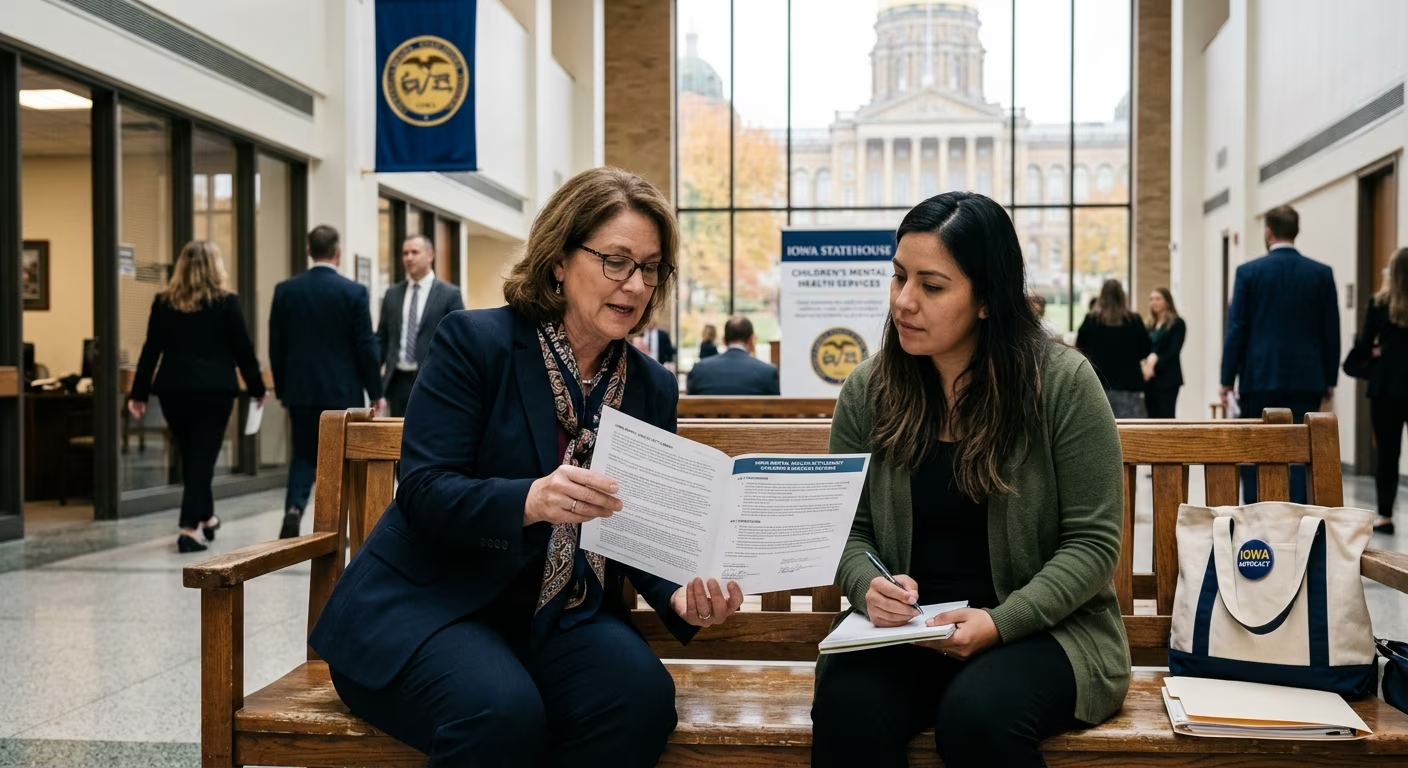
In a monumental victory for children’s health advocacy, the State of Iowa has officially reached a final settlement in a sweeping class-action lawsuit. For years, families of children with severe emotional and behavioral conditions faced an agonizing reality: the state’s healthcare infrastructure simply did not provide adequate, legally mandated mental health services. Instead of receiving care in their homes and communities, many vulnerable youths were subjected to prolonged institutionalization, unnecessary hospitalizations, or left entirely without professional support.
This groundbreaking agreement forces a comprehensive overhaul of how Iowa administers its Medicaid program for pediatric mental health. It represents not just a legal mandate, but a profound moral correction. By legally binding the Iowa Department of Health and Human Services (HHS) to implement sweeping reforms and develop robust community-based services, the settlement marks a definitive end to an era of systemic neglect. This comprehensive analysis explores the origins of the legal battle, the federal laws underpinning the case, and the transformative initiatives set to reshape pediatric behavioral health care in the state.
The Core of the Conflict: Unpacking the Class Action Lawsuit
The catalyst for this statewide transformation was a federal lawsuit filed in January 2023, driven by a formidable coalition of advocacy groups including Disability Rights Iowa, Children’s Rights, the National Health Law Program, and the law firm Ropes & Gray LLP. Brought on behalf of Medicaid-eligible children under the age of twenty-one, the class-action complaint alleged that the Iowa Department of Health and Human Services had maintained a longstanding failure to deliver Intensive Home- and Community-Based Services (IHCBS).
At the heart of the plaintiffs’ argument was the assertion that Iowa’s systemic deficiencies forced children into a destructive and entirely preventable cycle. When a child experiences a severe behavioral health crisis, the most effective therapeutic interventions are those delivered consistently within their natural environment—their home, school, and local community. However, because Iowa lacked an adequate network of community-based providers, care coordination, and mobile crisis response teams, parents were often left with no choice but to seek care in emergency rooms or psychiatric institutions.
Institutionalization is not only exponentially more expensive for state taxpayers, but it also fundamentally isolates children from their support systems, disrupting their education, peer relationships, and family bonds. The lawsuit highlighted how these failures were not merely unfortunate administrative gaps in care, but direct, actionable violations of federal law. By denying medically necessary treatments to Medicaid-enrolled youth, the state was systematically failing some of its most vulnerable residents, prompting the federal courts to intervene and demand a structurally sound, permanent remedy.
Understanding EPSDT and the Olmstead Mandate
To fully grasp the magnitude and legal foundation of the Iowa Medicaid settlement, it is essential to understand the federal statutes that formed the backbone of the plaintiffs’ case: the Medicaid EPSDT benefit and the Americans with Disabilities Act (ADA).
Under federal Medicaid law, states are required to provide the Early and Periodic Screening, Diagnostic, and Treatment (EPSDT) benefit. This mandate acts as a comprehensive safety net for children and adolescents under the age of twenty-one. EPSDT requirements mandate that states not only screen for physical and mental health conditions but also provide any medically necessary services to correct or ameliorate those identified conditions. The plaintiffs successfully argued that intensive home-based mental health care falls squarely under this mandate. When a licensed practitioner determines that a child requires in-home therapy to manage a serious emotional disturbance, the state is legally obligated to fund and provide it, regardless of existing programmatic limitations.
Furthermore, the lawsuit leaned heavily on the integration mandate of the ADA, as interpreted by the landmark 1999 Supreme Court decision in Olmstead v. L.C. The Olmstead decision declared that the unjustified segregation of people with disabilities in institutions constitutes unlawful discrimination. Public entities are required to provide community-based services to persons with disabilities when such services are appropriate, the individuals do not oppose them, and the placement can be reasonably accommodated. Iowa’s glaring lack of community mental health infrastructure practically guaranteed that children would face institutionalization, putting the state in direct, undeniable conflict with the Olmstead integration mandate.
The Settlement Agreement: A Blueprint for Reform
Faced with overwhelming legal pressure and a mountain of evidence regarding system failures, the state of Iowa opted to collaborate with the plaintiffs to forge a comprehensive settlement rather than engaging in a protracted, costly trial. Granted preliminary approval in early 2025 and finalized shortly thereafter, the settlement acts as a legally binding blueprint for systematic, statewide reform.
Under the strict terms of the agreement, the Iowa Department of Health and Human Services is compelled to rapidly expand its provider capacity and build out a robust, interconnected network of community-based mental health services. This is not a vague political promise; the settlement includes strict, court-ordered timelines, requiring the state to implement concrete quality management frameworks, oversight mechanisms, and transparent accountability systems.
The state must aggressively transition away from its over-reliance on institutional care, residential treatment facilities, and emergency room boarding. Instead, it must ensure that every Medicaid-eligible child with a serious emotional disturbance receives timely, uninterrupted access to care within the least restrictive environment possible. The federal court will maintain active jurisdiction to monitor the state’s progress, ensuring that the Iowa HHS strictly adheres to its newly established implementation plan. This sustained judicial oversight guarantees that the promises made in the courtroom translate into tangible, life-saving services for families in need.
Introducing the Iowa REACH Initiative
The operational centerpiece of the legal settlement is the creation and rapid rollout of the Iowa Responsive Excellent Care for Healthy youth (Iowa REACH) initiative. Iowa REACH is deliberately designed to be a holistic, statewide service array that fundamentally redesigns how pediatric behavioral health care is accessed, funded, and delivered to struggling families.
This ambitious initiative focuses on preventing psychiatric crises before they occur and responding appropriately and safely when they do. It utilizes the following core components to revolutionize the state’s approach:
- Comprehensive Care Coordination: Navigating the mental health system is notoriously complex and often traumatizing for parents. Iowa REACH mandates the provision of dedicated care coordinators who work directly alongside families. These professionals help formulate individualized treatment plans, connect children with specialized therapists, and ensure that different healthcare providers are communicating effectively, thereby relieving parents of an overwhelming administrative burden.
- Intensive In-Home Services: Rather than requiring a family to transport a highly dysregulated child to a sterile clinic or hospital, intensive therapeutic interventions will be brought directly to the home environment. This allows clinicians to observe family dynamics, teach de-escalation techniques in real-time, and provide customized support in the environment where the child spends the majority of their time.
- Mobile Crisis Response Teams: Mental health emergencies do not adhere to regular business hours. Under the new initiative, Iowa will deploy rapid-response mobile crisis teams available 24/7. These teams consist of trained psychiatric professionals who can travel directly to a child in crisis, de-escalate the situation safely, and connect the family with immediate follow-up care, drastically reducing the need for law enforcement involvement or traumatic emergency room visits.
- Standardized Screening and Assessment: To identify children at risk long before their conditions deteriorate into life-threatening emergencies, the state is implementing a new, uniform screening process. This ensures that mental health disabilities are caught early during routine pediatric well-child visits and that children are seamlessly referred to appropriate, evidence-based interventions without delay.
The Transformational Impact on Families
The profound human impact of this settlement cannot be overstated. For parents of children with severe behavioral or emotional disorders, the daily reality often involves navigating an endless maze of waitlists, facing the heartbreaking prospect of relinquishing legal custody just to access state-funded residential care, or enduring extreme financial and emotional distress while trying to keep their child safe.
By pivoting the state’s strategic focus toward the Iowa REACH initiative and home-based care models, families are finally empowered to remain intact. Parents will no longer have to serve as makeshift clinical social workers, fighting an adversarial bureaucracy just to secure basic healthcare rights for their children. The introduction of mobile crisis units means that a family in the throes of an evening emergency has a dedicated lifeline to call—one that brings specialized clinical de-escalation rather than punitive, frightening, or traumatizing institutional responses.
Moreover, providing care in a familiar, stable environment yields vastly superior clinical outcomes. Decades of psychiatric research demonstrate that children are significantly more receptive to therapy when they feel physically safe and emotionally supported by their primary caregivers. By fostering emotional regulation and practical coping skills within the context of the child’s daily life, these community-based services promote long-term resilience, independence, and well-being, vastly improving the developmental trajectory of these young lives.
Setting a National Precedent
Iowa’s intensive legal battle and subsequent settlement echo far beyond its state borders. Across the United States, pediatric mental health systems are buckling under the weight of increased patient demand, severe provider shortages, and chronic legislative underfunding. Many states are currently relying on the exact same broken, unconstitutional models of institutionalization and emergency room boarding that prompted the Iowa lawsuit.
This final settlement serves as both a stark legal warning and an instructional roadmap for other state governments. It powerfully reaffirms the legal teeth of the Medicaid EPSDT benefit and the ADA’s Olmstead mandate, signaling to advocacy groups nationwide that systemic healthcare failures can successfully be challenged and rectified in federal court. As Iowa begins to implement the REACH initiative, policymakers, legal scholars, and healthcare administrators across the country will be watching closely, potentially using it as a gold-standard framework to fundamentally reform their own struggling pediatric behavioral health systems.
Frequently Asked Questions (FAQs)
What is the primary goal of the Iowa pediatric mental health settlement?
The main objective is to legally ensure that Medicaid-eligible children in Iowa who suffer from serious emotional and behavioral conditions receive intensive, home- and community-based mental health services. The goal is to keep vulnerable children out of hospitals and institutions, allowing them to heal and thrive within their own communities.
Why was the State of Iowa sued in the first place?
A coalition of child advocacy groups sued the Iowa Department of Health and Human Services, alleging the state consistently violated federal Medicaid laws (specifically the EPSDT mandate) and the Americans with Disabilities Act. The lawsuit argued that Iowa failed to provide legally required, community-based mental health care, forcing children into unnecessary and harmful institutionalization.
What exactly is the EPSDT benefit?
EPSDT stands for Early and Periodic Screening, Diagnostic, and Treatment. It is a mandatory, comprehensive Medicaid benefit that requires states to provide preventive health care services, including all medically necessary mental health and behavioral treatments, for enrolled children and adolescents under the age of twenty-one.
How will the new Iowa REACH initiative help struggling families?
The Iowa REACH (Responsive Excellent Care for Healthy youth) initiative will systematically provide critical, accessible services like 24/7 mobile crisis response, dedicated care coordination, and intensive in-home therapy. This support system is custom-designed to safely stabilize children within their own homes, significantly reducing the emotional and administrative burden on parents and local emergency departments.
Does this legal settlement apply to all children living in Iowa?
The settlement specifically targets and legally protects Medicaid-eligible children and youth under the age of twenty-one who have been formally diagnosed with a serious emotional disturbance and require intensive home and community-based services. However, the overarching systemic improvements, capacity building, and infrastructure investments are likely to elevate the overall standard of behavioral health care for all youth across the state over time.
References
- Early and Periodic Screening, Diagnostic, and Treatment — Centers for Medicare & Medicaid Services (Medicaid.gov). 2024-09-26. https://www.medicaid.gov/medicaid/benefits/early-and-periodic-screening-diagnostic-and-treatment/index.html
- Community Integration / Olmstead Decision — U.S. Department of Justice (ADA.gov). 2023-10-31. https://www.ada.gov/topics/community-integration/
- Children’s Mental Health Initiative — Substance Abuse and Mental Health Services Administration (SAMHSA). 2026-05-26. https://www.samhsa.gov/grants/grant-announcements/sm-21-004
- Court Preliminarily Approves Settlement Agreement Filed To Ensure Iowa’s Children Receive Vital Mental Health Services — Disability Rights Iowa. 2025-01-29. https://disabilityrightsiowa.org/