Introduction: A Paradox in Child Protection
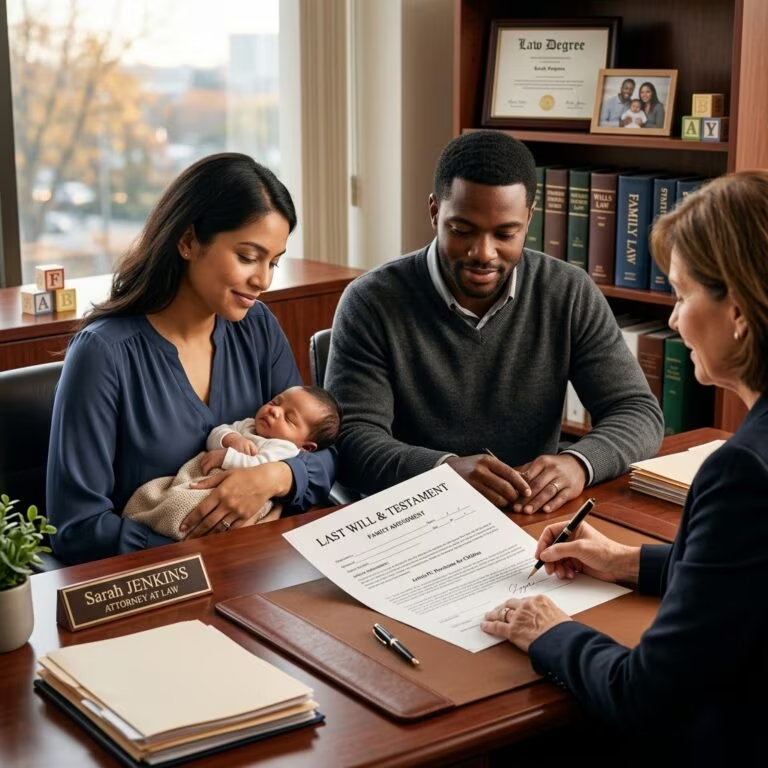
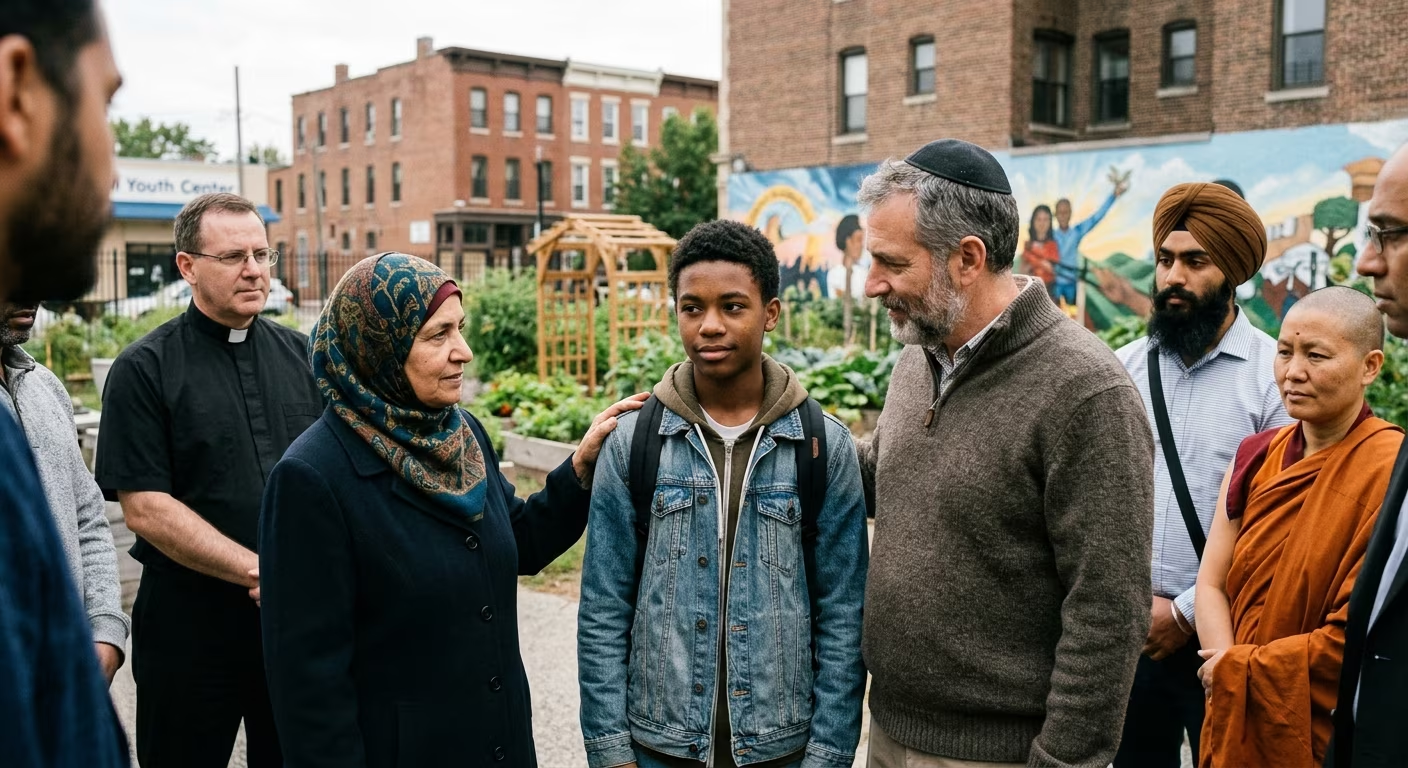
In the complex landscape of the child welfare system, the primary mandate is universally understood: every child deserves a safe, supportive, and loving home. However, a troubling paradox has emerged in recent years. While thousands of children await permanent placement, numerous qualified, eager prospective parents are being systematically turned away. The catalyst for this exclusion? State-sanctioned religious exemptions that allow taxpayer-funded foster care and adoption agencies to refuse service to individuals who do not align with the agency’s specific religious tenets. In response to this civil rights challenge, an unprecedented alliance of civil rights advocates and diverse religious leaders has emerged, forming a unified interfaith coalition dedicated to eradicating discrimination in adoption and foster care networks.
This movement is not merely a legal battle; it is a profound moral undertaking. It challenges the assumption that religious freedom must come at the expense of a child’s right to a family. By examining the structural barriers created by exclusionary practices, we can better understand the urgent need for reform and the critical role that interfaith advocacy plays in reshaping the future of child welfare.
The Urgency of the Foster Care Crisis
To fully grasp the devastating impact of exclusionary policies, one must first confront the stark realities of the nation’s foster care system. Hundreds of thousands of children are currently navigating out-of-home care, and the system is chronically overwhelmed. Every year, an estimated 20,000 young people “age out” of the foster system without ever having been placed with a permanent family. Aging out without a familial safety net drastically increases a young person’s vulnerability to homelessness, human trafficking, chronic unemployment, and systemic poverty.
The shortage of available, qualified foster and adoptive families is the most critical bottleneck in child welfare today. Social workers and placement specialists are constantly scrambling to find appropriate homes that can cater to the diverse emotional, physical, and developmental needs of these children. In this context of scarcity, policies that artificially shrink the pool of potential parents are not just inefficient; they are actively detrimental to the well-being of the youth the state is sworn to protect. When an agency turns away a loving family simply because of their faith background, marital status, or sexual orientation, the ultimate price is paid by a child who must spend another night in a group home or temporary facility.
Decoding Religious Exemptions in Child Welfare
The core of the current legal and ethical debate revolves around “religious exemptions.” These are statutory provisions or policy waivers that permit child welfare agencies—many of which receive substantial taxpayer funding via government contracts—to bypass standard anti-discrimination laws. Proponents of these exemptions argue that faith-based organizations should not be compelled to violate their deeply held religious beliefs to participate in government programs. Consequently, these agencies claim the right to deny services to prospective parents who fail a religious litmus test.
In practice, this means an agency can legally refuse to work with a prospective parent because they are Jewish, Muslim, Catholic, or atheist, depending on the specific doctrinal stance of the organization. Furthermore, these exemptions are frequently weaponized against the LGBTQ+ community, explicitly barring same-sex couples from fostering or adopting. The legal justification often hinges on a distorted interpretation of religious freedom, effectively transforming the First Amendment from a shield designed to protect individual religious exercise into a sword used to deny essential public services to marginalized groups.
This creates a deeply inequitable system. When state governments outsource their child welfare duties to private, faith-based contractors, they are essentially allowing public funds to subsidize discrimination. The interfaith coalition highlights this crucial distinction: while religious freedom is a bedrock American principle, it does not grant organizations the right to use taxpayer dollars to impose their religious views on the public, especially when doing so inflicts demonstrable harm on vulnerable children.
The Disproportionate Harm to LGBTQ+ Youth
The impact of discriminatory child welfare practices is acutely felt by LGBTQ+ youth, who are significantly overrepresented in the foster care system. Research indicates that sexual minority and gender-expansive youth make up a disproportionately large percentage of the foster population, often entering the system due to family rejection or abuse rooted in their identity. These young people are at a heightened risk for trauma, depression, and suicide when placed in non-affirming environments.
When child welfare agencies utilize religious exemptions to turn away LGBTQ+ adults, they simultaneously deprive LGBTQ+ youth of the opportunity to be placed in homes where they will be inherently understood, affirmed, and celebrated. Affirming homes are not a luxury; they are a critical lifeline for these marginalized youth. The interfaith coalition emphatically points out that policies permitting discrimination against same-sex couples directly sabotage the child welfare system’s ability to find suitable, culturally competent homes for its most at-risk demographic. It represents a systemic failure that prioritizes bureaucratic dogma over trauma-informed care.
Core Principles of the Interfaith Coalition
The mobilization of faith leaders to combat this discrimination is a powerful counter-narrative to the idea that religion inherently supports exclusionary practices. The interfaith coalition operates on several foundational principles:
- Child-Centric Priorities: The absolute paramount consideration in any child welfare decision must be the best interest of the child, completely superseding the organizational preferences or religious ideologies of the placement agency.
- Redefining Religious Liberty: The coalition advocates for an interpretation of religious liberty that protects personal worship without endorsing state-funded discrimination. True religious freedom does not require the marginalization of others.
- The Moral Imperative of Inclusion: Drawing from a wide array of theological traditions—from Christianity to Judaism to Islam—the coalition emphasizes that the core tenets of most faiths mandate caring for the vulnerable, welcoming the stranger, and prioritizing love over exclusion.
- Accountability in Public Funding: Any organization that voluntarily accepts government contracts and taxpayer dollars must adhere to strict non-discrimination standards that protect all citizens equally.
By stepping into the public arena, these faith leaders are reclaiming the moral high ground, demonstrating that bigotry is not an inherent feature of religious conviction, and proving that faith communities can be the strongest advocates for civil rights.
Analyzing the Impact: Inclusion vs. Exclusion
| Policy Approach | Impact on Prospective Parents | Impact on Foster Youth | Systemic Efficiency |
|---|---|---|---|
| Exclusionary (Religious Exemptions) | Alienates and turns away qualified, willing families based on identity or faith. | Prolongs stays in temporary care; denies access to affirming homes. | Reduces the overall pool of available homes, increasing system strain and costs. |
| Inclusive (Non-Discrimination) | Welcomes all qualified applicants, expanding community participation. | Increases placement rates; provides diverse, culturally competent environments. | Maximizes available resources, shortens wait times for permanent placements. |
The Legal Battleground and Legislative Landscape
The struggle over religious exemptions in child welfare is currently being fought in statehouses and federal courts across the country. Following the nationwide legalization of same-sex marriage, a wave of state-level legislation was introduced specifically designed to shield faith-based adoption agencies from non-discrimination ordinances. Several states have successfully codified these “licenses to discriminate,” creating fragmented, unequal systems where the rights of prospective parents vary wildly depending on their zip code.
The legal landscape is further complicated by shifting federal regulations and significant court rulings. Cases like Fulton v. Philadelphia have tested the boundaries of government contracts and religious exercise, highlighting the precarious nature of civil rights protections in the current judicial climate. While the Supreme Court’s decisions have often been narrow and highly specific to the contractual language of individual cities, they have emboldened proponents of exemptions to push for broader federal protections. Civil rights organizations and the interfaith coalition are working tirelessly to counter these efforts, filing amicus briefs and lobbying for comprehensive federal protections that firmly tether taxpayer funding to non-discriminatory practices.
The Human Toll of Bureaucratic Exclusion
Beyond the legal jargon and political posturing, the human cost of these exclusionary policies is profound. For prospective parents, the experience of being turned away by an agency—not because they are unequipped to love and provide for a child, but because of who they love or how they pray—is deeply humiliating and traumatic. It sends a chilling message that the state views them as second-class citizens, unworthy of participating in the fundamental human experience of raising a family.
For the children left behind, the cost is even higher. Every family turned away represents a missed opportunity for a child to find stability, security, and unconditional love. The trauma of prolonged institutionalization or bouncing between multiple foster homes leaves lasting scars on a child’s psychological development. The coalition stresses that an agency’s desire to maintain theological purity should never condemn a child to a childhood without a family.
Charting a Path Forward for Child Welfare Reform
Dismantling the architecture of state-sanctioned discrimination requires a multi-pronged approach. First, there must be a concerted effort to pass comprehensive federal legislation that explicitly prohibits discrimination in any child welfare program receiving federal funds. Legislative proposals aiming to ensure that every child deserves a family represent a critical step toward unifying standards across all fifty states.
Second, public awareness campaigns driven by interfaith and civil rights coalitions must continue to expose the real-world harms of these policies. By centering the voices of foster youth and rejected parents, advocates can cut through the abstract debates over religious freedom and focus the public’s attention on the tangible suffering caused by discrimination. Finally, local and state governments must be pressured to rigorously enforce existing non-discrimination clauses in their contracts, ensuring that public money is never used to fund bigotry.
Conclusion
The launch of an interfaith coalition to fight foster care and adoption discrimination represents a watershed moment in the intersection of civil rights and child welfare. By boldly declaring that religious freedom cannot be used as a shield for discriminatory practices, these advocates are demanding a return to the core mission of the child welfare system: prioritizing the safety, health, and happiness of vulnerable youth. The path forward is undoubtedly challenging, fraught with legal complexities and entrenched ideological divides. However, the moral imperative remains clear. Until every qualified, loving family is welcomed with open arms, and every child is granted the opportunity to thrive in a permanent home, the fight for a truly equitable and just child welfare system must continue unabated.
Frequently Asked Questions
What is a religious exemption in the context of child welfare?
A religious exemption is a legal loophole or policy waiver that allows child-placing agencies—often those receiving taxpayer funding—to deny services to prospective foster or adoptive parents based on the agency’s religious beliefs. This typically targets LGBTQ+ individuals, single parents, or people of different faiths.
Why are faith leaders opposing these exemptions?
Many faith leaders argue that true religious liberty does not justify using government funds to discriminate against others. They emphasize that the core tenets of their respective religions prioritize caring for vulnerable children and welcoming loving families, rather than enforcing exclusionary bureaucratic rules.
How do these discriminatory policies affect children in the foster system?
By turning away qualified families, these policies artificially reduce the pool of available homes. This leads to longer stays in temporary care, higher reliance on group homes, and an increased likelihood that youth will age out of the system without a permanent family.
Are LGBTQ+ youth disproportionately impacted by the foster care system?
Yes, statistics indicate that LGBTQ+ youth are highly overrepresented in foster care, often due to familial rejection. Discriminatory policies harm them directly by limiting the availability of affirming, supportive homes that are critical to their psychological well-being.
What can be done to stop discrimination in adoption and foster care?
Advocates recommend passing federal non-discrimination legislation, tying taxpayer funding to strict anti-discrimination requirements, and supporting interfaith and civil rights coalitions that challenge exclusionary state laws in court.
References
- Safe and Appropriate Foster Care Placement Requirements for Titles IV-E and IV-B — U.S. Administration for Children and Families (ACF), Department of Health and Human Services (HHS). 2023-09-28. https://www.federalregister.gov/documents/2023/09/28/2023-21274/safe-and-appropriate-foster-care-placement-requirements-for-titles-iv-e-and-iv-b
- Fulton v. Philadelphia, 593 U.S. ___ (2021) — Supreme Court of the United States. 2021-06-17. https://www.supremecourt.gov/opinions/20pdf/19-123_g3bi.pdf
- Religious Rights of Youth in Out-of-Home Care — Child Welfare Information Gateway. 2021. https://www.childwelfare.gov/pubs/religiousrights/
- Equality Act (House Report 116-56) — U.S. Government Publishing Office. 2019-05-10. https://www.govinfo.gov/content/pkg/CRPT-116hrpt56/pdf/CRPT-116hrpt56-pt1.pdf