
Holding Leaders Accountable: The Legal Battle Over D.C.’s Child Welfare System
Discover how decades of litigation and civil contempt motions transformed the District of Columbia’s broken child welfare system into a national model for reform.
Introduction: A System in Crisis
The responsibility of protecting vulnerable children is arguably the most profound and essential duty entrusted to local governments. When municipal child welfare systems fail, the consequences are measured not merely in administrative deficits or budget shortfalls, but in disrupted lives, compromised physical safety, and deep generational trauma. For decades, the child welfare system in Washington, D.C., stood as a glaring, tragic example of systemic administrative failure. This dysfunction prompted one of the longest, most complex, and highly contentious legal battles in American civil rights history.
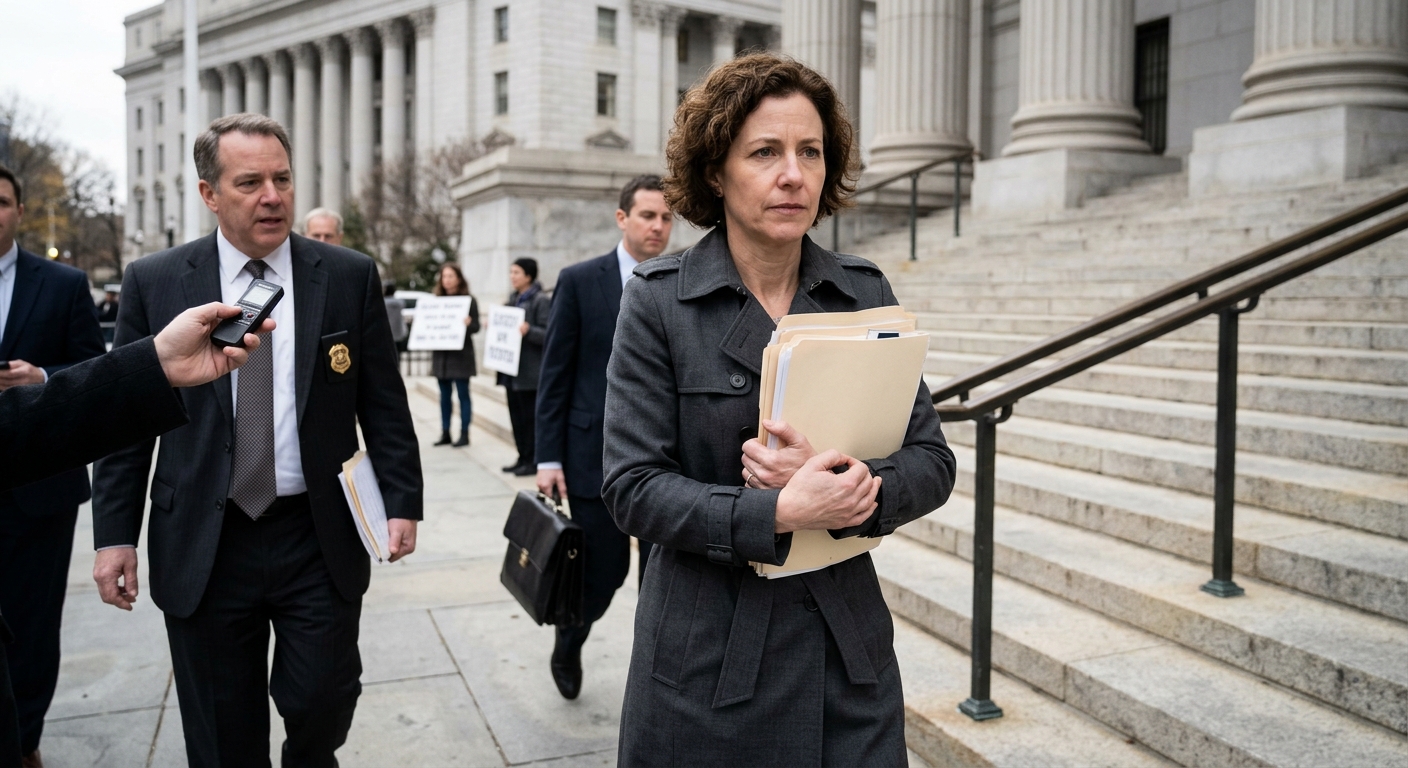
Central to this legal marathon was the aggressive use of federal court intervention to force local compliance. The litigation culminated in dramatic moments where national advocacy groups were forced to file formal contempt of court motions against the city’s highest executives. This comprehensive article explores the intricate legal strategies, the massive structural challenges, and the ultimate administrative triumphs involved when child advocates utilize the federal judicial system to demand strict accountability from reluctant municipal leaders. It serves as a detailed analysis of how sustained legal pressure can eventually forge a functioning, protective system out of a completely broken bureaucracy.
The Historical Context of the District’s Child Welfare Failures
In the late 1980s, the District of Columbia’s child protection apparatus was in a state of absolute administrative and operational collapse. Plagued by extreme employee turnover, chronically undertrained staff, and entirely unmanageable social worker caseloads, the local Department of Human Services was failing its most basic and vital mandate. Investigations into severe physical abuse and neglect were routinely delayed for months or ignored altogether. The infrastructure required to protect the city’s most vulnerable youth simply did not exist in any functional capacity.
Children who were removed from unsafe environments were often placed into overcrowded emergency boarding homes or temporary institutional shelters where they languished for years. These vulnerable youths frequently bounced from one unstable placement to another, effectively growing up inside a bureaucratic maze without any definitive path to adoption, permanent guardianship, or safe family reunification. The resulting psychological toll on these children was immeasurable.
In 1989, leading civil liberties and national child advocacy organizations filed a sweeping federal class-action lawsuit on behalf of thousands of children in the District’s care. Following a revealing and exhaustive federal trial in 1991, a United States District Court judge issued a blistering, historic opinion. The judge described the state of the child welfare system as an absolute “travesty” and found that the city was unequivocally violating the fundamental constitutional and statutory rights of its foster children. This landmark ruling set the stage for decades of federal oversight, introducing a complex and often highly adversarial dynamic between local municipal autonomy and federally mandated civil rights reform.
The Mechanisms of Court-Ordered Reform: Consent Decrees and Monitors
When a federal court finds a municipality legally liable for systemic civil rights violations, the prescribed remedy typically involves a legally binding consent decree or a modified final judicial order. In the context of the District of Columbia’s child welfare case, the court mandated sweeping, structural changes across every single facet of the agency’s daily operations. These strict federal mandates included hard caps on social worker caseloads to ensure children received adequate attention, mandatory comprehensive health, dental, and psychological screenings for all children entering foster care, and rigorous legal timelines for finalizing adoptions.
The Vital Role of the Independent Monitor
To ensure strict, unbiased compliance with these federal mandates, the court appointed an independent monitor. This monitor—typically comprising a dedicated team of experienced child welfare experts, social workers, and data analysts—was tasked with continuously evaluating the city’s operational progress. They conducted extensive field reviews, audited case files, and reported their unvarnished findings directly to the federal judge. While these court orders provide a clear, evidence-based roadmap for recovery, their ultimate success depends entirely on the political will, funding commitments, and competence of local municipal leaders.
When that political will falters, or when entrenched bureaucratic inertia stalls progress, the court’s oversight mechanisms must be weaponized by the plaintiffs to force action. In the most severe cases of chronic non-compliance, federal courts possess the profound authority to shift the local agency into federal receivership. Receivership is a drastic and extraordinary legal measure where the federal court strips operational and financial control away from the local government entirely, appointing an independent receiver with broad, unchecked powers to run the agency and override local laws if necessary.
When Leaders Fail to Act: The Strategic Push for Contempt
The trajectory of institutional reform is rarely linear or smooth. In the District of Columbia, brief periods of administrative progress were frequently followed by severe operational backsliding. Advocacy groups, serving as plaintiffs’ legal counsel for the foster children, meticulously monitored the agency’s data output. When the city’s child welfare agency repeatedly failed to meet negotiated benchmarks, the legal battle rapidly escalated from boardroom negotiations back into the federal courtroom.
Civil Contempt Explained
The most potent and aggressive tool in a civil rights advocate’s legal arsenal is the motion for civil contempt. A civil contempt motion is a formal declaration and urgent plea to the court stating that a party has intentionally violated a binding judicial order. In the context of municipal reform, filing for contempt against a sitting Mayor is a high-stakes, highly publicized legal maneuver. It is designed to expose executive inaction, publicly highlight failing administrations, and trigger severe judicial sanctions—such as massive daily fines—to force immediate compliance.
During the late 2000s, progress in the District stalled significantly. Despite years of oversight and millions of dollars spent, the city was missing crucial implementation deadlines. Foster children were still experiencing multiple, highly disruptive placements, and adoption rates were steadily declining. Frustrated by stalled negotiations, unfulfilled promises, and a perceived lack of executive commitment, advocacy groups filed a formal motion to hold the Mayor and the city in civil contempt. They forcefully argued that city leadership had deliberately bypassed the court-appointed monitor, unilaterally submitted incomplete strategy plans to the court, and displayed a remarkably lackadaisical approach to the physical and emotional safety of foster youth.
The Legal and Political Friction: Executive Autonomy vs. Judicial Accountability
The aggressive push for contempt highlighted a profound ideological and legal friction that frequently arises in structural civil rights litigation. On one side, child advocates and the federal judiciary demanded strict, unyielding adherence to the agreed-upon reform benchmarks. They steadfastly maintained that the lives and well-being of vulnerable children completely superseded local political conveniences, and that federal supervision must persist until the city could reliably and consistently ensure child safety.
On the opposing side, city officials and local government attorneys aggressively argued for municipal autonomy. Utilizing legal mechanisms designed to terminate outdated consent decrees, they contended that perpetual federal oversight violated the fundamental constitutional principles of the separation of powers. They argued this effectively allowed the federal judicial branch to indefinitely and improperly run an executive city agency. City lawyers argued that while the system was not perfect, it had improved drastically from the disastrous conditions of the early 1990s, and that it was legally appropriate to return full operational control to local, democratically elected administrators.
However, federal judges presiding over long-standing civil rights decrees are historically wary of releasing governments from oversight prematurely based solely on promises of future performance. In ruling on the contentious contempt motions, the court decisively sided with the advocates. The judge formally found the city and its executive leadership in civil contempt for failing to implement approved strategy plans and for blatantly ignoring the court-mandated consultation requirements. The ruling sent a shockwave through the municipal government, proving that federal courts would not simply fade away due to political fatigue.
A Turning Point: Steady Progress and Structural Evolution
The sharp legal sting of the contempt rulings, combined with intense public scrutiny, eventually catalyzed a much more sustainable and deeply rooted era of reform. Recognizing that child welfare could not be treated as a secondary priority buried within a massive, convoluted bureaucracy, the city fundamentally restructured its government. The child welfare division was permanently extracted from the massive umbrella department and elevated to a standalone, cabinet-level agency reporting directly to the Mayor.
This structural elevation ensured better, dedicated funding streams, direct executive accountability, and much higher visibility for child welfare issues. Over the subsequent decade, the newly empowered agency began to systematically meet its rigorous exit standards. It successfully reduced the number of children in out-of-home care by investing heavily in preventive, community-based services designed to stabilize at-risk families before forced legal removal became necessary.
Key Metrics of Systemic Improvement
The transformation of the agency over three decades was profound, moving from a disorganized department to a streamlined, data-driven organization.
| Metric | Pre-Litigation Era (Late 1980s) | Post-Reform Era (2020s) |
|---|---|---|
| Agency Structure | Buried within a larger, underfunded human services bureaucracy. | Independent, cabinet-level agency reporting directly to the Mayor. |
| Foster Care Population | Estimated 2,500 to 3,000 children, with severe tracking inaccuracies. | Reduced to under 700 children through proactive family stabilization. |
| Caseworker Loads | Frequently exceeding 100 cases per worker, leading to severe neglect. | Strictly capped to meet national best practice standards. |
| Focus of Services | Reactive emergency placements and long-term institutionalization. | Proactive community support, family reunification, and rapid adoptions. |
The End of an Era: The Final Settlement and Legacy
After more than three decades of intense litigation, multiple periods of receiverships, and aggressive contempt motions, the landmark lawsuit finally reached its historic conclusion. In 2021, the federal court formally approved a final settlement agreement, officially ending the federal oversight that had governed the agency since the early 1990s. The judge who oversaw the complex case for much of its history praised the system’s remarkable transformation from a dysfunctional disaster into a recognized national model for child welfare administration.
The resolution was not a sudden, overnight victory, but the cumulative, hard-fought result of relentless legal advocacy, unyielding judicial firmness, and the eventual maturation of city leadership to embrace systemic change rather than continuously fight it in federal court.
A Blueprint for Child Welfare Systems Nationwide
The multi-decade legal saga in the nation’s capital serves as a critical, highly instructive blueprint for other jurisdictions across the country currently grappling with broken child welfare systems. It clearly underscores that lasting, systemic reform requires substantially more than just temporary infusions of cash or the periodic firing of agency directors. It demands sustained, fiercely independent oversight and the unwavering willingness of legal advocates to hold the highest levels of government legally accountable when they falter.
While civil contempt motions and deeply adversarial court battles are financially costly and emotionally exhausting for all parties involved, they are sometimes the only legal mechanisms capable of breaking through deeply entrenched bureaucratic inertia. The enduring legacy of this litigation is a profound testament to the power of the federal courts to enforce civil rights, ensuring that the most vulnerable members of society are never left to languish in the dark shadows of administrative failure.
Frequently Asked Questions (FAQs)
What is a consent decree in civil rights litigation?
A consent decree is a legally binding agreement approved by a federal judge that resolves a dispute between parties without an admission of guilt. In civil rights cases, it usually outlines specific, measurable reforms a government agency must implement to correct constitutional violations, often accompanied by strict timelines and independent monitoring.
What happens when a mayor or city official is held in civil contempt?
When an official is held in civil contempt, the court determines they have intentionally failed to comply with a judicial order. The court can impose sanctions designed to coerce compliance, which may include heavy daily financial penalties levied against the city or the appointment of a federal receiver to take over the agency’s operations.
Why do federal courts appoint independent monitors?
Federal judges rely on independent monitors because the court lacks the day-to-day expertise and resources to track a complex agency’s compliance. Monitors are neutral experts who audit data, conduct site visits, and provide objective reports to the judge, ensuring that the city’s self-reported progress is accurate and verifiable.
How did the District of Columbia eventually exit federal court oversight?
The District exited federal oversight by consistently meeting dozens of strict performance benchmarks over a sustained period. This involved restructuring the child welfare agency, drastically reducing social worker caseloads, investing in preventative family services, and proving to the court and the independent monitor that the reforms were structurally permanent and sustainable.
References
- LaShawn A. v. Fenty, 701 F. Supp. 2d 84 (D.D.C. 2010) — United States District Court for the District of Columbia. 2010-04-05. https://law.justia.com/cases/federal/district-courts/district-of-columbia/dcdce/1:1989cv01754/33926/896/
- Case Profile: LaShawn A. v. Fenty — Civil Rights Litigation Clearinghouse, University of Michigan Law School. 2021-06-04. https://clearinghouse.net/case/11186/
- Final Settlement Agreement in LaShawn A v. Bowser Approved — Center for the Study of Social Policy. 2021-06-04. https://cssp.org/2021/06/final-settlement-agreement-in-lashawn-a-v-bowser-approved/
- LaShawn A. v. Bowser, Final Settlement Agreement — District of Columbia Child and Family Services Agency. 2020-08-31. https://cfsa.dc.gov/sites/default/files/dc/sites/cfsa/publication/attachments/LaShawn%20Settlement%20Agreement%20Final%20August%2031%202020.pdf
Similar Articles








Read full bio of Sneha Tete


