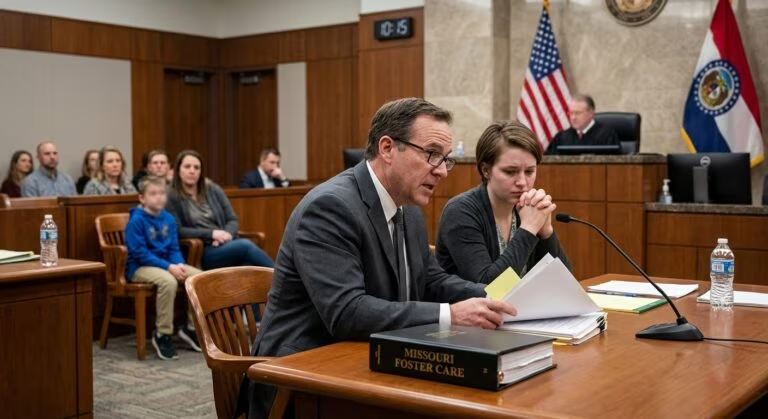
Every year in the United States, roughly 20,000 young people “age out” of the foster care system, effectively emancipating into adulthood without the traditional safety nets that many of their peers take for granted. At any given time, there are approximately 400,000 children and youth navigating the complexities of foster care. While a positive K-12 educational experience can serve as a powerful counterweight to the instability and trauma they may face, the transition into adulthood remains fraught with peril. One of the most severe risks for this demographic is youth homelessness. A longitudinal study focused on the adult functioning of former foster youth found that between 31% and 46% of study participants had experienced homelessness by the time they reached 26 years of age. Without family members to fall back on for financial or emotional assistance, transitioning into society can often mean a direct pipeline to the streets.
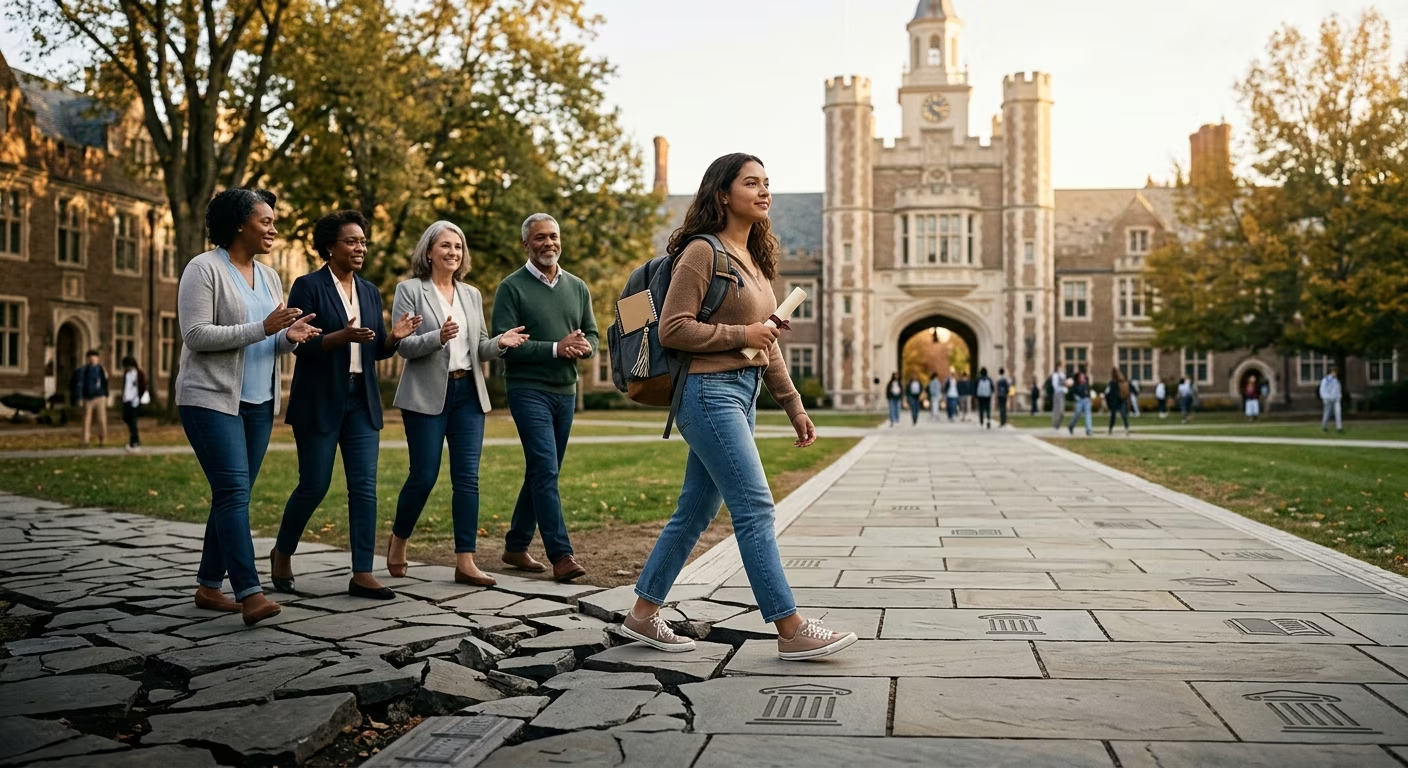
However, a vital pathway out of this cycle of poverty and housing instability exists: higher education. A college degree offers more than just an academic credential; it provides a structural ecosystem of housing, mentorship, financial assistance, and long-term economic mobility. Unfortunately, accessing and persisting through higher education presents its own labyrinth of systemic barriers for young people with a history of foster care. Bridging the gap between a fragile exit from the child welfare system and the structured environment of a university requires concerted policy interventions, financial waivers, and dedicated campus support programs.
The Harsh Reality: Transitioning from Foster Care to Independence
The concept of “aging out” highlights a critical flaw in the child welfare framework. When individuals in foster care reach the age of majority—18 in most states, though some jurisdictions have extended care up to age 21—they are abruptly cut off from state-funded housing, financial subsidies, and casework support. This sudden loss of a safety net leaves them intensely vulnerable. In stark contrast, a significant majority of young adults in the general population continue to receive financial and emotional support from their parents well into their mid-twenties, allowing them the grace period needed to establish careers and secure stable housing.
For foster youth, the transition to independence is often compounded by the cumulative effects of educational disruption. On average, youth in foster care experience four different home placements by the time they are 17 years old. Each residential move frequently necessitates a change in schools, resulting in lost academic credits, broken relationships with teachers and peers, and significant gaps in foundational learning. Consequently, only about 55% of foster youth earn a high school diploma by age 19, a rate that falls far below the national average.
This lack of educational attainment severely restricts employment opportunities in a competitive economy. Without a high school diploma or a collegiate degree, securing a job that offers a living wage and necessary health benefits is incredibly difficult, pushing many former foster youth into a precarious financial state where rent and basic necessities quickly become unaffordable. The intersection of these factors—lack of familial support, disrupted secondary education, and severely limited earning potential—creates a perfect storm that drives a disproportionate number of these young adults into episodes of prolonged homelessness.
The Role of Higher Education in Breaking the Cycle
Higher education stands as one of the most effective structural interventions for altering the trajectory of youth transitioning out of the foster care system. For students who have historically lacked a consistent and safe home environment, a university or community college campus can serve as a stabilizing force. Beyond the confines of the classroom, academic institutions offer access to secure dormitory housing, campus dining plans, physical and mental healthcare facilities, and a built-in community of engaged peers and academic mentors.
The promise of a postsecondary degree is synonymous with long-term economic self-sufficiency. Earning a bachelor’s degree significantly increases lifetime earning potential and drastically reduces the likelihood of future housing insecurity. Acknowledging this reality, approximately 70% of teens who emancipate from foster care express a strong, persistent desire to attend college. However, the outcomes are starkly different from their aspirations: fewer than 10% of these youth manage to enroll in higher education, and an estimated 3% to 4% successfully graduate with a four-year degree.
Closing this massive gap between aspiration and collegiate attainment is critical for societal equity. When former foster youth are empowered to access and complete college, they transcend the statistical expectations that have been placed upon them, breaking generational cycles of poverty, abuse, and disenfranchisement. Education becomes the ultimate equalizer, providing the tools necessary to navigate adulthood with confidence and financial independence.
Systemic Barriers to College Access and Retention
While the benefits of higher education are unequivocally clear, the path to enrollment and degree retention is blocked by numerous systemic hurdles. The most immediate and daunting barrier is financial. Navigating the Free Application for Federal Student Aid (FAFSA) has historically been an overwhelming process for students without legal guardians. While recent legislation like the FAFSA Simplification Act has sought to ease the burden by streamlining the process for students to declare independent status, many youths still struggle immensely. They are often burdened with the traumatizing task of tracking down legal documents and providing proof to financial aid offices that they were wards of the court—a process that can deter them from finalizing their financial aid packages.
Housing insecurity does not magically disappear once a student successfully enrolls in a college. In fact, standard academic calendars can inadvertently trigger episodes of homelessness. When residence halls close for winter, spring, and summer breaks, students who rely entirely on campus housing are often left with nowhere to go. Without family homes to return to for the holidays, former foster youth may find themselves sleeping in cars, in temporary homeless shelters, or couch-surfing with friends until the new academic semester begins.
Furthermore, the psychological toll of past trauma cannot be ignored in an academic context. The foster care experience often carries enduring mental health challenges, including chronic anxiety, depression, and post-traumatic stress disorder (PTSD). Without adequate mental health counseling and proactive academic coaching, these students are at a much higher risk of “stopping out”—leaving college before completing their degree due to feelings of profound isolation or being utterly overwhelmed by compounding academic and financial pressures.
Legislative and Policy Solutions: Paving the Way Forward
Addressing the multifaceted challenges faced by foster youth requires robust legislative and policy frameworks at both the state and federal levels. Policymakers are increasingly recognizing that targeted financial assistance is the bedrock of college access for this specific demographic.
At the federal level, the Education and Training Voucher (ETV) program provides targeted grants of up to $5,000 per academic year specifically for eligible current and former foster youth. These crucial funds can be utilized for tuition, housing, textbooks, transportation, and other education-related living expenses. Additionally, federal initiatives like the Foster Youth to Independence (FYI) program aim to integrate housing choice vouchers with educational and child welfare support, ensuring that young people do not have to choose between finding a safe place to sleep and attending their classes.
State governments have also stepped up by implementing robust tuition waiver programs that drastically reduce or completely eliminate the cost of college for eligible students. These waivers are critical instruments for transforming the distant dream of higher education into a tangible, accessible reality.
State Tuition Waivers and Support Programs
| State | Program Overview | Key Eligibility Requirements |
|---|---|---|
| Arizona | The Arizona Foster Youth Award utilizes a combination of federal grants and university aid to cover the full cost of undergraduate tuition and mandatory fees. | Must have been in the Arizona foster care system on or after their 16th birthday. |
| Nevada | The NSHE Foster Youth Fee Waiver covers base registration fees and applicable lower-division laboratory fees at public colleges and universities. | Must have been in Nevada foster care at age 13 or older and be under the age of 26. |
| Texas | State-mandated tuition and fee waivers at all public colleges and universities for eligible youth. | Must have been in the custody of the Texas Department of Family and Protective Services (DFPS). |
Campus-Based Support Programs: Creating a Safety Net
Financial aid alone is woefully insufficient without a highly supportive infrastructure physically located on the college campus. To genuinely improve retention and graduation rates, higher education institutions must implement comprehensive, trauma-informed support programs tailored to the unique, holistic needs of former foster youth.
- Designated Campus Liaisons: Progressive universities have established designated campus liaisons. States like Florida and California have even passed legislation requiring public postsecondary institutions to employ specialized staff members who serve as primary points of contact for students from the foster care system. These liaisons help students navigate financial aid complexities, connect them with academic tutoring, and act as fierce advocates when administrative hurdles arise.
- Year-Round Housing Programs: To directly combat housing insecurity and prevent seasonal homelessness, colleges are increasingly offering year-round housing options. This ensures that dormitories remain open and fully accessible for vulnerable students during all holiday and summer breaks.
- Wraparound Auxiliary Services: On-campus food pantries, emergency micro-grants for unexpected expenses (like a broken laptop or sudden medical bill), and dedicated mentorship programs create a safety net that closely mirrors the support typically provided by a stable family structure. Peer support groups further foster a sense of belonging, allowing students with shared lived experiences to build resilience and community together.
Actionable Steps to Support Foster Youth in Higher Education
Creating an equitable educational landscape requires a collective, sustained effort from universities, lawmakers, and community advocates alike. The stakes are simply too high to rely solely on individualized resilience.
- For Universities: Academic institutions should prioritize demographic data collection to accurately track the enrollment, retention, and graduation rates of former foster youth. Expanding on-campus housing to standard 12-month contracts and providing trauma-informed training to all academic advisors and financial aid officers are essential operational steps.
- For Policymakers: State legislatures must work diligently to eliminate arbitrary age caps on tuition waivers. Many foster youth experience delayed college entry due to the turbulent nature of their early adulthood; cutting off vital financial support at age 26 artificially limits their potential. Furthermore, federal funding for the ETV program should be proactively expanded to reflect the rapidly rising costs of modern higher education.
- For the Community: Non-profit organizations, local philanthropists, and community businesses can provide critical support through one-on-one mentorship, offering paid professional internships, and funding supplementary community scholarships to cover the hidden costs that tuition waivers do not address, such as transportation, dorm supplies, and professional interview attire.
Conclusion
The journey from the unstable landscape of the foster care system to earning a college degree is undeniably arduous, frequently fraught with severe financial instability and the looming, constant threat of homelessness. Yet, when provided with the appropriate resources, inclusive tuition waivers, and holistic campus-based support systems, young adults who have experienced foster care consistently demonstrate immense resilience, brilliance, and academic capability. Higher education remains one of the most powerful systemic tools available for breaking the cycle of poverty and disenfranchisement. By dismantling the administrative and financial barriers that stand in their way, society can successfully ensure that the transition out of foster care is not a traumatic pathway to the streets, but rather a secure stepping stone toward a self-sufficient, empowered, and thriving future.
Frequently Asked Questions (FAQs)
What percentage of youth aging out of foster care experience homelessness?
Research indicates that between 31% and 46% of young adults who age out of the foster care system experience at least one episode of homelessness by the time they reach age 26. This vulnerability is primarily due to an abrupt loss of state support, coupled with a lack of familial financial resources.
How does higher education help former foster youth?
Higher education provides a multifaceted support system that extends far beyond academics. It offers direct access to stable housing through dormitories, consistent meals via dining plans, physical and mental health services, and a supportive community of peers. Ultimately, securing a college degree significantly boosts long-term earning potential, helping to permanently break the cycle of poverty.
What are tuition waivers for foster youth?
Tuition waivers are state-level legislative programs that allow eligible current and former foster youth to attend public colleges and universities without paying standard tuition and base registration fees. The specific eligibility requirements, such as age limits and the amount of time spent in the state’s care, vary widely by jurisdiction.
What is the Education and Training Voucher (ETV) program?
The ETV program is a federally funded initiative that provides up to $5,000 per academic year to eligible youth who have aged out of the foster care system. These flexible funds can be used to cover various college-related living expenses, including tuition, off-campus rent, textbooks, and essential transportation.
References
- Students in Foster Care — U.S. Department of Education. 2024-01-01. https://www2.ed.gov/about/inits/ed/foster-care/index.html
- Homelessness During the Transition From Foster Care to Adulthood — Dworsky, A., et al. American Journal of Public Health. 2013-12-01. https://www.ncbi.nlm.nih.gov/pmc/articles/PMC3969135/ (This older source is used because it serves as the foundational, peer-reviewed longitudinal study on homelessness incidence among transitioning foster youth.)
- Higher Education: Actions Needed to Improve Access to Federal Financial Assistance for Homeless and Foster Youth — U.S. Government Accountability Office (GAO). 2016-05-19. https://www.gao.gov/products/gao-16-343 (This comprehensive GAO report is included as it provides the definitive original standard on federal financial aid access barriers for this vulnerable population.)
- Supporting College Students Transitioning Out of Foster Care — Administration for Children and Families. 2019-01-01. https://www.acf.hhs.gov/opre/report/supporting-college-students-transitioning-out-foster-care (Included as an authoritative federal formative evaluation report establishing vital benchmarks for postsecondary education retention programs.)