
HHS Resignations and Reproductive Freedom
Analyzing how federal leadership shifts impact reproductive rights.
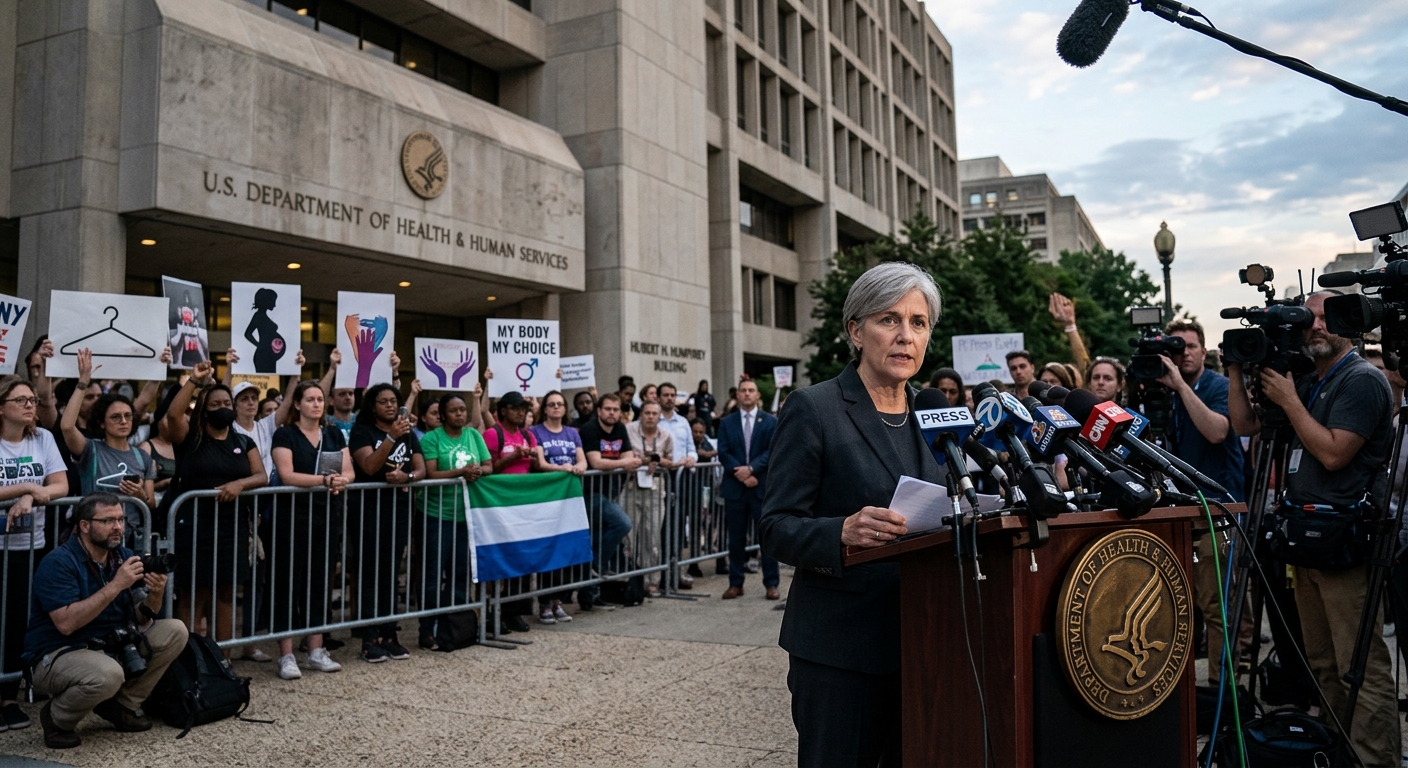
Navigating the Crossroads: HHS Leadership and Reproductive Freedom
The departure of high-ranking government officials often triggers a ripple effect across federal departments, prompting civil rights advocates to reevaluate the trajectory of national policy. The resignation of a key leader within the Department of Health and Human Services (HHS)—specifically within the Administration for Children and Families (ACF)—serves as a pivotal moment for reproductive freedom in the United States. For years, the intersection of federal authority and bodily autonomy has been a highly contested battleground, particularly concerning marginalized and vulnerable populations placed under federal care. When individuals in prominent, decision-making positions step down, it brings into sharp focus the ideological directives they championed and the systemic legacy those policies leave behind. Understanding this administrative transition requires a comprehensive look into the mechanisms of federal oversight, the landmark legal challenges mounted by civil liberties organizations, and the ongoing struggle to protect the fundamental right to accessible reproductive healthcare.
The Administration for Children and Families: Scope and Power
To comprehend the gravity of leadership changes within HHS, one must first understand the vast responsibilities of the Administration for Children and Families. The ACF is tasked with managing programs that promote the economic and social well-being of families, children, and communities nationwide. Crucially, this agency oversees the Office of Refugee Resettlement (ORR), a specific division responsible for the care and placement of unaccompanied migrant children who enter the United States. This unique custodial role means that the federal government legally acts in loco parentis—in the place of a parent—for thousands of displaced youth.
The decisions made by an Assistant Secretary dictate not just standard housing and educational requirements, but also the extent of medical services these minors can access. Under certain administrative regimes, these extensive powers have been leveraged to impose strict ideological constraints on reproductive health. The systemic denial of access to contraception, prenatal care, and abortion services for teenagers in federal custody became one of the most defining and controversial legacies of the ACF’s oversight.
The Core Controversy: Undocumented Minors and Healthcare Access
The controversy surrounding reproductive freedom for unaccompanied minors reached a boiling point when federal officials enacted policies that effectively granted ORR directors the power to veto a minor’s decision to terminate a pregnancy. For teenagers fleeing severe violence and seeking asylum, arriving in the United States pregnant often means navigating complex, intersectional trauma alongside a daunting legal and immigration system. Policies requiring high-level executive approval for abortion access created an insurmountable bureaucratic blockade.
Young women found themselves trapped in federal shelters, subjected to mandatory counseling at religiously affiliated crisis pregnancy centers, and denied the necessary medical transport to reproductive health clinics. The government’s stance was historically rooted in the assertion that facilitating abortion access conflicted with federal interests. However, civil rights advocates fiercely argued that holding marginalized youth hostage to an administration’s political agenda was both unconstitutional and deeply unethical, violating core principles of bodily autonomy and equal protection under the law.
Analyzing the Legal Battles for Bodily Autonomy
The fight against these restrictive administrative policies resulted in fierce legal confrontations, highlighting the indispensable role of the judiciary in checking executive overreach. Civil rights organizations swiftly mobilized, bringing landmark lawsuits to challenge the constitutionality of the HHS and ORR directives. These courtrooms became the primary arena for defending the rights of unaccompanied minors.
Advocates successfully argued that the government could not place an undue burden on a minor’s constitutional right to access an abortion, regardless of their immigration status or custodial situation. Federal courts frequently sided with the plaintiffs, issuing emergency injunctions that forced federal shelters to step aside and allow young women to obtain the medical care they desperately requested. These legal victories were monumental, firmly establishing that constitutional protections regarding reproductive freedom do not evaporate the moment a person is detained at the U.S. border.
The Realities of Administrative Delay and De Facto Bans
While courtroom victories provided immediate relief to individual plaintiffs, the broader strategy of the administration was often one of calculated attrition. Even when policies were officially halted by federal judges, the practical reality inside the federal shelter network remained overwhelmingly challenging. Bureaucratic hurdles, prolonged legal appeals, and intimidation tactics were actively employed to delay healthcare access.
In reproductive healthcare, time is of the essence. By dragging out court proceedings and refusing to expedite medical clearances, federal officials created a “de facto” ban. A pregnant teenager detained in a state with strict gestational limits could easily be pushed past the legal window for a procedure while waiting for federal officials to process basic paperwork. This systemic delay tactic highlighted exactly how administrative machinery could be weaponized to achieve ideological goals without explicitly changing federal law.
The Psychological Toll on Vulnerable Youth
The consequences of delaying or denying reproductive healthcare extend far beyond immediate legal battles; the psychological toll on vulnerable youth is catastrophic. For undocumented minors, the journey to the United States is frequently marred by severe trauma, including human trafficking, sexual violence, and profound physical hardship. Arriving in a supposedly safe environment only to discover that their bodily autonomy is completely controlled by federal bureaucrats deeply exacerbates this trauma.
Mental health professionals widely agree that forcing an adolescent to carry an unwanted pregnancy can lead to severe psychological distress, an increased risk of self-harm, and long-term psychiatric complications. Mandating that pregnant teenagers visit centers which employ manipulative tactics to dissuade them from medical procedures only compounds this emotional distress. Implementing a trauma-informed approach to reproductive health is an absolute necessity for any federal agency entrusted with the well-being of displaced and marginalized minors.
Implications of Leadership Transitions: Policy Shifts vs. Optics
Against this backdrop of intense litigation and public outcry, the resignation of an HHS Assistant Secretary represents both a symbolic victory and a practical question mark. For civil rights defenders, the departure of an official who spearheaded regressive policies offers a moment of respite and a clear opportunity for systemic reform. It demonstrates that sustained public pressure, congressional oversight, and relentless legal challenges can effectively hold powerful individuals accountable.
However, a change in leadership does not automatically guarantee a lasting change in institutional culture. The bureaucratic framework, the extensive network of federal shelter contractors, and the entrenched policy directives often outlast the tenure of any single political appointee. Therefore, while a resignation is significant, advocates caution against early complacency. Incoming leadership must be actively pressured to dismantle restrictive frameworks and explicitly codify protections for reproductive freedom within the agency’s permanent operational guidelines.
The Broader Landscape of Reproductive Justice and Civil Liberties
The struggle over unaccompanied minors is just one facet of a much larger, ongoing battle for reproductive justice in the United States. The federal government’s approach to the ACF and ORR often mirrors its broader stance on healthcare funding and family planning initiatives. For instance, the same administrative ethos that blocked migrant teens from abortion access frequently attempts to dismantle federal grant programs dedicated to providing comprehensive family planning services to low-income communities.
A comprehensive understanding of this issue requires a deeply intersectional approach. The battle for reproductive freedom cannot be divorced from immigrant rights, youth advocacy, and racial justice. The young women most affected by the policies of the HHS and ACF are disproportionately women of color confronting the intersecting traumas of displacement, poverty, and systemic inequality. The defense of reproductive freedom must therefore be championed by a broad, uncompromising coalition of civil rights groups and healthcare professionals.
Steps Toward Lasting Reform and Accountability
Moving forward, the resignation of controversial HHS leadership must serve as a catalyst for concrete, structural reform. The mere cessation of harmful policies is insufficient; affirmative, irreversible steps must be taken to guarantee reproductive equity. First, HHS and the ACF must issue unequivocal directives ensuring that all individuals in their custody have unimpeded, confidential access to comprehensive reproductive healthcare. Second, independent auditors should be appointed to monitor compliance and prevent future abuses of power within the shelter network. Finally, Congress must act to codify these vital protections into federal law, firmly removing the vulnerability that comes with shifting administrative regimes.
Table: Key Entities in Federal Reproductive Health Oversight
| Entity / Organization | Role and Primary Responsibilities | Impact on Reproductive Rights |
|---|---|---|
| Department of Health and Human Services (HHS) | Federal executive department responsible for enhancing the health and well-being of all Americans. | Sets high-level directives that govern federal funding for family planning and sets standards for healthcare access. |
| Administration for Children and Families (ACF) | A division of HHS overseeing programs promoting the economic and social well-being of families and children. | Appoints leadership that directly dictates the welfare and operational guidelines of youth in federal custody. |
| Office of Refugee Resettlement (ORR) | Agency within the ACF responsible for the care and placement of unaccompanied migrant children. | Acts as a legal guardian, making critical determinations regarding a detained minor’s access to medical care. |
| Civil Rights Advocates | Non-profit and legal organizations dedicated to defending individual liberties. | Provide crucial legal representation to challenge unconstitutional directives and ensure access to reproductive care. |
Frequently Asked Questions (FAQs)
- What is the Administration for Children and Families (ACF)?
The ACF is a division of the Department of Health and Human Services (HHS) that manages federal programs focused on social and economic well-being, including the care of unaccompanied migrant children. - How does HHS policy directly impact reproductive freedom?
HHS leadership determines how federal funds are allocated for family planning and sets the medical care standards for populations living in federal custody, such as undocumented youth. - Why are unaccompanied minors particularly vulnerable?
These minors are often fleeing violence and trauma. Because they are in the legal custody of the federal government, they cannot access healthcare, including abortions, without administrative approval. - What role do federal courts play in these disputes?
Federal courts serve as a check on executive power. They have frequently intervened to issue emergency injunctions allowing minors to receive reproductive care when government agencies attempt to block them. - Does a change in agency leadership guarantee policy change?
Not necessarily. While a new leader can issue different directives, bureaucratic structures and long-standing shelter contracts often require sustained public and legal pressure to permanently reform.
References
- Administration for Children and Families: Mission and Overview — U.S. Department of Health and Human Services. 2024-01-15. https://www.acf.hhs.gov/about/what-we-do
- Unaccompanied Children Program Fact Sheet — Office of Refugee Resettlement, HHS. 2024-03-10. https://www.acf.hhs.gov/orr/about/ucs/facts-and-data
- Garza v. Hargan, 874 F.3d 735 (D.C. Cir. 2017) — U.S. Court of Appeals for the District of Columbia Circuit. 2017-10-24. https://www.cadc.uscourts.gov/internet/opinions.nsf/
- Refugee and migrant health — World Health Organization. 2023-11-20. https://www.who.int/news-room/fact-sheets/detail/refugee-and-migrant-health
- U.S. appeals court rules against Trump administration on teen migrant abortions — Reuters. 2018-06-04. https://www.reuters.com/article/us-usa-immigration-abortion/u-s-appeals-court-rules-against-trump-administration-on-teen-migrant-abortions-idUSKCN1J024V/
Similar Articles








Read full bio of medha deb


