
Healing the Divide: Preserving Family Unity at the Border
Exploring the psychological and legal necessities of keeping families intact.
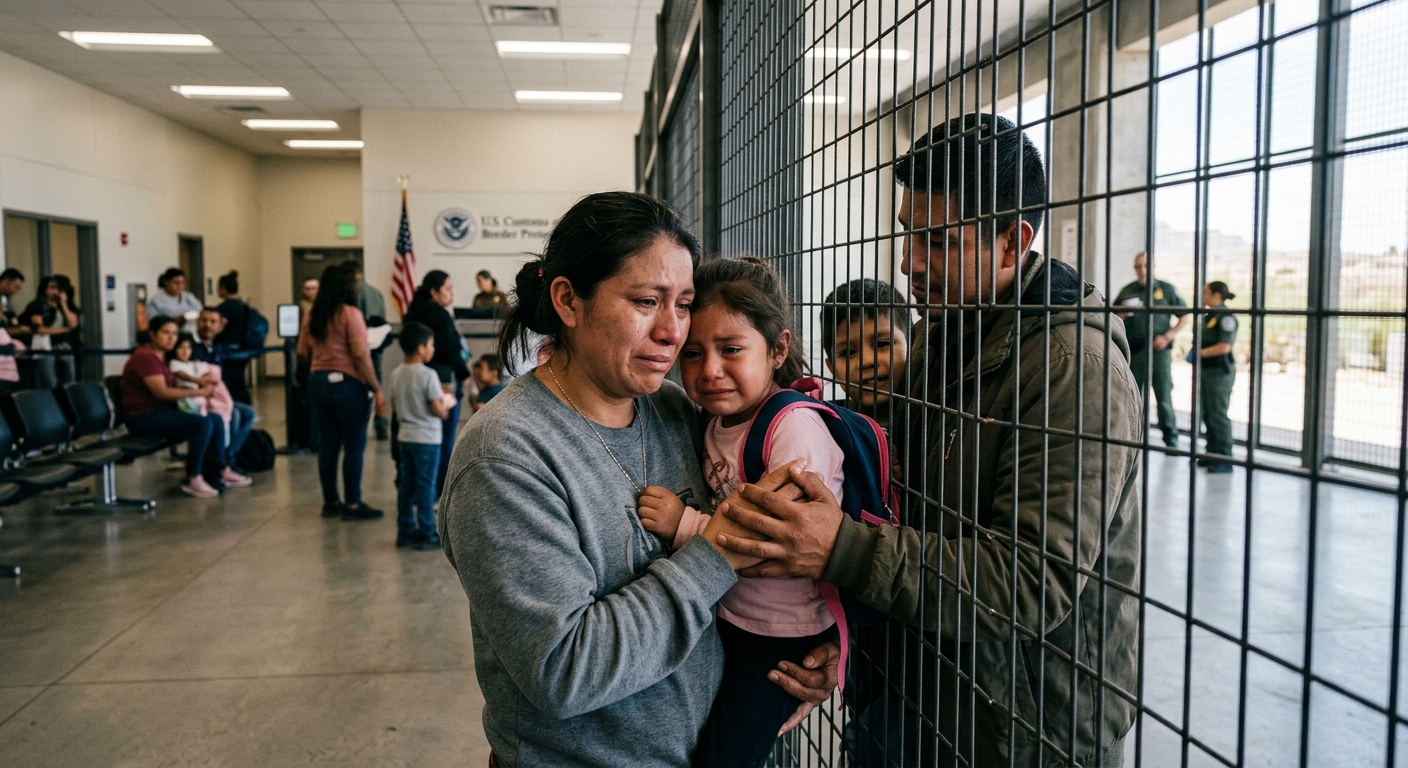
Migration is an enduring human phenomenon, driven by the profound desire for safety, stability, and a better future. When individuals and families make the arduous decision to leave their home countries, they are often fleeing extreme violence, political persecution, or systemic poverty. However, when these vulnerable populations reach international borders seeking asylum, they sometimes encounter state policies that compound their trauma rather than offer refuge. Among the most deeply contested and morally fraught of these policies is the systematic separation of migrant families.
Stripping children from the arms of their parents in the name of border enforcement represents a profound fracture in ethical governance and human rights. It is not merely a logistical or political issue; it is a profound moral crisis. This article explores the imperative to permanently eliminate family separation, examining the international legal frameworks that protect family unity, the devastating psychological impact on children, and the necessity of shifting toward restorative, community-based immigration reforms. By analyzing these dimensions, we can understand why safeguarding the family unit is a non-negotiable cornerstone of humane border policy.
The Fundamental Human Right to Family Unity
At the core of international human rights law is the unequivocal recognition of the family as the natural and fundamental group unit of society. This principle is enshrined in cornerstone documents such as the Universal Declaration of Human Rights and the Convention on the Rights of the Child, which assert that families are entitled to protection by society and the State. When governments design immigration policies that deliberately fracture this unit, they operate in direct violation of these global consensus standards.
The United Nations High Commissioner for Refugees (UNHCR) has provided extensive guidelines emphasizing that the detention of asylum-seekers is inherently undesirable and should only be used as a measure of absolute last resort. Within these guidelines, the preservation of family unity is paramount. The rationale is clear: families provide critical emotional and physical security, particularly during periods of intense vulnerability such as displacement and migration.
Safeguarding family unity requires adherence to several core principles:
- Non-Penalization of Asylum Seekers: Individuals seeking refuge should not be punished for their method of entry, nor should family separation be wielded as a punitive tool for deterrence.
- Best Interests of the Child: All actions concerning minors, whether undertaken by public or private social welfare institutions, courts of law, or administrative authorities, must prioritize the child’s best interests above enforcement quotas.
- Proportionality and Necessity: Any restriction on the liberty of migrant families must be strictly necessary, proportionate, and fundamentally respect their right to seek asylum.
To ignore these principles is to strip the asylum process of its humanity, reducing complex human survival strategies to mere administrative infractions.
The Hidden Scars: Unpacking the Psychological Toll on Minors
The intersection of pediatric health and immigration enforcement presents a sobering reality: separating children from their parents causes immediate, severe, and potentially irreversible psychological harm. The American Academy of Pediatrics (AAP) has consistently and forcefully warned against the detention and separation of immigrant children. Their policy statements emphasize that such environments fail to meet even the most basic standards of care and actively expose children to severe trauma.
Central to the medical consensus against family separation is the phenomenon of “toxic stress.” Standard, everyday stress can be a healthy part of childhood development when it is buffered by supportive adult relationships. However, toxic stress occurs when a child experiences strong, frequent, and prolonged adversity without the mitigating presence of a trusted caregiver. When a child is forcibly removed from their parents—their most critical source of safety, emotional regulation, and comfort—their physiological stress response systems go into overdrive.
This prolonged biological alarm state can physically disrupt the development of a child’s brain architecture and compromise their immune system. The World Health Organization (WHO) notes that refugee and migrant children are already exposed to intense stressors before and during their journeys, making them highly vulnerable. Compounding this with forced separation exacerbates the risk of long-term mental health conditions.
Pediatricians and mental health professionals have observed alarming symptoms in separated children, including:
- Severe Anxiety and Depression: Manifesting as withdrawal, inconsolable crying, and a loss of interest in their surroundings.
- Post-Traumatic Stress Disorder (PTSD): Resulting in night terrors, hypervigilance, and severe emotional dysregulation.
- Developmental Regression: Loss of previously acquired skills, such as speech delays or the return of bedwetting in older children.
Recently, leading health organizations have reiterated the urgent need to end family detention entirely, noting that no amount of time in detention is safe for children. The psychological devastation is swift, but the road to recovery can span a lifetime.
Navigating the Legal and Historical Landscape of Border Enforcement
Historically, immigration policies in various jurisdictions have occasionally drifted toward “zero-tolerance” frameworks, utilizing harsh penalties as a supposed deterrent against irregular migration. The rationale often presented by policymakers is that visible, punitive consequences—such as prosecution and subsequent family separation—will dissuade future migrants from making the journey. However, evidence consistently shows that deterrence-based policies do not stop forced migration; they merely inflict collateral damage on the most vulnerable.
When governments weaponize family separation as a border management strategy, they cross a distinct ethical line, transforming a civil administrative process into a mechanism of intentional state-sponsored trauma. Legal advocates and civil rights organizations have historically had to intervene through massive litigation to halt these practices and protect the fundamental rights of families.
These legal battles are vital to maintaining democratic accountability. Lawsuits have frequently resulted in settlements that mandate the reunification of separated families and place strict injunctions against the resumption of such policies. However, while legal injunctions can stop the immediate bleeding, they do not automatically heal the wounds. The complex logistics of tracking down deported parents, coordinating cross-border reunifications, and navigating bureaucratic labyrinths highlight the profound recklessness of implementing separation policies without tracking mechanisms. The legal landscape must therefore evolve from merely stopping abuse to proactively ensuring it can never be legally authorized again.
Evolving Paradigms: Punitive vs. Restorative Approaches
To truly reform border management, societies must transition from punitive enforcement models to restorative, humanitarian paradigms. The table below contrasts the core tenets of these two opposing approaches to immigration policy.
| Policy Feature | Punitive Enforcement Model | Restorative Humanitarian Model |
|---|---|---|
| Primary Objective | Deterrence through harsh consequences. | Safe, orderly processing and protection. |
| Treatment of Families | Separation or prolonged institutional detention. | Preservation of family unity; community placement. |
| Psychological Impact | Induces toxic stress and long-term trauma. | Mitigates trauma through supportive services. |
| Legal Alignment | Often violates international asylum norms. | Strict adherence to global human rights laws. |
Accountability and Restorative Measures for Affected Families
Ending the practice of family separation is only the first step; true justice demands comprehensive accountability and restorative measures for those whose lives have been fractured. Reunification is not the finish line; it is the absolute minimum requirement. When a state inflicts targeted trauma on families, it bears a moral and legal responsibility to facilitate their healing and integration.
Restorative justice in the context of immigration requires a multi-faceted approach. First, affected families must be granted secure legal status. It is a profound injustice to separate a family, traumatize the child, and then subject them to the ongoing terror of potential deportation. Providing a pathway to permanent residency acknowledges the specific harm inflicted and offers the stability necessary for psychological recovery.
Second, comprehensive behavioral health support must be subsidized and made readily accessible. The psychological scars of toxic stress do not vanish upon reunification; they require years of specialized, trauma-informed therapy. Furthermore, financial reparations and legal compensation serve as necessary accountability mechanisms, ensuring that the state is held liable for constitutional and human rights violations. By implementing these restorative measures, governments can begin to close the dark chapters of their enforcement history and rebuild trust with vulnerable populations.
Charting a Humane Course Forward: Alternatives to Detention
The moral imperative to eliminate family separation inherently requires the adoption of humane alternatives for managing asylum seekers. Rather than relying on the punitive measures of family separation or prolonged family detention, experts and international bodies advocate for community-based Alternatives to Detention (ATDs).
These programs prioritize comprehensive case management, integrating newly arrived families into communities where they can receive legal orientation, medical care, and social services while their immigration proceedings move forward. Data consistently demonstrates that community-based ATDs are overwhelmingly effective; when families are treated with dignity and provided with legal representation, their compliance rates with immigration court hearings soar.
Beyond their high effectiveness and humanitarian alignment, community-based programs are significantly more cost-efficient than maintaining massive, privatized detention infrastructures. They reflect a fundamental shift in perspective: viewing asylum seekers not as security threats to be neutralized, but as human beings exercising a legal right to seek refuge. By investing in social workers, community sponsors, and legal aid rather than armed guards and chain-link facilities, nations can forge an immigration system that reflects their highest ideals rather than their deepest fears.
Frequently Asked Questions (FAQs)
Why is family separation considered a human rights violation?
Family separation violates core international human rights frameworks, such as the Universal Declaration of Human Rights and the UN Convention on the Rights of the Child. These frameworks establish that the family is the fundamental unit of society and is entitled to protection. Using separation as a punitive measure or deterrent violates the right to family unity and the principle that the best interests of the child must be a primary consideration.
What is “toxic stress” and how does it relate to detained children?
Toxic stress occurs when a child experiences strong, frequent, and prolonged adversity—such as being forcibly separated from a parent—without the buffering support of a trusted caregiver. Unlike normal stress, toxic stress can disrupt the development of a child’s brain architecture and immune system, leading to long-term physical and mental health issues, including PTSD, anxiety, and cognitive impairments.
What are Alternatives to Detention (ATDs)?
Alternatives to Detention (ATDs) are community-based programs that allow asylum seekers and migrants to live in the community while their legal cases are processed, rather than being held in institutional detention centers. These programs often include case management, legal assistance, and social services support, proving to be both highly cost-effective and successful in ensuring compliance with immigration hearings.
How does international law view the detention of asylum-seekers?
According to guidelines established by the United Nations High Commissioner for Refugees (UNHCR), the detention of asylum-seekers is inherently undesirable and should only be utilized as an exceptional measure of last resort. Seeking asylum is not a crime, and therefore, asylum-seekers should not be penalized or subjected to arbitrary detention simply for entering a country to claim refugee status.
References
- Detention of Immigrant Children — American Academy of Pediatrics. 2017-05-01. https://publications.aap.org/pediatrics/article/139/5/e20170483/38727/Detention-of-Immigrant-Children
- AAP, leading health groups call for end of family detention — American Academy of Pediatrics News. 2025-03-26. https://publications.aap.org/aapnews/news/28456/AAP-leading-health-groups-call-for-end-of-family
- Guidelines on the Applicable Criteria and Standards relating to the Detention of Asylum-Seekers and Alternatives to Detention — UN High Commissioner for Refugees (UNHCR). 2012. https://www.refworld.org/policy/strategy/unhcr/2012/en/88561
- Health of refugee and migrant children: technical guidance — World Health Organization (WHO). 2018. https://iris.who.int/handle/10665/342285
Similar Articles








Read full bio of medha deb


