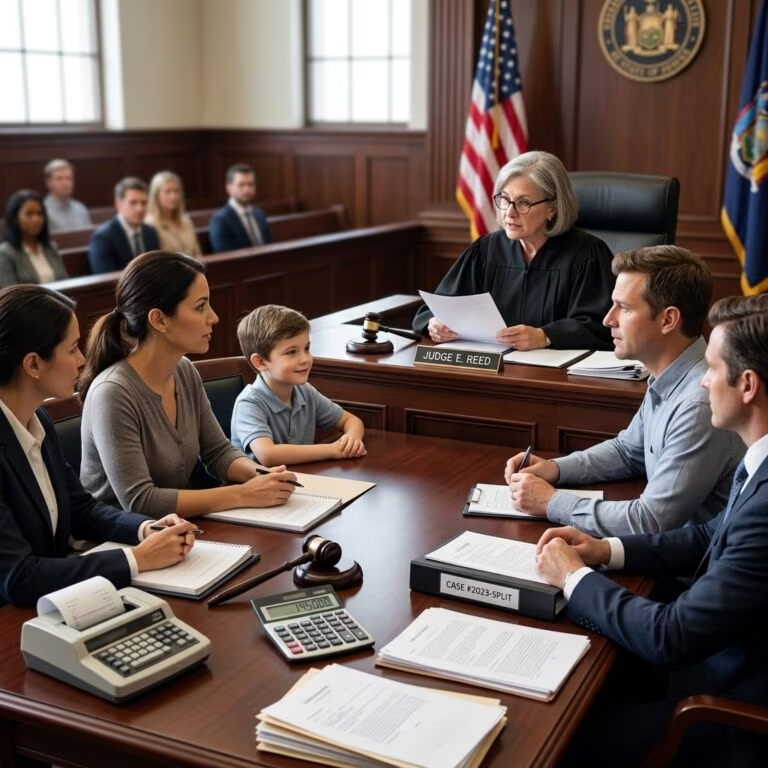
Estate settlement in Hawaii involves court-supervised validation of wills, debt payment, and asset distribution to beneficiaries. For modest estates, state laws provide accelerated pathways to minimize delays and expenses associated with traditional proceedings.
Understanding Traditional Estate Administration in Hawaii
The standard process requires filing the deceased’s will or petitioning for a personal representative appointment in the Circuit Court’s Probate division, located in the judicial circuit of the decedent’s residence. Key stages include asset inventory and appraisal, creditor notifications via direct mail and newspaper publication, debt and tax settlements, and final distribution per the will or intestacy statutes.
Courts oversee these steps to ensure fairness, but complexity arises with real property held solely by the decedent or personal assets exceeding certain thresholds, mandating full administration. Durations typically span six to twelve months for uncomplicated cases, extending longer with disputes or large inventories.
When Full Court Involvement Becomes Necessary
Full probate activates for estates with individually titled real estate, regardless of value, or personal property surpassing $100,000 without beneficiary designations. Hawaii’s four judicial circuits handle cases: First (Oahu), Second (Maui, Lanai, Molokai), Third (Hawaii Island), and Fifth (Kauai).
- Real estate solely owned: Triggers probate to clear title for heirs.
- High-value personalty: Banks and institutions demand court orders for release.
- Disputes: Challenges to wills or representative appointments necessitate formal oversight.
Without a will, intestacy laws dictate distribution prioritizing spouses, children, parents, and siblings.
Streamlined Alternatives for Modest Estates
Hawaii prioritizes efficiency for smaller legacies through affidavit-based collection and summary methods, allowing successors to claim property without exhaustive court supervision.
Affidavit Process for Personal Property Under $100,000
Heirs can utilize a sworn Affidavit for Collection of Personal Property if the estate lacks real estate and total personal assets stay below $100,000. Requirements include:
- At least 30 days post-death elapsed.
- No probate petition filed or pending.
- Affiant qualifies as successor per will or intestacy rules.
The form details estate value, identifies assets, and affirms compliance. After notarization and attachment of a certified death certificate, present it to custodians like banks for direct transfer. This bypasses court entirely, often resolving in weeks.
Summary Administration for Eligible Estates
For estates qualifying as small, summary administration permits immediate distribution post-personal representative appointment, waiving creditor notice periods. Initiate by opening a probate file and requesting this designation; if approved, assets pass swiftly to entitled parties under Hawaii Revised Statutes § 560:3-1203.
Qualification Thresholds:
| Asset Type | Maximum Value | Key Conditions |
|---|---|---|
| Personal Property Only | $100,000 | No real estate; affidavit viable |
| With Real Estate | Varies | Summary probate if modest overall |
| Any Estate | N/A | No disputes; cooperative heirs |
Three Main Court-Supervised Pathways
Hawaii offers tiered probate variants tailored to estate dynamics.
- Informal Proceedings: Ideal for uncontested, straightforward estates. Minimal judicial input; personal representative handles filings independently. Fastest option, often concluding in months without hearings.
- Unsupervised Formal: Addresses specific concerns like representative liability limits. Court approves key actions but avoids ongoing monitoring.
- Supervised Formal: Reserved for contested matters or complexities requiring judge-led oversight, including hearings and approvals at each step. Longest duration, potentially years.
Petition choice depends on disputes, size, and beneficiary cooperation.
Proactive Strategies to Sidestep Probate Altogether
Non-probate transfers form the cornerstone of avoidance planning.
- Joint Tenancy with Survivorship: Real or personal property co-owned passes directly to survivor, clearing title automatically.
- Payable-on-Death (POD) Designations: Bank accounts, securities transfer to named beneficiaries outside court.
- Transfer-on-Death (TOD) Deeds: Applicable to real estate in Hawaii, naming successors for seamless vesting upon death.
- Revocable Living Trusts: Assets funded into trusts avoid probate; successor trustee distributes per terms privately and promptly.
- Beneficiary-Designated Assets: Life insurance, retirement accounts bypass estate administration.
Combining these ensures most assets evade probate, with affidavits handling any residue.
Timeline Expectations Across Methods
Processing varies significantly:
| Method | Typical Duration | Court Involvement | Best For |
|---|---|---|---|
| Affidavit Collection | 1-2 months | None | Personal property < $100k |
| Summary Admin | 3-6 months | Minimal | Small estates overall |
| Informal Probate | 6-12 months | Low | Uncontested cases |
| Formal Supervised | 1-3+ years | High | Disputed/complex |
Factors like asset liquidity, creditor claims (four-month window), and tax clearances influence pacing.
Costs and Financial Implications
Full probate incurs court fees, attorney charges (often 2-5% of estate value), appraisals, and publications. Shortcuts slash these: affidavits cost under $500 typically, summary under $2,000. Pre-planning via trusts yields maximal savings, preserving more for heirs.
Frequently Asked Questions
What qualifies as a small estate in Hawaii?
Estates with personal property valued at $100,000 or less and no solely-owned real estate can use affidavits to skip probate.
How do I start the affidavit process?
Wait 30 days after death, complete the notarized affidavit, attach death certificate, and submit to asset holders.
Does joint ownership always avoid probate?
Yes, for Hawaii property with right of survivorship; the survivor gains full title immediately.
Can I use summary administration with real estate?
Yes, if the overall estate is modest and uncontested, though real property may require additional title steps.
What if there’s no will?
Intestacy rules apply; affidavit or probate follows standard heir priority: spouse, descendants, etc.
How long do creditors have to claim?
Four months after notice publication in formal probate.
Planning Recommendations for Hawaii Residents
Consult estate attorneys early to assess assets and implement POD/TOD designations or trusts. Review beneficiary forms annually, especially post-life events. For decedents without plans, evaluate shortcut eligibility promptly to expedite transfers.
These options empower families to honor legacies efficiently amid Hawaii’s scenic yet bureaucratic landscape.
References
- Understanding The Probate Process In Hawaii: 8 Things You Need — Buried In Work. 2024. https://buriedinwork.com/articles/probate/hawaii-probate-process/
- Introduction to Probate in Hawaii — Legacy Logix. 2024. https://legacylogix.com/probate/hawaii
- How Probate Works in Hawaii & How to Avoid It — 3D Wealth Advisors. 2024. https://3dwealthadvisors.com/blog/what-happens-if-you-dont-probate-a-will/
- Probate Shortcuts for Small Estates in Hawaii — Nolo. 2024. https://www.nolo.com/legal-encyclopedia/hawaii-probate-shortcuts-31956.html
- HAWAI’I PROBATE RULES — Hawaii State Judiciary. 2024-09-01. https://www.courts.state.hi.us/wp-content/uploads/2024/09/hpr_ada.pdf