
Green Card via Marriage to LPR: Your Guide
Navigate the path to permanent residency when married to a U.S. lawful permanent resident, including visa waits and adjustment rules.
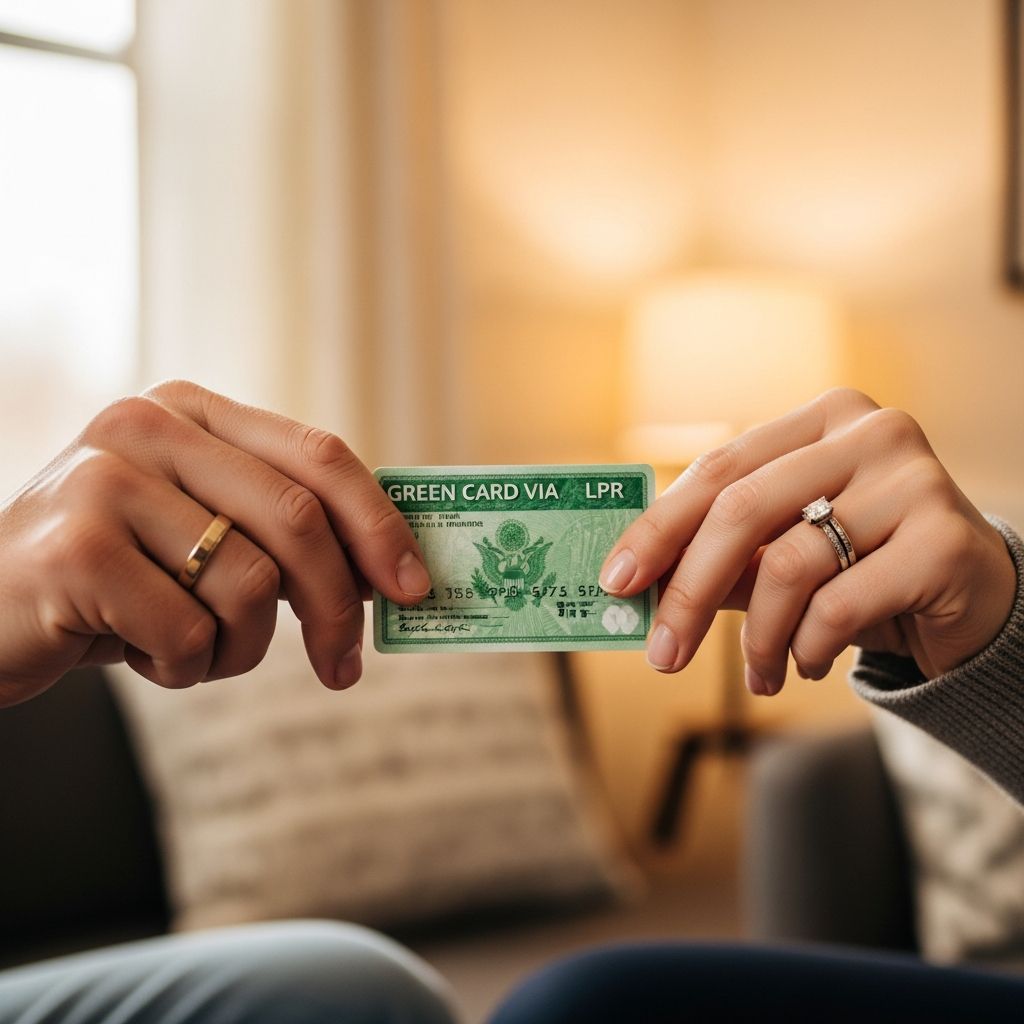
Obtaining lawful permanent residency, commonly known as a green card, through marriage to a U.S. lawful permanent resident (LPR) involves specific eligibility criteria, waiting periods, and procedural steps distinct from marriages to U.S. citizens. This process requires careful attention to visa availability and maintaining lawful status.
Understanding Eligibility Basics
When your spouse holds LPR status rather than citizenship, you fall under the F2A family preference category, subjecting your application to annual visa limits and potential backlogs. Unlike immediate relatives of citizens, who face no numerical caps, F2A applicants must wait until a visa number becomes current based on their priority date.
To qualify initially, establish a bona fide marriage recognized under U.S. law. This means proving the union is genuine, not entered solely for immigration benefits. Your LPR spouse files Form I-130, Petition for Alien Relative, to kickstart the process. Approval establishes the qualifying relationship but does not grant status; it sets your priority date.
- Valid marriage certificate from a legitimate ceremony.
- Proof of any prior marriages’ legal termination (divorce decrees, death certificates).
- Evidence of shared life, such as joint finances or residence, to affirm authenticity.
Visa Availability and Priority Dates Explained
The cornerstone difference for LPR spouses is visa availability. USCIS and the Department of State publish the Visa Bulletin monthly, listing cutoff dates for each category. Your priority date—typically the I-130 filing date—must be earlier than the listed cutoff for F2A to proceed with adjustment or consular processing.
As of recent bulletins, F2A often shows backlogs, especially for certain chargeability countries like Mexico, China, India, and the Philippines. For others, waits may span 1-3 years or more, fluctuating with demand. Contact immigration professionals to verify current availability for your case.
| Category | Typical Wait Time | Key Factor |
|---|---|---|
| F2A (LPR Spouses) | 1-5+ years | Visa Bulletin cutoff |
| IR1/CR1 (Citizen Spouses) | Immediate | No numerical limits |
Pathways to Green Card: Inside vs. Outside the U.S.
Adjustment of Status for Those in the U.S.
If physically present in the U.S. in lawful status, file Form I-485 concurrently with or after I-130 approval, but only when a visa is available. Strict bars apply: no unauthorized employment history, no unlawful presence accrual, and entry must have been via inspection or parole (Visa Waiver Program entrants generally ineligible).
- Maintain continuous lawful nonimmigrant status (e.g., H-1B, F-1).
- Avoid any unlawful work post-entry.
- Ensure no overstay exceeding grace periods.
Upon filing I-485, apply for advance parole and employment authorization to travel or work legally while awaiting adjudication.
Consular Processing for Those Abroad
For applicants outside the U.S., after I-130 approval and visa availability, complete National Visa Center (NVC) steps: submit Form DS-260, fees, and documents. Attend a medical exam and consular interview at a U.S. embassy or consulate.
Prepare for scrutiny on marriage validity during the interview. Bring updated evidence of ongoing relationship.
Financial Sponsorship Obligations
Your LPR spouse must file Form I-864, Affidavit of Support, proving income at 125% of federal poverty guidelines for household size. Use recent tax returns, W-2s, and pay stubs. If insufficient, a joint sponsor (U.S. citizen or LPR) can co-sign, meeting the same threshold.
This enforceable contract ensures you won’t become a public charge. Sponsors remain liable until you work 40 quarters or status changes.
Navigating Conditional Residency
If approved less than two years after marriage, you receive a two-year conditional green card. Within 90 days before expiration, file Form I-751 to remove conditions, jointly with your spouse, proving continued bona fide marriage.
Evidence includes:
- Joint bank statements, leases, or utilities.
- Photos, travel records, and affidavits from acquaintances.
- Birth certificates of shared children.
Waivers available for divorce, abuse, or death. Approval upgrades to a 10-year unconditional green card.
Common Pitfalls and How to Avoid Them
Delays arise from incomplete evidence of genuine marriage or status violations. USCIS conducts fraud interviews if suspicions arise, sometimes separately. Unlawful presence over 180 days triggers 3/10-year bars upon departure, complicating cases.
Table of Frequent Errors:
| Error | Consequence | Avoidance |
|---|---|---|
| Insufficient bona fide proof | Denial or Stokes interview | Gather diverse ongoing evidence |
| Unauthorized work | Ineligible for adjustment | Secure work authorization timely |
| Missing visa availability | Premature filing rejection | Check Visa Bulletin monthly |
Documentation Checklist
Compile these for I-130 and subsequent steps:
- Sponsor (LPR): Green card copy, passport, tax returns, proof of prior marriage terminations.
- Beneficiary: Passport, birth certificate, police certificates, medical exam (for consular).
- Marriage Proof: Certificate, joint assets docs, photos spanning relationship timeline.
Timeline Overview
- I-130 filing and approval: 10-24 months.
- Wait for priority date current: Variable per bulletin.
- I-485/DS-260 processing: 6-18 months post-availability.
- Interview and approval: Final step.
Frequently Asked Questions
Can I file I-485 immediately after marrying an LPR?
No, wait for I-130 approval and visa availability; premature filing leads to rejection.
What if my LPR spouse becomes a citizen during the process?
Your category upgrades to immediate relative, eliminating visa wait.
Am I eligible if I entered on VWP?
Generally no for adjustment; consider consular processing.
How to prove a genuine marriage?
Use commingled finances, shared residence docs, and third-party letters.
What happens if we divorce before I-751?
File waiver with evidence of bona fide marriage and qualifying hardship.
Next Steps Toward Naturalization
After 5 years as unconditional LPR (or 3 if married to citizen), apply for citizenship via N-400. Demonstrate residency, good moral character, and pass civics/English tests (waivers possible).
Consult USCIS.gov for forms and fees, updated annually. Professional legal advice recommended for complex cases involving prior violations.
References
- Green Card Through Marriage Eligibility — Ashoori Law. 2023. https://www.ashoorilaw.com/green-card-through-marriage/
- What Do I Need To Apply for a Marriage Green Card? — Salvado & Associates. 2024. https://www.salvadolaw.com/blog/what-do-i-need-to-apply-for-a-marriage-green-card
- How to Get a Green Card Through Marriage in California? — KAR Law. 2026. https://www.karlaw.com/blog/how-to-get-a-green-card-through-marriage-in-california/
- IR-1/CR-1 Visa | U.S. Green Card For Married Partners — Visum-USA. 2024. https://www.visum-usa.com/en/us-green-card/ir1-cr1-visa.html
- Permanent Residency (Green Card through Marriage) — University of Iowa International Programs. 2023. https://international.uiowa.edu/isss/current-students/permanent-residency-green-card-through-marriage
- Immigrant Visa for a Spouse of a U.S. Citizen (IR1 or CR1) — U.S. Department of State. 2025-01-17. https://travel.state.gov/content/travel/en/us-visas/immigrate/family-immigration/immigrant-visa-for-spouse.html
Similar Articles








Read full bio of medha deb


