
Foster Care to Homelessness: The Crisis of Aging Out
How systemic child welfare failures push transition-age youth into a cycle of homelessness.
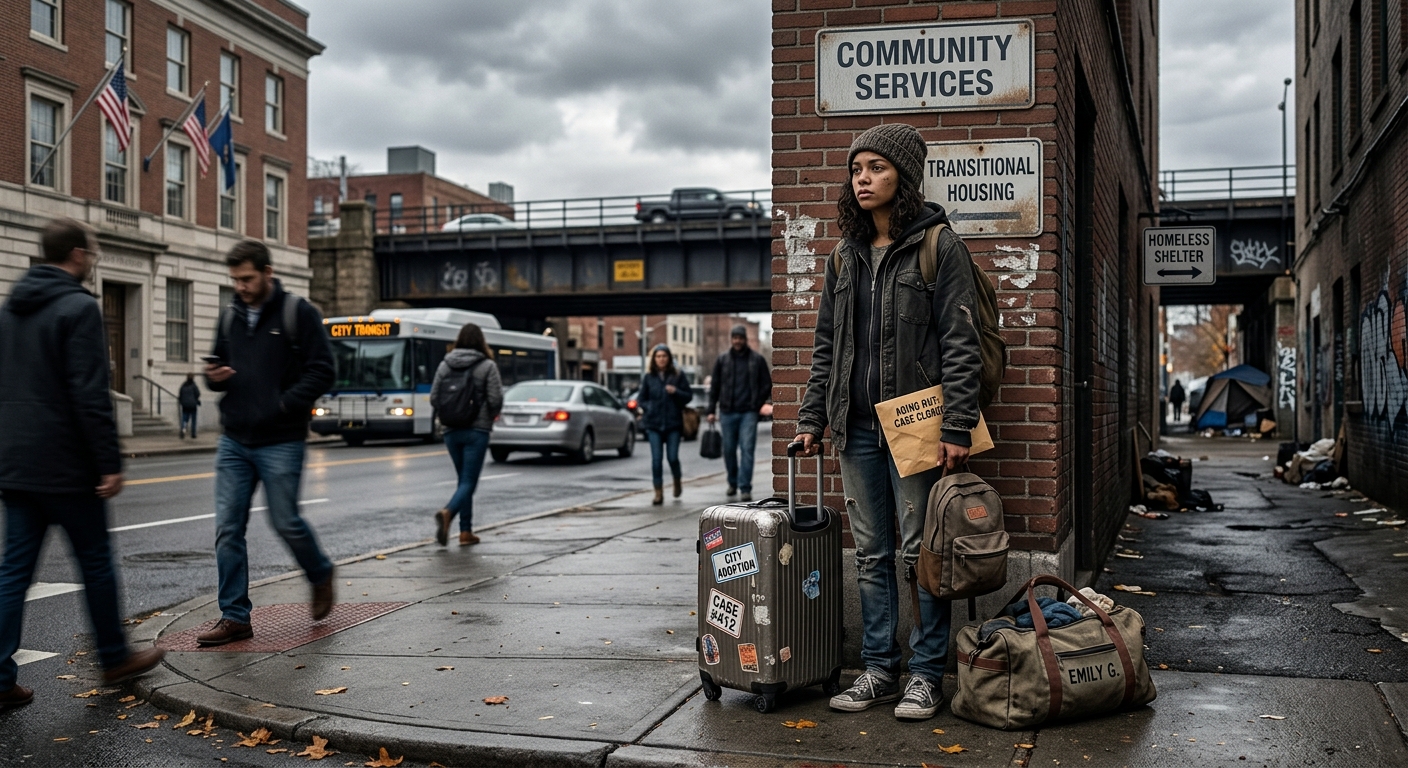
The Absentee Guardian: When the State Fails Its Most Vulnerable
The child welfare system is founded on a profound and solemn premise: when a biological family is unable to safely care for a child, the state steps in to assume the critical role of guardian. The inherent promise of this intervention is safety, stability, and a pathway to a healthy future. However, a growing body of statistical evidence and legal action suggests that for older adolescents on the precipice of adulthood, the state frequently acts as an absentee parent. Instead of being guided toward self-sufficiency, thousands of young people aging out of the system are abruptly cut off from critical resources, housing, and developmental support.
This systemic failure has created a heavily documented pipeline leading directly from state custody to the streets. As public awareness of this crisis grows, federal courts and advocacy groups are beginning to rigorously question municipal responsibilities. The crisis facing transition-age foster youth is no longer just a tragic social issue; it has evolved into a fierce battleground for civil rights, highlighting the deep structural deficits within local government frameworks.
The Harsh Reality of Emancipation
In conventional family structures, the transition from adolescence to adulthood is a gradual, highly supported process. Young adults today frequently rely on their parents well into their mid-twenties for financial assistance, a place to live during economic downturns, co-signing on apartment leases, and vital emotional guidance. For youth entrenched in state care, emancipation—commonly referred to as “aging out”—presents a starkly different and unforgiving reality. On their eighteenth or twenty-first birthdays, depending on their state’s specific jurisdiction, these young people are routinely discharged from residential placements and foster homes. They are often sent into the world with little more than a trash bag of personal belongings and a printed list of local homeless shelters.
The statistics surrounding this abrupt transition are alarming and highlight a nationwide crisis. According to federal data, between 31 and 46 percent of youth exiting the child welfare system experience homelessness by the time they reach age 26 . Furthermore, young people with a history of state care tend to endure significantly longer periods of homelessness compared to their peers who were never involved in the system. The systemic failure to provide an adequate off-ramp into early adulthood leaves these young adults highly vulnerable to a host of secondary crises. Without a stable address, maintaining employment becomes nearly impossible, educational pursuits are frequently abandoned, and the likelihood of entering the justice system drastically increases.
Key Statistics on the Transition to Adulthood
| Metric | Data Point | Implication |
|---|---|---|
| Homelessness Rate | 31% – 46% by age 26 | State systems are failing to secure long-term housing for emancipated youth. |
| Average Duration of Homelessness | 27.5 months (former foster youth) | Lack of familial safety nets prolongs exposure to housing instability. |
| Annual Emancipation Volume | ~15,000 – 20,000 youth globally | A massive influx of unsupported young adults enters the economy each year. |
Demanding Accountability: A Landmark Legal Battle
The widening, dangerous gap between statutory legal obligations and the lived reality of foster youth has inevitably sparked significant litigation. One of the most prominent recent examples is a class-action civil rights lawsuit filed against municipal and state agencies in Southern California. The case, heavily driven by coalitions of legal advocacy groups representing transition-age youth, alleges that the regional child welfare department has systematically and continuously failed to secure safe, stable housing for older adolescents in its care.
Instead of providing legally mandated transitional housing and developmental support services, the lawsuit claims the municipality frequently leaves young people to rely on unsafe couch-surfing arrangements, dangerous adult emergency shelters, or sleeping in vehicles. The plaintiffs argue that this institutional negligence severely violates both state and federal laws explicitly designed to protect vulnerable, state-dependent youth.
In a highly significant procedural development, defense attorneys representing the municipality attempted to have the case dismissed. They argued that federal courts should not overstep and dictate local administrative policies or resource allocation . However, the Ninth Circuit Court of Appeals recently rejected this effort, allowing the plaintiffs to move forward to the merits of the case. This pivotal ruling establishes a vital legal precedent: government child welfare agencies cannot shield themselves from rigorous judicial oversight when they fundamentally fail to deliver the basic housing and behavioral health services required by law. The outcome of this litigation could force structural overhauls in how municipalities across the country manage youth emancipation.
The Intersection of Mental Health, Trauma, and Housing
A crucial and often overlooked dimension of the housing crisis for former foster youth is the complex intersection of childhood trauma and systemic rigidity. Many children originally enter state custody due to severe abuse, profound neglect, or tragic family separation—experiences that leave lasting, deep psychological scars. As these individuals transition into adolescence and early adulthood, they require specialized behavioral health care and trauma-informed living environments to successfully build independent lives.
Unfortunately, the current housing infrastructure is glaringly ill-equipped to handle these nuanced needs. A recent academic study focused on housing instability drivers highlighted that rigid institutional rules and abrupt, poorly planned discharges significantly exacerbate homelessness for transitioning youth . In many residential placements, zero-tolerance policies regarding behavioral outbursts—often symptoms of unaddressed trauma—lead to immediate eviction.
For young people grappling with diagnosed mental health conditions, the bureaucratic hurdles required to secure and maintain transitional housing are frequently insurmountable. Civil rights litigation underscores this exact issue, noting that transition-age youth with mental health disabilities are routinely subjected to discriminatory screening processes by housing providers. When these vulnerable individuals are denied reasonable therapeutic accommodations or are hastily evicted from transitional programs without proper due process, their mental stability rapidly deteriorates. This lack of a safety net frequently results in emergency psychiatric hospitalizations, chronic street homelessness, and tragic exposure to physical and sexual violence.
Evaluating Extended Foster Care Initiatives
In a proactive effort to mitigate the harsh, immediate outcomes of emancipation at age 18, several progressive jurisdictions have implemented extended foster care programs. A prominent national example is California’s legislative framework, which allows eligible young adults to voluntarily remain in state care until age 21. According to extensive longitudinal research tracking youth transitions to adulthood, extended care models have demonstrated highly positive impacts on subsequent educational attainment, employment rates, and overall economic well-being .
Yet, ambitious legislation drafted on paper does not automatically translate to a physical roof over a young person’s head. The most persistent, crippling issue facing extended foster care is a severe, systemic shortage of physical housing units. Supervised Independent Living Placements (SILPs) and specialized transitional housing programs designed specifically for non-minor dependents are frequently operating at full capacity with massive waitlists. Furthermore, housing stipends provided by the state often fail to match the soaring rental costs in major metropolitan areas.
Consequently, a young adult can be legally enrolled in an extended foster care program but remain practically unhoused—forced to sleep in a car while technically under the state’s supervision. This stark discrepancy highlights a fundamental flaw in modern policy design: extending the legal timeline of care is highly ineffective if the underlying community infrastructure lacks the physical capacity to house the individuals it is mandated to protect. Without a synchronized expansion of affordable housing stock, extended care acts merely as a well-intentioned administrative designation rather than a tangible, life-saving safety net.
Redesigning the Safety Net: A Matrix of Support
Effectively dismantling the foster care to homelessness pipeline requires a comprehensive, multifaceted approach that aggressively moves beyond temporary, reactionary fixes. The foundation of this reform must be built on systemic shifts in both policy and housing inventory.
- Expanding Specialized Housing Inventory: There must be a massive financial investment in specialized housing stock. Child welfare agencies need to develop robust, seamless partnerships with local housing authorities to maximize the utilization of federal resources, ensuring that every emancipated youth has a guaranteed placement.
- Readiness-Based Emancipation: The system must fundamentally shift from an arbitrary, age-based emancipation model to a readiness-based transition model. Discharging a young person simply because they have reached a specific birthday, completely regardless of their housing status, financial savings, or acquired life skills, is a recipe for disaster. Transition planning must begin years in advance and legally require guaranteed, stable housing arrangements prior to the termination of state wardship.
- Trauma-Informed Program Design: Policies must deeply integrate comprehensive, trauma-responsive care into all housing programs. Transitional housing should feature on-site case management, flexible rules that accommodate psychological healing, and strong peer support networks, ensuring that young adults are not punitively evicted for behaviors stemming from untreated trauma.
Conclusion
The transition from adolescence to independent adulthood is universally challenging, even under the absolute best circumstances. For young people who have already endured the profound trauma of family separation and institutionalization, it should not be a one-way ticket to destitution and street homelessness. The ongoing, high-stakes legal battles unfolding across the country serve as a powerful, necessary indictment of a system that has historically prioritized bureaucratic convenience and budget constraints over fundamental human well-being. Ultimately, society and local governments must decide whether they will uphold their moral and legal obligations to their most vulnerable youth, or continue to allow the child welfare system to function as a pipeline to societal marginalization.
Frequently Asked Questions
What does it mean for a youth to “age out” of foster care?
“Aging out” refers to the bureaucratic process where a young person in the child welfare system reaches the legal age of adulthood (typically 18 or 21, depending on the state’s laws) and is formally emancipated. At this juncture, the state’s legal guardianship abruptly ends, and the youth is expected to support themselves entirely, most often without the critical safety net of a traditional biological or adoptive family.
Why are former foster youth at such a disproportionately high risk of homelessness?
Foster youth frequently lack the familial support networks, financial safety nets, and affordable housing options that young adults typically rely upon during early independence. Compounded by untreated mental health conditions, complex trauma, a lack of rental history, and abrupt institutional discharges, these young adults face massive, intersecting structural barriers to achieving basic stability.
How do extended foster care (EFC) programs help alleviate this crisis?
Extended foster care programs allow eligible youth to voluntarily remain in the child welfare system until age 21. This provides crucial additional time to complete secondary or higher education, secure stable employment, and access transitional housing stipends. While longitudinal studies confirm these programs improve long-term outcomes, their overall effectiveness is currently heavily constrained by a severe lack of available, affordable physical housing inventory in many regions.
What is the broader significance of the civil rights lawsuits against child welfare agencies?
Lawsuits filed against municipal and state child welfare systems aim to strictly hold government agencies legally accountable for failing to provide mandated housing and supportive transition services. By seeking sweeping systemic reform through the courts, these civil rights cases strive to dismantle discriminatory housing practices and legally ensure that vulnerable youth are not discharged by the state directly into homelessness.
References
- Child Welfare System — Youth.gov. 2024. https://youth.gov/youth-topics/child-welfare-system
- The California Youth Transitions to Adulthood Study (CalYOUTH) — Chapin Hall at the University of Chicago. 2022. https://www.chapinhall.org/project/the-california-youth-transitions-to-adulthood-study-calyouth/
- To Avoid Homelessness, Former Foster Youth Need a Matrix of Supports — New York University. 2025-11-12. https://www.nyu.edu/about/news-publications/news/2025/november/to-avoid-homelessness–former-foster-youth-need-a-matrix-of-supp.html
- LA County asks Ninth Circuit to nix lawsuit by foster care youths — Courthouse News Service. 2025-09-19. https://www.courthousenews.com/la-county-asks-ninth-circuit-to-nix-lawsuit-by-foster-care-youths/
Similar Articles








Read full bio of medha deb


