
Foster Care Crisis: The Battle for Constitutional Rights
When child welfare fails, what legal standard must vulnerable youth meet?
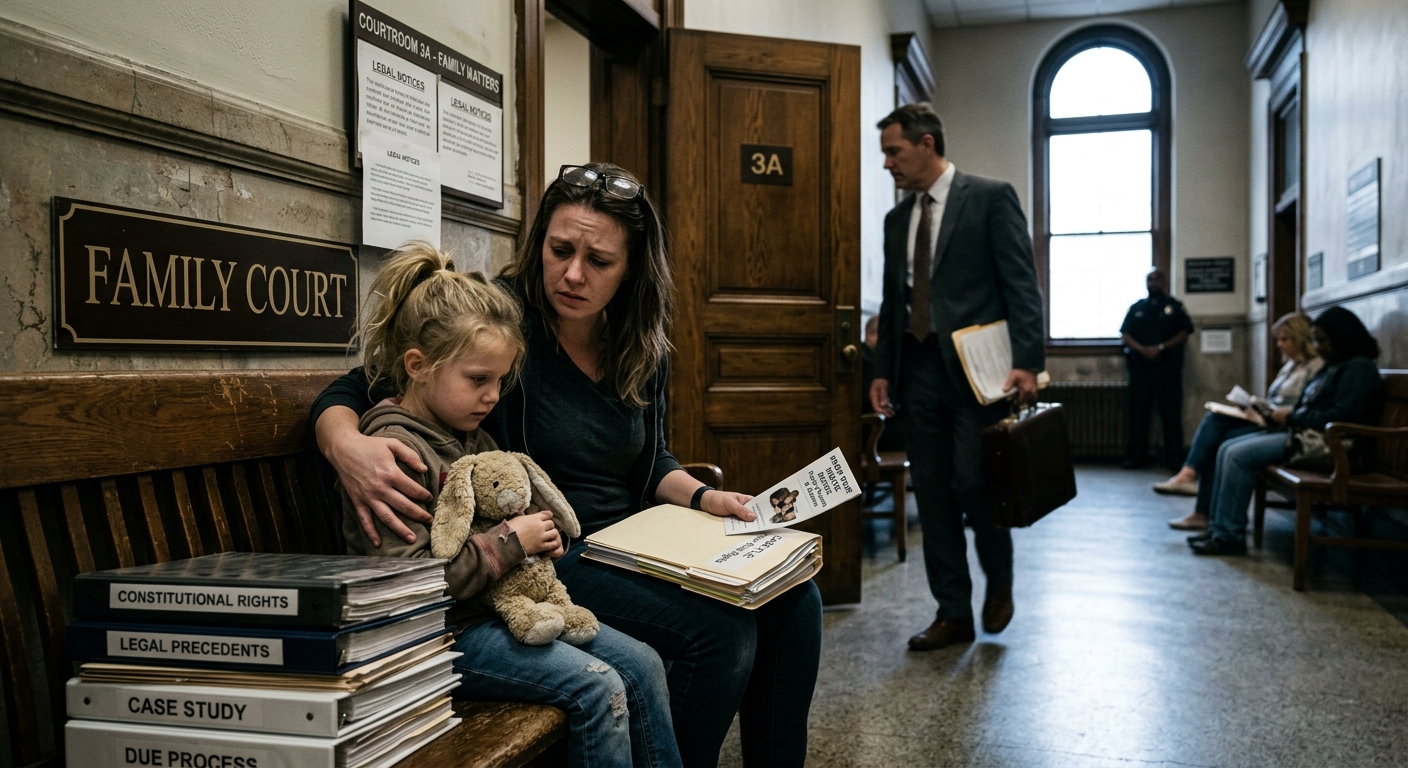
The Unseen Crisis in Custodial Care
When a child is removed from their home due to abuse, neglect, or abandonment, the state makes a profound, unspoken promise to that vulnerable individual: we will keep you safe. Society entrusts state-run child welfare systems with the physical, emotional, and psychological well-being of its most defenseless citizens. However, in jurisdictions across the United States, this fundamental promise is routinely broken. Children placed in state custody frequently face a reality that is just as dangerous—if not significantly more perilous—than the chaotic homes from which they were initially removed.
Instead of finding a safe harbor, many youth endure repeated physical and emotional trauma, constant geographical instability, and prolonged stays in highly restrictive institutional settings. When state agencies fail so fundamentally in their duty of care, the absolute last resort for these children and their advocates is the federal court system. Civil rights organizations and pro bono legal teams frequently file massive class-action lawsuits on behalf of thousands of foster youth, seeking sweeping injunctive relief to force mandatory systemic reform.
However, these complex legal battles are not merely about proving that a bureaucracy is inefficient or broken; they are about defining the precise legal standard of accountability in America. The central question that plagues federal judges is incredibly complex: What exact burden of proof must abused, dependent children meet to establish that a state has violated their fundamental constitutional rights? The intense debate over this judicial standard determines whether vulnerable youth will receive the systemic protection they are legally owed, or whether they will be left to languish in a bureaucratic void, shielded by legal technicalities.
Understanding the Obligations of the State
To fully comprehend the legal battles surrounding the foster care system, one must first look to the foundations of the United States Constitution. The Fourteenth Amendment explicitly declares that no state shall deprive any person of life, liberty, or property, without due process of law. Over several decades of evolving jurisprudence, the Supreme Court has clarified how this vital constitutional clause applies to individuals who are held in state custody.
The landmark 1989 Supreme Court case, DeShaney v. Winnebago County Department of Social Services, established a critical, baseline precedent for civil rights litigation . In that devastating case, the Court ruled that the state does not have a general, affirmative constitutional duty to protect free citizens from private violence. However, the Court simultaneously carved out a monumental exception: when the state affirmatively takes a person into its legal and physical custody and holds them there against their will, a special relationship is formally created. At that exact moment, the Constitution imposes a strict, affirmative duty on the state to assume direct responsibility for that person’s safety, medical care, and general well-being.
Because foster children are involuntarily removed from their biological families and placed entirely into the physical and legal custody of the government, federal courts across the country have widely recognized that these minors possess a substantive due process right to be free from harm. Additionally, the federal Adoption Assistance and Child Welfare Act of 1980 mandates that all states receiving federal funding must make reasonable efforts to prevent unnecessary family separation, actively reunify families when safe, and secure permanent adoptive placements when reunification is impossible. Together, these constitutional parameters and statutory frameworks form the undeniable bedrock of modern foster care litigation, theoretically guaranteeing that state agencies will be held to a rigorous minimum standard of care.
A Landmark Challenge: Lessons from High-Profile Class Actions
Despite these seemingly robust legal frameworks, systemic dysfunction remains rampant. According to comprehensive data from the U.S. Department of Health and Human Services, thousands of vulnerable children continue to experience substantiated maltreatment while officially residing in foster care placements . This grim statistical reality has prompted numerous large-scale, multi-year class-action lawsuits aimed at dismantling failing state infrastructures.
A prime historical example of this type of ambitious litigation is the Connor B. v. Patrick case, a massive class-action lawsuit filed on behalf of thousands of children navigating the Massachusetts foster care system . In such expansive cases, plaintiffs’ attorneys are tasked with presenting staggering, irrefutable evidence of profound systemic neglect. They methodically document the tragic trajectories of children who have been forcibly moved through dozens of different temporary homes, repeatedly tearing them away from neighborhood schools, familiar friends, and biological siblings.
During these trials, advocates highlight critical, systemic failures: desperate shortages of licensed foster homes, extreme caseworker caseloads that make it physically impossible for social workers to properly monitor child safety, and a disturbing overreliance on institutional, congregate-care facilities that resemble juvenile detention centers far more than they resemble loving homes. The ultimate goal of these monumental lawsuits is rarely direct financial compensation for the victims. Instead, advocates desperately seek equitable relief—binding federal court orders mandating that the state completely overhaul its operational practices, significantly increase the hiring of caseworkers, drastically improve trauma-informed training, and strictly monitor all placement safety metrics. To emerge victorious, plaintiffs must present both aggregate quantitative data and harrowing individual testimonies, proving beyond a doubt that the state’s administrative failures are not merely isolated tragic incidents, but rather an entrenched pattern of systemic deprivation that exposes an entire class of children to an unreasonable, foreseeable risk of harm.
The Battle Over Legal Standards: How Do We Measure Failure?
While proving that a massive child welfare system is functionally broken is often a straightforward endeavor, legally proving that this specific dysfunction violates the United States Constitution is fiercely and relentlessly debated. The core conflict in federal courtrooms centers entirely on the specific judicial standard used to evaluate the state’s level of culpability.
In child welfare civil rights class actions, plaintiffs forcefully argue that the presiding judge should apply the substantial departure from accepted professional judgment standard. Under this highly scrutinized framework, a constitutional violation officially occurs if a state agency’s actions, policies, or systemic inactions represent a substantial, undeniable departure from accepted professional standards, clinical practices, or standard social work judgment. If licensed child welfare experts testify that a state’s caseworker-to-child ratio, or its chronic failure to investigate reports of active abuse, falls egregiously below the universally accepted norms of professional social work, the state should legally be held liable for the resulting harm.
Conversely, state defendants routinely push for—and occasionally convince federal judges to formally adopt—the significantly higher shocks the conscience standard. This exceptionally rigorous legal standard is typically reserved by the courts for evaluating the split-second actions of law enforcement officers engaged in high-speed vehicular chases, or for analyzing the conduct of prison guards operating in highly volatile penal settings, where instantaneous, life-or-death decisions must be made under extreme duress. To successfully meet the shocks the conscience threshold, plaintiffs must essentially prove that high-ranking state officials acted with a level of deliberate indifference, malice, or intentional cruelty.
Applying this criminal-leaning standard to the administrative oversight of foster care is highly controversial. Advocacy groups vehemently argue that it places an insurmountable, unjustifiable, and logically flawed burden on abused children. Foster youth are completely and involuntarily dependent on the state for their daily survival. By legally requiring these minors to prove that a massive bureaucracy’s slow, systemic neglect shocks the conscience, federal courts are erroneously holding vulnerable, non-penal wards of the state to the exact same rigorous standard of proof required of an incarcerated, convicted felon. This interpretation effectively allows extreme administrative incompetence, chronic understaffing, and disastrous mismanagement to completely escape constitutional scrutiny, simply because the bureaucratic failure was not intentionally malicious.
Comparing Legal Standards in Civil Rights Litigation
| Legal Standard | Typical Legal Context | Required Burden of Proof | Impact on Foster Youth Plaintiffs |
|---|---|---|---|
| Professional Judgment | Medical, Psychiatric, and Custodial Care Settings | Must prove actions significantly departed from accepted industry practices. | Provides a fair, attainable method to hold state agencies accountable for gross professional negligence. |
| Shocks the Conscience | Penal Institutions, Police Pursuits, Emergency Law Enforcement | Must prove malicious intent, deliberate indifference, or extreme egregious behavior. | Creates an almost impossible hurdle, shielding systemic incompetence behind a wall of legal immunity. |
Budgetary Excuses and Constitutional Mandates
Another major, recurring point of contention in these complex legal battles is the explicit role of state legislative funding. Frequently, federal district court judges will thoroughly review the presented evidence, express deep sympathy for the victims, and openly acknowledge sweeping, horrific problems within a state child welfare agency. Yet, they will ultimately decline to hold the executive agency constitutionally liable, pointing instead to a stark lack of financial resources provided by the government.
State executives, governors, and department heads frequently testify that they are doing the absolute best they can with the highly restricted budgets provided by the state legislature. In several high-profile rulings, judges have agreed with this defense, officially concluding that the catastrophic failings of the foster care system are primarily the direct result of legislative underfunding and severe budgetary shortfalls, rather than administrative management myopia or a deliberate, calculated disregard for children’s rights by the executive branch.
Civil rights advocates and legal scholars vehemently oppose this dangerous judicial reasoning. They argue that permitting fiscal considerations and budgetary excuses to infect the strict consideration of substantive due process claims sets a profoundly dangerous and legally unsound precedent. Fundamental constitutional rights are not supposed to be contingent on a state’s financial convenience or the political whims of a legislature. If federal courts universally accept the view that vital constitutional mandates must yield to state legislative funding prerogatives, the long-term consequences for broad civil rights enforcement would be devastating. It provides a highly convenient, impenetrable loophole for state governments: legislatures can continuously, intentionally underfund critical child protection agencies, and then the state can use that exact self-imposed underfunding as an absolute shield against constitutional liability when dragged into federal court.
The Separation of Powers Debate in Institutional Reform
The monumental struggle to structurally reform foster care through federal litigation is further complicated by the foundational judicial doctrines of federalism and the separation of powers. Federal appellate courts are historically and institutionally hesitant to issue broad, sweeping injunctions that essentially allow unelected federal judges to take over the complex, day-to-day management of a sovereign state’s administrative agency.
Appellate judges frequently express deep philosophical concern that the federal courtroom is simply not the appropriate venue for solving highly complex, deeply entrenched social welfare problems. They argue that the constitutional power to appropriate taxpayer money, draft social legislation, and design public policy belongs exclusively to the democratically elected branches of state government—namely, the legislature and the governor. Consequently, even when federal appellate courts readily recognize that a state foster care system is deeply flawed, functionally broken, and actively harming children, they may still affirm a lower court’s dismissal of the class action. In doing so, they essentially direct the battered plaintiffs to take their legitimate grievances to the political ballot box rather than relying on the intervention of the federal bench.
This strict adherence to judicial restraint leaves legal advocates and vulnerable children in an incredibly precarious position. While cautious federal courts patiently wait for sluggish, politically divided state legislatures to act, entire generations of children continue to suffer immeasurably in broken, dangerous systems. The judicial refusal to decisively intervene in these crises underscores the profound, frustrating limits of using litigation as the sole vehicle for achieving systemic, institutional reform in America.
Implications for Future Child Welfare Litigation
Despite these formidable, deeply entrenched legal hurdles, the tireless fight for systemic accountability continues across the nation. Legal advocacy organizations are constantly analyzing past defeats, adapting their courtroom strategies, and bringing highly targeted, data-driven lawsuits. Rather than attacking an entire state system at once, some advocates now focus on specific, undeniable, and easily measurable harms—such as the rampant overmedication of foster youth with powerful psychotropic drugs, or the illegal, prolonged housing of traumatized children in administrative office buildings and cheap hotels.
The ultimate goal of the civil rights community remains the establishment of a uniform, fair, and logical legal standard recognized universally by the United States Supreme Court—a standard that accurately reflects the state’s profound, life-altering duty of care to the defenseless children it forcefully removes from their biological families. Until federal law definitively and universally recognizes that gross professional negligence and systemic apathy in child welfare constitute a clear constitutional violation, advocates will continue to battle state by state, courtroom by courtroom, demanding that the government’s promise of safety is finally fulfilled.
Frequently Asked Questions (FAQs)
What rights do children have when placed in state custody?
Under the Fourteenth Amendment of the U.S. Constitution, children involuntarily placed in state custody (like foster care) have a substantive due process right to be protected from harm. Because the state has removed them from their families, it assumes an affirmative duty to ensure their basic safety, medical needs, and general well-being are met.
Why are class-action lawsuits used to reform foster care?
Class-action lawsuits are utilized because they allow advocates to address systemic, widespread failures rather than just individual tragedies. By representing all children in a state’s foster care system simultaneously, attorneys can seek broad injunctive relief—court orders that force the government to overhaul its policies, hire more staff, and improve overall living conditions for thousands of youth at once.
What is the difference between the “professional judgment” and “shocks the conscience” standards?
The “professional judgment” standard assesses whether a state agency’s actions fell significantly below accepted social work and child welfare practices. The “shocks the conscience” standard is much harder to prove, requiring evidence of malicious intent or extreme deliberate indifference. Advocates argue the former is appropriate for child welfare, while the latter should only apply to volatile law enforcement scenarios.
References
- DeShaney v. Winnebago County Department of Social Services, 489 U.S. 189 (1989) — U.S. Supreme Court. 1989-02-22. https://supreme.justia.com/cases/federal/us/489/189/
- Child Welfare Outcomes 2021: Report to Congress — U.S. Department of Health & Human Services. 2024-03-01. https://cwoutcomes.acf.hhs.gov/cwodatasite/
- Connor B. ex rel. Vigurs v. Patrick, 774 F.3d 45 (1st Cir. 2014) — U.S. Court of Appeals for the First Circuit. 2014-12-15. https://law.justia.com/cases/federal/appellate-courts/ca1/13-2467/13-2467-2014-12-15.html
Similar Articles








Read full bio of Sneha Tete


