
The Invisible Wounds: How Forced Separation Alters Migrant Children’s Biology
Abruptly removing primary caregivers fundamentally disrupts a child's brain architecture and stress response, causing lifelong harm.
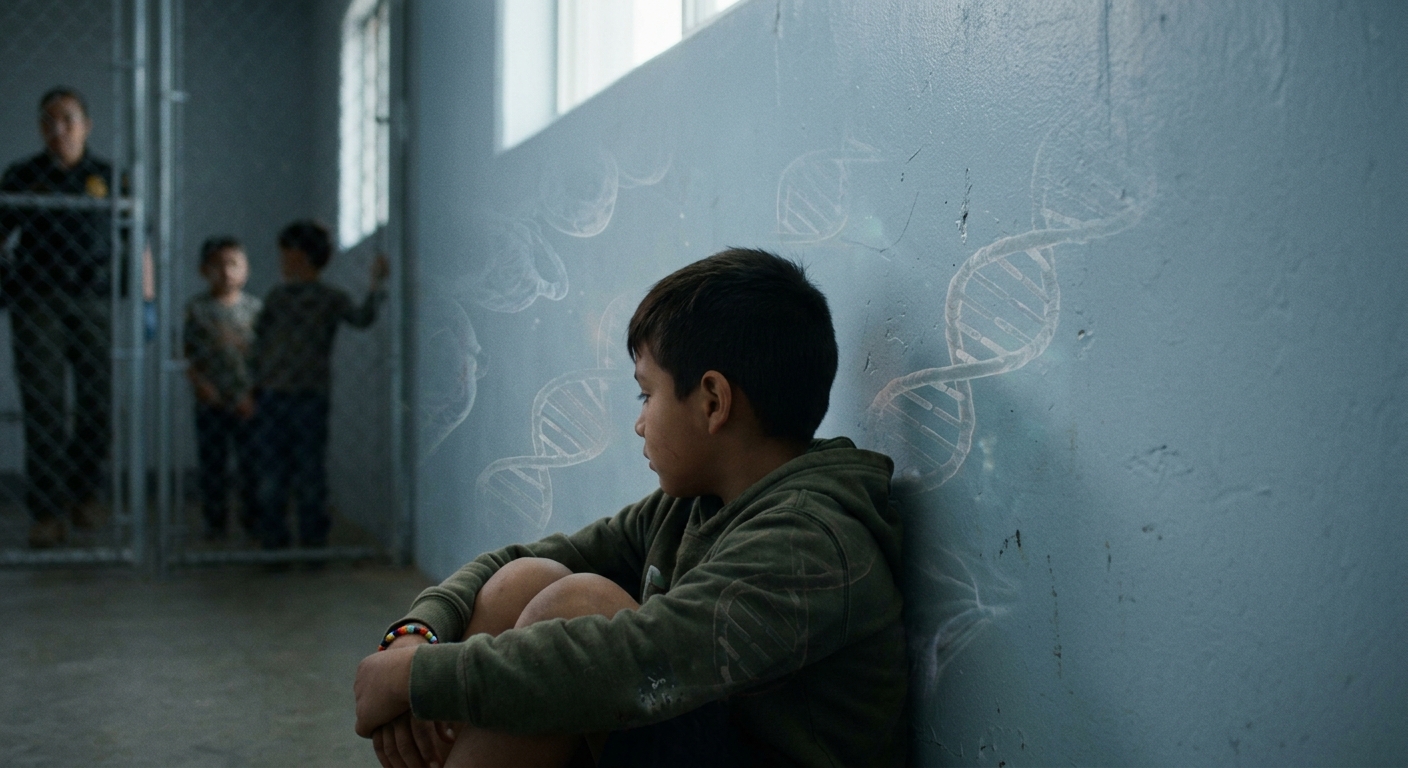
The Unseen Scars: How Forced Caregiver Separation Alters Child Biology and Future Well-being
When discussing border policies and the management of displaced populations, public discourse frequently centers on logistics, legal frameworks, and national security. However, beneath the visible administrative borders lies a profound, invisible crisis occurring within the biology of the most vulnerable participants: young children. The practice of forcibly separating migrant children from their primary caregivers at borders does much more than induce temporary fear or sadness. According to leading pediatric and developmental science, this abrupt severing of the parental bond triggers a catastrophic cascade of physiological and neurological reactions. It fundamentally alters the architecture of a developing brain, leaving scars that may persist for a lifetime. By examining the mechanisms of human development, we can understand why forced separation is not merely a difficult administrative measure, but a deeply traumatic event with lifelong public health implications.
The Fundamental Role of Attachment in Early Development
To comprehend the magnitude of the trauma inflicted by caregiver separation, one must first understand the foundational role of attachment in early human development. Unlike many other species that are born with a degree of self-sufficiency, human infants and young children rely entirely on adult caregivers not only for physical survival—food, shelter, and warmth—but for fundamental neurological regulation. Safe, stable, and nurturing relationships are the bedrock upon which a child’s future physical and mental health is built.
In the early years of life, the brain is highly plastic and develops at an astonishing rate, forming more than a million new neural connections every second. These connections are primarily forged through “serve and return” interactions between the child and their caregiver. When a child cries, babbles, or gestures, and the adult responds with eye contact, comforting words, or a reassuring touch, neural pathways are strengthened. More importantly, the caregiver acts as an external nervous system for the child. When external shocks occur, a responsive parent provides the emotional and physical buffering necessary to calm the child’s internal alarm system. Removing this primary figure abruptly destroys this essential buffer. Without the caregiver to mediate the world, the child is left neurologically exposed and defenseless against overwhelming environmental stressors.
Understanding the Stress Spectrum: Positive, Tolerable, and Toxic
Stress is a universal human experience, and not all stress is inherently harmful. Developmental psychologists classify childhood stress into three distinct categories: positive, tolerable, and toxic. Understanding these distinctions is crucial to recognizing why institutional separation is uniquely damaging.
- Positive Stress: This type of stress is brief, mild to moderate in magnitude, and an essential component of healthy development. Examples include the nervousness of meeting a new person, the frustration of learning a new skill, or receiving a routine vaccination. During these events, the child’s heart rate and stress hormones elevate slightly, but quickly return to baseline levels. This process builds resilience.
- Tolerable Stress: Tolerable stress involves more severe, longer-lasting adversity, such as a natural disaster, a severe injury, or the death of a family member. While the body’s stress response is heavily activated, the presence of a supportive, loving adult buffer prevents the biological response from causing long-term damage to the brain and body.
- Toxic Stress: Toxic stress occurs when a child experiences strong, frequent, and prolonged adversity without the buffering protection of a supportive caregiver. When a child’s stress response system remains activated at high levels for extended periods—precisely what happens when a child is abruptly torn from their parents and placed in an unfamiliar institution—it crosses the threshold into toxic stress. This relentless biological alarm system turns the child’s own survival mechanisms against their developing body.
The Physiology of Trauma in Displaced Minors
What exactly happens inside the body and brain of a child experiencing toxic stress due to caregiver separation? The biological response is immediate and profound. When a child perceives a massive threat—such as the sudden disappearance of the person who guarantees their safety—the brain’s fear center, the amygdala, goes into overdrive. It sounds an internal alarm that activates the hypothalamic-pituitary-adrenal (HPA) axis, flooding the child’s rapidly developing system with stress hormones, primarily cortisol and adrenaline.
In short bursts, cortisol is life-saving; it prepares the body for a “fight or flight” response by increasing heart rate, elevating blood pressure, and routing energy to muscles. However, prolonged exposure to high levels of cortisol is highly neurotoxic to a developing brain. The continuous wash of stress hormones begins to physically alter brain architecture. It inhibits the development of the prefrontal cortex, the area of the brain responsible for executive functions like reasoning, impulse control, problem-solving, and emotional regulation. Simultaneously, toxic stress damages the hippocampus, which is critical for learning and memory.
Instead of building pathways for complex thought and emotional stability, the brain prioritizes basic survival and threat detection. The neural networks associated with fear and anxiety are fortified, while those required for cognitive processing and self-regulation are stunted. The child is physiologically trapped in a constant state of hyper-arousal, expecting danger at every turn. Because their primary source of co-regulation (the parent) is absent, they have no biological mechanism to switch off the internal alarm.
The Unique Vulnerability of Migrant Populations
While caregiver separation is universally traumatic, migrant children face compounding vulnerabilities that exponentially increase the risk of severe, long-lasting damage. By the time a displaced child reaches a border checkpoint, they have often already endured immense hardships. Their histories frequently include exposure to systemic violence, extreme poverty, persecution, and the arduous, dangerous physical journey of migration itself.
Under these circumstances, the child’s stress response system is already heavily taxed. The primary caregiver is often the only constant, comforting element in their chaotic universe—the sole thread of continuity keeping their psychological foundation intact. When that final thread is deliberately cut at a border or checkpoint, the resulting psychological collapse is devastating.
Furthermore, the environment into which separated migrant children are typically placed exacerbates the trauma. Institutional detention centers, even those designated for minors, cannot replicate the individualized, affectionate care of a parent. These environments frequently involve sensory deprivation, rigid institutional routines, language barriers, and a rotating staff of unfamiliar adults. Medical and pediatric authorities have explicitly stated that there is no evidence that any amount of time in detention is safe for children, noting that such environments directly threaten child health and exacerbate psychological trauma. The child is not just losing a parent; they are being plunged into an alien, often sterile environment where their specific emotional and developmental needs cannot be met.
Short-Term Disruptions vs. Lifelong Consequences
The immediate behavioral symptoms of this profound biological disruption are often starkly visible. Caregivers and medical professionals working with separated children frequently report severe developmental regressions. A child who was previously toilet-trained may begin bedwetting. A talkative toddler may suddenly stop speaking, withdrawing into a state of elective mutism. Severe sleep disturbances, chronic nightmares, loss of appetite, inconsolable crying, and violent temper tantrums are common. These are not merely behavioral issues; they are the external manifestations of a brain overwhelmed by toxic stress.
Tragically, if the separation is prolonged, the biological consequences can echo throughout the individual’s entire lifespan. The disruption of the immune system and the constant state of systemic inflammation associated with toxic stress significantly elevate the risk of chronic physical health conditions in adulthood. Epidemiological studies linking early childhood adversity to adult health outcomes show strong correlations with cardiovascular disease, metabolic disorders like type 2 diabetes, autoimmune conditions, and premature mortality.
The mental health toll is equally catastrophic. Children who experience the sudden, unmitigated loss of a primary caregiver are at a drastically higher risk for developing severe psychiatric conditions. Rates of Post-Traumatic Stress Disorder (PTSD), severe clinical depression, generalized anxiety disorders, and suicidal ideation are markedly elevated. In adolescence and adulthood, the impaired development of the prefrontal cortex and the dominance of the amygdala often lead to difficulties with emotional regulation, increasing the likelihood of substance abuse as a coping mechanism, as well as difficulties in forming healthy, trusting relationships. The damage is so profound that it can even alter the child’s epigenome, changing the way their genes are expressed and potentially passing the biological markers of trauma onto future generations.
Pathways to Mitigation and the Urgency of Family Reunification
The human brain possesses neuroplasticity—the ability to change and adapt—which means that recovery is possible. However, mitigating the profound damage caused by forced separation requires immense, specialized intervention. The foundational step in any recovery process must be the immediate and safe reunification of the child with their primary caregiver. Every day that a child remains separated from their family compounds the toxic stress and deepens the neural grooves of trauma.
Once reunited, children often require intensive, trauma-informed care. This includes long-term psychological support, specialized therapeutic interventions designed to help them process their experiences, and guidance for parents on how to re-establish trust and provide the intense co-regulation the child now desperately needs. Systemically, preventing this damage requires a shift in public policy. Legal and immigration frameworks must recognize that family integrity is not merely a legal or moral concept, but a fundamental medical necessity for a child’s survival and healthy development.
Frequently Asked Questions (FAQs)
What exactly is toxic stress?
Toxic stress refers to the prolonged and severe activation of the body’s stress response systems—such as elevated heart rate and sustained high levels of cortisol—without the buffering protection of a supportive caregiver. This intense state of hyper-arousal disrupts the development of brain architecture and other major organ systems.
Why is caregiver separation so biologically traumatic for young children?
Young children rely entirely on their primary caregivers to regulate their physical and emotional states. Caregivers act as a buffer against external stressors. When this buffer is abruptly removed, the child’s internal alarm system cannot turn off, leading to a massive flood of stress hormones that can physically damage the developing brain.
Can the effects of toxic stress from family separation be reversed?
While the brain’s neuroplasticity allows for healing, it requires prompt reunification with the caregiver and often intensive, long-term, trauma-informed therapeutic support. Without intervention, the biological and psychological impacts can last a lifetime, significantly increasing the risk of chronic disease and mental health disorders in adulthood.
How do institutional detention environments affect separated migrant children?
Institutional settings, such as detention centers, lack the personalized, nurturing environment required for healthy child development. They often feature language barriers, rotating staff, and rigid routines, which compound the child’s fear and anxiety, exacerbating the toxic stress caused by the sudden loss of their parents.
References
- Toxic Stress — Center on the Developing Child at Harvard University. 2020. https://developingchild.harvard.edu/science/key-concepts/toxic-stress/
- Improving Early Childhood Development — World Health Organization (WHO). 2020-03-01. https://www.who.int/publications/i/item/9789240002825
- Detention of Immigrant Children — American Academy of Pediatrics. 2017-05-01. https://publications.aap.org/pediatrics/article/139/5/e20170483/38727/Detention-of-Immigrant-Children
Similar Articles








Read full bio of medha deb


