
Fighting for Reproductive Healthcare Rights Post-Roe
The evolving legal and medical fight for bodily autonomy post-Roe.
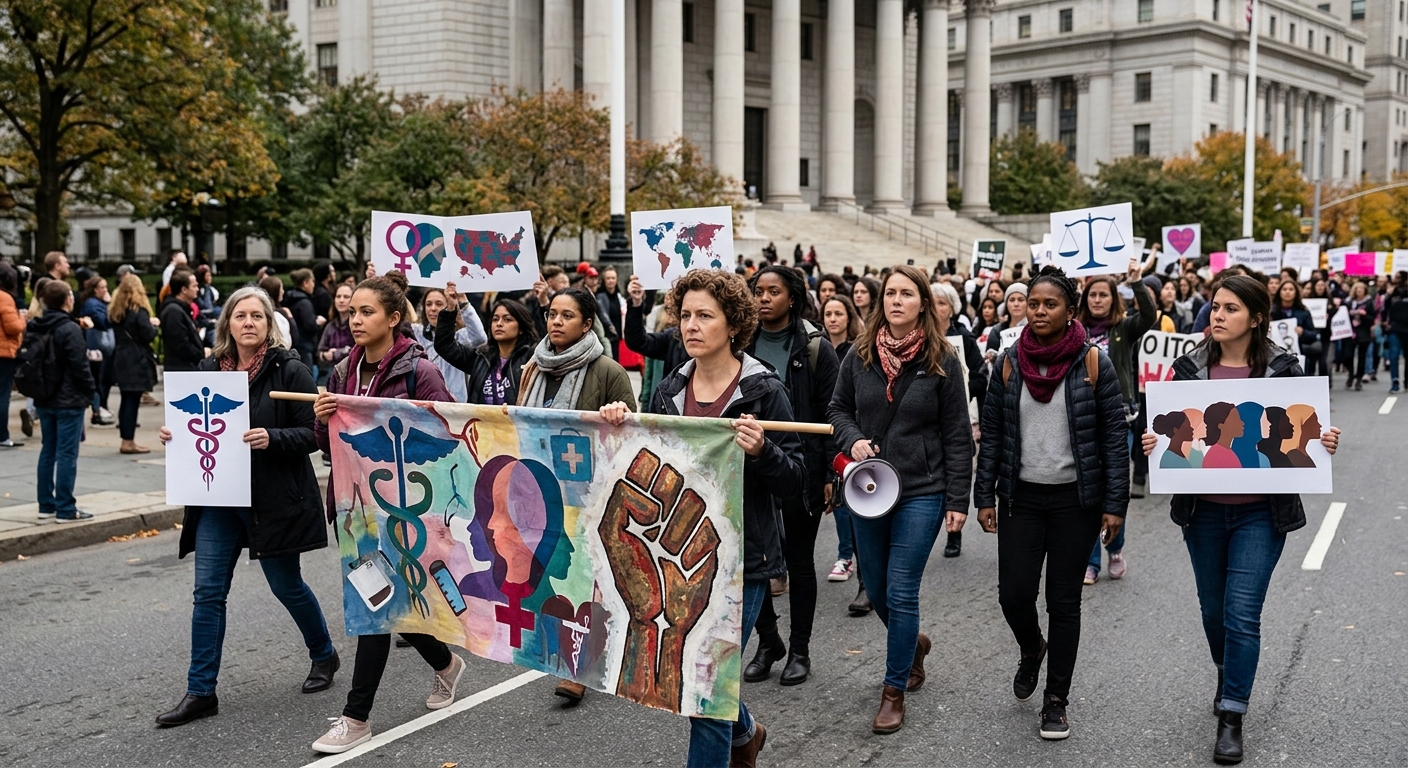
The Fracture of a Constitutional Guarantee
The landscape of reproductive healthcare in the United States underwent a seismic shift in the summer of 2022. When the Supreme Court issued its landmark ruling in Dobbs v. Jackson Women’s Health Organization, it effectively dismantled the federal constitutional right to abortion established nearly five decades earlier by Roe v. Wade. Almost overnight, the guarantee of reproductive autonomy was fractured, leaving behind a jagged, state-by-state patchwork of laws. For civil rights attorneys, healthcare providers, and grassroots organizers, the battle for bodily autonomy did not end with the Dobbs decision; instead, it entered a volatile and unprecedented new chapter.
Advocates who once relied on federal courts to protect access were forced to quickly pivot, developing entirely new strategies to protect patients and medical professionals from a massive wave of restrictions, bans, and criminalization. This new era has ushered in profound legal, medical, and ethical dilemmas that reach far beyond elective procedures. The struggle is no longer just about preserving a constitutional baseline; it is about mitigating the immense harm inflicted by state-level total bans, strict gestational limits, and targeted restrictions on reproductive healthcare providers. The post-Roe reality has tested the resilience of the American healthcare system and the intricate legal frameworks that govern medical privacy, interstate commerce, and emergency medicine. Understanding what it means to fight for reproductive rights today requires looking closely at the courtrooms, clinics, and communities where the consequences of these abrupt policy changes are unfolding in real time.
The State-by-State Battleground: A Fragmented Legal Landscape
With the federal shield permanently removed, the locus of the fight for reproductive freedom immediately shifted to state legislatures and state supreme courts. The result has been the creation of two distinctly different Americas when it comes to reproductive healthcare. In over a dozen states, predominantly located in the South and Midwest, total or near-total abortion bans were triggered almost instantly following the Dobbs decision. These sweeping bans have not only criminalized the provision of abortion but have also introduced severe penalties—including steep financial fines and lengthy prison sentences—for medical professionals found in violation of the law.
Legal advocates and civil rights organizations have been forced to play a grueling, localized game of legal defense. Instead of relying on the Fourteenth Amendment of the U.S. Constitution, attorneys are now rigorously mining individual state constitutions for provisions that could be interpreted as protecting bodily autonomy, personal privacy, or gender equality. This shift has led to a flurry of high-stakes litigation in state courts across the nation. While some state supreme courts have recognized independent, state-level rights to reproductive freedom based on historical privacy clauses, others have heavily rubber-stamped restrictive laws, plunging local communities into a constant state of legal uncertainty.
In sharp contrast, states that strongly support reproductive rights have doubled down on legal protections. Policymakers in these safe-haven states have enacted comprehensive legislation designed to safeguard both the patients seeking care and the providers delivering it. One of the most significant legal innovations in the post-Roe era has been the implementation of “shield laws.” These specific laws are crafted to protect healthcare professionals operating in states where abortion is legal from extradition, civil lawsuits, or criminal investigations initiated by authorities in states with abortion bans. This unprecedented legal polarization has created an environment where the legality of a standard medical procedure depends entirely on geographic boundaries, forcing attorneys to navigate extraordinarily complex questions of interstate jurisdiction and the limits of state regulatory power.
The Rise of Medication Abortion and the Telehealth Revolution
As the physical footprint of abortion access shrank due to sweeping bans, the medical and logistical significance of medication abortion expanded exponentially. The two-drug regimen—consisting of mifepristone and misoprostol—now accounts for the vast majority of all pregnancy terminations in the United States. Recognizing the immense logistical hurdles created by physical clinic closures in ban states, reproductive rights advocates and forward-thinking medical professionals have increasingly relied on telehealth infrastructure to deliver necessary care.
The rapid expansion of telehealth abortion services has been a critical lifeline, but it has also transformed into a fierce, multi-jurisdictional legal battleground. Anti-abortion organizations and conservative state attorneys general have repeatedly attempted to challenge the Food and Drug Administration’s (FDA) approval and regulation of mifepristone. Their overarching goal has been to restrict access to the medication nationwide, thereby circumventing progressive states’ individual abortion laws. Legal advocates have fought vigorously against these challenges in federal courts, arguing that undermining the FDA’s scientific authority would not only devastate reproductive healthcare but also deeply threaten the entire regulatory framework for all prescription drugs in the United States.
Telemedicine, combined with protective shield laws in progressive states, has allowed a dedicated network of providers to prescribe and mail medication directly to patients living in states with strict total bans. This specific practice has opened up a highly contentious new frontier in the fight for reproductive rights. Providers willing to operate under the umbrella of these shield laws take on calculated professional and personal risks to ensure that vulnerable patients in restricted areas are not entirely cut off from safe medical care. The ongoing, complex legal disputes over whether a state government can constitutionally dictate the flow of FDA-approved medications through the federal postal system represent one of the most critical ongoing struggles in the modern reproductive rights arena.
The Chilling Effect on Clinics and Routine Medical Care
The overturning of Roe v. Wade has had a catastrophic and cascading impact on the entire infrastructure of reproductive healthcare. Across the states that quickly enacted stringent bans, dozens of brick-and-mortar clinics were forced to immediately halt abortion services or close their doors permanently. For the dedicated providers who staffed these clinics, the sudden transition has been deeply traumatic. Many physicians and nurses have been forced to uproot their lives and relocate their specialized practices to safe-haven states, tragically leaving behind vulnerable communities that desperately need comprehensive reproductive and sexual healthcare services.
The medical fallout, however, extends far beyond elective abortion care. The remarkably vague and often medically confusing language utilized in state abortion bans has created a massive, system-wide chilling effect on routine obstetrics and gynecology. Doctors find themselves thrust into impossible ethical and legal situations when managing routine miscarriage complications, ectopic pregnancies, or severe, life-threatening fetal anomalies. Because many state bans only allow abortions in ill-defined “medical emergencies” to save the life of the pregnant person, physicians are often paralyzed by the very real fear of criminal prosecution.
As a result, healthcare providers are regularly forced to consult hospital compliance lawyers and massive legal teams before intervening in life-threatening medical crises. This dynamic severely delays critical, time-sensitive care until the patient’s condition deteriorates to the point of imminent death or severe sepsis. This toxic environment has inflicted profound moral injury on healthcare workers nationwide. Medical professionals take an oath to do no harm, yet they are increasingly forced by draconian state laws to temporarily withhold standard, evidence-based care. Legal advocates are currently representing countless patients who were denied emergency care, suing states to clarify the specific medical exceptions within their abortion bans. These essential lawsuits are crucial not only for protecting future patients from severe physical morbidity but also for providing doctors with the exact legal clarity they desperately need to practice medicine without the looming threat of imprisonment.
Navigating the Complexities of Interstate Travel for Healthcare
With safe, legal abortion highly inaccessible in large, contiguous swaths of the country, patients have been forced into a sprawling, grassroots network of interstate travel. Thousands of individuals now cross state lines every single month to obtain routine healthcare services that were once safely available in their own neighborhoods. This mass migration for medical care places an enormous, disproportionate burden on patients—particularly those who are low-income, lack paid time off from work, or have significant daily childcare responsibilities.
The intensive logistical coordination required to safely move patients from restricted states to safe-haven states is immense. A robust, highly organized network of local abortion funds and practical support organizations has heroically stepped into the void, operating essentially as emergency medical travel agencies. These grassroots groups provide direct financial assistance for commercial flights, gas, hotel accommodations, meals, and the out-of-pocket cost of the medical procedure itself. The resilience, funding capabilities, and daily dedication of these organizers constitute a vital, indispensable pillar of the modern fight for reproductive autonomy.
However, the rapid surge in out-of-state patients has naturally placed unprecedented strain on the remaining clinics in destination states. Providers in progressive areas like Illinois, Colorado, and New Mexico are consistently facing massive backlogs and heavily extended wait times. These delays can easily push patients further into their pregnancies, inherently complicating the medical procedures, increasing associated medical costs, and increasing emotional distress. Furthermore, legal advocates are remaining highly vigilant against coordinated attempts by restrictive states to criminalize the simple act of assisting someone to travel across state lines for an abortion, a highly controversial move that legal scholars argue would directly violate the constitutional right to freely travel between states.
Demographic Impacts and the Intersectionality of the Struggle
The severe consequences of the post-Roe landscape are far from distributed equally across the American populace. The fight for reproductive rights is inherently and inextricably tied to broader, systemic struggles for racial and economic justice. Public health statistics consistently demonstrate that the heaviest burdens of abortion bans fall disproportionately on Black, Indigenous, and other women of color, as well as on heavily rural communities and individuals living at or below the federal poverty line. These specific populations already face deeply entrenched, systemic inequities within the broader healthcare system, including alarmingly higher rates of maternal mortality and severely limited access to comprehensive contraceptive care.
Advocacy organizations and civil rights lawyers deeply recognize that securing the legal right to an abortion on paper is only half the battle; true, lasting reproductive justice requires actively ensuring that access to high-quality care is a tangible reality for everyone, entirely regardless of their zip code, racial background, or income level. The civil rights legal strategies of the future are becoming increasingly intersectional. Advocates are boldly challenging sweeping bans not just on the basis of personal privacy, but directly on the strong legal grounds of equal protection and religious freedom, carefully highlighting how these restrictive laws essentially enforce narrow, sectarian views upon a highly diverse national population.
The Road Ahead: Ballot Initiatives and Democratic Action
Despite the grim realities of the highly restricted current legal landscape, there remain potent avenues for future progress. One of the single most effective strategies utilized by reproductive rights advocates in the post-Dobbs era has been direct democratic action. Across the country, whenever the specific issue of abortion rights has been put directly on the ballot for citizens to decide, voters have consistently chosen to protect, enshrine, or expand medical access. From traditionally conservative strongholds to progressive coastal bastions, citizen-led ballot initiatives have proven to be a formidable, highly successful tool for overriding restrictive state legislatures and explicitly amending state constitutions to protect reproductive freedom.
The ongoing, multi-generational fight requires a heavily multifaceted approach. It involves continuous, aggressive litigation to immediately block the most extreme state restrictions, robust philanthropic funding for practical support networks to help patients securely travel, and relentless, community-level political organizing to fundamentally change the makeup of state legislatures. The advocates, doctors, and lawyers actively leading this charge are operating in an environment of constant, high-stakes crisis, yet their commitment remains totally unshaken. The ongoing battle for reproductive rights post-Roe is a grueling marathon, one that fundamentally demands unwavering persistence to entirely rebuild a medical and legal system where bodily autonomy is universally recognized as a fundamental human right.
State Policy Status and Impacts
To understand the current severe disparities, it is highly helpful to look at how different state legal categorizations directly affect both patients and providers. The table below broadly outlines the general landscape of reproductive healthcare policies currently being enforced across the United States.
| Policy Environment | Legal Status of Providers | Patient Impact | Key Characteristics |
|---|---|---|---|
| Total Ban States | Face criminal penalties, total loss of medical licenses, and high risk of long-term imprisonment for abortion provision. | Must entirely rely on out-of-state travel, self-managed medication outside the medical system, or forced pregnancy. | Virtually no exceptions, or extremely poorly defined exceptions for life-threatening medical emergencies. |
| Gestational Limit States | Legal to provide care only up to a specific week (e.g., 6, 12, or 15 weeks); fully criminalized thereafter. | Forces highly rushed decision-making; causes extreme difficulty in accessing care before patients even realize they are pregnant. | Often strategically combined with mandatory waiting periods, forced ultrasounds, and multiple clinic visits. |
| Safe-Haven States | Legally protected by robust state shield laws against out-of-state investigations or civil litigation. | Access to the full spectrum of reproductive care, though local clinics may have extremely long wait times due to out-of-state influx. | Enshrined state constitutional protections, rapidly expanded telehealth infrastructure, and Medicaid coverage for abortion. |
Frequently Asked Questions (FAQs)
Is medication abortion still legally available?
Yes, medication abortion utilizing the standard regimen of mifepristone and misoprostol remains fully FDA-approved and legally available in states that have not outright banned the procedure. In states with total bans, the physical distribution and administration of these medications are strictly prohibited by state law, though significant enforcement challenges exist regarding interstate mail and cross-border telehealth.
Can patients legally travel to another state for reproductive healthcare?
Currently, yes. The fundamental right to travel freely between states is a heavily protected constitutional right in the United States. Patients living in states with severe reproductive restrictions frequently travel to safe-haven states to securely receive medical care, though some highly restrictive states have recently attempted to introduce novel legislation targeting those who financially or logistically assist in the travel process.
What exactly are “shield laws” in the context of reproductive healthcare?
Shield laws are proactive, protective legal statutes passed by progressive safe-haven states specifically designed to insulate their medical providers from legal repercussions initiated by states with severe abortion bans. These robust laws explicitly prevent the physical extradition of local providers and block out-of-state subpoenas, criminal warrants, or civil lawsuits related to legally provided reproductive healthcare.
How have hospital emergency rooms been impacted by state abortion bans?
Vague and contradictory legal exceptions in total ban states have caused massive confusion within hospital emergency departments. Attending physicians often deeply fear criminal prosecution if they intervene too early in a miscarriage or ectopic pregnancy, leading to highly dangerous, medically unnecessary delays in life-saving obstetrical care while medical teams desperately consult hospital legal counsel.
References
- Abortion in the United States — Guttmacher Institute. 2026-03-24. https://www.guttmacher.org/fact-sheet/induced-abortion-united-states
- Stability in the Number of Abortions from 2023 to 2024 in US States Without Total Bans Masks Major Shifts in Access — Guttmacher Institute. 2025-04-15. https://www.guttmacher.org/report/stability-number-abortions-2023-2024
- CDC’s Abortion Surveillance System FAQs — Centers for Disease Control and Prevention (CDC). 2024-11-27. https://www.cdc.gov/reproductivehealth/data_stats/abortion.htm
Similar Articles








Read full bio of Sneha Tete


