
The Fatal Consequences of Minor Traffic Stops
Exploring the urgent need to reform minor traffic stops and pretextual policing.
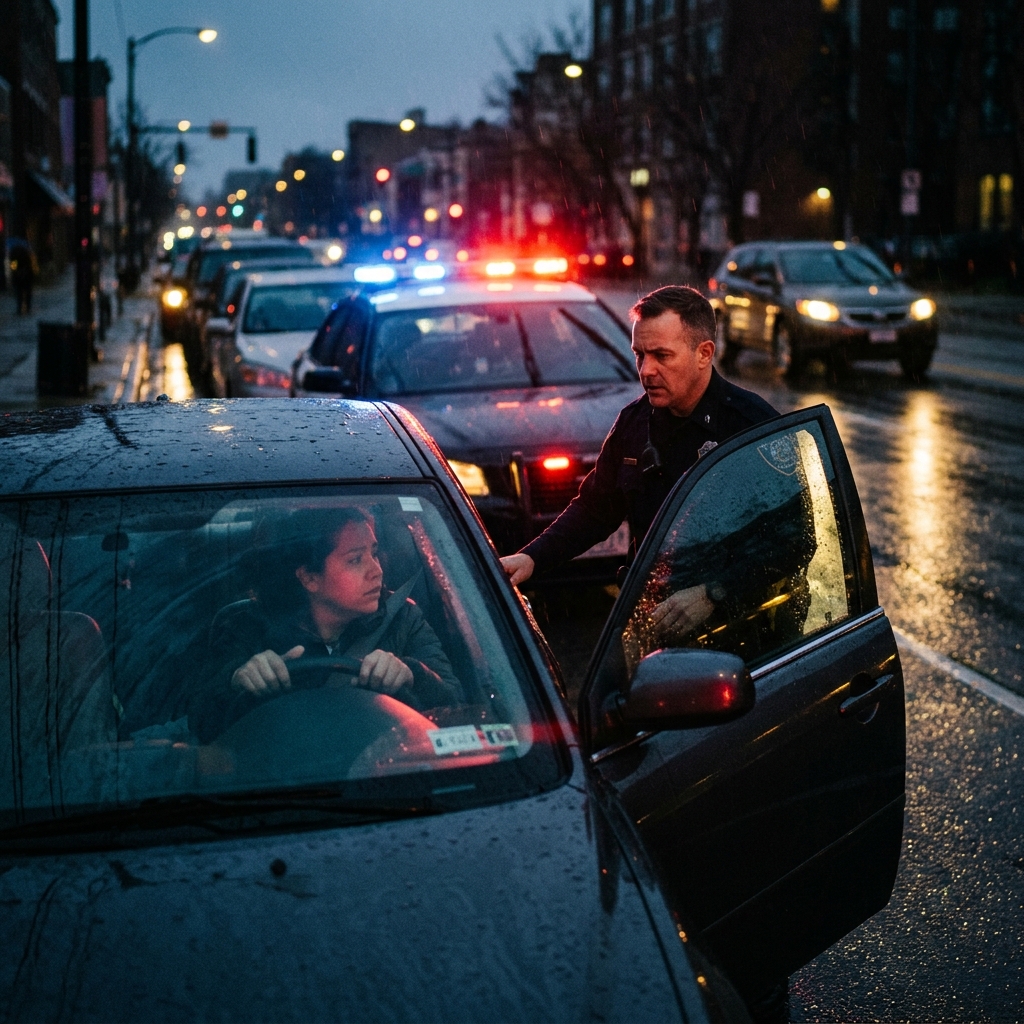
The Core Problem with Routine Traffic Policing
Every single day across the United States, millions of individuals commute to their workplaces, transport their children to school, and embark on routine errands. For the vast majority of these drivers, experiencing a traffic stop initiated by law enforcement is little more than an unexpected inconvenience that typically resolves in a verbal warning or a monetary citation. However, for a deeply disproportionate segment of the American population, the sudden appearance of flashing red and blue lights in a vehicle’s rearview mirror induces profound anxiety and represents a tangible threat to personal safety. The tragic reality of modern American policing is that a seemingly innocuous interaction—such as being pulled over for an expired registration tag, an air freshener hanging from a rearview mirror, or a malfunctioning taillight—can rapidly and unpredictably escalate into a fatal encounter.
The overarching narrative surrounding traffic safety has long relied on the premise that stringent enforcement of every minor motor vehicle code prevents catastrophic accidents. Yet, as the nation has witnessed through numerous high-profile tragedies, the use of armed police officers to enforce low-level, non-moving violations has birthed a secondary crisis. When we deploy heavily armed law enforcement agents to address administrative infractions or minor equipment failures, we are inherently introducing the potential for lethal force into situations that pose zero immediate danger to public safety. Reevaluating the framework of traffic enforcement is no longer simply a matter of optimizing judicial resources; it has evolved into a critical moral imperative necessary to preserve human life and protect fundamental civil liberties.
The Mechanics of Pretextual Policing
To understand why minor traffic stops so frequently serve as the flashpoint for police violence, one must examine the legal framework that enables them. At the center of this issue is the concept of a “pretextual stop.” This policing strategy involves law enforcement officers using minor, often technical, traffic or equipment violations as a legal justification—or pretext—to stop a vehicle. The true motivation for the stop is usually to investigate the driver or passengers for a more serious crime, despite the officer lacking the probable cause or reasonable suspicion required by the Fourth Amendment to initiate a search or detention directly.
Because motor vehicle codes are incredibly dense and encompass hundreds of hyper-specific rules, almost any driver on the road is technically committing a minor infraction at any given moment. From a license plate illuminated by a bulb that is slightly too dim, to tires touching a lane line for a fraction of a second, officers have near-unlimited discretion to initiate a stop. Once the vehicle is pulled over, the nature of the interaction shifts from traffic safety to a criminal investigation. Officers may look for signs of nervousness, peer into the windows for alleged contraband, or pressure drivers into consenting to a vehicle search. This investigative fishing expedition turns everyday citizens into criminal suspects before any actual evidence of wrongdoing is established, fundamentally eroding the public trust in law enforcement institutions.
The Demographic Reality: A Statistical Overview
The application of pretextual stops is not evenly distributed across the driving population. Extensive empirical research has consistently demonstrated that minority communities bear the brunt of discretionary traffic enforcement. In 2022, data collected by the Bureau of Justice Statistics revealed that an estimated 19 percent of U.S. residents aged 16 or older had experienced contact with the police within the past year, with traffic stops serving as a primary driver of police-initiated interactions. While this data highlights the sheer volume of stops, independent academic analyses provide a clearer picture of the underlying racial disparities.
The Stanford Open Policing Project, an extensive research initiative that analyzed nearly 100 million traffic stop records across the country, uncovered that Black drivers were stopped at a rate approximately 20 percent higher than white drivers when compared against their share of the residential population. This discrepancy cannot be explained away by differences in driving behavior. To isolate the role of racial bias, researchers utilized a “veil of darkness” methodology. They discovered that the disproportionate stop rates for Black drivers decreased notably after sunset, a time when a driver’s race is significantly more difficult for an officer to discern from outside the moving vehicle.
Furthermore, the disparity extends beyond the initial stop. The Stanford data indicated that once pulled over, Black and Hispanic drivers were far more likely to be subjected to vehicle searches, cited, or arrested compared to their white counterparts, even though white drivers who were searched were statistically more likely to be found in possession of contraband. This statistical reality underscores that pretextual policing is not just an inefficient method of finding illegal goods; it is a systemic driver of racial inequality within the broader criminal justice system.
From Citation to Crisis: The Anatomy of Escalation
The transition from a routine citation for a non-moving violation to a violent crisis is often swift and chaotic. When an armed officer approaches a vehicle, the inherent power dynamic is heavily skewed. Officers are trained to command compliance and maintain strict control over the encounter. However, drivers who are suddenly pulled over may experience confusion, panic, or fear—especially if they belong to a demographic with a historical distrust of the police.
A sudden movement to retrieve a driver’s license from a glove compartment, a request for clarification regarding the reason for the stop, or an expression of frustration can be misinterpreted by an officer as non-compliance or a threat. Because the officer is armed and operates under a paradigm that prioritizes their own physical survival above all else, this misinterpretation can instantly lead to drawn weapons, physical force, or lethal action. The profound tragedy is that the initial offense—perhaps a suspended registration or a broken brake light—did not warrant an armed response in the first place. The escalation is a direct byproduct of using heavily equipped crime-fighters to perform administrative compliance tasks on the civilian roadways.
The Hidden Economic Toll on Vulnerable Communities
Beyond the immediate physical dangers of pretextual traffic stops, there is a pervasive and devastating economic toll extracted from marginalized communities. Low-level traffic enforcement functions, in many municipalities, as a regressive taxation system. A single ticket for a broken taillight or an expired tag can result in hundreds of dollars in fines, court fees, and administrative surcharges.
For individuals living paycheck to paycheck, these unexpected fines are often insurmountable. When drivers cannot afford to pay, they face late fees, compounding interest, and ultimately, the suspension of their driver’s license. Driving with a suspended license out of necessity—to commute to a job or purchase groceries—exposes them to further criminal charges, arrests, and deeper financial ruin. This cycle criminalizes poverty, ensuring that a minor equipment failure traps individuals in a perpetual loop of debt and systemic judicial involvement. Addressing traffic enforcement reform is intrinsically linked to economic justice and dismantling systems that disproportionately penalize the working class.
A Roadmap for Meaningful Policy Solutions
To prevent future tragedies and restore equity on the roads, structural changes to traffic enforcement must be implemented at both the legislative and municipal levels. Minor adjustments to department policy or implicit bias training alone have proven insufficient; true reform requires reducing the footprint of armed policing in everyday civilian life.
Legislative Action to Restrict Stops
State legislatures and city councils hold the power to redefine what constitutes a stoppable offense. In 2021, Virginia became a pioneer in this arena by enacting sweeping legislation that transformed minor traffic and pedestrian violations from primary offenses into secondary offenses. The new law explicitly prohibited law enforcement officers from initiating a stop solely for infractions such as the odor of marijuana, dangling objects from rearview mirrors, or defective taillights. Under this framework, police can still cite drivers for these issues if they are pulled over for a primary safety violation (like reckless driving or extreme speeding), but they can no longer use minor equipment flaws as a gateway to conduct investigatory fishing expeditions.
Transitioning to Alternative Enforcement Methods
Another viable solution is removing armed police from routine traffic enforcement entirely. Cities across the nation are exploring the creation of specialized, unarmed civilian departments—often housed under the Department of Transportation—tasked exclusively with traffic management and administrative enforcement. For non-moving violations, automated enforcement via mail-in citations, or providing drivers with vouchers to repair broken equipment rather than issuing punitive fines, can achieve compliance without the looming threat of physical violence.
Traditional vs. Reformed Traffic Enforcement
To better visualize the shift in policing paradigms, consider the following comparison between the current model and proposed equitable models.
| Aspect | Traditional Traffic Enforcement | Reformed Traffic Enforcement |
|---|---|---|
| Primary Actor | Armed, sworn law enforcement officers. | Unarmed civilian personnel or automated cameras. |
| Focus of the Stop | Investigatory fishing expeditions (pretextual stops). | Strictly addressing the specific safety violation. |
| Minor Equipment Violations | Used as primary justification to pull over vehicles. | Treated as secondary offenses or handled via mail. |
| Outcome for Driver | High risk of escalation, arrest, or steep fines. | Low risk of violence; focus on compliance (e.g., repair vouchers). |
Conclusion
The insistence on utilizing armed police forces to enforce every minor detail of the motor vehicle code is a policy failure that costs lives. The data is unequivocal: pretextual traffic stops disproportionately target marginalized communities, strip individuals of their civil liberties, and frequently escalate into traumatic or lethal encounters. By adopting sensible legislative reforms—such as eliminating minor offenses as primary reasons for traffic stops and transitioning toward unarmed enforcement for administrative issues—society can prioritize true public safety. A broken taillight or an expired registration should never be the catalyst for a death sentence.
Frequently Asked Questions (FAQs)
What is a pretextual traffic stop?
A pretextual stop occurs when a police officer pulls over a vehicle for a minor traffic or equipment violation (like an expired tag or a dim license plate light) but is actually using that infraction as a legal excuse to investigate the driver for unrelated, more serious suspicions without having the constitutionally required probable cause.
Why are pretextual stops considered controversial?
They are highly controversial because they are often applied discriminatorily, targeting Black, Hispanic, and low-income drivers at disproportionate rates. Furthermore, deploying armed officers for minor administrative violations significantly increases the likelihood of a routine interaction unnecessarily escalating into a violent or deadly encounter.
Can police pull you over for something hanging from your rearview mirror?
In many states, yes. Historically, laws prohibiting “obstructed views” have given police broad discretion to pull drivers over for items like air fresheners or graduation tassels. However, reform-minded states, such as Virginia, have recently banned officers from using this specific minor infraction as the primary reason for initiating a traffic stop.
How would roads stay safe without armed police conducting traffic stops?
Reforming traffic stops does not mean abandoning safety. Reforms aim to redirect armed police focus toward serious, dangerous moving violations—like reckless driving or driving under the influence. Minor, non-moving infractions can be managed safely through unarmed civil enforcement, automated camera systems, or by sending citations through the mail, thereby removing the threat of lethal force from administrative tasks.
References
- Contacts Between Police and the Public, 2022 — Bureau of Justice Statistics. 2024-10-04. https://bjs.ojp.gov/library/publications/contacts-between-police-and-public-2022
- Stanford Open Policing Project analyzed data from nearly 100 million traffic stops in the US — Stanford University. 2019-03-15. https://openpolicing.stanford.edu/
- Pretextual Policing — Justice Forward Virginia. 2021. https://justiceforwardva.com/pretextual-policing
Similar Articles








Read full bio of Sneha Tete


