
Rethinking Child Welfare: The Demand for Family Miranda Rights in New York
Discover why advocates are fighting for "Family Miranda" rights to protect parents during child welfare investigations in New York.
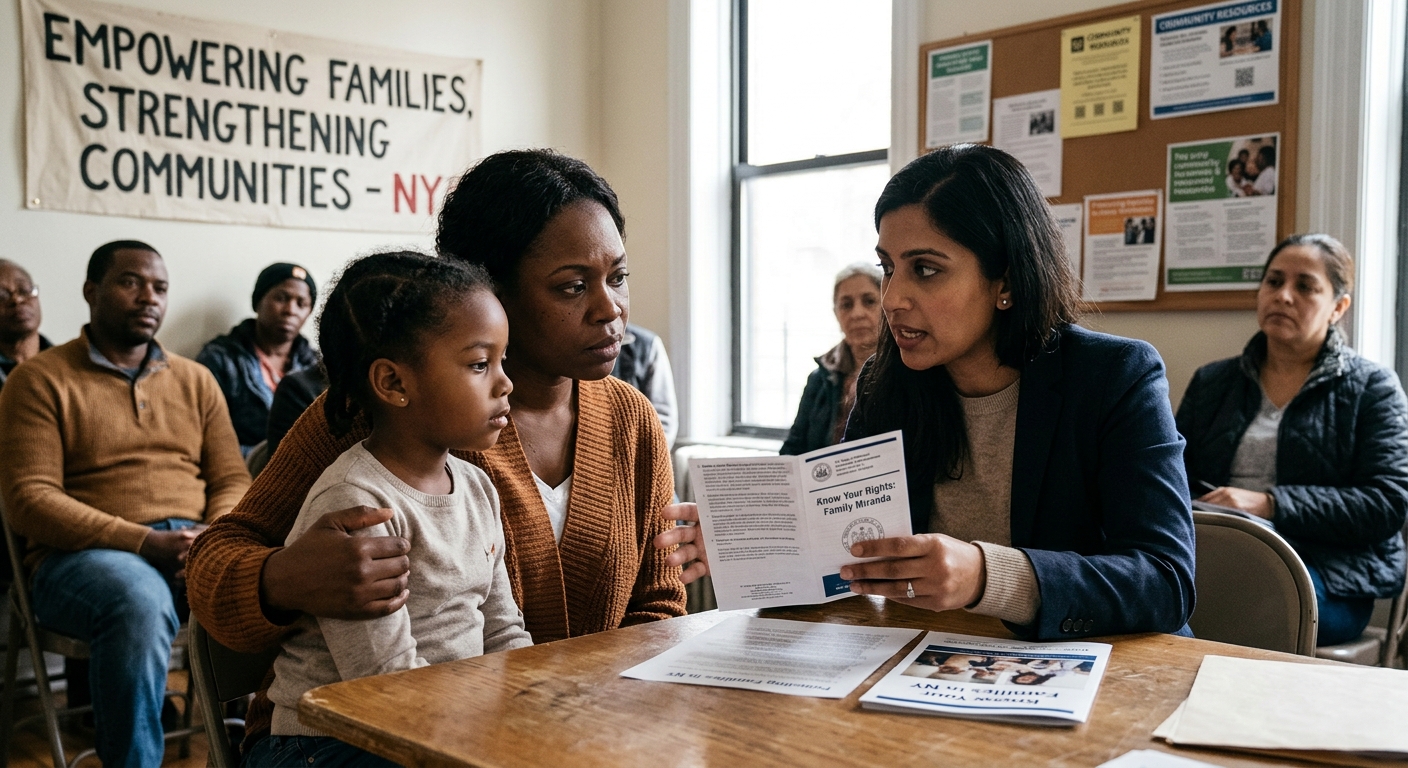
The “Knock on the Door” and the Constitution
When law enforcement officers make an arrest, the sequence of events is deeply ingrained in the public consciousness: “You have the right to remain silent. Anything you say can and will be used against you in a court of law.” These Miranda warnings are a fundamental cornerstone of the American justice system, designed to protect individuals from self-incrimination and ensure they understand their constitutional rights before custodial interrogation. However, when the knock on the door comes not from a police officer, but from a child welfare caseworker, parents are afforded no such mandatory disclosures.
The moment a caseworker from Child Protective Services (CPS) or the Administration for Children’s Services (ACS) in New York arrives at a family’s home, the stakes are undeniably catastrophic. The potential outcome is not just fines or incarceration, but the removal of a child from the family home—a trauma that alters the course of a family’s life forever. Despite the gravity of these investigations, caseworkers are not legally required to inform parents of their rights. This glaring gap in constitutional protection has sparked a fierce legislative and grassroots movement in New York and across the nation, calling for the implementation of “Family Miranda” rights.
Understanding the Current State of Child Welfare Investigations
To understand why Family Miranda rights are becoming a focal point of civil rights advocacy, one must examine the mechanics of a modern child welfare investigation. Investigations are typically triggered by a call to a state hotline. These calls can come from mandated reporters—such as teachers, doctors, or social workers—or from anonymous tipsters, which can sometimes include estranged partners or disgruntled neighbors. Once a report is logged, an agency is legally obligated to investigate.
When an investigator arrives at a residence, the power dynamic is inherently lopsided. Parents, often caught off guard and terrified by the prospect of losing their children, frequently default to total compliance. They allow caseworkers into their homes, permit invasive searches of their pantries and medicine cabinets, and even consent to strip searches of their children to check for bruises. All of this is routinely done without a warrant, without the presence of an attorney, and without the parent realizing they have the constitutional right to say no.
The Fourth Amendment of the U.S. Constitution protects citizens from unreasonable searches and seizures by the government. Legal scholars argue that because CPS investigators are state actors exercising police power, their actions should be strictly governed by these constitutional limitations. Yet, a loophole exists in practice: coercion masquerading as consent. Because parents are not informed that they can refuse entry or demand a court order, their compliance is legally interpreted as voluntary consent, effectively waiving their Fourth Amendment protections.
What Are “Family Miranda” Rights?
The push for a Family Miranda warning is not an attempt to create new legal loopholes or invent novel constitutional protections; rather, it is a mechanism to ensure that existing rights are clearly communicated to citizens in moments of high stress. If enacted, Family Miranda legislation would require caseworkers to read a standardized disclosure to parents at the very first point of contact.
The core components of the proposed warnings include a variety of vital protections:
- The Right to Remain Silent: Parents must be informed that they do not have to answer questions, and that any statements they make can be used against them in family court proceedings to justify child removal.
- The Right to Legal Counsel: Parents have the right to consult with an attorney before speaking with a caseworker or signing any documents, including releases of medical or educational records.
- The Right to Deny Entry: Unless the caseworker is accompanied by a law enforcement officer executing a court order, or there are clear, exigent circumstances indicating a child is in immediate danger of severe harm, parents can legally deny entry to their home.
- Notice of Allegations: Parents have the right to know exactly what allegations have been made against them, allowing them to understand the nature of the investigation. In current practice, caseworkers frequently conduct open-ended interrogations, fishing for unrelated issues without disclosing the original complaint that triggered the hotline call. This lack of transparency can lead to prolonged, intrusive investigations based on unfounded rumors rather than factual safety concerns. A mandated disclosure would firmly restrict the scope of the initial inquiry and allow parents to provide specific, relevant information to clear their names without exposing their entire private lives to unwarranted state scrutiny.
The Legislative Push in New York: Confronting Systemic Bias
New York has become a critical battleground for this issue. Lawmakers and advocacy groups are rallying behind the Family Miranda Rights Act, formally introduced as Senate Bill S901 and Assembly Bill A1980. This proposed legislation is part of a broader package aimed at overhauling a system that disproportionately targets marginalized communities across the state.
Data from an internal audit commissioned by the New York City Administration for Children’s Services (ACS)—which was made public following a Freedom of Information Law request—revealed startling admissions about the agency’s practices. The report indicated that the system operates in a “predatory” manner that specifically targets Black and Hispanic families. In New York, Black families are subjected to investigations at a rate seven times higher than white families, and their children are removed from their homes thirteen times more frequently.
Advocates assert that this disparity is largely driven by the conflation of poverty with neglect. The vast majority of child welfare cases are not opened due to allegations of severe physical or sexual abuse; rather, they stem from neglect, which is often symptomatic of systemic poverty—such as lack of food, inadequate housing, or inability to afford childcare. By enforcing Family Miranda rights, lawmakers hope to level the playing field, ensuring that marginalized families who may not have immediate access to legal resources are not tricked or coerced into surrendering their rights.
Furthermore, the movement in New York is heavily supported by a coalition of public defenders, civil rights groups, and directly impacted parents. Organizations have testified before the state legislature, sharing harrowing accounts of families torn apart due to minor misunderstandings or poverty-driven circumstances. The push for the Family Miranda Rights Act is not merely a theoretical legal debate; it is a profound demand for racial and economic justice. Advocates argue that until these disclosures become mandatory, the child welfare system will continue to function as a pipeline that destabilizes communities and perpetuates generational trauma under the guise of child protection.
A National Movement: Looking at Texas and Beyond
While New York debates the merits of the Family Miranda Rights Act, other states have already taken definitive action. Texas recently passed legislation requiring the Department of Family and Protective Services (DFPS) caseworkers to provide parents with verbal and written notice of their rights at the initial point of contact. This includes the right to refuse to speak without an attorney and the right to deny entry without a court order. Crucially, the Texas law stipulates that if a caseworker fails to provide this warning, the information gathered cannot be used in subsequent civil proceedings to terminate parental rights.
Washington State has also had a version of these protections in place for nearly two decades, though advocates argue it lacks the robust due process enforcement mechanisms seen in the new Texas model. The success of legislation in these states serves as a powerful counterargument to those who claim that reading parents their rights will cause the child welfare system to collapse.
The Arguments Against Family Miranda: Balancing Rights and Safety
Despite the momentum, the movement faces significant opposition. Detractors, including some child welfare agency leaders and child safety advocates, argue that implementing a Miranda-style warning will foster an adversarial relationship between families and caseworkers from the outset.
The primary concern is that if parents are explicitly told they can refuse entry or remain silent, many will choose to do so. Opponents fear that this lack of cooperation will severely delay investigations, potentially leaving vulnerable children in dangerous, abusive environments while caseworkers scramble to secure court orders. They argue that the child welfare system is fundamentally different from the criminal justice system; its primary goal is the rehabilitation of the family and the protection of the child, not punishment. Therefore, they contend, importing criminal justice protocols into a social services framework is misguided and dangerous.
However, civil rights advocates counter this by emphasizing that constitutional rights are not contingent on convenience. The fact that a government investigation is framed as “help” does not negate a citizen’s Fourth Amendment protections. Furthermore, advocates argue that a system built on deceit and coercion cannot effectively help families. True rehabilitation and child safety require trust, transparency, and a respect for the dignity of the parents.
Actionable Steps for Families Facing Investigations
While legislation is still pending in many jurisdictions, families must navigate the current reality of the child welfare system. Understanding one’s rights prior to an investigation is the most effective defense against overreach.
- Do Not Panic, But Be Cautious: If a caseworker arrives at your door, remain calm. Recognize that they are a government agent conducting an investigation.
- Ask for Identification and the Allegations: Politely ask to see the caseworker’s ID and request a clear explanation of the allegations made against you.
- Step Outside to Talk: You do not have to invite the caseworker inside your home. You can step outside and close the door behind you to have a conversation.
- Do Not Consent to Searches or Interviews: Unless they have a court order, you can decline to let them inspect your home or interview your children. Politely state that you wish to consult with an attorney before allowing any searches or answering questions.
- Seek Legal Counsel Immediately: Contact a family defense attorney or a local legal aid organization as soon as possible. Having legal representation early in the process dramatically alters the trajectory of an investigation.
- Document Every Interaction: Parents should maintain a detailed log of every communication with child welfare workers. This includes noting the dates, times, and summaries of conversations, as well as retaining copies of any documents provided or requested. If a caseworker makes specific demands or claims they have a warrant, parents should ask for physical copies. Meticulous documentation can be invaluable for legal counsel in identifying potential procedural violations or instances where coercion was utilized to bypass constitutional boundaries.
Frequently Asked Questions (FAQs)
Do I have the right to refuse entry to a CPS caseworker in New York?
Yes. Unless the caseworker has a signed court order or there are exigent circumstances (a reasonable belief that a child is in immediate danger of serious harm), you have the Fourth Amendment right to deny them entry into your home.
Will refusing to cooperate with CPS make me look guilty?
Exercising your constitutional rights should not be legally construed as an admission of guilt. However, caseworkers may use your refusal as grounds to petition a family court judge for a warrant or order to compel your cooperation. It is always best to exercise your rights while immediately seeking the guidance of an attorney.
How does the Family Miranda differ from criminal Miranda warnings?
Criminal Miranda warnings apply when a person is in police custody and subject to interrogation. Family Miranda warnings, as proposed in the legislation, would apply at the initial contact between a child welfare investigator and a parent, advising them of their civil rights regarding home entry, legal counsel, and the right to remain silent during a civil abuse or neglect investigation.
If a caseworker finds something during a warrantless search, can it be used against me?
Currently, if you “consent” to a search by letting them in, the findings can be used in family court to justify child removal. If Family Miranda laws like those in Texas are passed, evidence gathered without proper rights advisement or a warrant may become inadmissible.
Why are advocacy groups pushing for this change now?
Increased transparency regarding the profound racial and economic disparities within the child welfare system has fueled this movement. Audits and data have shown that marginalized families are disproportionately targeted, and advocates argue that mandated rights disclosures are a necessary step to curb systemic overreach and protect families from unwarranted separation.
Conclusion: Reimagining Child Protection
The debate surrounding Family Miranda rights represents a critical inflection point in how American society views the intersection of child safety and constitutional liberties. For decades, the child welfare system has operated with sweeping authority, often bypassing the procedural safeguards that govern other branches of law enforcement.
The legislative efforts in New York, spearheaded by grassroots organizations and civil rights advocates, challenge the premise that protecting children requires the suspension of parental rights. By demanding transparency and informed consent at the very inception of an investigation, the Family Miranda movement seeks to dismantle the coercive practices that have disproportionately fractured minority and low-income families. Whether through state-by-state legislative victories or broader judicial recognition, the demand for due process in the family regulation system is a call for justice that can no longer be ignored.
References
- Senate Bill S901 (2023-2024 Legislative Session) — New York State Senate. 2023-01-09. https://www.nysenate.gov/legislation/bills/2023/S901
- Fourth Amendment to the United States Constitution — U.S. Government Publishing Office. 1992. https://www.govinfo.gov/content/pkg/GPO-CONAN-1992/pdf/GPO-CONAN-1992-10-5.pdf
- NYC Child Welfare Agency Lobbying to Weaken “Miranda Warning” Bill — ProPublica. 2023-06-05. https://www.propublica.org/article/nyc-child-welfare-acs-miranda-warning-bill
- Curtail the Racist ‘Child Welfare’ System — American Civil Liberties Union (ACLU). 2024-02-14. https://www.aclu.org/action/curtail-racist-child-welfare-system
Similar Articles








Read full bio of Sneha Tete


