
Faith and the Sacred Right to Reproductive Justice
How diverse religious communities champion abortion as a moral imperative.
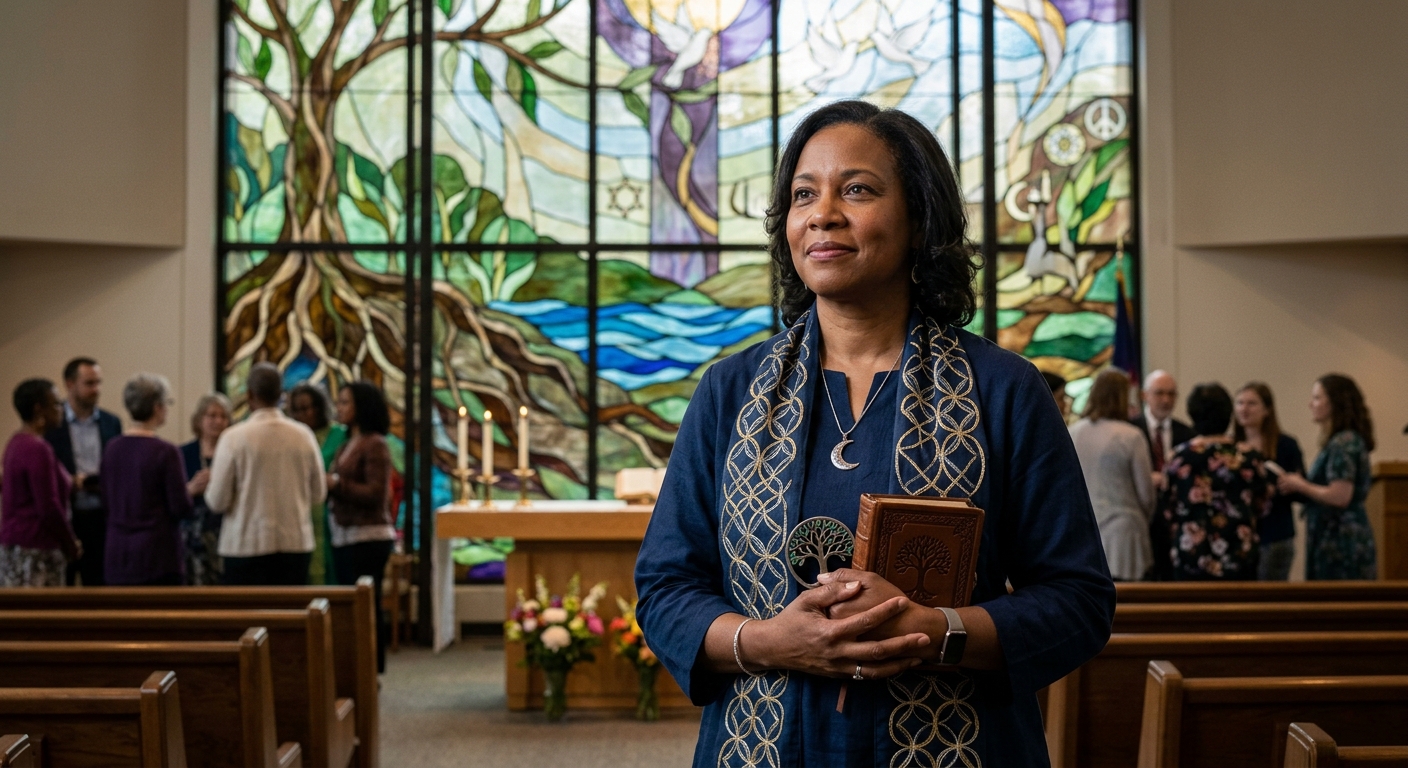
The cultural narrative surrounding abortion in the United States often paints a stark, uncompromising picture: religion on one side, and reproductive freedom on the other. For decades, the public discourse has been dominated by a vocal subset of conservative religious groups that strongly oppose abortion access, cementing the widespread assumption that faith and bodily autonomy are mutually exclusive. However, this monolithic portrayal is not just incomplete; it is fundamentally inaccurate. Across the nation, a dynamic and growing movement of religious communities, clergy members, and faithful individuals is stepping to the forefront of reproductive rights advocacy. For these dedicated advocates, the right to make decisions about one’s own body is not a rejection of faith, but a profound expression of it.
These interfaith advocates argue that reproductive justice is a deeply moral imperative rooted in compassion, individual dignity, and the sacredness of human agency. The intersection of faith and reproductive rights is a complex, evolving landscape that challenges the mainstream assumption of religious homogeneity. When the national conversation expands to legitimately include progressive Christians, Jews, Muslims, Unitarian Universalists, and practitioners of various other traditions, an entirely different theological framework emerges. In these communities, advocating for abortion access isn’t merely a secular or political concession; it is viewed as a strict spiritual obligation. By reclaiming the moral high ground, faith-based organizers are shifting the contemporary paradigm, proving beyond a doubt that religious liberty and reproductive freedom can—and do—coexist beautifully. This article explores the theological foundations of this movement, the legal intersections of healthcare and the First Amendment, and the grassroots strategies faith leaders currently employ to protect reproductive justice.
Dismantling the Monolith: Diverse Theological Perspectives on Autonomy
To fully understand the faith-based movement for reproductive rights, one must first recognize the immense theological diversity that exists within and across religious traditions. Public opinion research has extensively documented that views on abortion vary significantly by religious affiliation, revealing that majorities within several major American religious groups firmly support legal abortion access. The assumption that the “religious vote” is an inherently anti-abortion bloc ignores millions of faithful individuals.
For example, in Judaism, the life and health of the pregnant person are consistently and historically prioritized over the potential life of a fetus. According to traditional Jewish law, an individual’s life, physical well-being, and mental health take absolute precedence. If a pregnancy endangers the mother in any capacity, abortion is not just permitted; it is often considered a religious mandate to preserve existing life. Consequently, many Jewish advocacy groups, scholars, and rabbis have been some of the most vocal opponents of total abortion bans, fiercely arguing that such laws violate their deeply held religious beliefs and force them to adhere to an alien theological framework.
Similarly, within various Christian denominations—including the Episcopal Church, the United Church of Christ, the Evangelical Lutheran Church in America, and the Presbyterian Church (USA)—there is robust, institutionally backed support for reproductive freedom. These denominations often frame their support for abortion access through the lens of social justice, emphasizing the moral agency of women and pregnant individuals. They argue that a divine creator endows individuals with the capacity, intellect, and responsibility to make complex moral decisions about their own families and bodies. From this perspective, restricting access to safe and legal abortion forces individuals into dangerous situations, disproportionately harming marginalized and impoverished communities, which directly contradicts the core Christian mandate to care for the vulnerable.
In Islam, while interpretations naturally vary among scholars and legal schools of thought, there is generally a historical consensus that abortion is permitted under certain circumstances. This is particularly true if the procedure is necessary to save the life of the pregnant person, and many Islamic schools allow it within the first 120 days of gestation before “ensoulment” is believed to occur. Unitarian Universalism also explicitly champions reproductive justice as a core tenet of its faith, advocating for the inherent worth and dignity of every person, which intrinsically includes the right to absolute bodily autonomy. By highlighting these incredibly diverse perspectives, faith leaders are systematically dismantling the myth that religion universally condemns abortion.
The Crossroads of Religious Liberty and Healthcare Access
The legal battleground for abortion access has increasingly focused on an unexpected, yet constitutionally profound, argument: religious liberty itself. As various states enact highly restrictive abortion policies, legal scholars and civil rights advocates are raising critical questions regarding the First Amendment of the United States Constitution. Specifically, they are examining the tension between state abortion bans and the dual protections of the Establishment Clause and the Free Exercise Clause.
The Establishment Clause explicitly prohibits the government from establishing a state religion or favoring one religious doctrine over another. When a state codifies a specific religious belief about when human life begins—such as the conservative Christian theological doctrine that life begins at the exact moment of conception—advocates argue it inherently violates this clause. By writing one specific religious definition of personhood into the criminal code, the state is imposing a singular theological doctrine onto the entire population, disregarding the scientific complexity and diverse religious views on the matter.
Furthermore, there is a highly compelling Free Exercise argument taking shape in courtrooms across the country. If a person’s faith dictates that they must terminate a pregnancy to protect their life, psychological health, or their family’s overall well-being, a strict state ban on abortion actively prohibits them from freely exercising their religion. In the wake of the Supreme Court overturning Roe v. Wade, litigants are innovatively utilizing state Religious Freedom Restoration Acts (RFRAs) and First Amendment protections to formally request religious exceptions to these abortion bans. This emerging legal strategy turns the traditional, conservative use of religious liberty on its head, utilizing the framework not to discriminate or deny healthcare, but to secure fundamental access to it.
This escalating legal friction highlights the profound consequences of intertwining conservative theology with secular state law. The landscape of state abortion policies currently illustrates a stark geographical divide, with some states enacting highly restrictive criminal bans and others moving aggressively to protect access as a fundamental right. In states leaning hostile to abortion, lawmakers frequently cite religious reasoning and scripture during legislative debates. For faith-based reproductive rights advocates, the fight against these bans is fundamentally a fight for the separation of church and state. It is a strict demand that the government remain neutral on theological definitions of personhood and allow individuals to navigate their healthcare decisions in private consultation with their own conscience, medical doctors, and chosen spiritual advisors.
Mobilizing the Pews: Grassroots Advocacy in Action
The commitment of progressive and moderate religious communities to reproductive freedom extends far beyond high-minded theological debate; it manifests daily in dynamic, highly organized grassroots activism. Faith leaders are purposefully leveraging their moral authority, expansive community networks, and physical organizational infrastructure to push back against legislative overreach and secure tangible legal protections for abortion access. In recent years, interfaith coalitions have played pivotal roles in supporting state-level ballot initiatives aimed at permanently codifying reproductive rights into state constitutions.
These strategic coalitions acutely recognize that passing protective legislation requires broad, diverse alliances. Clergy members often volunteer to testify before state legislative committees, lead peaceful public rallies, and utilize their platforms during weekly religious services to educate their congregations about the undeniable moral imperative of reproductive justice. They provide a vital counter-narrative to the hostile protests often seen outside reproductive health clinics. By organizing community “clinic defense” initiatives, clergy and congregants peacefully stand outside healthcare facilities to sing, pray, and physically shield patients from harassment. This highly visible, faith-rooted support provides immense comfort to patients who are often aggressively told that God condemns their private healthcare choices.
Moreover, many religious organizations actively and directly fund abortion access. Through regular congregational collections, dedicated community funds, and strategic partnerships with local abortion funds, religious groups provide crucial financial assistance to individuals who cannot afford the high cost of the medical procedure, interstate travel, safe lodging, or childcare. This direct community action embodies a practical, hands-on application of their faith—a steadfast commitment to removing the systemic and financial barriers that arbitrarily prevent individuals from accessing the medical care they urgently need.
Key Strategies of Faith-Based Reproductive Advocates
The organizing and advocacy efforts of religious communities are incredibly multifaceted, employing a wide variety of effective tactics to influence public policy and support marginalized individuals:
- Theological Education and De-stigmatization: Hosting regular workshops, study groups, and sermons that properly reframe abortion as a complex moral choice, helping to quickly dismantle the shame, guilt, and stigma so often associated with the procedure in religious spaces.
- Legislative Advocacy and Legal Action: Filing amicus curiae (friend of the court) briefs in major reproductive rights lawsuits, detailing the deep theological support for abortion and rigorously arguing against the unconstitutional imposition of a singular religious viewpoint.
- Direct Mutual Aid: Establishing and consistently contributing to local abortion funds, organizing volunteer transportation networks for those desperately needing to travel out of state for care, and providing holistic emotional support for pregnant individuals.
- Interfaith Coalition Building: Building broad, sustainable coalitions across dramatically different religious traditions to effectively demonstrate a unified, diverse front supporting bodily autonomy and true religious liberty.
Reframing the Pro-Choice Argument as a Moral Imperative
For several decades, the mainstream pro-choice movement has largely, and understandably, focused on legal rights, medical necessity, and constitutional privacy. While these secular arguments remain absolutely crucial to the movement, the seamless integration of faith-based advocacy has introduced a powerful new dimension to the national discourse: the undeniable language of morality. By forcefully arguing that abortion access is an ethical and religious necessity, faith leaders are successfully capturing the attention of the “movable middle”—everyday individuals who are spiritually inclined but perhaps conflicted about the complexities of abortion.
This intentional moral reframing is essential in a culturally religious country like the United States. It explicitly allows people to support reproductive rights not in spite of their faith, but entirely because of it. It beautifully validates the complex, deeply personal nature of reproductive decision-making and honors the ultimate spiritual agency of the pregnant person. Furthermore, it directly challenges anti-abortion advocates to finally answer for the measurable harm caused by restrictive laws, successfully shifting the heavy moral burden onto those who would deliberately deny essential healthcare.
There is also a profound historical precedent for this moral stance. Long before the landmark Roe v. Wade decision, networks like the Clergy Consultation Service on Abortion were actively helping women safely navigate the dangerous landscape of illegal abortions. Today’s faith leaders are proudly walking in those exact historical footsteps, boldly asserting that there is nothing inherently holy about forced birth, and there is profound grace in allowing individuals to determine their own futures.
Ultimately, the passionate involvement of religious communities in the fight for reproductive freedom is a remarkable testament to the enduring power of faith as a primary catalyst for social justice. As the legal and political landscape continues to shift dramatically, these advocates remain steadfast in their conviction that true, uncompromising religious liberty must include the right to bodily autonomy. They are proving every day that the pews are not just quiet places of worship, but wellsprings of moral courage, demanding a just society where every person is trusted to make the sacred choices that govern their own body and life.
Frequently Asked Questions (FAQs)
Do all religions oppose abortion?
No. While some conservative religious denominations strongly oppose abortion, many prominent religious traditions—including Judaism, progressive Christian denominations (such as the Episcopal Church and the United Church of Christ), and Unitarian Universalism—support reproductive freedom and view safe abortion access as a vital moral imperative.
How does the First Amendment relate to abortion access?
The First Amendment explicitly protects the free exercise of religion and prevents the government from establishing a state religion (the Establishment Clause). Legal advocates argue that severe abortion bans rooted in specific Christian theological beliefs violate the Establishment Clause, and that denying abortions to those whose distinct faith permits or requires it violates the Free Exercise Clause.
What is the Religious Freedom Restoration Act (RFRA) and how is it used in abortion cases?
State and federal RFRAs are civil rights laws originally designed to protect individuals from government actions that substantially burden their religious practices. Recently, civil rights advocates and religious congregations have used state RFRAs to sue against restrictive abortion bans, arguing that these health bans unlawfully burden the sincere religious practices of individuals whose faith supports abortion access.
How do faith communities practically support abortion access?
Religious groups engage in various active forms of advocacy and aid, including testifying against restrictive legislation in statehouses, aggressively supporting citizen-led constitutional amendments for reproductive rights, providing a peaceful and protective presence at health clinics, and directly funding abortion procedures and travel costs for those in financial need.
References
- Public Opinion on Abortion — Pew Research Center. 2026-03-12. https://www.pewresearch.org/religion/fact-sheet/public-opinion-on-abortion/
- The State Abortion Policy Landscape One Year Post-Roe — Guttmacher Institute. 2023-06-15. https://www.guttmacher.org/article/2023/06/state-abortion-policy-landscape-one-year-post-roe
- The Religious Exception to Abortion Bans: A Litigation Guide to State RFRAs — Stanford Law Review. 2024-05-20. https://www.stanfordlawreview.org/print/article/the-religious-exception-to-abortion-bans/
Similar Articles








Read full bio of Sneha Tete


