
Faith, Compassion, and Child Welfare: Embracing LGBTQ+ Equality
Why prioritizing children’s needs means ending discrimination in foster care.
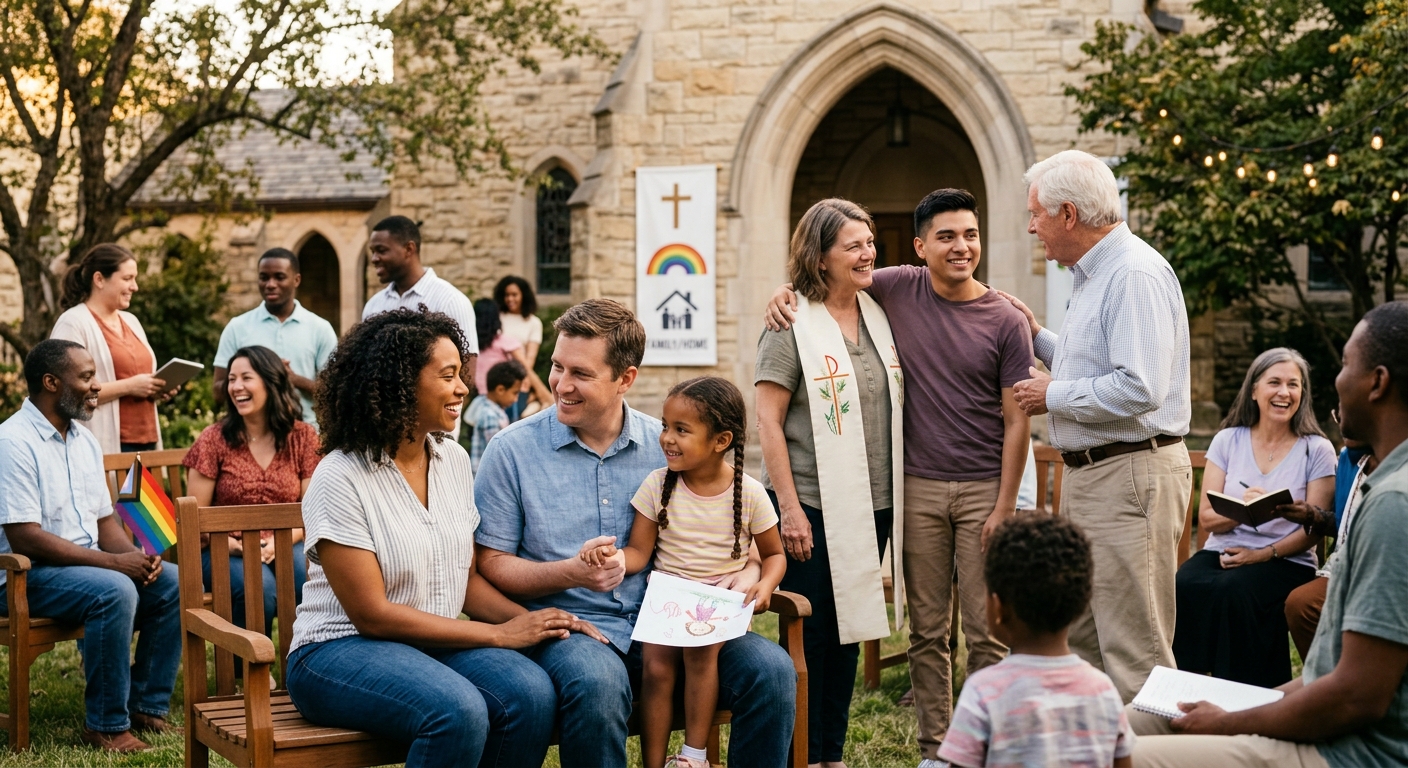
The intersection of religious liberty, child welfare, and LGBTQ+ equality remains one of the most fiercely debated ethical battlegrounds in modern society. At the center of this dialogue are faith-based child welfare agencies that rely on religious exemptions to deny fostering and adoption services to same-sex couples and LGBTQ+ individuals. While religious freedom is an undeniable constitutional right, the assertion that faith requires the exclusion of capable, loving parents from the foster care system presents a profound moral paradox. When examining the core tenets of social justice—particularly those emphasizing the protection of the vulnerable—it becomes evident that true adherence to faith mandates the embrace of LGBTQ+ equality, not its rejection.
Across various religious traditions, the directive to care for orphans, marginalized communities, and the defenseless is not presented as an optional charity, but as a fundamental moral obligation. Turning away qualified parents while hundreds of thousands of children languish in the foster care system directly contradicts this foundational mandate. By prioritizing institutional ideology over the well-being of defenseless youth, exclusionary policies fail both the children they are meant to serve and the very principles of compassion and human dignity they claim to uphold.
The Shared Values of Faith and Protecting the Vulnerable
To understand the ethical friction in the child welfare system, one must first look at the theological underpinnings that drive faith-based charity. Major religious frameworks, including Catholic social teaching, are built heavily on the concept of human dignity and the “preferential option for the poor and vulnerable.” In any functioning society, children separated from their biological families due to abuse, neglect, or profound tragedy represent the absolute most vulnerable population. Their need for safety, stability, and unconditional love is immediate and profound.
Historically, religious institutions stepped in to fill the gaps left by the state, founding orphanages and child placement agencies driven by a sense of divine duty to “love thy neighbor.” This duty was inherently inclusive in its original intent: to provide sanctuary where none existed. However, a theological disconnect occurs when these same institutions evolve to prioritize strict doctrinal adherence regarding sexual orientation over the immediate physical and emotional needs of the child. When a faith-based agency rejects a legally married same-sex couple who has the resources, emotional capacity, and desire to adopt, the agency is effectively stating that a child remaining in institutional care is preferable to placing them in a loving, LGBTQ-headed household.
This stance creates a severe misalignment with the broader religious mandate of solidarity and compassion. If the ultimate goal of faith in action is to alleviate suffering and elevate human dignity, then any administrative policy that artificially restricts the pool of loving homes is a direct affront to those values. Faith, in its purest application within social services, should serve as a bridge connecting vulnerable children to safety, rather than a barrier enforcing social exclusion.
A System in Crisis: The Reality of Foster Care Today
The ethical urgency of this debate is magnified by the stark realities of the American child welfare system. It is a system perpetually operating in a state of crisis, overburdened by the sheer volume of youth requiring placement and a chronic shortage of available, qualified foster families. According to the U.S. Department of Health and Human Services (HHS), Administration for Children and Families (ACF), hundreds of thousands of children are in the foster care system on any given day, with tens of thousands waiting for permanent adoption.
Children in the foster system often experience multiple placements, bouncing from home to home or ending up in group facilities. This lack of permanence significantly disrupts their psychological development, educational continuity, and sense of self-worth. Youth who age out of the foster care system without finding a permanent family face devastating statistical outcomes, including disproportionately high rates of homelessness, incarceration, and substance abuse.
Given this dire landscape, state and federal child welfare priorities must be singularly focused on expanding the pool of capable resource families. Every available, vetted, and eager home is a lifeline. From a purely administrative and child-welfare perspective, systematically turning away a demographic that has historically shown a strong inclination toward adoption is not just discriminatory; it is detrimental to public health and child safety.
The Proven Capacity and Dedication of LGBTQ+ Parents
The argument for excluding LGBTQ+ individuals from fostering and adoption is wholly dismantled by empirical evidence regarding their capacity to parent and their willingness to step into the child welfare gap. Research consistently demonstrates that same-sex couples are uniquely motivated to foster and adopt. A comprehensive study by the Williams Institute at the UCLA School of Law found that same-sex couples are seven times more likely to be raising adopted or foster children than their different-sex counterparts. Furthermore, an estimated 2.5 million LGBTQ+ adults are currently parenting children across the country.
Beyond the willingness to adopt, decades of peer-reviewed sociological and psychological research have unequivocally settled the debate on child outcomes in LGBTQ-headed households. The American Academy of Pediatrics (AAP), alongside every major medical and psychological association, has affirmed that children raised by gay or lesbian parents fare just as well as those raised by heterosexual parents. In its comprehensive policy statements, the AAP emphasizes that children need nurturing relationships, security, and social stability, and that these outcomes are driven by parental competence and emotional support, not the parents’ sexual orientation or gender identity.
Furthermore, LGBTQ+ parents often bring a unique and vital perspective to foster care. Many foster youth have experienced trauma, rejection, and marginalization. LGBTQ+ adults, having often navigated their own journeys of societal marginalization and overcoming prejudice, are frequently equipped with profound empathy, resilience, and an intrinsic understanding of what it means to build a “chosen family.” This lived experience makes them incredibly effective advocates and caregivers for traumatized youth.
When “Religious Liberty” Causes Tangible Harm
The crux of the legal and social debate often hinges on the concept of religious liberty. Proponents of exclusionary policies argue that forcing faith-based agencies to license same-sex couples violates their First Amendment rights. However, this argument ignores the critical context in which these agencies operate: they are performing a state function, often subsidized by taxpayer dollars, to serve a public population.
Religious freedom is a deeply cherished right that protects an individual’s or institution’s ability to worship and operate without government interference. But it has never been an absolute license to discriminate in the public square, especially when executing government contracts. When a state delegates its sacred duty of caring for wards of the state to a private agency, that agency must act in the best interest of the child and the public, which mandates adherence to non-discrimination principles.
The harm caused by these exemptions is not abstract; it is tangible and multidimensional. First, it directly harms the children who are denied the immediate placement in an available, loving home. Second, it causes profound psychological harm to LGBTQ+ youth who are currently in the foster care system. The Williams Institute notes that LGBTQ+ youth are overrepresented in foster care, often because they were rejected by their families of origin due to their identity. When the very system tasked with rescuing them partners with agencies that legally discriminate against people who look, love, or identify like them, it reinforces the trauma of rejection and institutionalizes homophobia.
Reconciling Social Doctrine with Equal Treatment
For individuals and institutions of faith, supporting equal treatment for LGBTQ+ people in child welfare does not require the abandonment of religious principles; rather, it requires a deeper, more holistic application of them. Many religious scholars and advocates argue that true faith naturally aligns with equality and the dismantling of oppressive structures.
In Catholic social teaching, for example, the principle of the “Common Good” dictates that societal conditions should allow all groups and individuals to reach their fulfillment. Excluding a marginalized group from participating in the noble act of family-building serves no public good; instead, it fractures communities and perpetuates stigma. Reconciling doctrine with equal treatment involves recognizing the inherent, divine spark in every individual and understanding that a family’s legitimacy is defined by the love, sacrifice, and safety it provides, rather than its alignment with archaic gender norms.
Faith communities possess an incredible power to drive social change. When faith leaders and organizations champion the rights of LGBTQ+ parents, they send a powerful message of healing and redemption. They demonstrate that the ultimate moral imperative is not the preservation of institutional exclusionary rights, but the unwavering commitment to securing a loving future for every child.
Evaluating Child Welfare Approaches
To clearly illustrate the systemic impact of these differing philosophies, the following table compares the outcomes of inclusive versus exclusionary child welfare models.
| Factor | Inclusive Approach | Exclusionary Approach (Religious Exemptions) |
|---|---|---|
| Impact on Available Homes | Maximizes the pool of qualified resource families, reducing the time children spend in institutional care. | Artificially restricts the pool of willing parents, leaving more children in group homes or unstable placements. |
| Child Well-Being | Prioritizes parental competence, stability, and emotional support, leading to faster permanence and better mental health. | Prioritizes institutional doctrine over immediate placement, risking prolonged trauma and placement disruption. |
| Impact on LGBTQ+ Youth in Care | Provides affirming environments and role models, reducing the risk of further identity-based trauma and rejection. | Reinforces systemic rejection and stigma, exacerbating mental health struggles for queer youth in the system. |
| Use of Public Funds | Ensures taxpayer dollars are used equitably to serve the public and comply with civil rights non-discrimination laws. | Directs taxpayer dollars to institutions that actively discriminate against a subset of the taxpaying public. |
Conclusion: Prioritizing the Child’s Best Interest
The mandate to protect children transcends religious boundaries, political affiliations, and cultural divides. While faith-based organizations have long been vital pillars of the child welfare system, their legacy of service is deeply compromised when they utilize religious freedom as a shield to enforce discrimination. The reality of the child welfare crisis demands that we evaluate prospective parents based solely on their capacity to provide a safe, nurturing, and permanent home.
Empirical evidence proves that LGBTQ+ parents are uniquely dedicated to adoption and foster care, and their children thrive. By embracing equal treatment for LGBTQ+ individuals, faith communities can fully realize their highest calling: to serve the most vulnerable without prejudice. Ultimately, true compassion means ensuring that no child is forced to sleep in a government office or group home simply because an agency refused to place them in the arms of a loving, qualified LGBTQ+ family.
Frequently Asked Questions (FAQs)
Do LGBTQ+ couples adopt and foster at higher rates?
Yes. Data from the Williams Institute indicates that same-sex couples are seven times more likely to foster and adopt children compared to different-sex couples. They play a disproportionately critical role in providing homes for youth in the foster care system, stepping up to take in children who are older or who have special needs.
What do pediatricians say about children raised by LGBTQ+ parents?
The American Academy of Pediatrics (AAP), along with numerous other leading medical, psychological, and child welfare organizations, has consistently affirmed that children raised by LGBTQ+ parents fare just as well emotionally, cognitively, and socially as children raised by heterosexual parents. The AAP stresses that the quality of parenting and the stability of the home are what determine a child’s success, not the sexual orientation of the parents.
Why is taxpayer funding a central issue in this debate?
Many faith-based child welfare agencies operate through contracts with state and local governments, meaning their services are largely funded by taxpayer dollars. Civil rights advocates argue that organizations utilizing public funds to carry out state functions should not be permitted to discriminate against the public—including LGBTQ+ taxpayers—based on internal religious doctrines.
Does ending religious exemptions force organizations to abandon their faith?
No. Ending religious exemptions in state-contracted child welfare simply requires that agencies applying for government funding comply with standard non-discrimination laws when executing a public service. Organizations remain entirely free to practice and preach their faith in their private capacities, places of worship, and self-funded ministries.
References
- Trends in Foster Care and Adoption: FY 2013 – 2022 — U.S. Department of Health and Human Services (HHS), Administration for Children and Families (ACF). 2024-03-20. https://www.acf.hhs.gov/cb/report/trends-foster-care-adoption-fy2013-2022
- Same-sex parents are 7 times more likely to raise adopted and foster children — Williams Institute at UCLA School of Law. 2020-10-27. https://williamsinstitute.law.ucla.edu/press/lgbtq-parents-fulton-press-release/
- More than 2.5 million LGBTQ adults are parenting children under the age of 18 — Williams Institute at UCLA School of Law. 2024-07-17. https://williamsinstitute.law.ucla.edu/press/lgbtq-parenting-us-press-release/
- Promoting the Well-Being of Children Whose Parents Are Gay or Lesbian — American Academy of Pediatrics. 2013-04-01 (Reaffirmed 2022). https://publications.aap.org/pediatrics/article/131/4/827/30911/Promoting-the-Well-Being-of-Children-Whose-Parents
Similar Articles








Read full bio of medha deb


