
The Evolving Landscape of U.S. Reproductive Rights
An in-depth analysis of the legal battles shaping US reproductive healthcare.
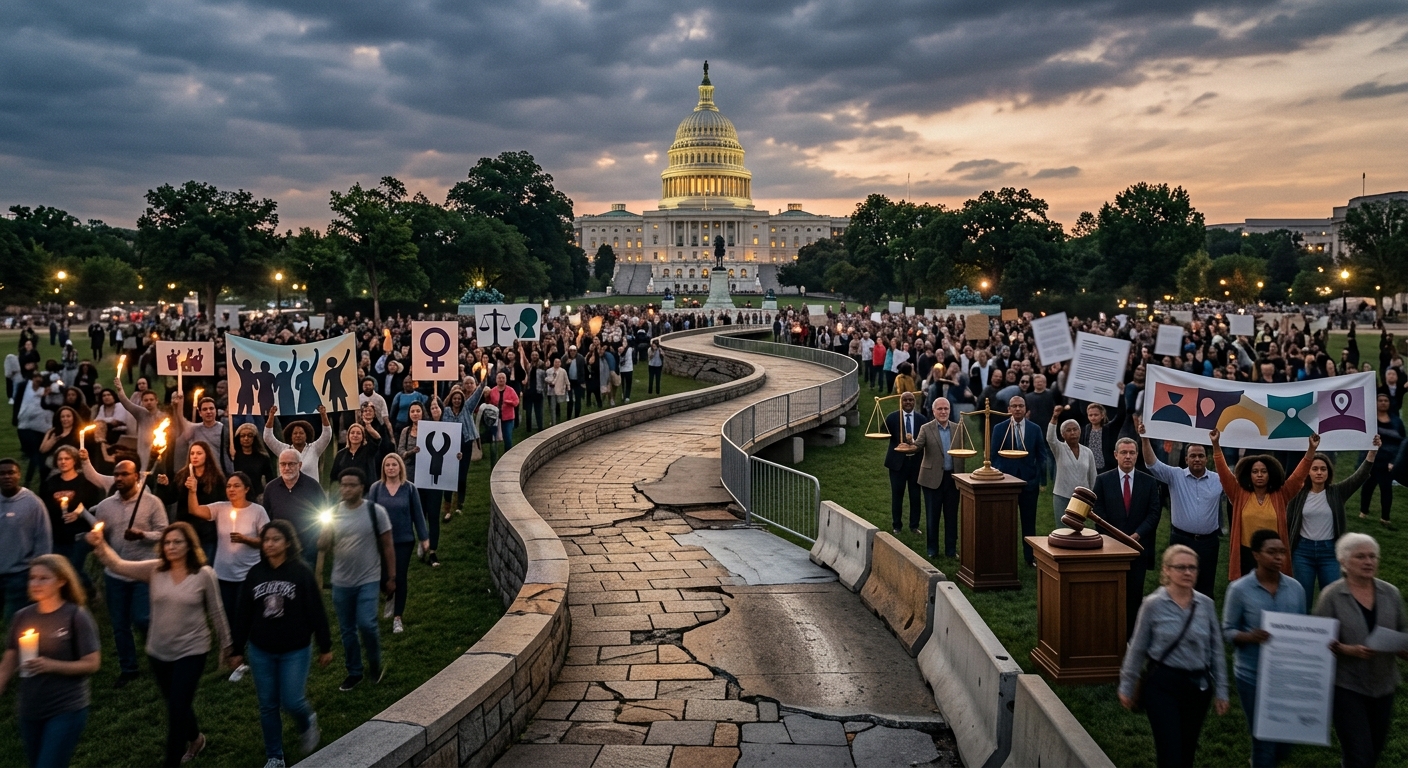
The landscape of reproductive healthcare in the United States has undergone a seismic transformation over the past few years. Since the Supreme Court issued its landmark decision in Dobbs v. Jackson Women’s Health Organization in the summer of 2022, effectively dismantling nearly fifty years of federal precedent, the authority to regulate or prohibit abortion care was returned entirely to individual states . This monumental shift did not settle the debate over reproductive rights; rather, it fractured a singular national standard into a complex, often contradictory patchwork of state-level laws, regulations, and legal disputes. As a result, patients, healthcare providers, and legal advocates find themselves navigating an unprecedented and rapidly shifting maze of healthcare policy. This article explores the myriad ways in which the fight over reproductive autonomy has evolved, shifting from the federal judiciary to state ballot boxes, emergency rooms, and pharmacy counters across the country.
A Shifting Paradigm: The Post-Roe Reality
The immediate aftermath of the overturning of the precedent set by the 1973 ruling was characterized by rapid legislative action across the nation. In several states, “trigger laws” that had been passed years in advance were activated, immediately banning or severely restricting abortion access the moment the federal protection was revoked. Conversely, other states moved swiftly to enact shield laws designed to protect both the patients seeking reproductive care and the medical professionals providing it. This bifurcation has created two starkly different realities depending entirely on geographical location.
For millions of Americans living in regions with strict bans, the basic premise of bodily autonomy and private medical decision-making has been fundamentally altered. The resulting environment is one of profound legal uncertainty, where doctors are frequently forced to consult with hospital legal departments before administering care, weighing the medical needs of the pregnant individual against the threat of criminal prosecution, steep fines, and the potential loss of their medical licenses. The legal battles have only intensified as advocates challenge the constitutionality of these new state bans under state-level constitutions, arguing that rights to privacy, equal protection, and liberty inherent in state charters inherently protect the right to terminate a pregnancy.
The Role of Direct Democracy: State Ballot Initiatives
One of the most defining features of the current reproductive rights landscape is the emergence of direct democracy as a primary tool for policy determination. Recognizing that heavily gerrymandered state legislatures may not accurately reflect the majority opinion of their constituents on the issue of reproductive healthcare, advocates have successfully pivoted to citizen-led ballot initiatives. These referendums allow voters to bypass legislative bodies and enshrine reproductive rights directly into their state constitutions.
According to health policy analyses, including tracking by organizations like the Kaiser Family Foundation, several states have already successfully passed measures that establish a fundamental right to reproductive freedom . In states across the political spectrum—ranging from traditionally conservative strongholds to progressive coastal regions—voters have consistently rejected measures that would strip away abortion protections and have overwhelmingly supported initiatives designed to secure them. The success of these ballot measures highlights a significant disconnect between certain state-level legislative actions and broader public sentiment. However, the process of getting these measures on the ballot is fraught with legal and logistical hurdles, including signature gathering challenges, intentionally confusing ballot language drafted by opposition officials, and extensive legal litigation aimed at blocking the votes entirely.
Safeguarding Interstate Healthcare Navigation
As entire regions of the country have become what health experts refer to as “maternity care deserts” or zones completely devoid of abortion access, the necessity for patients to cross state lines to receive care has skyrocketed. This massive influx of medical travel has sparked a new frontier of legal conflict: the right to interstate travel. Several jurisdictions with stringent bans have proposed or attempted to enact legislation that would criminalize the act of assisting a minor, or in some cases any resident, in traveling to another state to obtain a legal abortion.
These attempts to extend state jurisdiction beyond state borders clash directly with the fundamental constitutional right to interstate travel, setting the stage for high-stakes federal litigation. In response to these aggressive tactics, destination states—places where reproductive care remains legal and protected—have passed comprehensive shield laws. These laws are explicitly designed to protect out-of-state patients, local doctors, and support networks from extrastate subpoenas, extraditions, and civil lawsuits originating from states with abortion bans. This unprecedented legal stand-off between states echoes historical conflicts over states’ rights and federalism, testing the limits of how far one state can go in policing the lawful behavior of its citizens when they are outside its borders.
The Critical Debate Over Emergency Medical Exceptions
Perhaps the most medically harrowing aspect of the post-2022 healthcare landscape revolves around the application of emergency medical exceptions. Under the Emergency Medical Treatment and Labor Act (EMTALA), a federal law enacted in 1986, Medicare-participating hospitals are strictly mandated to provide stabilizing medical treatment to any patient presenting to an emergency department with an emergency medical condition .
The Department of Health and Human Services (HHS) has explicitly stated that if a physician determines that an abortion is the necessary stabilizing treatment to resolve a life-threatening or health-threatening condition, EMTALA requires the physician to provide that care, regardless of conflicting state abortion bans. However, this federal directive has faced fierce resistance and intense legal challenges from states seeking to enforce their absolute bans without broad health exceptions. The resulting legal limbo places emergency room physicians in an impossible ethical and legal bind. Doctors must navigate the gray area of determining exactly how close a patient must be to death before intervening, balancing their Hippocratic Oath to do no harm against the very real threat of felony charges. Reports have multiplied of patients experiencing severe pregnancy complications being denied standard medical care until their conditions deteriorate to the point of imminent catastrophic organ failure or severe sepsis.
Medication Abortion Under the Legal Microscope
While surgical procedures often dominate the public narrative, medication abortion currently accounts for the majority of all pregnancy terminations in the United States. Consequently, medications like mifepristone have become primary targets for legislative and legal restriction. Mifepristone was approved by the U.S. Food and Drug Administration (FDA) over two decades ago and has a well-documented safety and efficacy record . Despite this extensive medical consensus, aggressive litigation has been launched in federal courts seeking to revoke the FDA’s approval of the drug entirely, or at the very least, reinstate severe restrictions on its distribution.
These legal efforts attempt to override the regulatory authority of the FDA, substituting judicial ideology for scientific and medical expertise. The battle over medication abortion also heavily involves the use of telehealth services. When the FDA permanently lifted the requirement that mifepristone be dispensed in person, it allowed for the medication to be prescribed via telehealth consultations and mailed directly to patients. This development proved revolutionary for expanding access, particularly for individuals in rural or underserved areas. In response, states with restrictive policies have explicitly banned the mailing of abortion medications, setting up complex legal battles over the supremacy of federal postal and FDA regulations versus state criminal codes.
Systemic Impacts on Marginalized Communities
The fragmentation of reproductive healthcare access does not affect all populations equally; it severely exacerbates existing systemic inequities in the American healthcare system. Low-income individuals, people of color, rural residents, and undocumented immigrants bear the overwhelming brunt of these legal restrictions. For a patient living paycheck to paycheck, the logistical and financial burden of arranging time off work, securing childcare, paying for interstate travel, funding lodging, and paying out-of-pocket for a medical procedure is often an insurmountable barrier.
This dynamic effectively creates a two-tiered healthcare system where reproductive autonomy is determined entirely by an individual’s socioeconomic status and zip code. Furthermore, states with the most stringent reproductive healthcare bans also consistently rank among those with the highest rates of maternal and infant mortality. The restriction of abortion access is inextricably linked to the broader degradation of comprehensive maternal healthcare, as the fear of prosecution drives obstetricians and gynecologists out of restrictive states, exacerbating the shortage of qualified medical professionals available to manage high-risk pregnancies, miscarriages, and routine prenatal care.
What Lies Ahead: Policy Proposals and Advocacy
As the legal environment continues to mutate, advocacy organizations, legal experts, and policymakers are deploying diverse strategies to stabilize and restore access to comprehensive reproductive healthcare. At the state level, efforts will likely continue to center on advancing constitutional ballot initiatives and securing favorable rulings from state supreme courts. Meanwhile, at the federal level, the push for nationwide legislative solutions remains a central political objective, with advocates calling for the codification of reproductive rights into federal law to override state bans.
Conversely, opponents of abortion access are simultaneously strategizing to enact national restrictions should the political balance of power shift in their favor. The enduring reality is that the clash over reproductive rights will remain a defining feature of American jurisprudence, healthcare policy, and political discourse for the foreseeable future, demanding continuous vigilance and adaptation from those seeking to ensure equitable medical access for all.
Frequently Asked Questions (FAQs)
What is the current status of medication abortion in the US?
Medication abortion, primarily utilizing mifepristone and misoprostol, remains legal at the federal level and is fully approved by the FDA. However, its accessibility varies drastically depending on state laws. While federal regulations currently permit these medications to be prescribed via telehealth and delivered by mail, numerous states have enacted laws specifically banning the mailing or telehealth prescription of abortion pills. Ongoing federal litigation continues to challenge the FDA’s regulatory authority and the ease of distribution for mifepristone.
How do ballot measures impact reproductive rights?
Ballot measures serve as a mechanism of direct democracy, allowing citizens to vote directly on proposed laws or constitutional amendments, thereby bypassing state legislatures. Since the summer of 2022, several states have successfully utilized ballot initiatives to enshrine the right to reproductive healthcare directly into their state constitutions. These tools have proven highly effective in protecting access, even in states with historically conservative legislative bodies, because they bypass partisan gridlock and directly reflect the will of the general voting populace.
What is EMTALA’s role in reproductive healthcare?
The Emergency Medical Treatment and Labor Act (EMTALA) is a foundational federal law requiring all Medicare-participating hospitals to provide stabilizing treatment to anyone experiencing a severe medical emergency. The federal government, through the Department of Health and Human Services, asserts that if an abortion is the necessary medical treatment to stabilize a patient and prevent severe health consequences or death, EMTALA mandates that the care be provided. This federal mandate is argued to preempt any conflicting state abortion bans.
Can states restrict travel for medical care?
The right to travel freely between states is widely considered a fundamental constitutional right in the United States. However, some states with strict reproductive healthcare bans have attempted to draft and enforce laws that would penalize individuals who assist minors, or others, in traveling out of state to obtain an abortion that is legal in the destination state. These attempts are facing severe legal challenges, while destination states are proactively enacting “shield laws” to protect incoming patients and local healthcare providers from out-of-state litigation.
References
- Dobbs v. Jackson Women’s Health Organization, 597 U.S. 215 (2022) — Supreme Court of the United States. 2022-06-24. https://www.supremecourt.gov/opinions/21pdf/19-1392_6j37.pdf
- Reinforcement of EMTALA Obligations specific to Patients who are Pregnant or are Experiencing Pregnancy Loss — U.S. Department of Health and Human Services (HHS). 2022-07-11. https://www.hhs.gov/sites/default/files/emergency-medical-care-letter-to-health-care-providers.pdf
- Information about Mifepristone for Medical Termination of Pregnancy Through Ten Weeks Gestation — U.S. Food and Drug Administration (FDA). 2025-01-17. https://www.fda.gov/drugs/postmarket-drug-safety-information-patients-and-providers/information-about-mifepristone-medical-termination-pregnancy-through-ten-weeks-gestation
- 2022 State Ballot Initiatives on Abortion Rights — Kaiser Family Foundation (KFF). 2022-09-20. https://www.kff.org/policy-watch/2022-state-ballot-initiatives-on-abortion-rights/
Similar Articles








Read full bio of medha deb


