
New Rules for Migrant Minors: The End of Flores Oversight
Federal courts end decades of oversight on migrant kids.
Introduction to a Paradigm Shift in Immigration Policy
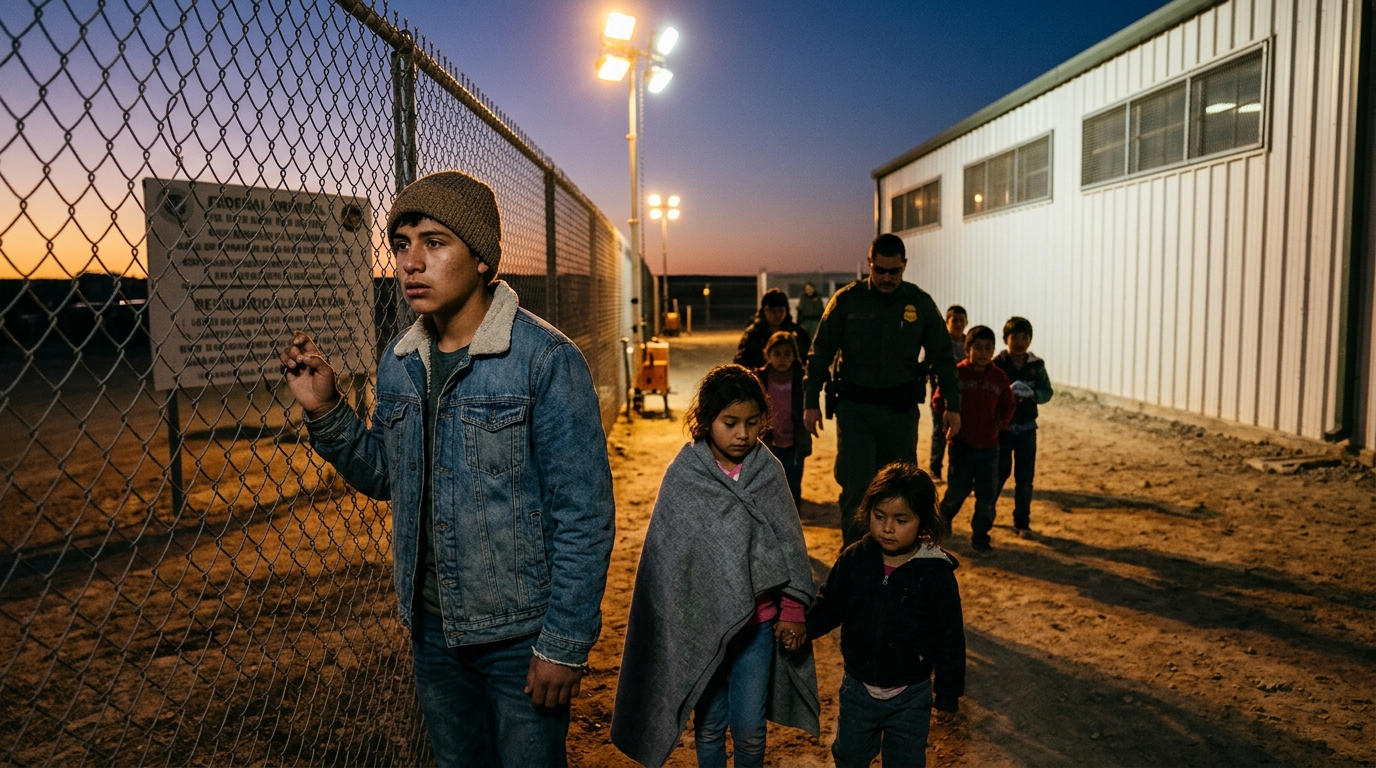
The landscape of immigration law and child welfare in the United States has recently undergone a seismic and deeply consequential shift. For nearly three decades, a landmark legal framework known as the Flores Settlement Agreement stood as the ultimate safeguard for undocumented, unaccompanied children entering federal custody. It provided strict, judicially enforced guidelines dictating precisely how long minors could be detained and the standard of conditions they had to be kept in. However, a monumental ruling by a federal judge has partially terminated this longstanding agreement for facilities operated by the Department of Health and Human Services (HHS). This decisive action effectively transfers the oversight of migrant children’s detention centers from the independent federal judiciary to internal government regulators under a newly minted set of administrative guidelines.
As this pivotal transition unfolds across the country, a pressing question echoes across legal, political, and humanitarian circles: What does the future hold for unaccompanied migrant children now that impartial, third-party judicial monitoring has come to a close? The stakes could not be higher. Global migration patterns driven by poverty, climate instability, and regional violence have resulted in historic numbers of youth crossing the border alone. This article comprehensively explores the history behind the original legal protections, analyzes the mechanics of the new federal regulations, and unpacks the impassioned debate surrounding the safety, rights, and well-being of some of the world’s most vulnerable children.
The Historical Context: What Was the Flores Settlement Agreement?
To fully grasp the magnitude of this policy change, one must intimately understand the origins and the impact of the Flores Settlement Agreement. The legal battle began in the mid-1980s, sparked by the harrowing experiences of Jenny Lisette Flores, a 15-year-old girl from El Salvador. Fleeing violence in her home country, she was apprehended by United States authorities and subsequently held in substandard, punitive conditions. The class-action lawsuit filed on her behalf, and on behalf of thousands of other detained youths, highlighted a deeply flawed institutional system. Investigations revealed that children were frequently held indefinitely alongside unrelated adults, systematically deprived of basic education, denied adequate recreation, and subjected to invasive strip searches.
After more than a decade of protracted and intense litigation, the federal government formally agreed to the Flores Settlement in 1997. This legally binding consent decree established a national minimum standard for the treatment of undocumented minors. Its core tenets explicitly mandated that the government must release children from immigration detention without unnecessary delay, prioritizing placements with parents, adult relatives, or specially licensed community programs. If a child had to be detained temporarily due to safety concerns or a lack of sponsors, the government was legally compelled to place them in the ‘least restrictive setting’ appropriate for their age and specific developmental needs.
Perhaps most importantly, the agreement implemented rigorous, independent judicial oversight. Plaintiffs’ lawyers and child advocates were granted court-backed access to holding facilities to inspect physical conditions and interview detained youths in private. This ensured that the federal government adhered strictly to the agreed-upon standards of humane treatment. Over the decades, and enduring through multiple presidential administrations, this mechanism served as the primary, legally actionable check against systemic abuses and catastrophic overcrowding in migrant detention centers.
The Catalyst for Change: The New HHS Foundational Rule
The termination of the Flores Settlement’s application to HHS did not occur in a vacuum; rather, it was the direct culmination of a highly anticipated administrative maneuver by the federal executive branch. On April 30, 2024, the Department of Health and Human Services’ Office of Refugee Resettlement (ORR) officially published the Unaccompanied Children Program Foundational Rule. This extensive, highly detailed set of regulations was purposefully designed to formally codify the protections historically guaranteed by Flores directly into the permanent federal administrative code.
The Foundational Rule aims to establish a clear, modernized statutory bedrock for the care, placement, and welfare of unaccompanied minors. The government crafted the rule to address contemporary challenges that the 1997 settlement could not have fully foreseen, such as the massive scale of modern migration and the complex trauma profiles of modern youth. Crucially, the federal government argued before the United States District Court for the Central District of California that these new, comprehensive regulations not only matched but actually exceeded the standard of care required by the original settlement.
Key Protections Codified in the Foundational Rule
- Comprehensive Healthcare: Mandated access to routine, specialized, and reproductive health services, ensuring that medical care cannot be denied based on state-level restrictions where a facility might be located.
- Sponsor Vetting: Enhanced and formalized procedures for the rigorous vetting of potential sponsors to actively prevent human trafficking and child labor exploitation.
- Least Restrictive Environment: A reinforced, absolute requirement to place youth in environments that minimize institutionalization, utilizing foster care networks whenever possible.
- Legal Access: Strengthened provisions guaranteeing access to legal representation and comprehensive ‘Know Your Rights’ presentations upon entry into the system.
Judge Dolly M. Gee, the federal judge who has overseen the implementation and enforcement of the Flores agreement for years, ultimately agreed that the HHS had successfully met its legal burden. Since the original 1997 agreement inherently stipulated that it would dissolve once the government implemented comprehensive regulations that satisfied its core terms, the court ruled to partially terminate the judicial oversight for children specifically in ORR custody, an order that took full effect on July 1, 2024.
Why Child Advocates and Rights Groups Are Deeply Concerned
Despite the administration’s firm assurances that the Foundational Rule represents a positive evolution in child welfare policy, a robust and vocal coalition of child rights advocates, immigration lawyers, and humanitarian organizations has voiced profound alarm. The crux of their concern does not necessarily lie within the text of the new regulations, which many admit are thoroughly written. Instead, their fear stems entirely from the complete elimination of independent, third-party oversight.
For over two decades, the Flores agreement empowered plaintiffs’ attorneys to act as critical watchdogs. They possessed the unassailable legal right to conduct unannounced site visits, file immediate motions to compel government action, and bring swift public attention to squalid conditions or egregious civil rights violations. Previous reports generated by these independent monitors exposed horrific realities—including children lacking access to basic hygiene products like soap, being fed spoiled food, and enduring prolonged isolation. Advocates argue that internal agency guidelines, no matter how comprehensive or well-intentioned, inherently lack the objective accountability provided by an impartial federal judge.
When the agency responsible for caring for these children is simultaneously the agency responsible for policing its own regulatory compliance, the risk of bureaucratic blind spots and institutional cover-ups dramatically increases. This apprehension is deeply magnified by the unprecedented scale of the current border crisis. Federal data indicates that nearly 300,000 unaccompanied minors have been processed over the last two years alone. Human rights organizations warn that such a massive logistical strain on the system makes rigorous, external oversight more critical than ever before. Without the leverage of federal court orders and the looming threat of judicial sanctions, advocates harbor legitimate fears that children might once again languish in temporary holding centers, experience devastating delays in sponsor vetting, or face drastically diminished living conditions during cyclical periods of systemic overcrowding.
Comparing the Old Framework vs. the New Guidelines
To fully visualize the practical implications of this monumental shift, it is immensely helpful to juxtapose the former judicial framework directly against the newly established administrative reality. The foundational difference lies entirely in the designated mechanisms of enforcement and the speed at which grievances can be legally remedied.
| Policy Framework | Primary Oversight Authority | Core Enforcement Mechanism | Scope of Application |
|---|---|---|---|
| Flores Settlement Agreement (1997) | Federal Judiciary (U.S. District Court) | Class-action motions, immediate injunctions, external attorney inspections | Historically applied to all federal agencies detaining minors (DHS and HHS) |
| HHS Foundational Rule (2024) | Internal HHS / ORR Administration | Internal grievance processes, designated ombudsman, internal audits | Only applies to HHS / ORR custody (DHS remains bound by Flores) |
Under the Flores Settlement, if a legal advocate discovered that an unaccompanied minor was being denied essential services, they could file an immediate grievance with the federal judge overseeing the case. This routinely prompted swift judicial intervention, mandatory compliance orders, and potential legal sanctions against the non-compliant facility. In stark contrast, under the newly implemented HHS Foundational Rule, enforcement relies heavily upon internal administrative structures. Complaints and instances of non-compliance must be routed through internal agency grievance procedures and newly established ombudsmen offices. While the federal government asserts that this internalized process is far more streamlined, legal scholars caution that administrative remedies historically suffer from bureaucratic bottlenecks, suffer from a lack of public transparency, and are rarely as expedient as a federal court injunction.
The Bifurcated Legal Landscape: What Happens Next?
It is crucial to note that the court’s termination of the Flores Settlement is only partial. The legally binding agreement remains in full force for the Department of Homeland Security (DHS), which explicitly includes Customs and Border Protection (CBP) and Immigration and Customs Enforcement (ICE). This inherently creates a highly complex, bifurcated legal landscape for a child actively navigating the United States immigration system.
When an unaccompanied minor first crosses the international border, they are typically apprehended and held in CBP holding facilities—environments frequently referred to by migrants as ‘hieleras’ or iceboxes due to their notoriously freezing temperatures and concrete floors. In these initial, critical 72 hours, the strict judicial oversight of Flores still heavily applies, mandating that the DHS transfer the child to HHS custody as swiftly as physically possible to ensure their safety. Once the minor crosses the threshold into an HHS and ORR facility, however, they are now strictly under the jurisdiction of the new Foundational Rule, and the historical, judicially enforced Flores protections immediately drop away.
Monitoring exactly how these two radically distinct legal regimes interact in practice will be a massive, ongoing undertaking for immigration attorneys and humanitarian workers. The immediate future will require intense vigilance from non-governmental organizations to actively ensure that the administrative transition does not inadvertently result in a severe decline in care standards. If systemic failures, overcrowding, or abuses emerge under the newly autonomous ORR regulations, advocates may find themselves forced to initiate entirely new, financially costly, and deeply time-consuming class-action litigation to restore federal oversight. They would essentially be starting the arduous fight for migrant children’s fundamental human rights entirely from scratch. The focus of the humanitarian community now turns aggressively to grassroots data collection, the protection of agency whistleblower reports, and relentless public advocacy to keep the current administration thoroughly accountable.
Frequently Asked Questions (FAQs)
What exactly is an unaccompanied migrant child?
An unaccompanied migrant child is legally defined under United States law as a minor under the age of 18 who currently has no lawful immigration status within the United States and does not have a biological parent or legal guardian in the country who is available to provide continuous care and physical custody. These children are recognized as highly vulnerable populations and legally require specialized welfare frameworks to prevent exploitation.
Why was the Flores agreement terminated now, after almost 30 years?
The original 1997 legal agreement was explicitly intended to be a temporary, stop-gap measure until the federal government formally formulated and adopted comprehensive regulations covering the proper care of immigrant minors. Because the Department of Health and Human Services successfully published its exhaustive Unaccompanied Children Program Foundational Rule in April 2024, a federal judge subsequently ruled that the agency had adequately codified the settlement’s core requirements. Therefore, the court determined that the judicial oversight for HHS had finally fulfilled its original legal purpose and was no longer strictly necessary.
Does this mean undocumented children can now be detained indefinitely?
No. The newly codified HHS regulations still contain highly strict administrative mandates regarding the timely release of minors to thoroughly vetted sponsors, foster networks, or family members. However, humanitarian advocates worry deeply that without independent judicial oversight actively policing these timelines, it will be significantly harder to legally identify and swiftly penalize specific instances where the federal agency fails to meet its obligations, potentially resulting in de facto prolonged detention for some youths caught in bureaucratic limbo.
Who is currently responsible for the welfare of these minors?
The Office of Refugee Resettlement (ORR), which operates as a specific subset of the larger Department of Health and Human Services (HHS), acts as the primary federal agency directly responsible for the care, placement, and daily welfare of unaccompanied minors once they are formally transferred out of initial border patrol (DHS) custody. They manage and fund a sprawling, nationwide network of state-licensed and federally run temporary shelters and specialized foster care programs.
References
- Unaccompanied Children Program Foundational Rule — Department of Health and Human Services (HHS). 2024-04-30. https://www.federalregister.gov/documents/2024/04/30/2024-08635/unaccompanied-children-program-foundational-rule
- Explainer | Final Regulations on the Care of Unaccompanied Children in Federal Custody — National Immigrant Justice Center. 2024-05-29. https://immigrantjustice.org/research-items/explainer-final-regulations-care-unaccompanied-children-federal-custody
- Government’s Move to Terminate Flores Agreement Could Leave Immigrant Children Unprotected — American Immigration Council. 2024-05-22. https://www.americanimmigrationcouncil.org/news/governments-move-terminate-flores-agreement-could-leave-immigrant-children-unprotected
Similar Articles








Read full bio of medha deb


