
Empowering Officials to Protect Immigrant Youth
Actionable strategies for officials to safeguard immigrant youth.
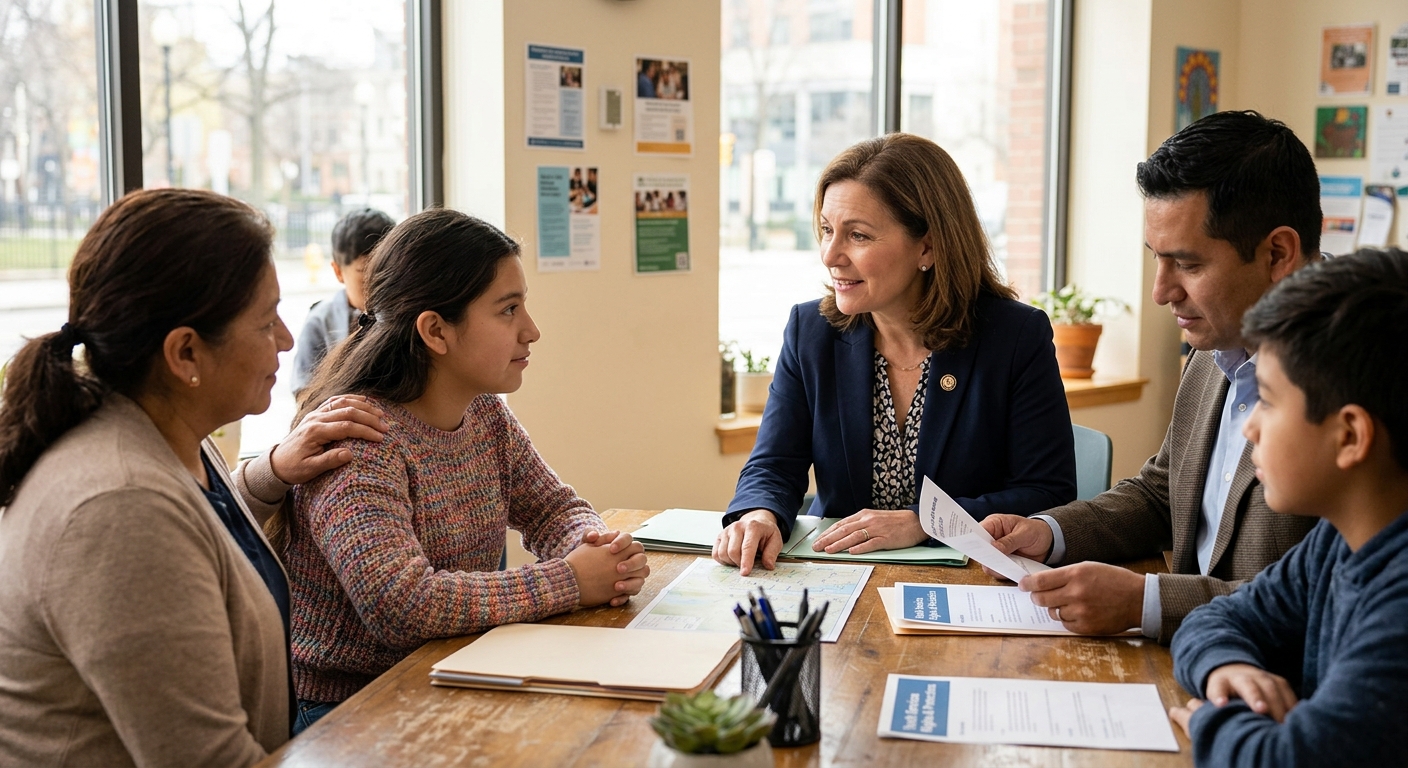
Across the United States, immigrant children and youth from mixed-status families are encountering unprecedented challenges that threaten their health, safety, and long-term development. Punitive federal immigration enforcement strategies, sweeping policy changes, and complex bureaucratic barriers have created an environment of fear and uncertainty. For families caught in the crosshairs of these systemic shifts, routine activities—such as attending school, seeking medical care, or utilizing public benefits—are often overshadowed by the looming threat of surveillance, detention, or family separation. While federal immigration laws dictate the broader landscape, the immediate consequences of these policies are felt most acutely at the community level. Consequently, state and local officials possess a unique and powerful mandate to intervene, acting as the primary line of defense in protecting the fundamental rights of vulnerable children.
The role of municipalities, county councils, and state legislatures cannot be overstated. By enacting protective ordinances, allocating targeted funding, and reshaping the way local agencies interact with immigrant populations, civic leaders can effectively buffer children from the traumatic fallout of national enforcement campaigns. It requires a multifaceted approach that addresses physical safety, mental well-being, healthcare access, and legal protections. This comprehensive guide explores actionable, evidence-based strategies that state and local policymakers can deploy to safeguard immigrant children, preserve family unity, and foster resilient, inclusive communities where all youth have the opportunity to thrive.
Combating Toxic Stress and Mitigating Childhood Trauma
The psychological toll of immigration enforcement on young minds is one of the most urgent public health issues facing immigrant communities today. When children live in constant fear that their parents could be apprehended or deported, their bodies remain in a prolonged state of heightened alertness. The American Academy of Pediatrics (AAP) and leading health organizations have extensively documented how this relentless anxiety translates into toxic stress. Unlike tolerable stress, which is temporary and cushioned by supportive adult relationships, toxic stress fundamentally alters a child’s brain architecture. It disrupts neural pathways critical for learning, emotional regulation, and cognitive development, paving the way for long-term health consequences.
State and local health departments must recognize toxic stress as a systemic public health crisis and respond accordingly. Medical professionals emphasize that even brief periods of family separation or detention can induce profound psychological trauma, manifesting as sleep disturbances, severe separation anxiety, and regressive behaviors. To mitigate these impacts, local governments should invest in trauma-informed care training for educators, pediatricians, and social workers. By equipping front-line professionals with the tools to identify the early signs of toxic stress, municipalities can ensure that immigrant children receive timely, culturally competent mental health interventions. Furthermore, establishing local grants to fund community health workers who specialize in immigrant trauma can bridge the gap between fearful families and vital psychiatric resources.
Beyond individual medical interventions, mitigating trauma requires addressing the root cause: the fear of family dissolution. Local leaders can champion public awareness campaigns that explicitly communicate the local government’s commitment to protecting family integrity. When a city or state visibly distances itself from aggressive federal enforcement tactics, it sends a powerful psychological signal to immigrant youth that their immediate environment is safe, thereby reducing the chronic anxiety that fuels toxic stress.
Establishing Enforcement-Free Zones in Crucial Institutions
For immigrant families, the fear of encountering immigration enforcement agents can turn essential community pillars—such as schools, hospitals, childcare centers, and courthouses—into zones of perceived danger. When parents are afraid to drop their children off at school or take a sick child to the emergency room, the collateral damage to the child’s education and physical health is immense. State and local officials have the authority to counteract this by formally designating these public spaces as enforcement-free zones, or “sensitive locations,” where immigration enforcement actions are strictly prohibited or heavily restricted.
Implementing an enforcement-free zone policy requires more than just a public declaration; it demands robust administrative protocols. School districts and local health boards should adopt binding resolutions that limit federal agents’ access to their facilities unless they present a valid judicial warrant. Additionally, local government workers should be strictly prohibited from collecting or sharing information regarding a family’s immigration status unless mandated by federal law. Training public employees on how to properly handle requests from immigration authorities ensures that schools and clinics remain genuine sanctuaries of learning and healing.
Furthermore, local leaders must actively communicate these protections to the community. Distributing multilingual materials that clearly outline the boundaries of enforcement-free zones helps rebuild trust. When families understand that local law enforcement and public institution staff are not acting as an extension of federal immigration agencies, they are significantly more likely to re-engage with the educational and healthcare systems their children desperately need.
Expanding Inclusive Access to Health Coverage and Social Services
A child’s immigration status should never dictate their ability to receive basic medical care or nutritional assistance. Yet, federal restrictions often exclude undocumented children and certain lawfully present immigrant youth from foundational safety net programs like Medicaid and the Children’s Health Insurance Program (CHIP). This leaves millions of children reliant on underfunded emergency room care rather than preventative pediatric services. State governments hold the key to closing this gap. A growing number of states have leveraged their budgetary authority to create fully state-funded health insurance programs that mirror Medicaid, specifically designed to cover income-eligible children regardless of their immigration status.
State legislators should prioritize the expansion of these inclusive health programs. By utilizing state funds to bypass federal exclusionary rules, officials can ensure that immigrant children have access to routine check-ups, immunizations, and specialized behavioral health services. The long-term economic and public health benefits of such expansions are undeniable. Preventative care reduces the burden on emergency medical systems and ensures that contagious diseases are managed swiftly. Local officials can complement state efforts by adequately funding municipal health clinics and federally qualified health centers (FQHCs) that operate on a sliding scale and do not require proof of legal residency.
In addition to healthcare, access to nutritional programs and early childhood education must be shielded from bureaucratic intimidation. Local governments can establish alternative, locally funded nutritional assistance programs that act as a substitute for federal SNAP benefits for ineligible immigrant families. Streamlining the application processes for these local benefits—and strictly prohibiting the retention of immigration data—removes the chilling effect that often prevents mixed-status families from seeking help.
Promoting Legal Protections and Family Preparedness
The complexities of the immigration legal system are notoriously difficult to navigate, and the stakes are extraordinarily high. Immigrants facing deportation proceedings do not have a constitutional right to government-appointed counsel, meaning children and parents frequently appear in immigration court alone. State and local governments can dramatically alter this power dynamic by funding universal representation programs. By providing grants to legal aid organizations, municipalities ensure that every immigrant facing removal proceedings has access to a qualified attorney. Legal representation is statistically shown to be the single most important factor in a successful immigration case, directly preventing unnecessary family separations.
Alongside universal representation, local officials should actively support “Know Your Rights” initiatives. Funding community organizations to host multilingual legal literacy workshops empowers families to understand their constitutional rights when interacting with law enforcement. Knowing that they have the right to remain silent or refuse entry without a warrant can prevent unlawful detentions that tear parents away from their children.
Crucially, local agencies must actively facilitate the creation of Family Preparedness Plans. As detailed by organizations like the Immigrant Legal Resource Center (ILRC), a Family Preparedness Plan is a critical legal and logistical framework that parents establish to ensure their children are cared for if the parents are suddenly detained. Local governments can support this by recognizing and standardizing caregiver authorization affidavits and power-of-attorney documents. By making it easier for parents to legally designate a trusted community member or relative as a temporary guardian, states can prevent children from unnecessarily entering the overburdened state foster care system. This proactive legal measure protects the child’s stability and maintains their connection to their community during a crisis.
Fostering Community-Based Support and Resource Centers
While policy changes and legal frameworks are essential, the day-to-day resilience of immigrant children relies heavily on grassroots, community-based support structures. Local governments should invest deeply in community organizations that already possess the cultural competence and linguistic skills necessary to reach isolated immigrant populations. Funding Family Resource Centers in neighborhoods with high immigrant densities creates centralized hubs where families can access food pantries, legal advice, tutoring, and mental health services in a single, trusted environment.
A highly effective strategy is the deployment of community service navigators. These are trained professionals, often from the immigrant communities themselves, who help families navigate the complex web of local services. Navigators can assist parents in enrolling their children in state-funded health programs, completing school registration, and finding peer support groups for youth experiencing anxiety. Because navigators share the cultural background of the families they serve, they can bypass the suspicion that often greets government employees.
Furthermore, local parks and recreation departments, alongside public libraries, can be mobilized to offer specialized after-school programs that celebrate immigrant cultures and foster a sense of belonging. When immigrant youth are integrated into community activities that affirm their identity and provide safe avenues for expression, they are better equipped to handle external stressors.
Disentangling Local Agencies from Federal Enforcement
One of the most immediate and impactful actions local officials can take is to strictly separate local law enforcement and municipal operations from federal immigration enforcement. When local police are perceived as an arm of ICE, immigrant families withdraw from civic life entirely. They become hesitant to report crimes, serve as witnesses, or even seek help during domestic emergencies, severely compromising public safety for everyone.
State and local governments must end voluntary cooperation agreements, such as 287(g) programs, which deputize local officers to perform federal immigration duties. Furthermore, local jurisdictions should pass ordinances prohibiting the use of municipal funds, facilities, or personnel to assist in federal immigration raids. Ensuring that local police departments have clear, publicized policies against stopping, questioning, or arresting individuals solely based on suspected immigration status is paramount.
Transparency and public oversight are equally vital. City councils should require local law enforcement agencies to publish regular data on any interactions or communications with federal immigration authorities. Creating civilian oversight boards to monitor these interactions ensures accountability and reassures the immigrant community that local officials are honoring their commitment to keeping local government services separate from federal deportation machinations.
Frequently Asked Questions (FAQs)
Why is local action necessary if immigration is a federal issue?
While the federal government controls immigration laws and border enforcement, state and local governments control the institutions that impact a child’s daily life, such as schools, local health clinics, and child welfare agencies. Local action is necessary to ensure these institutions remain accessible and safe, effectively mitigating the collateral damage of federal policies on children’s health, stability, and education.
What is a Family Preparedness Plan?
A Family Preparedness Plan is a comprehensive strategy created by parents to ensure their children are safely cared for in the event of sudden detention or deportation. It typically includes critical legal documents, such as a caregiver’s authorization affidavit or power of attorney, which designate a trusted guardian. This proactive measure prevents children from being unnecessarily placed into the state foster care system.
How does toxic stress affect immigrant youth?
Toxic stress occurs when a child experiences strong, frequent, or prolonged adversity—such as the constant fear of family separation—without adequate adult support. It can severely disrupt the development of brain architecture, leading to immediate behavioral issues, severe depression, anxiety, and an increased risk of long-term physical health problems like heart disease and diabetes.
What are enforcement-free zones?
Enforcement-free zones, sometimes called sensitive locations, are public spaces where immigration enforcement actions are explicitly prohibited or heavily restricted by local or state policies. Common examples include educational facilities, hospitals, courthouses, and places of worship. The goal is to ensure that individuals can access essential services and participate in civic life without the paralyzing fear of detention.
Can undocumented children receive state health insurance?
Under federal law, undocumented children are generally excluded from federal Medicaid and CHIP. However, recognizing the public health imperative, several states have enacted progressive legislation to use fully state-funded programs to provide comprehensive health coverage to income-eligible children, regardless of their immigration status.
References
- AAP, leading health groups call for end of family detention — American Academy of Pediatrics. 2025-03-26. https://publications.aap.org/aapnews/news/12275/AAP-leading-health-groups-call-for-end-of-family
- Step-by-Step Family Preparedness Plan — Immigrant Legal Resource Center (ILRC). 2026-03-10. https://www.ilrc.org/resources/step-step-family-preparedness-plan
- State Health Coverage for Immigrants and Implications for Health Coverage and Care — KFF. 2026-05-19. https://www.kff.org/racial-equity-and-health-policy/issue-brief/state-health-coverage-for-immigrants-and-implications-for-health-coverage-and-care/
Similar Articles








Read full bio of medha deb


