
Empowering the Next Generation at the Polls
Discover proven strategies to empower young voters and increase turnout.
Introduction to Youth Electoral Participation
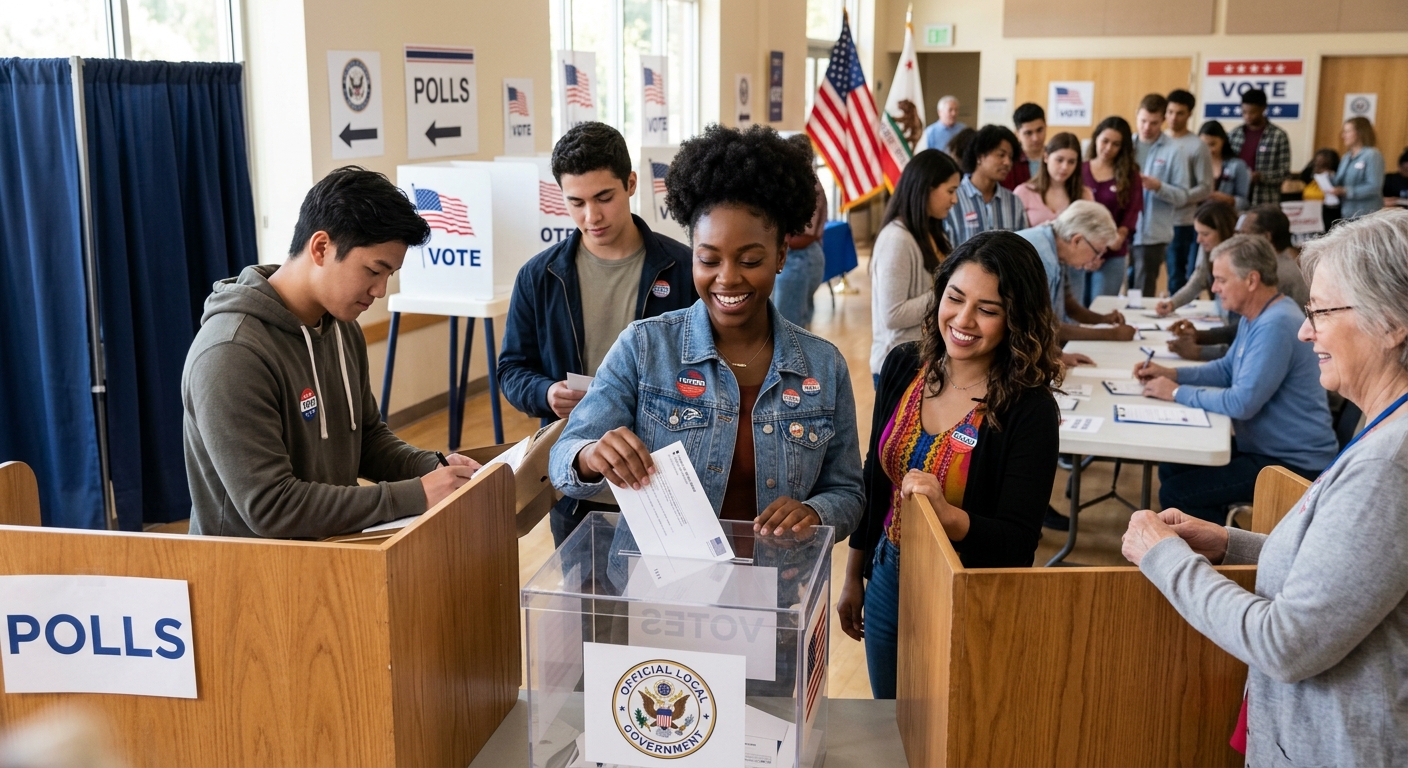
The foundation of a thriving democracy rests on the active participation of its citizens. However, one demographic group consistently presents a paradox in American politics: young adults. Between the ages of 18 and 29, Millennials and Generation Z represent a massive, diverse, and deeply engaged segment of the population. They organize protests, lead social movements, and dominate discourse on digital platforms. Yet, when Election Day arrives, their turnout rates frequently lag behind those of older generations. Understanding what it takes to get younger voters to the polls requires looking past the oversimplified narrative of apathy. Instead, we must examine the complex interplay of structural barriers, policy decisions, and mobilization strategies that dictate youth electoral participation.
The Demographic Power of the Youth Vote
The sheer numbers alone make the youth vote a formidable force in the American political landscape. As older generations naturally age out of the electorate, Generation Z and younger Millennials are stepping into their place, bringing with them a distinct set of values and priorities. By recent estimates, these younger generations account for tens of millions of eligible voters. When they do turn out, their impact is undeniable.
Data from the Center for Information & Research on Civic Learning and Engagement (CIRCLE) at Tufts University revealed that youth voter turnout in the 2024 presidential election reached an estimated 47%. While this figure remains lower than the participation rates of voters over the age of 50, it signifies a sustained period of historically high youth engagement that began during the 2018 midterms. In key battleground states, the youth vote has repeatedly provided the margin of victory, proving that when young people are motivated and able to access the ballot box, they can determine the direction of national policy.
Despite these gains, deep inequities persist within the youth electorate itself. Turnout is heavily stratified by education level, race, and geography. Young adults with college degrees consistently vote at higher rates than those without, and white youth often have higher turnout rates than Black and Hispanic youth, due in large part to systemic disparities in resources and targeted voter suppression efforts. Addressing these gaps is not merely a matter of political strategy; it is a fundamental requirement for achieving a truly representative democracy. The challenge for organizers, policymakers, and civic institutions is to transform potential power into consistent electoral action.
Navigating Structural Barriers to the Ballot Box
To increase youth turnout, we must first dismantle the barriers that keep them from voting. The narrative that young people are simply too lazy to vote is a convenient myth that obscures a harsh reality: the American electoral system is often actively hostile to new and mobile voters. Young adults face a unique set of logistical challenges that can make casting a ballot feel like an insurmountable task.
Voter ID Laws and the Rejection of Student IDs
One of the most pervasive hurdles facing young voters is the patchwork of strict voter identification laws across the United States. According to research by the Brennan Center for Justice, millions of eligible Americans lack the specific types of government-issued photo ID required by certain states to cast a ballot. For young people, particularly college students, this barrier is acutely felt. Many students do not have an in-state driver’s license if they moved out of state for school, and obtaining one can be an expensive, confusing, and time-consuming process.
To complicate matters further, many states have enacted laws that specifically exclude college or university IDs from their list of acceptable voter identification. In some jurisdictions, even if a student ID is issued by a state-funded public university, it is flatly rejected at the polls. This legislative maneuvering forces students to jump through additional bureaucratic hoops just to prove their identity, dampening enthusiasm and effectively suppressing turnout among first-time voters.
The Eradication of On-Campus Polling Places
Even if a young voter possesses the correct identification, they still need an accessible place to vote. Unfortunately, there is a heavily documented trend of polling place closures disproportionately affecting college campuses and communities of color. Following the Supreme Court’s 2013 decision in Shelby County v. Holder—which gutted key preclearance provisions of the Voting Rights Act—hundreds of polling locations have been shuttered nationwide. (Note: While the seminal Leadership Conference report detailing these closures was published in 2019, it remains the uniquely authoritative baseline for understanding the ongoing, post-Shelby campus access crisis.)
Local election officials have frequently targeted university campuses for the consolidation or removal of voting sites. In recent election cycles, students at major universities in states like Texas and Georgia have had to battle local county commissions over the removal of early voting locations from student centers. When a polling place is moved miles away from campus, it creates a logistical nightmare for students who may lack reliable transportation, have tightly packed class schedules, or juggle multiple part-time jobs. Long lines stretching for hours at the few remaining locations serve as an additional deterrent, penalizing young people for attempting to exercise their civic duty.
Complex Registration Rules and Deadlines
The voter registration process itself acts as a significant hurdle. Unlike older voters who may have lived at the same permanent address for decades, young adults are highly transient. They move into dormitories, change apartments every year, and frequently cross state and county lines. Each physical move requires updating their voter registration. States with early registration deadlines—sometimes cutting off registration a full 30 days before an election—often disenfranchise young people who only become politically engaged in the final, highly publicized weeks of a campaign. Without uniform national rules, the complexity of navigating fifty different sets of state requirements leads to widespread confusion, missed deadlines, and ultimately, uncast ballots.
The Issues Driving the Younger Electorate
If structural barriers explain why some young people are prevented from voting, what explains the motivations of those who successfully navigate the system? Unlike older generations, who may harbor deeply ingrained partisan loyalties, younger voters are fiercely independent and overwhelmingly issue-driven. They are generally less interested in party labels and vastly more focused on tangible policy outcomes that will dictate the viability of their futures.
- Climate Change and Environmental Justice: For Generation Z, climate change is an urgent, existential threat rather than a theoretical political debate. Young voters actively seek candidates who acknowledge the severity of the environmental crisis and propose aggressive, science-based solutions to transition away from fossil fuels.
- Economic Inequality and Student Debt: The economic realities facing today’s young adults are daunting. Stagnant entry-level wages, the soaring cost of housing, and the crushing, decades-long burden of student loan debt have fundamentally altered their financial trajectories. Policies addressing wealth inequality and affordable healthcare resonate deeply with this demographic.
- Reproductive Rights and Social Justice: Following major judicial shifts regarding bodily autonomy, reproductive rights have become a massive mobilizing force for young voters. Additionally, issues of racial equity, LGBTQ+ rights, and gun violence prevention consistently rank at the absolute top of their civic priorities.
The Role of Digital Platforms in Civic Engagement
In the modern era, any comprehensive strategy to mobilize the youth electorate must navigate the digital landscape. Social media platforms are no longer just supplementary spaces; they are the primary arenas for political discourse, news consumption, and grassroots organizing for younger generations. Unlike traditional television or print media, digital platforms facilitate decentralized political movements and authentic peer-to-peer connection.
Influencers and content creators have essentially become vital civic educators. During recent election cycles, nonpartisan voting rights organizations have successfully partnered with digital creators to disseminate bite-sized, highly shareable information about voter registration deadlines, mail-in ballot procedures, and polling place locations. This direct strategy meets young voters exactly where their attention is focused.
However, the digital landscape also presents the severe challenge of political disinformation. Young voters are occasionally targeted by bad actors seeking to suppress turnout through confusing or intentionally false information regarding election dates or ID requirements. Equipping young people with robust digital media literacy skills is an essential component of modern civic education, ensuring that their engagement translates into informed votes rather than cynicism.
Proven Strategies to Mobilize Younger Voters
Getting younger voters to the polls requires a proactive, multi-pronged approach that combines aggressive policy reform with authentic, grassroots engagement. Waiting until October to reach out to 18-year-olds is a recipe for failure; mobilization must be an ongoing, well-funded, year-round effort.
Implementing Pro-Voter Policies
The most effective way to organically boost youth turnout is to modernize the laws that govern our elections. Policies that streamline the voting process have a proven track record of enfranchising young people. The table below outlines three critical policy reforms:
| Policy Reform | Mechanism | Impact on Youth Voters |
|---|---|---|
| Automatic Voter Registration (AVR) | Automatically registers eligible citizens to vote when they interact with government agencies (like the DMV) unless they opt out. | Dramatically increases youth voter rolls by removing the proactive burden of registration. |
| Same-Day Registration | Allows eligible voters to register and cast a ballot on the exact same day during early voting or Election Day. | Eliminates the barrier of arbitrary, early registration deadlines for transient student populations. |
| Pre-Registration for Teens | Allows 16- and 17-year-olds to pre-register, automatically adding them to active voter rolls on their 18th birthday. | Seamlessly integrates young citizens into the democratic process before they leave high school. |
Integrating Civic Education
Schools and universities must embrace their role in preparing young people for democratic participation. Robust civic education should go far beyond memorizing the three branches of government; it must involve teaching students the practical mechanics of democracy—how to register, how to research candidates, and how to physically navigate a polling place. High schools should actively host voter registration drives, while universities must commit to facilitating nonpartisan democratic engagement on their campuses.
Peer-to-Peer Organizing
Traditional political campaigns routinely overlook young voters, assuming they are an unreliable demographic. However, grassroots organizing led by young people, strictly for young people, is incredibly effective. Peer-to-peer text banking, on-the-ground campus organizing, and relational organizing (talking to friends and family) speak to young people in their own language. When young people see their immediate peers taking action, it establishes voting as a communal, socially expected activity.
Frequently Asked Questions (FAQs) About Youth Voting
Why is youth voter turnout historically lower than older demographics?
Youth voter turnout is lower largely due to structural and logistical barriers rather than apathy. Young people move frequently for education or jobs, requiring them to constantly update their registrations. They also face strict voter ID laws, lack of transportation to distant polling places, and confusing registration deadlines that older, permanently established voters do not struggle with to the same degree.
How do strict voter ID laws impact college students?
Strict voter ID laws can disproportionately disenfranchise college students. Many states mandate a government-issued photo ID to vote but explicitly exclude university-issued student IDs from their accepted documents. If an out-of-state student attends college in one of these states and does not possess a local driver’s license, they may be turned away at the polls.
What is Automatic Voter Registration (AVR) and how does it help?
Automatic Voter Registration (AVR) is a systemic policy where eligible citizens are automatically registered to vote when interacting with government agencies, such as obtaining a driver’s license. This policy significantly helps young voters by streamlining the process and ensuring they are added to the voter rolls immediately upon becoming eligible.
Does practical civic education in schools actually increase voter turnout?
Yes. Comprehensive civic education that teaches the practical logistics of democratic participation—such as how to register, how to fill out a mail-in ballot, and where to vote—has been shown to increase youth electoral participation. Providing the right tools before age 18 creates lifelong voters.
The Path Forward
The future of American democracy hinges on its ability to faithfully integrate the voices of its youngest citizens. The path forward does not require a magical formula; it demands a firm commitment to removing discriminatory structural barriers, expanding equitable access to the ballot, and engaging young people deeply on the policy issues that matter most to them. By treating the youth vote not as a secondary afterthought, but as a critical, foundational cornerstone of our political system, we can ensure that the next generation is fully empowered to shape the world they are set to inherit.
References
- The Youth Vote in 2024 — Center for Information & Research on Civic Learning and Engagement (CIRCLE) at Tufts University. 2025-04-14. https://circle.tufts.edu/latest-research/youth-vote-2024
- Voter ID — Brennan Center for Justice. 2024-01-01. https://www.brennancenter.org/our-work/research-reports/voter-id
- New Laws Threaten Students’ Freedom to Vote — Voting Rights Lab. 2025-09-29. https://votingrightslab.org/new-laws-threaten-students-freedom-to-vote/
- Democracy Diverted: Polling Place Closures and the Right to Vote — The Leadership Conference Education Fund. 2019-09-11. https://civilrights.org/democracy-diverted/
Similar Articles








Read full bio of medha deb


