How Elite Universities Can Champion Vulnerable Foster Youth
Elite universities hold the power to transform the lives of foster youth.
The Imperative for Elite Institutions to Step Up
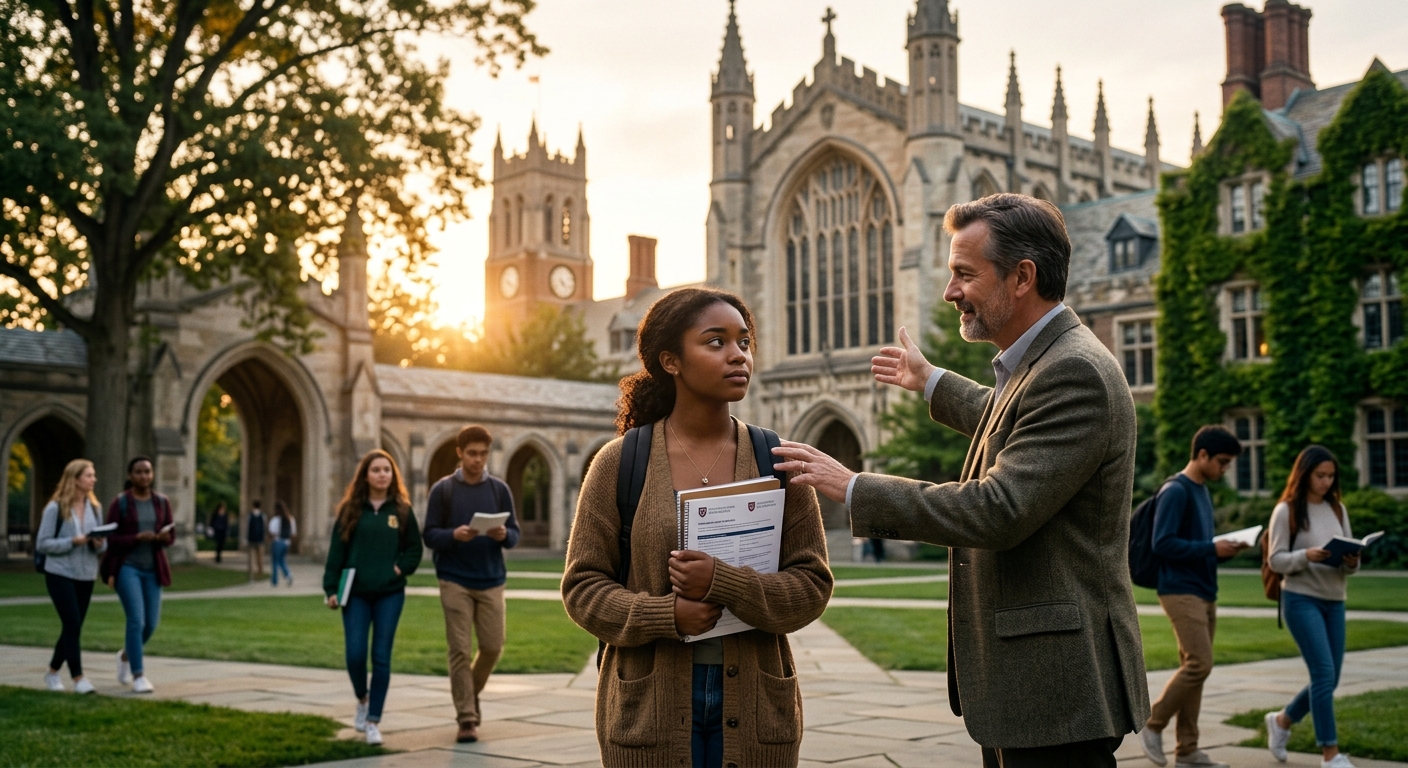
Higher education frequently serves as an engine of social mobility, offering students the tools, networks, and credentials necessary to build sustainable, fulfilling futures. However, this engine does not run equally for everyone. Among the most profoundly marginalized groups in the American educational system are young people who have navigated the complexities of the foster care system. Often arriving at the threshold of adulthood with significant psychological trauma, a glaring lack of familial safety nets, and highly disrupted educational backgrounds, these youths face staggering hurdles that standard college students simply do not encounter. Elite universities—specifically well-resourced institutions across the nation boasting billion-dollar endowments—possess a unique capacity and, arguably, a moral imperative to fundamentally change the trajectory of these young lives. By implementing robust, targeted support systems and leveraging their vast institutional power, elite higher education can pivot from being merely accessible on paper to becoming genuinely transformative for the most vulnerable children in our society. This comprehensive analysis explores the deeply entrenched systemic barriers foster youth face, evaluates data-driven interventions that have proven successful, and outlines the urgent, actionable strategies that top-tier universities must adopt to aggressively champion these marginalized students.
The Harsh Reality: Systemic Failures in Child Welfare
The contemporary child welfare system is ostensibly designed to protect vulnerable children from egregious abuse and severe neglect. In practice, however, it frequently acts as a punitive apparatus that penalizes poverty rather than alleviating it. Families struggling with severe economic hardship are overwhelmingly separated rather than supported. Instead of addressing the underlying root causes of household instability—such as a lack of affordable housing, inadequate mental healthcare access, or persistent food insecurity—the state routinely intervenes by removing children from their homes. This traumatic separation inflicts enduring psychological wounds on both the children and their families. For the youth placed in foster care, the system rarely offers the safe, enduring stability it theoretically promises. Frequent, jarring transfers between temporary foster homes, institutional group facilities, and short-term emergency shelters mean constant disruption. This chronic instability is deeply normalized within the system, yet its cumulative impact on a developing child’s psychological well-being and academic progression is nothing short of catastrophic.


The Future of AI: Preventing a Big Tech Monopoly >

Educational continuity is unfortunately one of the most prominent casualties of the modern foster care system. Every single time a child is forced to change placements, they almost invariably have to change schools. With each move, crucial academic credits are lost in administrative translation, relationships with trusted teachers and mentors are abruptly severed, and academic gaps widen exponentially. The U.S. Department of Education actively acknowledges that students in foster care experience significantly lower high school graduation rates compared to their peers in stable housing. In many jurisdictions, barely half of the youth who experience out-of-home care manage to secure a standard high school diploma by the time they reach age 18. This systemic failure to prioritize educational continuity leaves these incredibly bright, highly capable young people structurally disadvantaged long before they even have the opportunity to sit for standardized tests or consider college applications. Consequently, transitioning to higher education becomes a monumental uphill battle fought on incredibly uneven terrain.
Bridging the Gap: Unpacking the Educational Data
The statistical realities surrounding foster youth and post-secondary educational attainment are deeply sobering and demand immediate institutional attention. While college enrollment and retention rates for the general population remain robust across the country, former foster youth lag significantly behind at every metric. National educational data indicates that roughly only 20 percent of college-bound students who have formally aged out of the foster care system ever manage to enroll in higher education. Furthermore, simply gaining enrollment does not guarantee completion. Current academic research indicates that the eventual college graduation rate for former foster youth hovers around a mere 3 to 10 percent, representing a stark, tragic contrast to the national average. These abysmal numbers do not reflect a lack of intelligence, inherent resilience, or personal ambition; rather, they clearly illustrate the devastating, compounding impact of navigating rigorous university life without a traditional, reliable support system.
When traditional undergraduate students face an unexpected financial crisis, a sudden housing gap during winter break, or severe academic burnout, they typically have stable families to lean on for immediate support. For former foster youth, however, a dormitory closure during the winter holidays can translate instantly to literal homelessness. A minor delayed financial aid disbursement can lead directly to acute food insecurity or being forced to drop out entirely to work minimum-wage jobs. Comprehensive data from higher education networks clearly shows that these students frequently juggle significant external adult responsibilities, lack any independent financial backing, and experience dramatically higher rates of stop-outs—the practice of temporarily withdrawing from school—than even first-generation, low-income students who did not experience out-of-home foster care. The data unequivocally demonstrates that granting access alone is wildly insufficient; actual graduation requires deep, comprehensive, wraparound intervention.
Pioneering Support Systems: The Guardian Scholars Model
While the broader statistics are undoubtedly grim, there are proven, highly effective models of success that provide an actionable blueprint for elite universities looking to make a difference. One of the most successful, universally lauded interventions in higher education is the Guardian Scholars program. First established at leading institutions like the University of California, Los Angeles (UCLA) in 2009, this innovative model was born directly out of fierce student advocacy for current and former foster youth. Program pioneers recognized early on that standard financial aid packages, while undeniably essential, were only one small piece of a much larger puzzle. These specialized programs operate on a holistic, trauma-informed framework designed to organically recreate the comprehensive, multi-faceted support system that a stable family typically provides to a young adult entering college.
A robust Guardian Scholars model offers priority class registration to ensure these vulnerable students secure the exact courses they need to graduate on time, thereby minimizing unnecessary tuition debt and preventing crippling administrative delays. Crucially, it guarantees reliable year-round housing, completely eliminating the terrifying, ever-present threat of homelessness during summer and winter breaks when campus dorms typically close their doors to the general student body. Additionally, these programs employ dedicated, full-time case managers who help students deftly navigate complex university bureaucracies, coordinate specialized mental health care, and offer trauma-informed academic advising. At universities where these intensive, tailored support models have been fully implemented, graduation rates for foster youth have predictably skyrocketed, frequently matching or even exceeding the overall institutional average for non-foster students. This proves that with the right scaffolding, these students thrive brilliantly.
Actionable Steps for Elite Higher Education Institutions
Institutions boasting multi-billion dollar endowments, expansive academic networks, and immense global social capital have the financial and structural resources to implement these best practices immediately. Establishing a specialized, fully funded program for former foster youth is not merely an act of collegiate charity; it is a fundamental alignment of institutional practice with their loudly stated missions of diversity, equity, and broad inclusion. Elite universities must begin by proactively and aggressively recruiting students directly from the foster care system. This requires establishing permanent partnerships with regional child welfare agencies, specialized public high schools, and grassroots non-profits dedicated to foster youth advocacy. Furthermore, university admissions offices must be thoroughly trained to evaluate applications through a trauma-informed lens, correctly recognizing that a student’s capacity to overcome severe systemic barriers is a far better, more accurate indicator of future potential than traditional standardized test scores.
Beyond proactive recruitment, elite academic institutions must guarantee full-ride financial aid packages that completely bypass the need for vulnerable students to take out predatory student loans. They should actively establish designated physical resource centers on their campuses—safe, welcoming spaces where foster youth can study, socialize, and organically connect with peers who deeply understand their unique, often painful backgrounds. Peer mentorship is absolutely crucial in this ecosystem; strategically connecting incoming freshmen with successful upperclassmen who have effectively navigated the university system fosters a critical, life-saving sense of belonging. Furthermore, universities must ensure that their campus mental health services feature clinical professionals specifically trained in complex childhood trauma and the psychosocial realities associated with post-foster care life. Institutionalizing these comprehensive mechanisms transforms campuses from alienating, elitist environments into genuinely nurturing, inclusive communities.
Leveraging Institutional Clout for Systemic Advocacy
Providing direct, on-campus student support is undeniably essential, but it remains a reactive measure to a fundamentally broken national system. Elite institutions also possess a profound, overarching responsibility to address the root systemic causes of these educational disparities through proactive, high-level advocacy. Universities are global powerhouses of peer-reviewed research, legal expertise, and public policy development. By partnering closely with leading civil rights organizations focused relentlessly on children’s welfare, prestigious academic institutions can play pivotal roles in dismantling the archaic legal structures that criminalize poverty and unnecessarily tear families apart. Clinical legal programs at top-tier university law schools can boldly litigate high-stakes, class-action lawsuits against state agencies that consistently fail to meet federal child welfare standards, forcing macro-level governmental reform.
Similarly, university schools of social work and public policy must rigorously prioritize academic research evaluating the true efficacy of preventive, community-based interventions versus highly disruptive out-of-home foster placements. Publishing high-impact, peer-reviewed data detailing the long-term, generational harms of family separation shifts the entire national policy narrative. When institutions with massive cultural footprints throw their considerable institutional weight behind urgent child welfare reform, state policymakers, federal judges, and local legislators are forced to listen and act. Through this vital dual approach—nurturing the individual students on their immediate campuses while aggressively fighting for structural legal reform in state legislatures—universities can enact profound, multi-generational change that transcends their own campus borders.
Comparative Analysis: Traditional vs. Trauma-Informed Support
To fully grasp the magnitude of how targeted interventions alter a student’s trajectory, it is helpful to analyze how standard university procedures routinely fail vulnerable populations compared to how trauma-informed policies actively protect them.
| Area of Student Need | Traditional University Approach | Trauma-Informed (Guardian Scholar) Approach |
|---|---|---|
| Housing Security | Dorms mandate closure during winter, spring, and summer breaks, displacing students. | Year-round housing is unconditionally guaranteed, preventing episodic homelessness. |
| Academic Advising | General counselors handle massive student caseloads with limited personalized time. | Dedicated, trauma-informed case managers offer intensive, individualized guidance. |
| Financial Aid | Standard packages often heavily rely on high-interest private or federal student loans. | Comprehensive full-tuition waivers and rapid-response emergency micro-grants are provided. |
| Class Registration | Registration access is based strictly on credit hours or a first-come, first-served basis. | Priority registration is granted to ensure timely graduation and minimize extra tuition costs. |
| Mental Health | Standard campus counseling centers enforce strict, short-term session limits. | Access to specialized, long-term trauma therapy is prioritized and heavily subsidized. |
Conclusion
The true, lasting measure of a university’s greatness is not found solely in the astronomical size of its financial endowment, the ruthless exclusivity of its admissions rate, or the global prestige of its alumni network. Rather, it is found in its tangible capacity to uplift, empower, and support the most vulnerable individuals among us. For far too long, the brilliant potential of children trapped in the labyrinthine foster care system has been stifled by a society that routinely punishes poverty, combined with a higher education landscape that ignores their highly unique, pressing needs. Elite institutions inherently possess the tools, the financial capital, and the unyielding moral duty to intervene and correct this course. By enthusiastically adopting comprehensive support models, unconditionally guaranteeing basic physiological needs, and aggressively advocating for systemic child welfare reform at the legislative level, these universities can radically redefine what it means to be a modern engine of opportunity. Empowering former foster youth is not just another fleeting educational initiative; it is a profound, necessary, and enduring act of social justice.
Frequently Asked Questions (FAQs)
Why do youth exiting the foster care system experience substantially lower high school graduation rates?
Constant systemic instability is the primary driving factor. Frequent foster placement changes inevitably lead to abruptly changing schools. This highly disruptive cycle results in permanently lost academic credits, severed mentor relationships, and severe emotional distress, making it incredibly difficult for students to maintain academic momentum or focus on future college aspirations.
What exactly constitutes a Guardian Scholars program?
A Guardian Scholars program is a specialized, campus-based support initiative specifically designed for former foster youth. Originally pioneered at universities like UCLA, these holistic programs provide critical wraparound services, including year-round campus housing, dedicated academic advising, targeted peer mentorship, and specialized mental health support to ensure college retention and timely graduation.
How can higher education institutions tangibly assist foster youth during academic holiday breaks?
Because many foster youth fundamentally lack a permanent, safe home to return to when classes pause, universities can assist by explicitly keeping specific dormitories open year-round. Additionally, they can offer food stipends during standard campus dining closures and provide rapid emergency housing micro-grants to prevent sudden, devastating homelessness.
Why is implementing trauma-informed care so crucial in a high-pressure university setting?
Many students navigating out of the child welfare system have experienced severe early-life neglect, physical abuse, or the fundamental, lasting trauma of family separation. Trauma-informed care ensures that all university staff—from tenured professors to financial aid officers—understand how deep trauma biologically impacts learning and behavior, allowing them to appropriately support students without inadvertently re-traumatizing them.
References
- Students in Foster Care — U.S. Department of Education. 2026-06-04. https://www2.ed.gov/about/inits/ed/foster-care/index.html
- How 3 former foster youth found community through the Bruin Guardian Scholars program — UCLA Newsroom. 2025-05-29. https://newsroom.ucla.edu/stories/how-3-former-foster-youth-found-community-through-bruin-guardian-scholars-program
- Undergraduate foster youth at the University of California — University of California Office of the President. 2020-07-01. https://www.ucop.edu/institutional-research-academic-planning/_files/undergraduate-foster-youth-at-the-university-of-california.pdf
- Stopping Out and its Impact on College Graduation Among a Sample of Foster Care Alumni — Journal of the Society for Social Work and Research. 2021-02-18. https://www.journals.uchicago.edu/doi/10.1086/713303
Similar Articles







Read full bio of medha deb