Dissolution of marriage serves as the formal legal mechanism to end a marital union in most U.S. jurisdictions, effectively terminating the spousal relationship and addressing associated matters like asset distribution and parental responsibilities.
Defining Dissolution of Marriage
The term dissolution of marriage refers to the court-supervised process that legally concludes a marriage, restoring individuals to single status while resolving financial and familial obligations. Unlike older concepts requiring proof of fault such as adultery or cruelty, modern dissolution emphasizes irretrievable breakdown of the relationship, aligning with no-fault principles adopted widely since the 1970s.
In essence, a dissolution decree fully severs the marital bond, distinguishing it from temporary arrangements like legal separation where parties remain wedded but live apart with court-ordered terms on support and property. This process ensures equitable outcomes, particularly when children or shared assets are involved.
Historical Shift to No-Fault Dissolutions
Prior to reforms in the late 20th century, ending a marriage demanded evidence of misconduct, leading to adversarial proceedings and public scrutiny. California’s 1970 adoption of ‘dissolution’ under Family Code Section 2310 marked a pivotal change, basing terminations on irreconcilable differences or incurable insanity without blame.
Today, nearly all states permit no-fault dissolutions, where stating the marriage is ‘irretrievably broken’ suffices, streamlining cases and reducing emotional toll. Minnesota statutes explicitly abolish defenses like condonation or recrimination, reinforcing this approach.
Key Distinctions: Dissolution vs. Traditional Divorce
While often synonymous, nuances exist by state. In many, dissolution equates to divorce generally. However, Ohio and Alaska reserve ‘dissolution’ for uncontested cases where spouses mutually agree on terms without alleging fault.
| Aspect | Dissolution (Uncontested) | Divorce (Contested) |
|---|---|---|
| Basis | Mutual agreement, no-fault | May involve fault grounds |
| Court Involvement | Minimal; review of agreement | Trials, hearings, judgments |
| Time & Cost | Faster, less expensive | Prolonged, costlier |
| Examples | Ohio, Alaska specifics | General fault-based claims |
This table highlights how uncontested dissolutions expedite resolution when consensus exists.
State-Specific Requirements and Variations
Residency rules vary: Florida mandates six months for one spouse, Minnesota 180 days. Grounds universally include irretrievable breakdown, but processes differ.
- Florida (Chapter 61, Fla. Stat.): No-fault only; equitable distribution of assets/debts, parenting plans mandatory if children involved.
- Minnesota (Sec. 518.06): Court grants on irretrievable breakdown finding; legal separation alternative if requested.
- California: Irreconcilable differences primary ground.
- Connecticut: Dissolution is the standard term for divorce.
Petitioners file in the county of residence, initiating formal proceedings.
Step-by-Step Process for Obtaining a Dissolution
Navigating dissolution involves structured phases:
- Eligibility Check: Confirm residency and grounds.
- Petition Filing: Submit Petition for Dissolution, detailing requests for custody, support, property split.
- Financial Disclosure: Mandatory affidavits of assets, debts, income.
- Serve Spouse: Notify via process server or certified mail.
- Response Period: 20-30 days to contest or agree.
- Negotiation/Mediation: Resolve disputes out of court where possible.
- Hearing/Trial: Judge approves uncontested agreements or decides contested issues.
- Final Decree: Issued post-waiting period (e.g., 6 months in some states).
Uncontested paths conclude swiftly via settlement review; contested ones may span years with discovery and trials.
Resolving Child-Related Matters
When minors are involved, courts prioritize best interests, crafting parenting plans for custody (legal/physical), time-sharing, and support. Factors include parental fitness, child preferences (age-dependent), and stability. Child support follows state guidelines based on income, overnights, healthcare.
Courts discourage alienation and favor cooperative co-parenting, often mandating mediation before trials.
Property Division and Financial Settlements
Community property states (e.g., California) split marital assets 50/50; equitable distribution states (most others, like Florida) divide fairly considering contributions, needs, marriage length.
Debts allocate similarly; premarital assets typically remain separate. Alimony (spousal support) assesses factors like earning disparity, homemaker sacrifices.
Legal Separation as an Alternative
Unlike dissolution, legal separation maintains marital status while courts order support, custody, property use—ideal for religious, insurance, or reconciliation reasons. Either party may later convert to dissolution.
Costs, Timelines, and Practical Tips
Uncontested dissolutions cost $200-$5,000, concluding in months; contested exceed $15,000 and years. Tips: Document finances early, consider mediation, consult attorneys for complex assets. Self-representation possible in simple cases but risky.
Frequently Asked Questions
Is dissolution of marriage the same as divorce?
Yes in most states, though some distinguish uncontested dissolutions from fault-based divorces.
What is a no-fault dissolution?
A process ending marriage without proving wrongdoing, based on irretrievable breakdown.
How long does dissolution take?
1-6 months uncontested; 1+ years contested, varying by state and complexity.
Do I need a lawyer for dissolution?
Not always for uncontested, but recommended for protections, especially with children or assets.
Can I get a dissolution without spouse agreement?
Yes, via contested process where court decides terms.
Emotional and Post-Dissolution Considerations
Beyond legalities, dissolution impacts taxes (filing status changes), insurance, estate plans. Counseling aids transition; name changes require separate petitions. Post-decree modifications possible for changed circumstances like job loss.
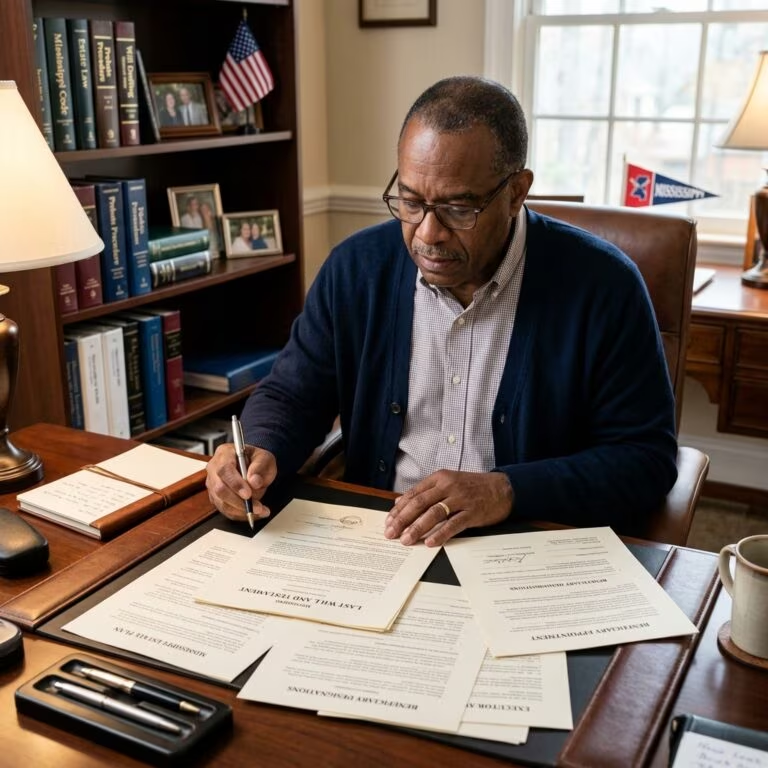
Couples should update wills, beneficiaries, titles promptly after finalization.
References
- Sec. 518.06 MN Statutes — Revisor of Statutes, State of Minnesota. 2023. https://www.revisor.mn.gov/statutes/cite/518.06
- Dissolution of Marriage – Legal Glossary Definition — Barnes Walker. 2024-10-15. https://barneswalker.com/legal-glossary/d/dissolution-of-marriage/
- Dissolution of marriage | Wex | US Law — Legal Information Institute, Cornell Law School. 2021-07-31. https://www.law.cornell.edu/wex/dissolution_of_marriage
- What Is a Dissolution of Marriage? — DivorceNet. 2024. https://www.divorcenet.com/legal-advice/divorce/divorce-basics/what-dissolution-marriage
- What’s the Difference Between Divorce and Dissolution? — Shur Law. 2023-05-12. https://shurlaw.com/whats-the-difference-between-divorce-and-dissolution/
- Divorce/Dissolution – Minnesota Judicial Branch — Minnesota Courts. 2025-01-20. https://mncourts.gov/help-topics/divorce