Introduction to the Conflict Over Youth Healthcare
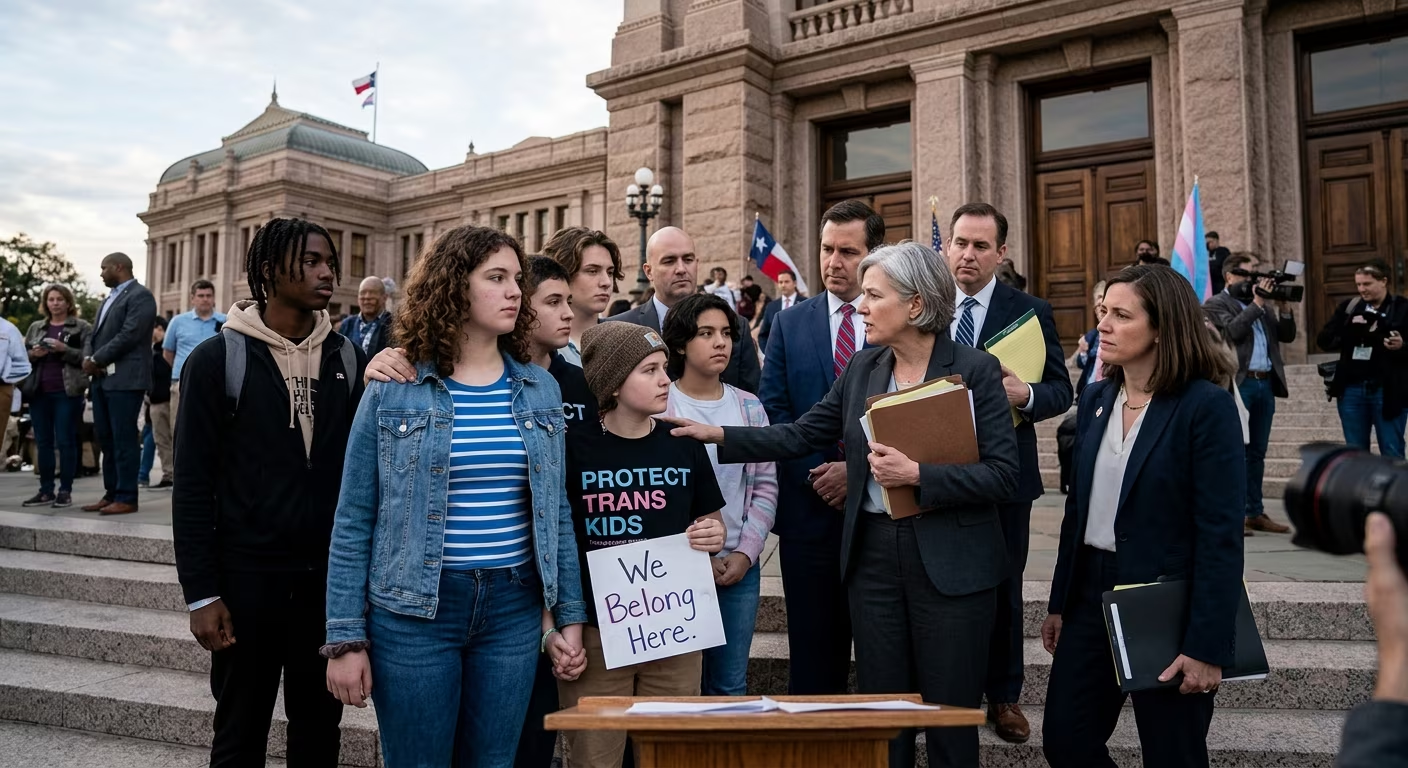
The ongoing debate concerning transgender rights in the United States has reached a critical inflection point in Texas, where government directives have fundamentally altered the landscape of pediatric healthcare and family law. The epicenter of this controversy involves a state executive directive that attempts to reclassify medically necessary, evidence-based gender-affirming care for adolescents as a form of “child abuse.” This unprecedented political move has not only sent shockwaves through the medical and psychological communities but has also triggered significant legal battles aimed at protecting the fundamental rights of marginalized families.
Central to this legal and ethical resistance is the landmark case Doe v. Abbott, a lawsuit filed by civil rights advocates seeking to halt state investigations that threaten to tear families apart. The situation unfolding in Texas is more than a localized policy dispute; it represents a profound ethical and legal clash regarding the boundaries of state power, the sanctity of parental rights, and the established consensus of modern medicine. As state officials attempt to leverage the child welfare system to enforce ideological standards, the lives and well-being of thousands of youths hang in the balance.
Deconstructing the Texas Directive
The immediate controversy ignited when Texas Attorney General Ken Paxton issued a formal legal opinion asserting that certain medical treatments provided to transgender minors—such as puberty-delaying medications and hormone replacement therapy—constitute child abuse under existing Texas Family Code. Following this highly controversial legal opinion, Governor Greg Abbott issued a corresponding directive to the Texas Department of Family and Protective Services (DFPS). He ordered the agency to launch prompt, thorough investigations into any reported instances of such medical care being administered to youth within the state.
Crucially, the governor’s directive didn’t merely target the parents of transgender adolescents; it established broad, mandatory reporting obligations for all licensed professionals. This included teachers, nurses, doctors, and therapists. The directive heavily implied that failure to report these so-called instances of abuse could result in severe criminal penalties and the loss of professional licensing.
This aggressive policy shift immediately created an environment of surveillance, panic, and fear. Healthcare providers were suddenly caught between their ethical and professional duty to provide standard-of-care medical treatment and the imminent threat of criminal prosecution. Simultaneously, parents of transgender adolescents faced the terrifying prospect of losing custody of their children simply for following their doctors’ specialized recommendations. Advocacy organizations and legal scholars quickly pointed out that weaponizing the child welfare system against loving, supportive families represents a severe overreach of executive power and a dangerous misinterpretation of statutory definitions of abuse.
The Legal Response: Analyzing Doe v. Abbott
In swift response to the aggressive posturing of the Texas government, a powerful coalition of civil rights organizations—including the American Civil Liberties Union (ACLU), the ACLU of Texas, and Lambda Legal—filed a lawsuit officially known as Doe v. Abbott. This critical litigation was designed to secure an immediate injunction to block the DFPS from enforcing the governor’s directive against families seeking healthcare for their children.
The plaintiffs in the legal case effectively highlight the chilling real-world consequences of the state’s policy. The lead plaintiffs, filing anonymously as Jane and John Doe to protect their family from harassment, are the parents of a transgender teenager. In a cruel twist of bureaucratic irony, Jane Doe is an employee of the DFPS itself. After inquiring with a supervisor about how the governor’s new directive would affect the agency’s internal operations and her own family, she was summarily placed on administrative leave, and a child welfare investigator was rapidly dispatched to her home.
Joining the Doe family in the lawsuit is Dr. Megan Mooney, a licensed clinical psychologist who frequently provides mental health care to transgender youth. Dr. Mooney argued before the court that the directive placed her in an impossible, unconstitutional bind. She was forced to choose between violating her fundamental ethical obligations to her vulnerable patients—thereby causing them severe psychological harm—and facing severe professional and legal penalties for failing to comply with the state’s newly invented mandatory reporting requirements.
The legal arguments articulated in Doe v. Abbott center on several critical constitutional and procedural claims. The plaintiffs strongly assert that the governor and attorney general acted far beyond their statutory authority and violated the strict separation of powers mandated by the Texas Constitution. Furthermore, the lawsuit contends that the directive egregiously infringes upon the fundamental rights of parents to make informed, private medical decisions for their children and blatantly discriminates against transgender youth by denying them equal access to life-saving medical care.
The Medical Consensus on Gender-Affirming Care
To accurately understand the immense gravity of this legal battle, it is essential to examine the unified, evidence-based stance of the American medical establishment. The actions taken by Texas state officials stand in direct, unapologetic opposition to the clinical guidelines and recommendations of nearly every major medical, psychological, and mental health organization in the United States.
The American Academy of Pediatrics (AAP) and the American Medical Association (AMA) have both issued strong, unequivocal statements condemning the criminalization of gender-affirming care. According to the AAP’s comprehensive policy guidelines, youth who identify as transgender and gender diverse must have unfettered access to developmentally appropriate, gender-affirming healthcare in a safe, inclusive clinical environment. This model of care is not a sudden, experimental trend but rather a carefully researched, evidence-based approach designed specifically to treat gender dysphoria—a globally recognized medical condition characterized by severe psychological distress due to a mismatch between assigned sex at birth and intrinsic gender identity.
The AMA has categorically labeled legislative and executive attempts to restrict this care as dangerous legislative intrusions into the sacred practice of medicine. Board-certified physicians rely on years of specialized training, rigorous peer-reviewed research, and deep clinical experience to formulate individualized treatment plans for adolescents. For some youth, this involves mere social transition; for others, it may involve completely reversible puberty-delaying medications that provide the patient and their family crucial time to explore gender identity without the compounding distress of irreversible pubertal changes. By categorizing these widely accepted, life-saving medical practices as child abuse, the Texas directive forces medical professionals to abandon science and medical ethics in favor of partisan political ideology, ultimately endangering the health and well-being of an already vulnerable patient population.
Psychological and Social Impact on Families
Beyond the sterile courtrooms and clinical medical offices, the devastating psychological toll on transgender youth and their families cannot be overstated. Adolescence is universally recognized as a turbulent developmental period, but for transgender teens, it is heavily compounded by societal stigma, peer bullying, and significantly higher baseline rates of depression and anxiety. Access to gender-affirming care has been repeatedly and conclusively shown to mitigate these severe risks, significantly reducing rates of suicidal ideation and self-harm among transgender youth.
The Texas directive actively and aggressively reverses these positive clinical outcomes. The mere threat of a DFPS investigation—which routinely involves invasive home visits, intense interrogations of children without their parents present, and the looming, terrifying possibility of foster care placement—creates a persistent, suffocating state of trauma. Families across Texas have reported living in hiding, pulling their children out of public schools and extracurricular activities, and even permanently fleeing the state to ensure their children can continue receiving vital medical care without the constant threat of state-sanctioned family separation.
This toxic climate of fear also extends to the siblings of transgender youth and the broader community support networks that families rely on for stability. When the powerful state mechanism designed specifically to protect children from genuine abuse and neglect is weaponized against loving families providing evidence-based healthcare, the foundational trust between citizens and child welfare agencies is fundamentally and irrevocably shattered.
National Context and Legislative Trends
The high-stakes battle currently unfolding in Texas serves as a potent microcosm of a much broader, deeply concerning national trend. Across the United States, dozens of state legislatures have actively introduced or passed bills aimed at aggressively restricting the civil rights of LGBTQ+ individuals, with a highly specific, coordinated focus on transgender youth. These restrictive measures range from barring transgender girls from participating in school sports to enacting outright criminal bans on providing gender-affirming medical procedures.
However, the profoundly aggressive nature of the Texas strategy—utilizing the power of the executive branch to unilaterally redefine child abuse without a democratic legislative vote—represents a unique and dangerous escalation in this cultural conflict. The ultimate judicial outcome of Doe v. Abbott and subsequent related cases will likely set incredibly powerful legal precedents for the entire country.
If appellate courts allow state executives to unilaterally criminalize established, mainstream medical care, it throws open the legal doors for profound governmental interference in the private lives, bodily autonomy, and intimate medical decisions of all citizens, not just those within the transgender community. Advocacy groups, medical professionals, and affected families remain fiercely committed to fighting these oppressive policies at every level, insisting that every child deserves the fundamental human right to grow up safe, supported, and healthy without fear of government persecution.
Frequently Asked Questions (FAQs)
What exactly is gender-affirming care?
Gender-affirming care encompasses a wide range of social, psychological, behavioral, and medical interventions designed to support and affirm an individual’s gender identity. For adolescents, this often focuses on social transition (like changing names and pronouns) and may include reversible puberty-delaying medications, all guided by rigorous clinical standards set by major medical associations.
Why is the Doe v. Abbott lawsuit significant?
The lawsuit is a critical legal challenge against the Texas governor’s directive that classified gender-affirming care as child abuse. It is significant because it directly confronts the state’s authority to criminalize evidence-based medicine, seeking to protect families from unwarranted child welfare investigations and family separation.
How have major medical organizations responded to the Texas directive?
Organizations such as the American Academy of Pediatrics (AAP) and the American Medical Association (AMA) have strongly condemned the directive. They maintain that gender-affirming care is medically necessary, life-saving treatment and argue that governmental interference in the patient-physician relationship poses severe risks to youth mental and physical health.
Can parents actually lose custody under this directive?
Yes, by legally classifying these medical treatments as child abuse, the directive granted the Texas Department of Family and Protective Services the authority to investigate parents. If the agency formally determined that abuse occurred, it could legally petition courts to remove children from the home, placing them into the foster care system.
References
- Doe v. Abbott | American Civil Liberties Union — American Civil Liberties Union (ACLU). 2026-03-03. https://www.aclu.org/cases/doe-v-abbott
- Ensuring Comprehensive Care and Support for Transgender and Gender-Diverse Children and Adolescents — American Academy of Pediatrics (AAP). 2018-10-01. https://publications.aap.org/pediatrics/article/142/4/e20182162/37381/Ensuring-Comprehensive-Care-and-Support-for
- March 26, 2021: State Advocacy Update — American Medical Association (AMA). 2021-03-26. https://www.ama-assn.org/health-care-advocacy/advocacy-update/march-26-2021-state-advocacy-update
- The Impact of 2025 Anti-Transgender Legislation on Youth — Williams Institute – UCLA School of Law. 2026-01-15. https://williamsinstitute.law.ucla.edu/publications/2025-anti-trans-leg-youth/