Introduction: The Shifting Landscape of Transgender Youth Rights
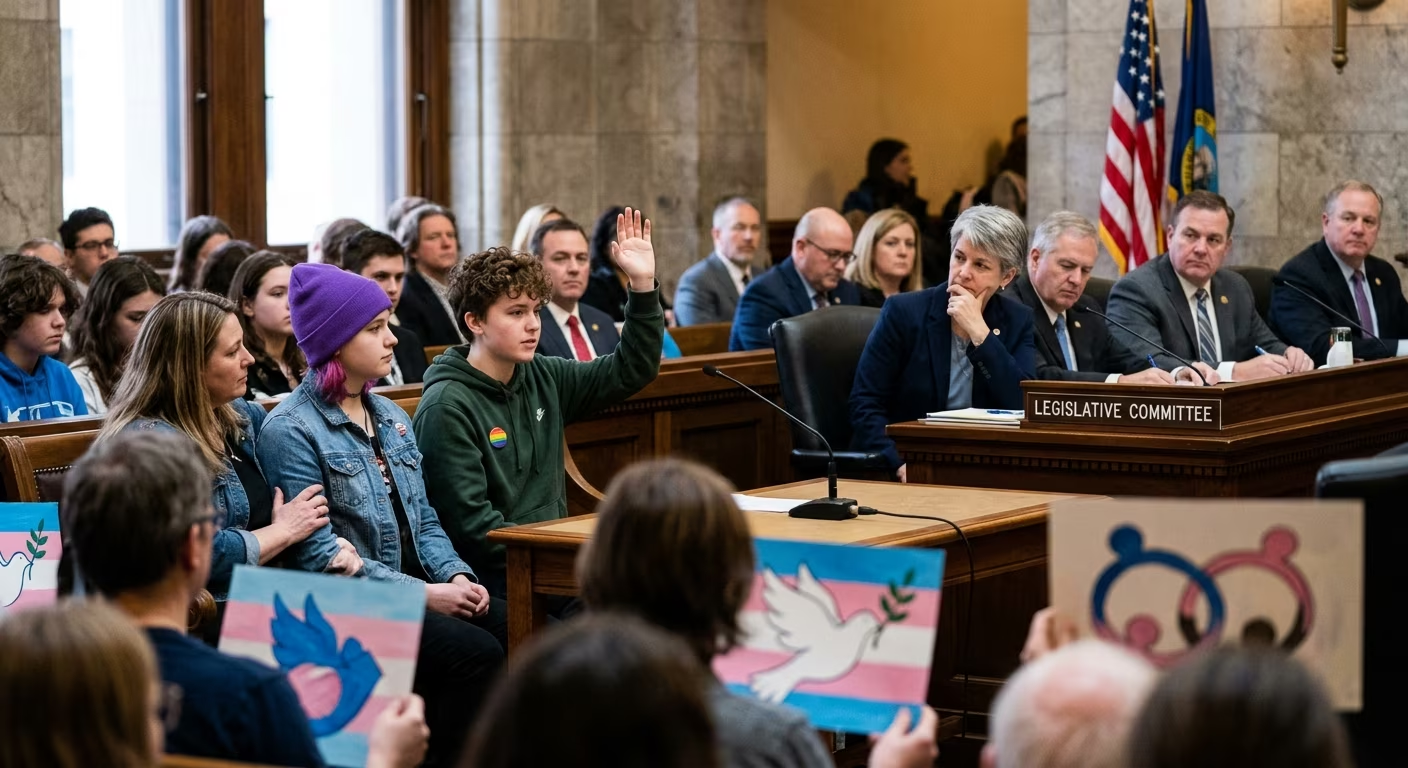
In recent years, the intersection of specialized healthcare, political ideology, and fundamental civil liberties has become a highly contested battleground across the United States. At the absolute center of this cultural and legislative storm is the provision of gender-affirming medical care for transgender and gender-diverse youth. Various state legislatures have aggressively moved to pass sweeping laws aimed at restricting or outright banning these specialized healthcare services for minors. A prominent example of this restrictive legislative trend occurred when South Dakota enacted legislation explicitly prohibiting both surgical and non-surgical gender-affirming treatments for individuals under the age of eighteen.
This rapid wave of state-level legislation has triggered immediate, profound, and sustained backlash from civil rights organizations, child welfare advocates, and the broader pediatric medical community. By legally criminalizing or severely restricting access to healthcare pathways that leading medical authorities consider both life-saving and medically necessary, states are fundamentally altering the foundational landscape of pediatric care. This comprehensive article provides an objective analysis of the ongoing controversy, carefully examining the details of the legislative actions, the established medical consensus regarding transgender youth healthcare, and the sweeping implications for human rights, constitutional law, and broader child welfare.
The Core of the Conflict: Legislation Against Medical Care
The coordinated legislative efforts to curtail gender-affirming care specifically target a broad range of medical interventions designed to help transgender and nonbinary youth align their physical bodies with their deeply held gender identities. While the explicit nuances of the bills vary significantly from one state jurisdiction to another, they universally share a common framework of stringent medical restrictions. Laws mirroring the one enacted in South Dakota strictly prohibit healthcare providers from administering puberty-blocking medications, prescribing cross-sex hormone replacement therapies (HRT), and performing gender-affirming surgical procedures on any minor patient.
Lawmakers and proponents of these legislative bans predominantly argue from a perspective rooted in the concept of child protection. They vehemently assert that minors inherently lack the requisite cognitive maturity to fully comprehend the complex, long-term, and potentially irreversible consequences of medical gender transition. Legislators supporting these bills contend that the state holds a compelling and overriding interest in preventing young, developing people from making permanent physical alterations to their bodies before they reach legal adulthood. Furthermore, they frequently argue that alternative, non-medical interventions—such as extensive psychological counseling designed to reconcile the minor’s gender identity with their biological sex—should be the only legally permissible avenues of clinical care.
However, the enforcement mechanisms deployed to uphold these bans are exceptionally stringent and often punitive. Healthcare professionals who violate these new legal parameters face severe professional and legal penalties. These consequences can include the immediate revocation of their state medical licenses, substantial financial fines, and, in several jurisdictions, direct criminal prosecution. Additionally, some newly passed laws deliberately expose medical providers to lasting civil liabilities, legally empowering former patients to sue them years after the medical care was initially provided. These harsh, punitive measures have quickly created a pervasive chilling effect within the medical community, forcing many specialized clinics to permanently shutter their operations and leaving thousands of vulnerable adolescent patients without access to continuous, essential medical care.
Understanding Gender-Affirming Care: The Medical Consensus
To fully grasp the massive scale and impact of these legislative bans, it is absolutely crucial to understand what pediatric gender-affirming care actually entails and how it is universally viewed by the modern medical establishment. Unlike the sensationalized and often inaccurate portrayals frequently amplified in partisan political discourse, gender-affirming care for minors is a highly individualized, methodical, and extensively monitored clinical process. For prepubescent children, pharmaceutical or surgical medical interventions are entirely excluded from the clinical pathway. Instead, care is exclusively focused on social transition, which may safely involve changes in preferred pronouns, chosen names, clothing styles, and haircuts.
As transgender youth enter the onset of adolescence, temporary medical options such as puberty blockers may be cautiously introduced by pediatric endocrinologists. Puberty-suppressing hormones are widely considered safe and fully reversible, serving primarily to briefly pause the distressing physical changes of endogenous puberty. This vital medical pause provides the adolescent, their family, and their dedicated medical team with crucial time to deeply explore the youth’s evolving gender identity without the immediate distress of developing permanent, unwanted secondary sex characteristics. For older, mature adolescents who continually demonstrate persistent gender dysphoria and meet rigorous diagnostic criteria set by psychological professionals, partially reversible hormone replacement therapy (HRT) may be thoughtfully considered.
The leading medical authorities in the United States overwhelmingly and consistently support gender-affirming care as an evidence-based, life-saving standard. The American Academy of Pediatrics (AAP) explicitly advocates for youth who identify as transgender and gender-diverse to have uninterrupted, safe access to comprehensive, gender-affirming, and developmentally appropriate healthcare. The foundational 2018 AAP policy remains the authoritative benchmark for pediatricians today. Similarly, the American Medical Association (AMA) officially recognizes that medical and surgical treatments for gender dysphoria are definitively medically necessary, actively opposing any state or federal policies that attempt to criminalize or impede the provision of this deeply evidence-based care. These massive medical organizations, firmly backed by specialized entities like the Endocrine Society, emphasize that denying these critical treatments is never a neutral clinical act. Denying care actively harms young patients by drastically exacerbating their gender dysphoria, inevitably leading to severe mental health crises, including significantly elevated rates of clinical depression, severe anxiety, and suicidal ideation.
The Human Rights and Child Welfare Perspective
Moving beyond the strict clinical domain, the intense national debate over gender-affirming care is fundamentally viewed by many as a dire question of basic human rights and comprehensive child welfare. National advocacy organizations dedicated to protecting children’s rights fervently argue that state-imposed bans on private medical care constitute a severe, unprecedented violation of bodily autonomy and equal protection under the law. These groups tirelessly emphasize that transgender and nonbinary youth are already one of the most uniquely vulnerable and systematically marginalized demographics in the country, facing heavily disproportionate rates of school bullying, family rejection, youth homelessness, and systemic societal discrimination.
By effectively institutionalizing this discrimination through targeted legislation, states are intentionally sending a highly damaging, pervasive message to transgender youth: that their deeply held identities are invalid and their overall health and survival are not a legislative priority. Dedicated child welfare experts firmly argue that a loving, supportive environment is the single most critical factor in the healthy psychological development of any child. When the government actively interferes in a deeply supportive medical process managed by parents and doctors, it directly undermines the family unit’s core ability to nurture the child effectively. Advocacy groups stress that this aggressive political interference in specialized healthcare forces loving families into impossible, heartbreaking situations. Families must either agonizingly watch their children suffer from untreated, debilitating dysphoria or completely uproot their established lives to physically relocate to sanctuary states that offer robust legal protections for transgender healthcare.
Legal Implications and Constitutional Challenges
The rapid passage of these restrictive healthcare laws has predictably led to an immediate avalanche of high-stakes litigation, swiftly transforming a healthcare debate into a complex, multi-year constitutional legal battle. Major civil rights organizations have rapidly filed comprehensive lawsuits in multiple federal courts, actively seeking emergency injunctions to prevent these restrictive laws from ever taking effect. The legal arguments marshaled against these medical bans are highly multifaceted, drawing heavily upon several foundational constitutional principles and historical legal precedents.
One of the primary, most powerful legal challenges heavily relies on the Equal Protection Clause of the Fourteenth Amendment of the United States Constitution. Plaintiffs compellingly argue that state bans on gender-affirming care unconstitutionally discriminate against citizens explicitly on the basis of their sex and their transgender status. Because these new laws prohibit specific medical treatments—such as testosterone or estrogen hormone therapy—only when they are prescribed for gender transition, while explicitly allowing the exact same pharmaceutical treatments for cisgender minors (for instance, safely treating precocious puberty or naturally occurring hormonal imbalances), they inherently and illegally target a specific, vulnerable minority group for disparate treatment.
Another highly compelling legal argument centers firmly on the fundamental, historical rights of parents. Historically, the legal right of parents to independently direct the upbringing and make private medical decisions for their own children has been a massive cornerstone of conservative legal philosophy in America. Ironically, in the modern context of gender-affirming pediatric care, it is the fierce advocates for transgender youth who are effectively utilizing this exact legal doctrine. They forcefully argue that the state legislature is vastly overstepping its legal bounds by stripping loving parents of their fundamental constitutional right to seek, evaluate, and legally consent to medically necessary, life-saving treatments for their children, as strongly recommended by their licensed physicians.
Navigating the Path Forward: Support Systems and Advocacy
Despite the escalating, highly visible legislative hostility across numerous states, affected families, dedicated healthcare providers, and local advocates are continuously demonstrating remarkable, steadfast resilience. In restrictive states where these bans have been officially enacted, robust grassroots networks have rapidly mobilized to help desperate families access vital out-of-state medical care. Non-profit organizations are tirelessly providing emergency financial assistance for out-of-state travel, crucial legal guidance for navigating the deeply complex new healthcare regulations, and vital emotional support networks for isolated youth who feel fundamentally alienated by their local governments.
Healthcare providers, though operating under the constant, looming threat of severe legal and professional penalties, continue to bravely fight for their young patients through relentless public advocacy and by actively participating as expert witnesses in the ongoing legal challenges against the bans. The unified medical community remains remarkably steadfast in its clinical consensus, continually refining its pediatric guidelines and publishing rigorous peer-reviewed scientific research that further underscores the life-saving efficacy and absolute necessity of gender-affirming interventions. The ultimate future of transgender healthcare in the United States remains precarious, heavily dependent on the eventual rulings of ongoing federal litigation. However, the unified, uncompromising stance of medical professionals ensures the fight will persist.
Frequently Asked Questions (FAQs)
- What does gender-affirming care for minors actually involve?
Gender-affirming care for minors is a highly individualized, developmentally appropriate clinical process. For prepubescent children, it strictly involves social transition, such as using preferred names and pronouns. For older adolescents, it may include fully reversible puberty blockers to pause distressing physical changes, and later, partially reversible hormone replacement therapy. Surgical interventions are almost universally reserved for adults and are exceptionally rare for minors.
- Why are state legislatures passing bans on this specific type of healthcare?
Lawmakers who advocate for these bans argue they are protecting vulnerable minors from making permanent, irreversible medical decisions before reaching full cognitive maturity. They express specific concerns over long-term physical effects and argue that the state has an overriding obligation to intervene, often promoting psychological counseling over any physical medical interventions for youth experiencing gender dysphoria.
- What is the official stance of major medical organizations on gender-affirming care?
The leading medical and psychological institutions, including the American Academy of Pediatrics and the American Medical Association, widely and officially endorse gender-affirming care. They strictly classify these treatments as evidence-based, medically necessary, and absolutely critical for reducing severe mental distress, clinical depression, and the highly elevated risk of suicide among transgender adolescents.
- What penalties do doctors face if they provide this care in restricted states?
In states where medical bans have been enacted, licensed healthcare professionals face incredibly severe consequences for providing gender-affirming care to minors. These harsh penalties typically include the immediate revocation of their state medical licenses, significant financial fines, the threat of civil liability lawsuits from former patients, and in certain jurisdictions, felony criminal charges.
- How are these state legislative bans being challenged in the legal system?
Prominent civil liberties groups are actively suing states over these bans, primarily citing the Fourteenth Amendment’s Equal Protection Clause. They firmly argue the laws illegally discriminate based on sex and transgender status. Furthermore, they argue the restrictive bans deeply violate the fundamental constitutional rights of parents to make informed, private medical decisions for their children without undue state interference.
References
- Ensuring Comprehensive Care and Support for Transgender and Gender-Diverse Children and Adolescents — American Academy of Pediatrics. 2018-10-01. https://publications.aap.org/pediatrics/article/142/4/e20182162/37381/Ensuring-Comprehensive-Care-and-Support-for
- Clarification of Evidence-Based Gender-Affirming Care H-185.927 — American Medical Association. 2023-06-12. https://policysearch.ama-assn.org/policyfinder/detail/gender-affirming?uri=%2FAMADoc%2FHOD.xml-0-5161.xml
- South Dakota bans gender-affirming treatments for trans minors — CBS News. 2023-02-13. https://www.cbsnews.com/news/south-dakota-kristi-noem-bans-gender-affirming-treatments-trans-minors/
- AMA strengthens its policy on protecting access to gender-affirming care — Endocrine Society. 2023-06-12. https://www.endocrine.org/news-and-advocacy/news-room/2023/ama-resolution-protecting-access-to-gender-affirming-care