
Defending the Flores Agreement: The Fight for Immigrant Children
Why child advocacy groups vehemently oppose federal efforts to dismantle the Flores Settlement Agreement and roll back vital protections for detained youth.
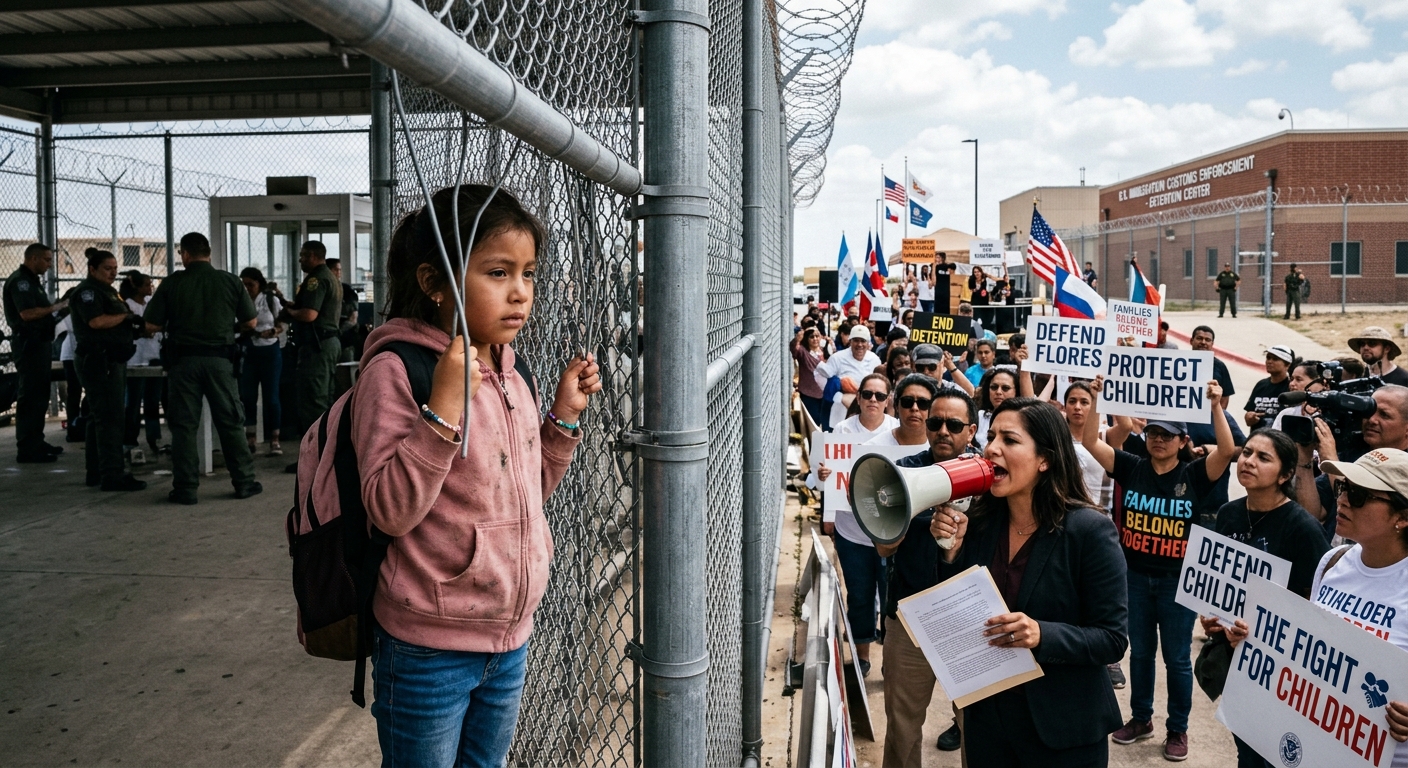
The Crucial Battle for Immigrant Children’s Rights
The detention of immigrant children by the federal government remains one of the most hotly contested issues in United States immigration policy. At the center of this legal, political, and moral battle lies the Flores Settlement Agreement, a landmark 1997 federal consent decree that established foundational, nationwide standards for the treatment, placement, and prompt release of immigrant minors in government custody. Over the past several years, successive administrations have attempted to alter, bypass, or completely terminate the judicial oversight mandated by this historic agreement.
Child welfare organizations, legal advocates, and human rights groups have vehemently opposed these proposed regulatory changes. They argue that dismantling the Flores Settlement without a robust, humane legislative replacement would open the door to indefinite child incarceration, severe psychological trauma, and a complete lack of independent oversight in federal detention centers. This comprehensive overview explores the history of the Flores agreement, the nature of the proposed federal rollbacks, and why child advocates are fighting tirelessly to preserve these essential safeguards for vulnerable youth.
The Origins and Evolution of the Flores Settlement
The origins of the Flores Settlement Agreement trace back to 1985, following the apprehension of a 15-year-old girl named Jenny Flores. Fleeing severe violence in El Salvador, she was detained by the former Immigration and Naturalization Service (INS) and held in a converted motel where she was subjected to daily strip searches and housed alongside adult strangers. Furthermore, the INS refused to release her to capable adult relatives who came forward, demanding that only a legal guardian could take custody. Critics argued this policy effectively weaponized the detention of minors to lure their undocumented parents into deportation proceedings.
This egregious treatment sparked a massive class-action lawsuit filed by child advocacy and human rights organizations. After more than a decade of fierce, complex litigation that eventually reached the United States Supreme Court, the federal government conceded, leading to the 1997 Flores Settlement Agreement. The decree was initially intended to serve as a temporary placeholder until the government could codify comprehensive regulations detailing the humane treatment of unaccompanied minors. However, because successive administrations struggled to enact rules that met the settlement’s strict baseline protections, the agreement has remained the primary legal shield for migrant children for over twenty-five years.
Core Mandates of the Agreement
To understand why advocacy groups fight so hard to maintain this legal framework, it is necessary to understand the specific protections it guarantees. The agreement established several non-negotiable rules for the detention of minors:
| Legal Provision | What It Requires | Impact on Child Welfare |
|---|---|---|
| Prompt Release | Requires the government to release children without unnecessary delay to parents, adult relatives, or licensed sponsors. | Prevents long-term institutionalization and allows children to integrate into a supportive, family-based environment. |
| Safe and Sanitary Conditions | Mandates that facilities providing temporary shelter must provide basic necessities such as clean drinking water, food, medical assistance, and temperature control. | Protects children from physical neglect, malnutrition, and exposure to dangerous elements in border holding cells. |
| State Licensing Requirements | Requires that facilities housing children for longer durations be non-secure and state-licensed to care for dependent children. | Ensures that shelters meet strict state-level child welfare and educational standards, rather than functioning like penal institutions. |
| Time Limits on Custody | Generally interpreted by the courts as a mandate to transfer children out of secure, unlicensed border facilities within 72 hours, with a maximum 20-day limit during massive influxes. | Drastically reduces the traumatic effects of early-stage incarceration by forcing the government to act swiftly. |
The Government’s Push to Terminate Flores
In recent years, the federal government has made multiple concerted efforts to dissolve the Flores Settlement Agreement. The most notable attempt occurred in 2019, when the Department of Homeland Security (DHS) and the Department of Health and Human Services (HHS) published a joint rule in the Federal Register intended to supersede the settlement. Federal attorneys argued that the 1997 agreement had become “ossified” and that intervening statutory changes—such as the Homeland Security Act of 2002 and the William Wilberforce Trafficking Victims Protection Reauthorization Act (TVPRA) of 2008—rendered the ongoing court supervision unnecessary.
The government’s core argument was that the strict release mandates of the Flores agreement created “loopholes” that actively incentivized unlawful border crossings by families, knowing they could not be detained indefinitely. By attempting to replace the agreement with their own internal regulations, federal agencies sought to eliminate the 20-day release mandate, which would have allowed for the indefinite detention of children alongside their parents in secure family residential centers. Furthermore, the proposed rules sought to create federal licensing schemes, allowing the government to bypass independent, state-level child welfare oversight.
The Devastating Impact of Prolonged Detention on Minors
Child rights advocates, pediatricians, and human rights organizations universally opposed these regulatory rollbacks, grounding their arguments in a massive body of medical and psychological research. The consensus among child development experts is that there is no safe amount of time for a child to be held in a detention facility. Prolonged incarceration causes severe, often irreversible harm to a minor’s physical and mental well-being.
- Toxic Stress and Brain Development: The environment of a detention center—characterized by locked doors, uniformed guards, restricted movement, and constant surveillance—triggers a prolonged “fight or flight” response in children. This toxic stress can permanently alter the architecture of a developing brain.
- Psychological Trauma: Medical evaluations of detained immigrant children consistently reveal alarmingly high rates of post-traumatic stress disorder (PTSD), severe anxiety, clinical depression, and suicidal ideation.
- Developmental Regression: Younger children held in confinement frequently exhibit signs of severe developmental regression, including the loss of toilet training, sudden mutism, night terrors, and severe attachment disorders.
Advocates argue that terminating the Flores protections and permitting indefinite family detention does not solve the immigration crisis; rather, it constitutes state-sponsored child abuse. Protecting children from this systemic trauma is the primary reason advocacy groups fight to uphold the strict time limits on custody established by the agreement.
The Erasure of Independent Oversight
Another major point of contention regarding the proposed changes to the Flores agreement is the issue of facility oversight. Under the settlement, independent attorneys and child advocates are granted legal authority to inspect holding facilities, interview detained children, and report on the conditions of confinement. This independent monitoring has been crucial in exposing overcrowded border stations, inadequate medical care, and severe hygiene deficiencies—such as children being denied toothbrushes, soap, or adequate sleeping mats.
If the Flores agreement is terminated and replaced entirely by internal DHS and HHS regulations, these agencies would essentially self-monitor. Advocacy groups argue that federal immigration enforcement agencies have a long, documented history of failing to hold themselves accountable. Stripping away the independent judicial oversight provided by Flores would leave vulnerable children without a voice and shield poor facility conditions from public and legal scrutiny.
Bypassing Child Welfare Standards
The Flores agreement’s requirement that children be placed in state-licensed facilities ensures that shelters are evaluated by independent child welfare experts rather than immigration enforcement officers. State licensing agencies look for educational programming, recreational space, adequate nutrition, and appropriate staff-to-child ratios. Proposed changes by the government have consistently sought to bypass this requirement by funneling children into massive, unlicensed federal influx facilities or military bases.
Advocates warn that removing the state-licensing requirement treats immigrant children not as dependents in need of care, but as prisoners. Unlicensed facilities operate with minimal transparency, and the lack of standardized child welfare protocols drastically increases the risk of neglect, physical abuse, and prolonged isolation.
Viable Alternatives to Indefinite Incarceration
Those opposing the rollback of the Flores agreement do not simply criticize the government’s approach; they offer proven, humane alternatives. Advocacy groups have consistently pushed for the expansion of community-based case management programs. Instead of relying on expensive and traumatic family detention centers, these programs assign social workers to assist newly arrived families in navigating the complex immigration court system.
Data consistently shows that community-based alternatives are significantly cheaper for taxpayers and yield incredibly high rates of compliance with immigration court appearances. By prioritizing child welfare over punitive incarceration, the federal government could manage immigration caseloads without subjecting minors to the devastating impacts of prolonged detention.
The Future of Immigrant Children’s Rights
The legal battle over the Flores Settlement Agreement remains dynamic. In recent years, federal judges, notably U.S. District Judge Dolly Gee, have had to carefully weigh government requests to transition out of the settlement against the ongoing realities of border detention. While courts have occasionally allowed partial transitions—such as permitting the Department of Health and Human Services to manage its own oversight for non-acute facilities—judges have firmly blocked attempts to entirely dismantle court supervision over acute Customs and Border Protection (CBP) holding cells.
Until the United States Congress passes comprehensive immigration reform that explicitly guarantees the rights, safety, and swift release of migrant children, the Flores Settlement Agreement remains the vital backstop against abuse. Child advocacy groups remain vigilant, recognizing that the fight to protect the dignity and legal rights of immigrant youth is far from over.
Frequently Asked Questions (FAQs)
What is the Flores Settlement Agreement?
The Flores Settlement Agreement is a 1997 legal consent decree that sets national minimum standards for the treatment, placement, and release of immigrant children in federal custody. It requires that children be held in safe and sanitary conditions and released to sponsors or family members without unnecessary delay.
Why did the government try to change or terminate the agreement?
Successive administrations have argued that the agreement’s strict limits on how long children can be detained (typically 20 days) prevent the government from keeping families together in detention while their immigration cases are processed. The government also claimed the agreement incentivizes illegal border crossings.
What is the psychological impact of detaining immigrant children?
Extensive medical and psychological research shows that detaining children causes severe trauma. Children in confinement frequently suffer from toxic stress, post-traumatic stress disorder (PTSD), depression, anxiety, and severe developmental regression.
What happens if the Flores Agreement is entirely dismantled?
If the agreement is terminated without a strong legislative replacement, the federal government would have the authority to detain children indefinitely, independent oversight and facility inspections by external lawyers would end, and children could be held in unlicensed, penal-like environments.
Are there alternatives to detaining immigrant children?
Yes. Child welfare advocates strongly recommend community-based case management programs. These programs allow families to live in communities while navigating the legal system with the help of social workers, boasting high court appearance compliance rates without the trauma of incarceration.
References
- Apprehension, Processing, Care, and Custody of Alien Minors and Unaccompanied Alien Children — Federal Register (Department of Homeland Security and Department of Health and Human Services). 2019-08-23. https://www.federalregister.gov/documents/2019/08/23/2019-17927/apprehension-processing-care-and-custody-of-alien-minors-and-unaccompanied-alien-children
- Judge partially ends court oversight of migrant children, chipping away at 27-year arrangement — AP News. 2024-06-28. https://apnews.com/article/migrant-children-flores-settlement-dolly-gee-73602f3066a2ab5d3c87e41b212f026a
- Mechanisms of Deterrence: Federal Immigration Policies and the Erosion of Immigrant Children’s Rights — National Institutes of Health (PMC). 2020-03-01. https://www.ncbi.nlm.nih.gov/pmc/articles/PMC7065636/
Similar Articles








Read full bio of medha deb


