
Creating A Valid Will In Virginia: 5 Essential Steps
Comprehensive guide to drafting, executing, and validating wills under Virginia law for secure estate distribution.
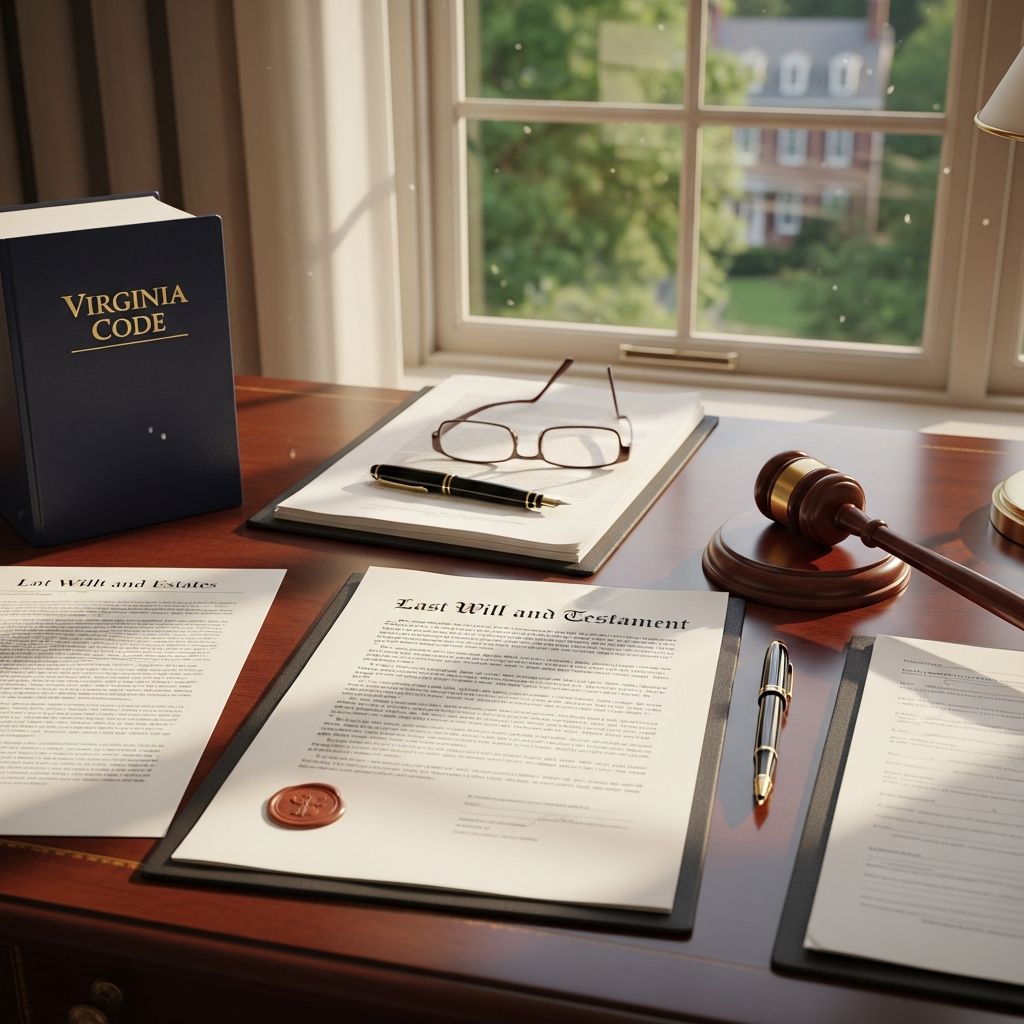
Establishing a will in Virginia ensures your assets are distributed according to your wishes after your passing. Virginia law outlines specific criteria for validity, emphasizing written documents, proper signatures, and witness protocols to prevent disputes during probate.
Who Can Legally Draft a Will in the Commonwealth?
To create a will in Virginia, individuals must meet basic eligibility standards. The primary requirements include reaching the age of majority and possessing mental competency.
- Age Requirement: You must be at least 18 years old. This threshold aligns with Virginia’s definition of adulthood for contractual and testamentary purposes.
- Mental Capacity: Known legally as ‘sound mind and memory,’ this means understanding the nature of your assets, recognizing potential heirs, and grasping the will’s implications. Courts assess this based on evidence at the time of execution.
Exceptions exist for military personnel in active service or mariners at sea, who may qualify for nuncupative (oral) wills under limited conditions, though these are rare and require strict proof.
Core Legal Standards for Will Validity
Virginia’s statutes mandate that all wills be documented in writing, with precise execution formalities to authenticate intent. These rules safeguard against fraud and ambiguity.
| Will Type | Writing Requirement | Signature Needs | Witness Protocol |
|---|---|---|---|
| Standard Typed Will | Typed or printed paper | Testator’s signature or proxy in presence | Two competent witnesses present simultaneously |
| Holographic Will | Entirely handwritten by testator | Testator’s signature | No witnesses needed; proved by two disinterested witnesses post-death |
Electronic wills represent an evolving area. As of 2026, House Bill 133 codifies the Uniform Electronic Wills Act, allowing execution via electronic means under defined safeguards like digital signatures and tamper-evident records.
Step-by-Step Process to Draft Your Virginia Will
Follow these structured steps to produce a compliant document, minimizing probate challenges.
- Inventory Assets: Catalog real property (homes, land), personal items (vehicles, jewelry), financial holdings (accounts, investments), and intangibles (digital assets, pets as property).
- Identify Beneficiaries: Name recipients clearly, including contingencies for predeceased heirs. Specify guardians for minor children.
- Appoint an Executor: Select a reliable personal representative to manage probate. Alternates prevent delays.
- Draft the Document: Use online tools, templates, or attorneys. Avoid audio/video; stick to hard copy unless qualifying for electronic.
- Review and Revise: Ensure clarity; update after life events like births, deaths, or marriages.
Execution Ceremony: Signing and Witnessing
The signing process is pivotal. For non-holographic wills, the testator must sign—or acknowledge the signature—in the presence of two witnesses who then subscribe in the testator’s presence. All must convene simultaneously.
- Witness Qualifications: Age 18+, sound mind, ideally disinterested (not beneficiaries or executors) to avoid conflicts.
- Timing Flexibility: Witnesses have a 30-day window to sign if not simultaneous, though simultaneity is recommended.
- Signature Placement: At the document’s end; post-signature additions may invalidate subsequent clauses.
Holographic wills bypass witnesses during creation but require two disinterested witnesses to verify handwriting after death.
Enhancing Probate Efficiency: Self-Proving Affidavits
Notarization isn’t mandatory for validity, but a self-proving affidavit streamlines probate by obviating live witness testimony.
This sworn statement, signed by the testator and witnesses before a notary, affirms due execution. Include witness addresses for completeness. Benefits include faster court admission and reduced costs.
Special Circumstances and Exceptions
Holographic Wills: Handwritten Simplicity
Virginia’s recognition of wholly handwritten wills offers flexibility for emergencies. Prove authenticity via two disinterested witnesses attesting to the handwriting.
Electronic Wills: 2026 Legislative Advances
HB133 (2026) introduces electronic execution, aligning Virginia with modern practices. Requirements likely mirror uniform acts: secure digital signing, recording, and storage.
Nuncupative Wills: Rare Oral Options
Limited to armed forces in conflict; must be witnessed and proved rigorously.
Common Pitfalls and How to Avoid Them
- Interested Witnesses: While not invalidating, they invite challenges. Opt for neutrals.
- Improper Storage: Keep originals safe; inform executor of location. Copies aid but don’t substitute.
- Outdated Wills: Revoke or amend via new will or codicil with formalities.
- Non-Probate Assets: Wills don’t control joint accounts, POD designations, or trusts—address separately.
Consequences of Intestacy: Why a Will Matters
Dying without a will triggers intestate succession: assets pass to spouse, children, or kin per Virginia Code §64.2-200. Unclaimed property escheats to the state. A will customizes distribution, appoints guardians, and names executors.
Professional Assistance: When to Consult Experts
Simple estates suit DIY via reputable online makers. Complex scenarios—blended families, businesses, tax issues—warrant attorneys. No lawyer mandate exists, but review ensures compliance.
Frequently Asked Questions About Virginia Wills
Does my will need notarization in Virginia?
No, but a self-proving affidavit with notarization eases probate.
Can I use a holographic will?
Yes, if entirely handwritten and signed, proved by two witnesses later.
Who should I choose as witnesses?
Adults of sound mind, preferably non-beneficiaries.
Are electronic wills legal now?
Yes, per 2026 HB133 adopting the Uniform Electronic Wills Act.
What if I lack a will?
State law dictates distribution; you lose control over guardians and executors.
Final Thoughts on Securing Your Legacy
Crafting a valid Virginia will empowers you to protect loved ones and honor intentions. Adhere to execution rules, consider self-proving options, and update periodically for enduring efficacy.
References
- § 64.2-403. Execution of wills; requirements — Virginia Code. Accessed 2026. https://law.lis.virginia.gov/vacode/title64.2/chapter2/section64.2-403/
- How to make a will in Virginia: A complete guide — FreeWill. Accessed 2026. https://www.freewill.com/learn/how-to-make-a-will-in-virginia
- How To Create a Will in Virginia (2026) — YouTube (Video Transcript). 2026. https://www.youtube.com/watch?v=vzfp2EovBZg
- Is My Will Valid in Virginia? — The Law Office of Angela N. Manz. Accessed 2026. https://www.manzlawfirm.com/is-my-will-valid-in-virginia/
- HB133 – 2026 Regular Session — Virginia Legislative Information System. 2026. https://lis.virginia.gov/bill-details/20261/HB133
- HB133 | Virginia 2026 | Electronic execution of estate planning — TrackBill. 2026. https://trackbill.com/bill/virginia-house-bill-133-electronic-execution-of-estate-planning-documents-codifies-uniform-electronic-wills-act/2762301/
Similar Articles








Read full bio of Sneha Tete


