
Valid Will In North Dakota: Complete Guide For 2025
Comprehensive guide to creating, executing, and managing a legally binding will under North Dakota law for secure estate distribution.
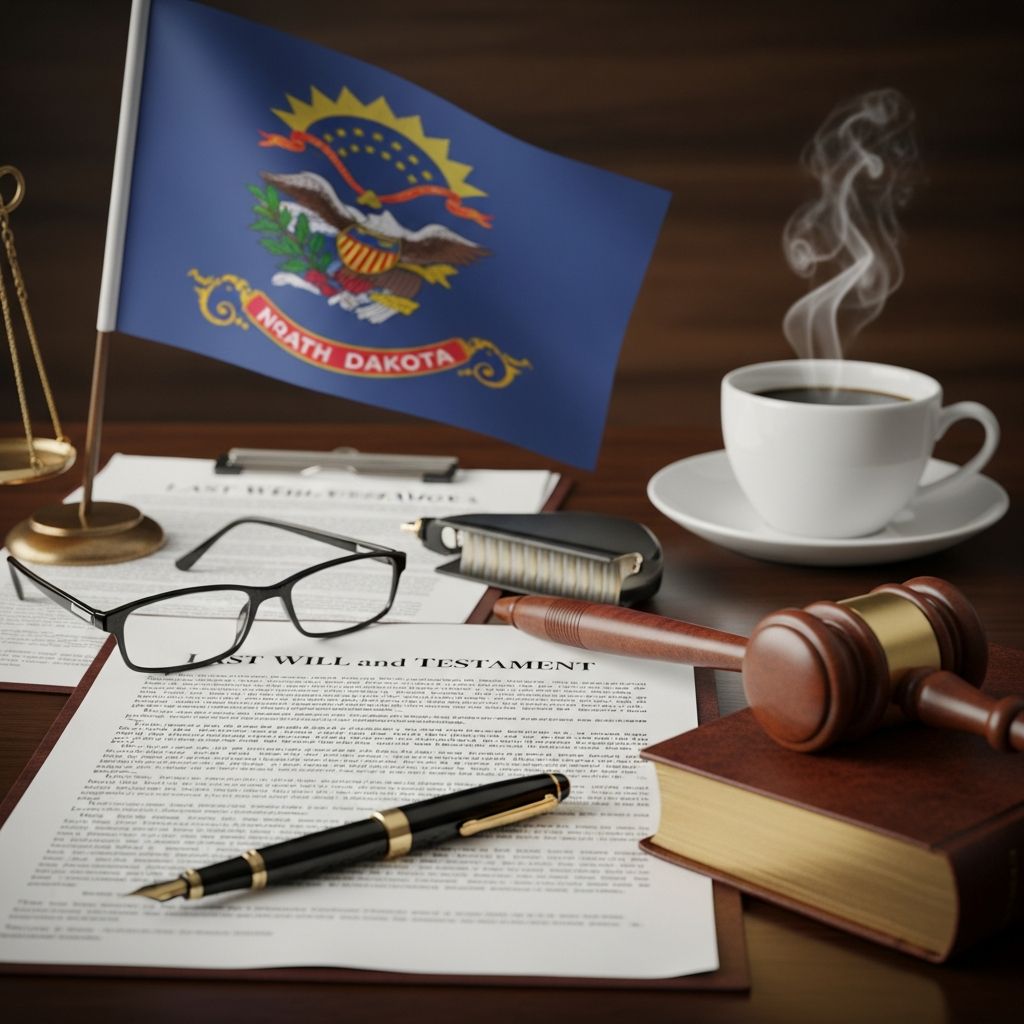
Establishing a last will and testament remains a cornerstone of effective estate planning in North Dakota, allowing individuals to dictate how their assets will be distributed after death. This document ensures your wishes are honored, potentially avoiding disputes among heirs and streamlining the probate process. North Dakota law provides clear guidelines for creating enforceable wills, accommodating various formats to suit different circumstances.
Eligibility Criteria for Will Makers
To execute a will in North Dakota, you must meet specific qualifications designed to confirm your capacity and intent. Primarily, individuals aged 18 years or older qualify, with an exception for emancipated minors through lawful marriage. Additionally, you must possess sound mind, meaning the ability to comprehend the nature of your act, the extent of your property, and the natural objects of your bounty—your intended beneficiaries.
- Age Requirement: 18+ or married minor.
- Mental Capacity: Understand document’s purpose and effects.
- Voluntary Action: Free from undue influence or duress.
These standards, outlined in North Dakota Century Code Section 30.1-08-01, safeguard against invalid claims of incapacity. Courts rigorously evaluate mental competence if contested, often relying on medical records or witness testimony.
Core Components of a Formal Written Will
A formal will in North Dakota demands a written document, signed by the testator in the presence of at least two competent witnesses who also sign. The will must be on physical paper—digital files alone do not suffice for standard wills. You can produce it via computer printing, typewriter, or handwriting, though typed versions reduce readability disputes.
During signing, declare to witnesses that the document represents your will. Witnesses should be disinterested parties, ideally not beneficiaries, to preempt conflict-of-interest challenges. Their signatures affirm they observed your signing or acknowledgment thereof and each other’s.
| Element | Requirement | North Dakota Code |
|---|---|---|
| Format | Written on paper | § 30.1-08-02 |
| Testator Signature | In presence of witnesses or acknowledged | § 30.1-08-02 |
| Witnesses | At least two, competent, sign in testator’s presence | § 30.1-08-02 |
This structure minimizes probate challenges, ensuring swift validation.
Understanding Holographic Wills
North Dakota permits holographic wills, entirely handwritten and signed by the testator without witnesses. For validity, all material provisions—such as beneficiary designations and asset distributions—must appear in your handwriting. This format suits emergencies but risks invalidation due to ambiguity or partial typing.
- Advantages: Quick creation, no witnesses needed.
- Drawbacks: Prone to interpretation issues; courts may exclude non-handwritten parts.
- Best Use: Temporary measure, followed by formal will.
Section 30.1-08-02(2) mandates strict handwriting compliance. Professional advice recommends converting holographics to formal wills promptly.
Electronic Wills: North Dakota’s Forward-Thinking Approach
Among few states, North Dakota recognizes electronic wills (e-wills) under Chapter 30.1-37, treating them equivalently to traditional ones. Creation involves secure digital platforms meeting stringent criteria: unique electronic signatures, tamper-evident records, and self-proving affidavits. Requirements include custodian designation for storage and access protocols.
E-wills demand:
- Electronic record with testator’s intent declaration.
- Two witnesses via audio-video or similar, confirming identity and soundness.
- Secure, unalterable storage with access logs.
Though innovative, e-wills’ novelty advises attorney oversight to navigate evolving standards.
Enhancing Wills with Self-Proving Features
Notarization isn’t mandatory for basic validity, but a self-proving affidavit accelerates probate by obviating witness testimony. You and witnesses swear before a notary that the will reflects your voluntary act, executed while of sound mind. Attach this affidavit to bypass court summons.
Benefits include:
- Reduced probate delays.
- Fewer authentication hurdles.
- Court acceptance without live witness verification (NDCC § 30.1-08-04).
For unwitnessed wills, notarization alone may substitute in limited cases, but self-proving remains superior.
Revoking or Updating Your Will
North Dakota allows unrestricted revocation or amendment anytime via new will, codicil, or physical destruction (burning, tearing). Intent governs: a subsequent will revoking prior ones explicitly or comprehensively supersedes predecessors. Courts presume full revocation if the new document covers your entire estate.
Common methods:
- New Will: States “I revoke all prior wills.”
- Codicil: Amendment to existing will, similarly executed.
- Destruction: Intentional obliteration by you or at your direction.
Life events like marriage, birth, or divorce may impact validity; review periodically.
What Happens Without a Will: Intestacy Rules
Dying intestate triggers North Dakota’s succession laws (NDCC §§ 30.1-04-02 to 05). Surviving spouse inherits fully if no descendants; otherwise, shares with children. Sequence prioritizes spouse, children, parents, siblings, then extended kin. Escheat to state occurs only absent all relatives.
| Survivors | Inheritance Share |
|---|---|
| Spouse only | 100% |
| Spouse + Children | Half to spouse, half to children |
| Children only | Equally among descendants |
| No spouse/children | Parents, siblings, etc. |
A will overrides these defaults, enabling custom distributions like charities or non-relatives.
Special Considerations for Complex Estates
Simple estates suit DIY tools, but complexities—business interests, blended families, tax minimization—warrant attorney consultation. Contested wills risk invalidation; professionals ensure compliance and dispute-proofing. North Dakota courts emphasize strict formalities, amplifying execution errors’ consequences.
Probate Overview and Will’s Role
Probate validates wills, inventories assets, pays debts, and distributes remnants. Self-proving wills expedite this; holographics may prolong. North Dakota offers simplified procedures for modest estates, minimizing costs.
Frequently Asked Questions
Can I use software to create my North Dakota will?
Yes, reputable software like Quicken WillMaker produces compliant documents, but review for state-specific nuances and consider attorney for complexities.
Do witnesses need to be North Dakota residents?
No, but they must be competent adults; out-of-state signing is fine if formalities met.
Does marriage automatically revoke my will?
No explicit revocation, but update to include new spouse; intestacy may apply otherwise.
Can I disinherit my spouse or children?
Spouse has elective share rights; children generally no forced heirship, but consult statutes.
How often should I review my will?
After major life events: marriage, divorce, births, deaths, asset changes.
Steps to Finalize Your Will Today
1. Assess assets and beneficiaries.
2. Draft using template or software.
3. Sign with two witnesses/notary.
4. Store securely, inform executor.
5. Update as needed.
Empower your legacy through informed planning. This guide synthesizes North Dakota statutes for accessibility; professional counsel tailors to your situation.
References
- North Dakota Century Code Title 30.1, Chapters 4 & 8 — North Dakota Legislative Branch. 2024. https://ndlegis.gov/cencode/t30-1.html
- Basic Requirements for a Last Will and Testament in North Dakota — LawInfo. Accessed 2026. https://www.lawinfo.com/resources/wills/north-dakota/
- Wills — Legal Services of North Dakota. Accessed 2026. https://lsnd.org/wills/
- Wills Research Guide — North Dakota Courts. Rev. Jan 2025. https://www.ndcourts.gov/Media/Default/Legal%20Resources/Legal%20Self%20Help/Probate/Wills%20Research%20Guide.pdf
- How to Create a Valid Will in North Dakota — O’Keeffe O’Brien Lyson Attorneys. Accessed 2026. https://www.okeeffeattorneys.com/how-to-create-a-valid-will-in-north-dakota/
Similar Articles








Read full bio of Sneha Tete


