
Legal Counsel for Minors: A Constitutional Imperative
Advocating for minors' constitutional right to legal counsel in state care.
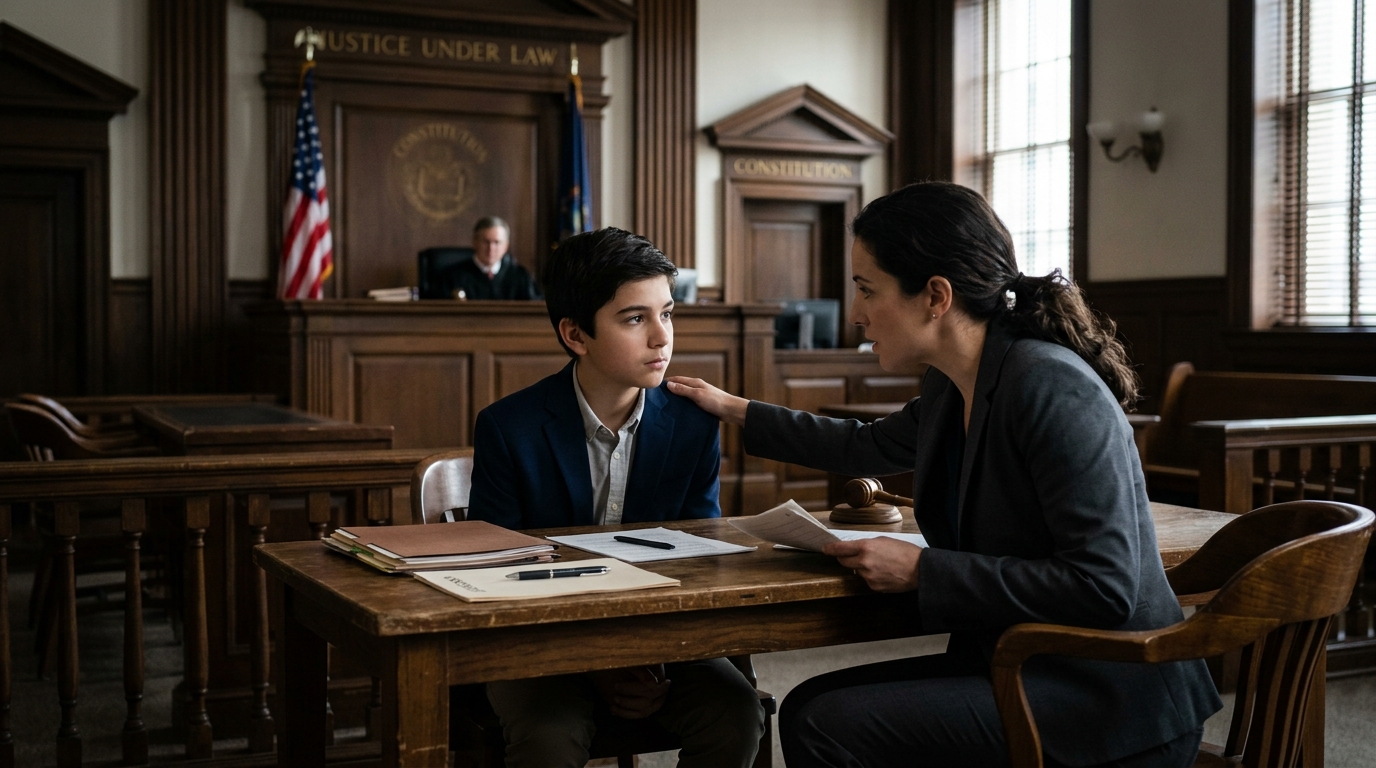
Every year, hundreds of thousands of children in the United States find themselves entangled in the complex web of the child welfare system. When the state intervenes to remove a minor from their home due to allegations of abuse, neglect, or endangerment, it exercises one of its most profound and severe civil powers. In an instant, the child’s entire world is upended. They may be abruptly separated from their parents, siblings, local schools, and the only community they have ever known. Yet, astonishingly, in many jurisdictions across the country, these vulnerable youth are thrust into an adversarial and intimidating judicial maze without a dedicated legal advocate by their side. While adults facing criminal charges, or even youth involved in juvenile delinquency proceedings, are constitutionally guaranteed a defense attorney, children in civil dependency and foster care cases frequently stand entirely alone before a family court judge.
Recent legal battles and civil rights campaigns are rigorously challenging this outdated and unbalanced paradigm. Groundbreaking class-action litigation in states that historically lack mandatory attorney provisions highlights a growing national movement that argues for a fundamental shift in juvenile justice and child welfare administration. Advocates firmly contend that forcing youth to navigate life-altering legal proceedings without professional counsel is a direct violation of the due process clause of the Fourteenth Amendment. This movement seeks to mandate the appointment of client-directed attorneys for all children in state custody, an initiative that would fundamentally transform how the American legal system views the independent rights, autonomy, and personal agency of minors.
The Intersection of Due Process and Foster Care
The Fourteenth Amendment of the United States Constitution guarantees that no state shall deprive any person of life, liberty, or property without due process of law. Historically, the judicial interpretation of “liberty” has heavily encompassed the right to family integrity—the fundamental right of families to remain together without unwarranted or arbitrary governmental interference. However, when a state agency initiates dependency proceedings, the focal point of the courtroom is almost exclusively on the rights of the biological parents and the overarching parens patriae authority of the state. This dynamic frequently and tragically sidelines the independent constitutional liberties and substantive rights of the child at the center of the case.
The legal precedent for juvenile rights took a massive leap forward in the landmark 1967 Supreme Court case In re Gault. In this decision, the Court established that minors accused of crimes in juvenile delinquency proceedings possess many of the same fundamental due process rights as adults, including the explicit constitutional right to legal counsel. The Supreme Court famously declared that neither the Fourteenth Amendment nor the Bill of Rights is for adults alone. Despite this sweeping and historic declaration, the precedent was largely confined to delinquency and criminal matters. For decades, the judiciary has hesitated to definitively extend these identical, ironclad protections to youth in civil dependency cases. This hesitation creates a glaring, systemic discrepancy. A child facing a few weeks in a juvenile detention facility is guaranteed a lawyer, but a child who may be permanently severed from their biological family, placed in a restrictive residential psychiatric facility, or left to languish in the foster care system for a decade is not. Legal scholars argue that the deprivation of liberty in the foster care system is just as severe as in the juvenile justice system, making legal counsel an absolute constitutional necessity.
“Best Interests” vs. Client-Directed Legal Advocacy
To fully comprehend the gravity of the right-to-counsel movement in child welfare, one must understand the critical legal distinction between a “best interests” advocate and a client-directed attorney. In a majority of jurisdictions, courts routinely appoint a Guardian ad Litem (GAL) or a Court Appointed Special Advocate (CASA) to cases involving dependent minors. While these individuals—who are often dedicated community volunteers or trained social workers—play a valuable supportive role, they do not serve as the child’s legal counsel in the traditional sense.
A Guardian ad Litem or CASA is explicitly tasked with investigating the child’s domestic circumstances and recommending to the presiding judge what they subjectively believe is in the child’s “best interests.” This framework, while well-intentioned, fundamentally strips the child of their own voice in court. If a fourteen-year-old strongly desires to be reunited with a rehabilitated biological parent or placed with a specific aunt, but the GAL believes that a specialized group home is a safer or more appropriate environment, the GAL will advocate for the group home. Under this model, the child’s expressed wishes are either completely muted, heavily filtered through the lens of an adult, or actively opposed in open court by the very person appointed to support them.
Conversely, a client-directed attorney is bound by strict ethical obligations to advocate zealously for what the client explicitly wants. An attorney provides confidential legal counsel, explains the complexities of the courtroom proceedings in age-appropriate language, files legal motions on the child’s behalf, and aggressively defends the child’s stated objectives. By interposing a trained legal professional between the child and the immense power of the state, the legal system empowers the youth as a rights-bearing individual rather than treating them merely as an object of the court’s protective authority. The attorney ensures that the child is an active, respected participant in their own life trajectory.
The Systemic Ramifications of Legal Voicelessness
When children are denied client-directed legal representation, the systemic ramifications are devastating and far-reaching. Without a dedicated attorney to file necessary legal motions, request evidentiary hearings, or compel child welfare agencies to act, children routinely experience prolonged and entirely unnecessary stays in the foster care system. They are highly vulnerable to the bureaucratic inertia, understaffing, and administrative backlogs that chronically plague many state welfare departments. A child without a lawyer is essentially invisible in a system driven by paperwork and legal procedure.
In regions where the legislative framework has historically treated the appointment of legal counsel in dependency proceedings as entirely discretionary, the outcomes are notably bleak. Unless a child is involved in a complex crossover case involving juvenile delinquency, they are typically assigned only a “best interests” advocate. This leaves older youth—who have strong, informed opinions about their living situations, educational needs, and healthcare preferences—without any formal mechanism to enforce their statutory rights. The consequences of this voicelessness are deeply tangible. Youth without attorneys are more frequently separated from their siblings, a traumatic experience that heavily compounds the pain of parental separation. They are also subjected to higher rates of placement instability, bouncing relentlessly between multiple short-term foster homes or being unnecessarily confined in restrictive congregate care facilities where they lack basic freedoms.
The Data: How Legal Counsel Transforms Outcomes
The intensifying push for universal legal representation for dependent minors is not based solely on abstract constitutional theories or academic philosophy; it is heavily backed by an overwhelming body of empirical data demonstrating that client-directed attorneys drastically improve child welfare outcomes. Independent research and comprehensive studies conducted by legal foundations and university child policy centers consistently reveal that when children are provided with their own lawyers, the entire trajectory of their dependency case changes for the better.
The measurable, data-driven benefits of appointing client-directed counsel for system-involved youth include:
- Expedited Permanency and Stability: Children with their own legal representation exit the foster care system at much higher rates, whether through safe family reunification, finalized adoption, or permanent legal guardianship, compared to their unrepresented peers.
- Significantly Reduced Time in Care: Because attorneys actively file motions to enforce visitation, demand timely agency reports, and challenge unnecessary court continuances, children spend markedly fewer days languishing in temporary out-of-home care.
- Increased Kinship Placements: Lawyers are highly effective at ensuring children are placed with kin or extended family members rather than with strangers, which helps preserve vital cultural, community, and familial ties.
- Educational and Medical Continuity: Attorneys advocate fiercely to prevent disruptions in a child’s schooling and ensure that state agencies immediately comply with mandates to provide necessary medical, dental, and trauma-informed mental health services.
- Prevention of Unnecessary Institutionalization: Dedicated legal advocates aggressively challenge the unnecessary placement of youth in restrictive residential treatment centers, psychiatric wards, or group homes, fighting instead for family-like, community-based alternatives.
By holding state agencies to strict statutory timelines and demanding individualized, evidence-based case plans, attorneys seamlessly transform a passive, bureaucratic process into a dynamic, legally accountable proceeding where the child’s well-being and rights are fiercely protected.
The Path Forward: Legislative Reform and Federal Funding
Recognizing the inherently transformative impact of legal representation, the landscape of child welfare law is gradually shifting on a national scale. Several progressive states have recently enacted sweeping legislation guaranteeing client-directed attorneys for all youth above a certain age in dependency proceedings. However, achieving universal, nationwide representation requires overcoming significant financial and logistical hurdles, as many state and local governments already struggle to adequately fund their existing public defense and legal aid systems.
Crucially, the federal government has recently taken decisive, historic steps to alleviate this financial burden and strongly encourage states to provide legal counsel. The Administration for Children and Families (ACF), a major division of the U.S. Department of Health and Human Services, updated its long-standing policies to allow state and tribal agencies to claim federal reimbursement under Title IV-E of the Social Security Act for the administrative costs of independent legal representation. This means that states can now leverage open-ended federal matching funds to help pay for highly trained attorneys for both children and parents in foster care proceedings. This pivotal policy shift provides the necessary financial scaffolding for jurisdictions to reform their juvenile justice and child welfare systems, moving the nation closer to a reality where every child’s constitutional rights are recognized and defended in court.
Frequently Asked Questions (FAQ)
What exactly is a civil dependency proceeding?
A civil dependency proceeding, commonly referred to as a child welfare or foster care case, is a formal legal process initiated by a government agency when there are credible allegations that a child has been abused, neglected, or abandoned. The family court judge determines whether the child must be temporarily or permanently removed from the home to ensure their safety, and the court continuously oversees the child’s placement and the parents’ mandated reunification plan.
How does a client-directed attorney differ from a CASA or GAL?
A Court Appointed Special Advocate (CASA) or Guardian ad Litem (GAL) is typically appointed by the judge to independently determine and advocate for what they believe is in the “best interests” of the child, which may entirely conflict with what the child actually wants to happen. An attorney, however, provides client-directed advocacy. They are bound by strict professional ethical rules to represent the child’s expressed wishes, offer confidential legal advice, and aggressively defend the child’s legal rights and liberties in the courtroom.
Does the U.S. Constitution guarantee children a lawyer in foster care cases?
Currently, the U.S. Supreme Court has not explicitly ruled that children have an absolute constitutional right to counsel in civil dependency cases, unlike the established precedent for juvenile delinquency (criminal) proceedings. However, ongoing class-action lawsuits and civil rights advocates argue forcefully that the 14th Amendment’s due process clause should require the mandatory appointment of attorneys due to the severe deprivation of personal liberty and family integrity that children experience when placed in foster care.
References
- Utilizing Title IV-E Funding to Support High-Quality Legal Representation and Promote Child and Family Well-Being — Administration for Children and Families (ACF), U.S. Department of Health and Human Services. 2021-01-20. https://www.acf.hhs.gov/cb/policy-guidance/im-21-06
- Foster Care Legal Representation – Final Rule — Federal Register, U.S. Department of Health and Human Services. 2024-05-10. https://www.federalregister.gov/documents/2024/05/10/2024-10170/foster-care-legal-representation
- A Child’s Constitutional Right to Family Integrity and Counsel in Dependency Proceedings — Emory Law Journal. 2021-05-01. https://scholarlycommons.law.emory.edu/elj/vol70/iss5/4/
Similar Articles








Read full bio of Sneha Tete


