
A New Era for Connecticut’s Child Welfare: The End of Decades of Federal Oversight
After 32 years, a federal court has ended its oversight of Connecticut's child welfare system, citing transformative reforms.
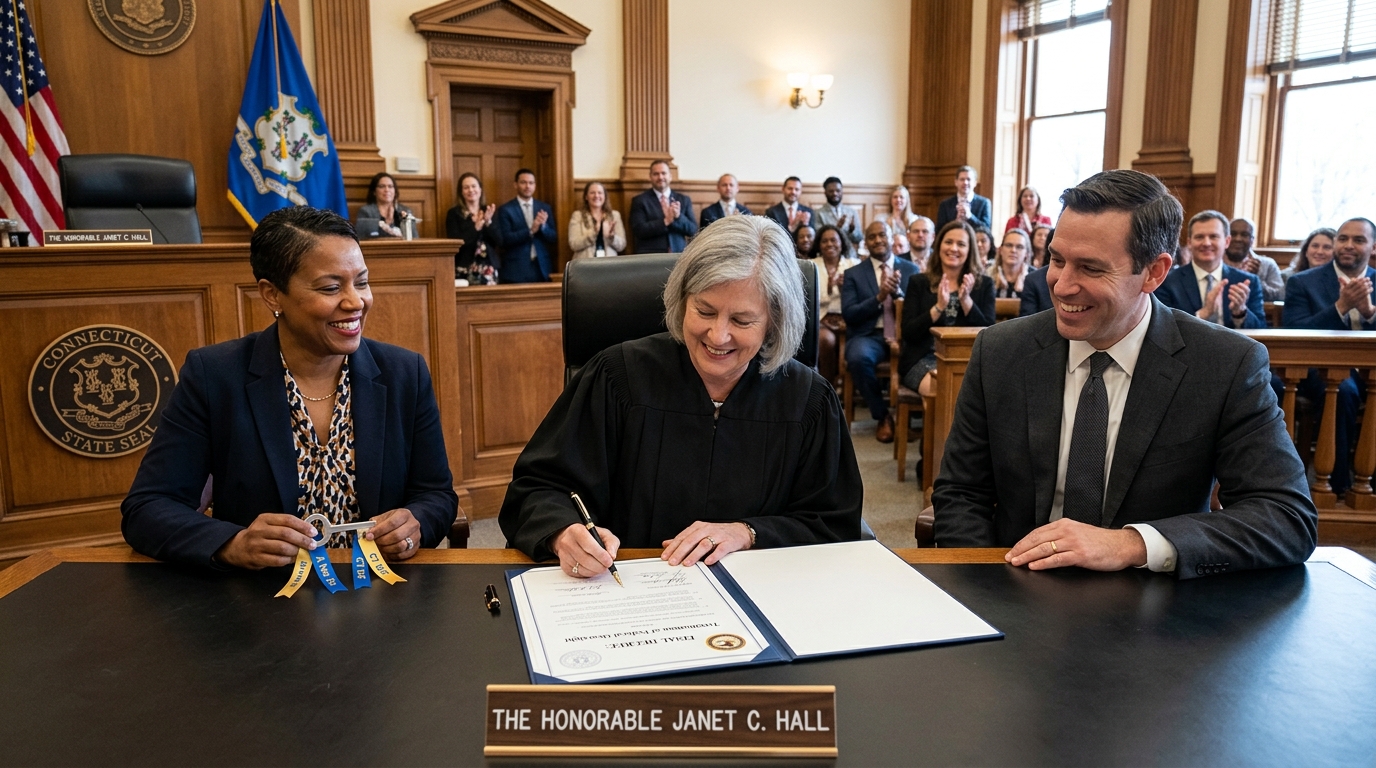
A Historic Milestone in Child Protection and Social Justice
For more than three decades, the state of Connecticut operated its child welfare system under the strict scrutiny of a federal court monitor. The shadow of a massive civil rights class-action lawsuit hovered over every policy decision, budget allocation, and operational directive within the Department of Children and Families (DCF). However, a monumental shift has occurred. In a landmark ruling, a federal judge officially closed the case, legally affirming that Connecticut has fundamentally transformed its approach to child protection .
This ruling is not merely a bureaucratic victory; it is a profound testament to systemic evolution. The termination of federal oversight signifies that the state is now equipped to protect its most vulnerable youth without the necessity of judicial compulsion. The path to this achievement was neither quick nor easy. It required a complete paradigm shift, moving away from punitive, institution-based care models toward family-centered, community-supported interventions. By examining the history of this litigation, the structural changes implemented, and the philosophical shifts in social work practice, we can glean critical insights into how broken public systems can be repaired.
The Catalyst: Understanding the Origins of the Litigation
To appreciate the magnitude of this recent federal court approval, one must understand the dire conditions that precipitated the original lawsuit in the late 1980s. The litigation, filed in 1989 on behalf of a ten-year-old boy operating under the pseudonym “Juan F.,” highlighted a system in profound crisis . At the time, the state’s child welfare infrastructure was crippled by chronic underfunding, severe staffing shortages, and a lack of standardized procedural oversight.
Social workers were reportedly carrying unmanageable caseloads, sometimes juggling dozens of highly volatile family crisis situations simultaneously. As a result, critical investigations were delayed, reports of severe neglect were occasionally overlooked, and children who were removed from their homes often found themselves languishing in overcrowded psychiatric hospitals or out-of-state residential facilities. The “Juan F.” class-action lawsuit was a desperate plea for constitutional accountability, arguing that the state was failing in its fundamental duty to protect the children in its custody.
The resulting 1991 consent decree mandated sweeping reforms. It forced the state to commit to legally binding benchmarks regarding caseload sizes, visitation frequencies, and the provision of adequate mental health, medical, and educational services. For the next thirty years, the agency’s performance would be meticulously graded against these rigorous federal standards .
The Mechanics of the Federal Consent Decree and the Exit Plan
A federal consent decree in the context of institutional reform is a complex legal instrument. It transfers a significant degree of operational authority from the state executive branch to a federally appointed court monitor. In Connecticut’s case, the monitor was tasked with conducting exhaustive quarterly reviews, auditing thousands of case files, and reporting compliance metrics directly to a federal judge.
The journey toward terminating this oversight was codified in a formalized Exit Plan. Originally approved in 2004 and substantially revised in 2017, this plan outlined specific, quantifiable outcome measures that the DCF had to achieve and sustain . The 2017 Revised Exit Plan demanded consistent excellence across ten specific domains, including:
- Timely Commencement of Investigations: Ensuring that reports of severe maltreatment were addressed within hours, not days.
- Caseload Standards: Legally capping the number of cases assigned to individual social workers to prevent burnout and ensure thorough case management.
- Placement Stability: Drastically reducing the number of times a child in foster care is moved from one home to another, which is a known driver of childhood trauma.
- Needs Met: A comprehensive metric evaluating whether the specific medical, dental, and psychological needs of each child were being adequately addressed.
Meeting these benchmarks for a single quarter was difficult; sustaining them for years—especially through administrative changes, budget crises, and a global pandemic—required an institutional resilience that many observers initially doubted was possible.
Strategic Policy Shifts: From Institutionalization to Kinship Care
The most dramatic improvement recognized by the federal court was not merely statistical, but philosophical. In the early years of the decree, the default state response to severe family dysfunction was often the immediate removal of the child and placement in a group home or institutional setting. Over time, child development experts and social workers successfully advocated for a radically different approach: family preservation and kinship care.
Modern child welfare practice recognizes that removing a child from their home inflicts its own deep psychological trauma. Even when a home environment is flawed, severing the biological and community ties of a child can lead to long-term emotional and behavioral deficits. Connecticut’s DCF adopted a “kinship first” philosophy. When removal became an absolute safety necessity, the agency prioritized placing the child with a grandparent, aunt, uncle, or close family friend rather than a stranger or an institution .
This shift required immense resources. Kinship caregivers often need financial support, specialized training, and access to immediate therapeutic interventions to handle traumatized youth. By heavily investing in community-based mental health services and wraparound family supports, the state was able to stabilize vulnerable families before a removal became necessary, or safely maintain children within their extended familial networks.
Data Highlights: Measuring Systemic Transformation
The data presented to the federal court during the final hearings painted a picture of an agency that had fundamentally altered its operational footprint. The reduction in the reliance on institutional settings is widely considered one of the most significant public policy achievements in the state’s history.
| Metric of Systemic Improvement | Historical Peak / Baseline | Current Status (At Case Closure) |
|---|---|---|
| Total Foster Care Population | Over 6,000 children | Approximately 3,200 children |
| Placement in Congregate/Institutional Care | Nearly 30% of youths | Under 7% of youths |
| Out-of-State Facility Placements | Over 290 youths isolated from home | Fewer than 10 youths |
Note: These figures illustrate the broad trajectory of the state’s progress as acknowledged during the federal exit proceedings, emphasizing the transition from institutional reliance to family-based care.
Confronting Racial Disparities in Child Welfare
As the state worked to satisfy the federal outcome measures, it also had to confront a deeply entrenched national issue: the disproportionate impact of the child welfare system on families of color. Statistically, Black and Hispanic families have historically been investigated, separated, and subjected to termination of parental rights at significantly higher rates than white families in similar socioeconomic circumstances.
The successful exit from federal oversight was heavily contingent upon the agency’s willingness to address these systemic inequities head-on. The state implemented racial justice initiatives aimed at identifying implicit bias in social work investigations. They developed specialized training for caseworkers to differentiate between poverty-induced hardships (such as lack of food or utilities) and actual parental neglect. By linking impoverished families with direct economic assistance and community resources rather than punishing them with child removal, the state made measurable strides in leveling the playing field and keeping marginalized families intact.
Sustaining the Momentum: Life After Federal Oversight
The closure of this federal lawsuit is a cause for celebration among advocates, policymakers, and dedicated social workers . However, it also brings a new set of challenges. Without the legal threat of federal contempt hovering over the state legislature, there is always a theoretical risk of budgetary backsliding. The true test of Connecticut’s transformation will be its ability to maintain these high standards autonomously.
Fortunately, the state has built robust internal quality assurance mechanisms over the last three decades. The establishment of internal review boards, sophisticated data-tracking software, and continuous community partnerships ensures that the core tenets of the consent decree have been permanently woven into the agency’s DNA. Furthermore, state-level watchdog entities, such as the Office of the Child Advocate, continue to operate independently, providing critical oversight and ensuring that the rights of children remain a top legislative priority.
The end of this legal chapter serves as a national blueprint. It proves that with sustained political will, adequate funding, and a commitment to evidence-based social work, broken systems can be rebuilt. It proves that the government can, in fact, learn to serve its most vulnerable citizens with compassion, efficiency, and respect for the sanctity of the family unit.
Frequently Asked Questions (FAQs)
What exactly is a federal consent decree?
A federal consent decree is a binding legal agreement, approved and enforced by a federal judge, that resolves a dispute between parties. In civil rights and institutional reform cases, it usually requires a government agency to meet specific performance benchmarks to correct unconstitutional or illegal conditions. The court maintains jurisdiction until all terms of the agreement are definitively met.
Why did the federal court decide to end its oversight now?
The federal judge approved the exit after reviewing comprehensive data showing that the state had met and sustained all the stringent outcome measures required by the 2017 Revised Exit Plan. This included maintaining low caseworker-to-client ratios, ensuring timely investigations, and drastically reducing the number of children placed in restrictive institutional settings.
What does “kinship care” mean, and why is it preferred?
Kinship care refers to the placement of a child with relatives or close family friends when they cannot safely remain with their biological parents. It is preferred over traditional stranger foster care because it helps maintain the child’s family, cultural, and community ties, which research shows significantly reduces the trauma of family separation and leads to better long-term psychological outcomes.
Will the state’s child welfare system go unregulated now?
No. While federal court oversight has ended, the state agency remains strictly regulated by state laws, the state legislature, and independent oversight bodies like the Office of the Child Advocate. The internal quality assurance systems built during the decades of the lawsuit are now permanent fixtures of the agency’s operations.
How did the system reduce its reliance on institutional care?
The reduction was achieved by investing heavily in community-based mental health resources, in-home therapeutic services, and robust support networks for biological and foster families. By addressing behavioral and psychological issues within a family setting, the state prevented the severe escalations that traditionally led to institutionalization.
References
- Governor Lamont Applauds Federal Court Ruling Ending Juan F. Consent Decree — State of Connecticut. 2022-03-24. https://portal.ct.gov/Office-of-the-Governor/News/Press-Releases/2022/03-2022/Governor-Lamont-Applauds-Federal-Court-Ruling-Ending-Juan-F-Consent-Decree
- Court ends federal oversight of child protection in CT — CT Mirror. 2022-03-24. https://ctmirror.org/2022/03/24/court-ends-federal-oversight-of-child-protection-in-ct/
- Summary of the Revised Juan F. Consent Decree Exit Plan — Connecticut General Assembly. 2017-02-08. https://www.cga.ct.gov/2017/rpt/2017-R-0046.htm
Similar Articles








Read full bio of Sneha Tete


