
Why Congress Must Protect Reproductive Healthcare Access
Federal intervention is crucial to stop state abortion bans.
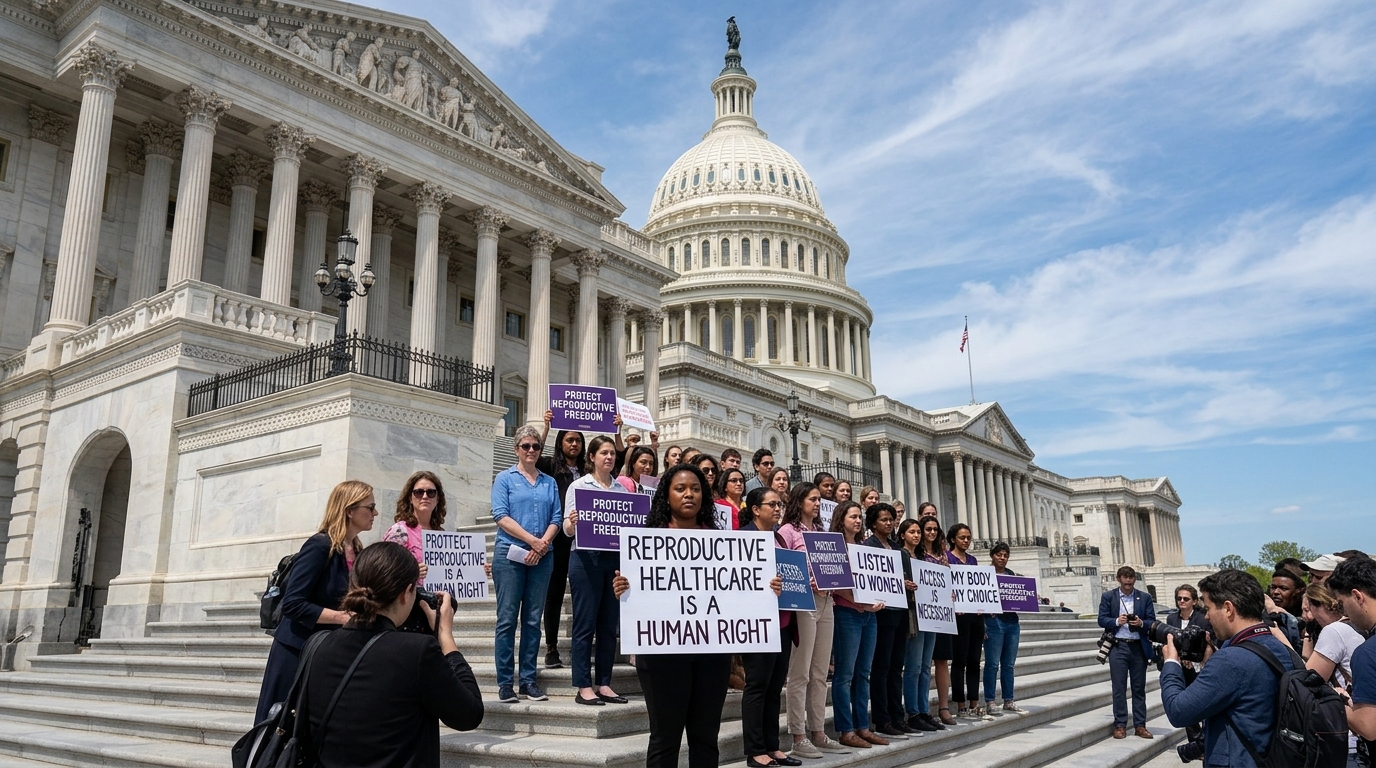
The landscape of reproductive healthcare in the United States has undergone seismic shifts over the past few years. For decades, the precedent set by landmark judicial rulings provided a baseline of protection for individuals seeking reproductive services, including abortion. However, the subsequent reversal of these foundational protections has laid bare a stark reality: when fundamental healthcare rights are left to the discretion of individual states, the result is a fragmented, unequal, and dangerous patchwork of access. In this volatile climate, a growing chorus of medical professionals, legal experts, and civil rights advocates are pointing to a singular, vital solution: comprehensive federal legislation to outlaw state-level attacks on reproductive autonomy.
The urgency of this situation cannot be overstated. We are witnessing a rapid regression in healthcare standards, where medical decisions are no longer guided by science and best practices, but by partisan rhetoric and state-sanctioned mandates. The consequences ripple outward, affecting everything from economic mobility to maternal mortality rates. When Congress hesitates, states emboldened by a lack of federal oversight swiftly enact draconic measures. State legislative bodies across the nation have increasingly utilized their legislative powers to chip away at, and in many cases completely eliminate, access to comprehensive reproductive care. This localized approach to healthcare regulation has created a crisis of public health and bodily autonomy. To ensure that medical decisions remain between patients and their healthcare providers, Congress must intervene. Federal legislation is not merely a political talking point; it is an urgent medical necessity required to protect the health, economic stability, and constitutional equality of millions.
The Strategy of State-Level Attrition
The dismantling of reproductive rights did not occur overnight. Long before outright bans became the norm in various regions, states employed a strategy of attrition designed to make accessing care practically impossible, even when it was technically legal. These multifaceted legislative maneuvers systematically shut down clinics and intimidated medical professionals over decades.
Targeted Regulation of Abortion Providers (TRAP Laws)
One of the most insidious methods utilized by state legislatures has been the implementation of Targeted Regulation of Abortion Providers, commonly known as TRAP laws. On the surface, proponents of these laws often claim they are designed to protect patient safety. In reality, medical experts universally recognize them as medically unnecessary regulations specifically engineered to force clinics to close.
- Admitting Privileges: Some states require clinic physicians to have admitting privileges at local hospitals. Because abortion is an exceedingly safe procedure with complication rates lower than those of wisdom tooth extraction, doctors rarely need to admit patients, making it difficult to secure and maintain these privileges.
- Architectural Requirements: Clinics have been forced to undergo multi-million-dollar renovations to meet ambulatory surgical center standards, such as mandating specific hallway widths or HVAC systems, which have no bearing on the safety of the procedures provided.
- Proximity Restrictions: Laws mandating that clinics must be located at arbitrary distances from schools or other institutions severely limit where healthcare facilities can operate, effectively banning them from densely populated urban areas.
Gestational Bans and Procedural Barriers
Beyond regulating the physical clinics, states have enacted severe restrictions on the timeline and methodology of care. Gestational limits, such as six-week bans, effectively ban abortion before many individuals even realize they are pregnant. Coupled with mandatory 24- to 72-hour waiting periods, required multiple visits, and forced biased-counseling sessions, these procedural barriers are designed to run out the clock on a patient’s legal window for care, turning standard medical procedures into an administrative nightmare.
The Human Cost of State Restrictions
The consequences of state-level abortion bans extend far beyond legal theory; they have immediate, devastating impacts on human lives. The burden of these laws does not fall equally across the population. Instead, they exacerbate existing systemic inequalities, punishing those with the fewest resources.
Disproportionate Impact on Marginalized Groups
When a state restricts or bans reproductive healthcare, wealthy individuals can often absorb the cost of traveling to a less restrictive state. They can take time off work, pay for flights and hotels, and arrange for reliable childcare. However, for marginalized communities—including low-income individuals, people of color, rural residents, and undocumented immigrants—these barriers are frequently insurmountable. Consequently, state bans force marginalized people to carry unwanted or medically dangerous pregnancies to term, perpetuating cycles of poverty and economic disenfranchisement.
Mental Health and Economic Repercussions
Furthermore, the psychological toll on individuals denied abortion care is profound. Studies consistently demonstrate that being forced to carry an unwanted pregnancy to term can lead to severe anxiety, depression, and long-term psychological distress. The trauma of navigating an adversarial legal and medical landscape, often while facing significant stigma and financial strain, leaves lasting scars on patients and their families. This mental health crisis is a direct, calculated byproduct of state policies that prioritize ideological control over holistic patient well-being.
The broader economic implications for states enforcing these bans are also coming into sharp focus. Businesses are increasingly hesitant to invest in or relocate to states where their employees cannot access comprehensive healthcare. The loss of workforce participation, combined with the staggering economic costs of maternal morbidity and forced births, creates a downward economic spiral. Federal protection is therefore not only a matter of personal liberty but also a prerequisite for a stable, equitable national economy.
The Rise of “Healthcare Deserts”
The aggressive legislative posture of certain states has led to the creation of vast healthcare deserts—regions spanning hundreds of thousands of square miles where comprehensive reproductive care is entirely unavailable. This lack of access affects not only abortion but also miscarriage management, ectopic pregnancy treatment, and routine prenatal care. Maternity wards in heavily restricted states are closing as obstetricians and gynecologists flee the threat of criminal prosecution, further degrading the overall maternal health infrastructure in those regions.
Why the Solution Must Be Federal
Given the aggressive and deeply entrenched nature of state-level restrictions, state-by-state advocacy is no longer sufficient to guarantee equitable healthcare access. A federal framework is essential to establish a unified standard of bodily autonomy that cannot be gerrymandered or legislated away by local politicians with extreme ideological agendas.
The Supremacy Clause as a Shield
The United States Constitution contains the Supremacy Clause, which establishes that federal law takes precedence over state laws. By enacting robust federal legislation protecting reproductive rights, Congress can effectively preempt and invalidate state-level bans and TRAP laws. A federal statute would serve as an impenetrable shield, ensuring that states cannot criminalize providers or penalize patients for engaging in evidence-based healthcare practices.
Moving Beyond Judicial Precedent
For nearly half a century, the protection of reproductive rights relied on Supreme Court jurisprudence. However, as recent history has demonstrated, judicial interpretations are subject to sudden and drastic change. Codifying these rights into federal statutory law provides a much stronger, more permanent foundation. Legislative action by Congress reflects the democratic will of the people and is far less susceptible to the shifting ideological balances of the courts.
Key Pillars of Meaningful Federal Legislation
For any federal intervention to be effective, it must be comprehensive. A singular declaration of legality is insufficient; the legislation must dismantle the specific mechanisms states use to restrict care. An effective federal bill must include several critical pillars to ensure true access.
| Focus Area | State-Level Threat | Required Federal Protection |
|---|---|---|
| Provider Safety | Criminalization, loss of medical license, and severe financial penalties for providing standard care. | Statutory right for healthcare professionals to provide care without fear of state prosecution or discriminatory professional penalties. |
| Patient Autonomy | Civil liability for seeking care, travel bans, and forced waiting periods. | Guaranteed right for patients to receive care, travel freely across state lines, and make medical decisions without state coercion. |
| Telemedicine | Bans on mailing abortion medication and utilizing telehealth for consultations. | Federal authorization for the dispensing of FDA-approved medications via telehealth and the postal service, preempting state bans. |
| Clinic Viability | TRAP laws (unnecessary architectural and admitting privilege requirements). | Prohibition of any medically unnecessary regulations that single out reproductive healthcare facilities for undue burdens. |
Protecting Medical Providers
Doctors, nurses, and pharmacists are currently caught in the crossfire of political maneuvering. Federal legislation must explicitly protect healthcare workers from state-sponsored retaliation. Providers must be able to adhere to their medical oaths and the standard of care without having to consult legal counsel before treating a patient experiencing a medical emergency.
Securing Patient Autonomy and Interstate Travel
Some states have attempted to extend their jurisdiction beyond their borders, threatening to prosecute individuals who travel to other states for reproductive care or those who assist them. Congress must unequivocally protect the right to interstate travel. Furthermore, federal law must safeguard patient data, ensuring that menstrual tracking apps, location data, and medical records cannot be weaponized by state law enforcement agencies.
Ensuring Telemedicine Access
Medication abortion now accounts for the majority of abortions in the United States. It is a highly safe and effective method that can be securely managed via telehealth. Recent judicial attempts to invalidate the FDA’s decades-old approval of these medications highlight the fragility of relying solely on administrative regulations. A single rogue judicial ruling or a hostile state attorney general can throw the entire national supply chain of reproductive medication into chaos. Therefore, federal legislation must codify the absolute authority of federal medical agencies over state-level political interference. Congress must build a firewall around telemedicine, recognizing it not as a luxury, but as a critical infrastructure component of modern healthcare that ensures equal access regardless of a patient’s physical location.
Political Realities and Legislative Hurdles
While the arguments for federal intervention are rooted in sound medical and human rights principles, the political realities of passing such legislation are daunting. The deep partisan polarization in the United States Congress presents a formidable hurdle. Measures designed to codify reproductive rights often face insurmountable opposition in the Senate due to the filibuster, which requires a supermajority to advance most legislation.
Despite these challenges, continuous advocacy is vital. The introduction and debate of these federal bills serve a crucial purpose: they articulate a clear vision for what equitable healthcare looks like and provide a framework for future legislative majorities. Grassroots mobilization, voter education, and sustained public pressure are the engines that will eventually drive this necessary federal action.
Frequently Asked Questions (FAQ)
What is the Women’s Health Protection Act (WHPA)?
The Women’s Health Protection Act is a proposed piece of federal legislation designed to protect the right to access and provide reproductive healthcare, specifically abortion, nationwide. It aims to preempt state-level bans and medically unnecessary restrictions, establishing a federal statutory right to this essential medical service.
How does federal law override state restrictions?
Under the Supremacy Clause of the U.S. Constitution (Article VI, Paragraph 2), federal law generally takes precedence over conflicting state laws. If Congress passes a law guaranteeing a specific healthcare right, states cannot enforce legislation that directly contradicts or undermines that federal guarantee.
What exactly are TRAP laws?
TRAP stands for Targeted Regulation of Abortion Providers. These are state-level regulations that impose severe, medically unnecessary requirements on abortion clinics and physicians. Examples include requiring clinics to be built like miniature hospitals or forcing doctors to have admitting privileges at local hospitals—tactics used solely to force clinics to shut down.
Why are some states seeing closures of maternity wards?
The chilling effect of severe abortion bans extends to general obstetric and gynecological care. Medical professionals are leaving states with harsh criminal penalties for fear of being prosecuted for treating miscarriages or complicated pregnancies. This exodus of providers has forced many rural hospitals to close their maternity wards, drastically reducing care for all pregnant individuals.
How can individuals advocate for federal protections?
Individuals can advocate by contacting their federal representatives and senators to urge support for protective legislation. Additionally, supporting local reproductive justice organizations, participating in grassroots mobilization, and staying informed about down-ballot elections are highly effective ways to drive systemic change.
The Path Forward
The ongoing state-level assault on reproductive healthcare is an untenable crisis that demands a national solution. Allowing an individual’s fundamental bodily autonomy to be dictated by their zip code undermines the very principles of equality and liberty. The strategic deployment of TRAP laws, gestational bans, and the criminalization of medical professionals are entirely incompatible with a just healthcare system.
Congress has a moral and constitutional obligation to intervene. By enacting comprehensive federal legislation that protects providers, ensures patient autonomy, and nullifies state-level interference, the federal government can restore equitable access to reproductive healthcare. The road to passing such legislation may be fraught with political obstacles, but the health, dignity, and freedom of millions depend on our collective refusal to accept a fractured nation where rights are granted or denied based on geography.
References
- State Policy Trends: Abortion and Contraception in the Post-Roe Era — Guttmacher Institute. 2024-01-15. https://www.guttmacher.org/state-policy
- Abortion Care Guideline — World Health Organization (WHO). 2022-03-08. https://www.who.int/publications/i/item/9789240039483
- The State of State Reproductive Health Policies — Kaiser Family Foundation (KFF). 2024-02-21. https://www.kff.org/womens-health-policy/
- Women’s Health Protection Act of 2023 — Congress.gov. 2023-03-08. https://www.congress.gov/bill/118th-congress/senate-bill/701
Similar Articles








Read full bio of Sneha Tete


