
Colorado Prenuptial Agreements: Complete Guide
Navigate Colorado prenup laws with clarity: requirements, protections, and enforcement.
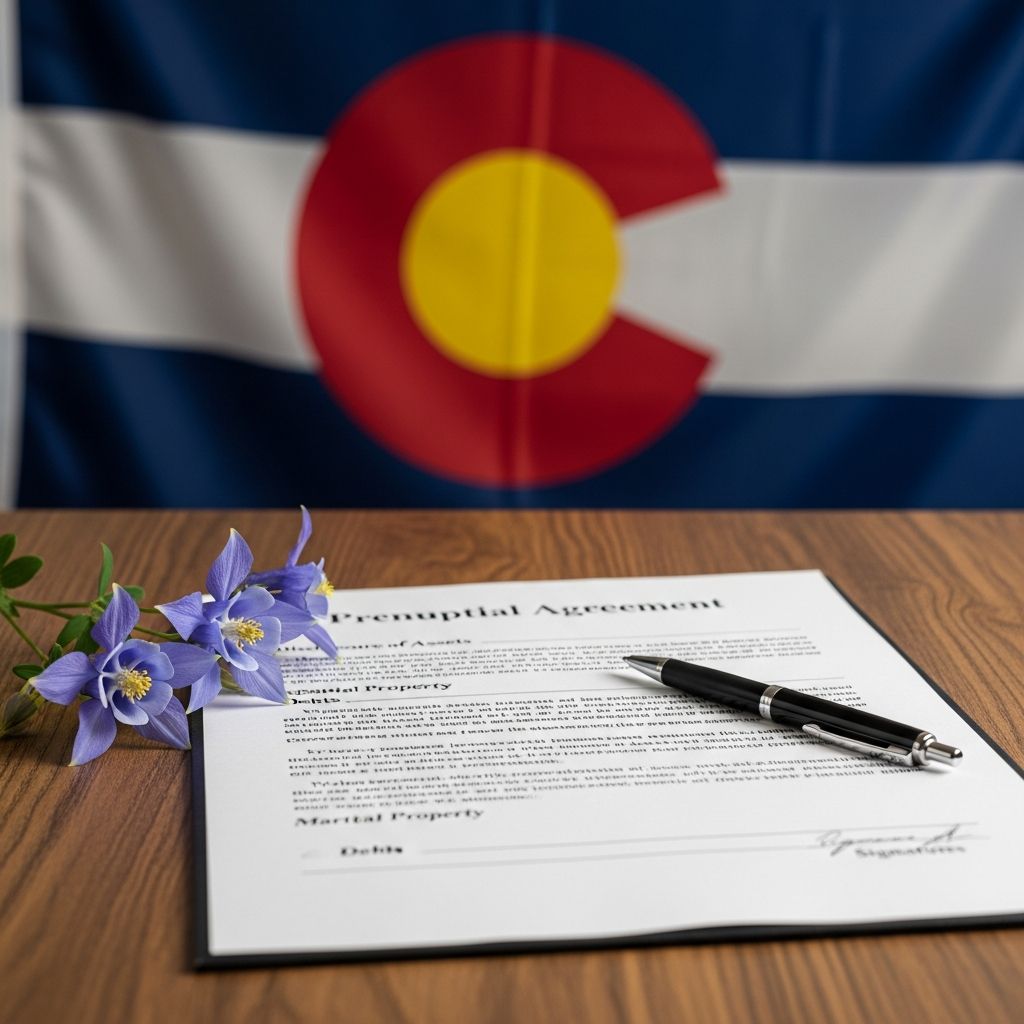
A prenuptial agreement serves as a financial roadmap for couples entering marriage, establishing clear expectations about asset division, debt responsibility, and spousal support before the relationship begins. In Colorado, these agreements have gained legal standing through comprehensive statutory framework that protects both parties while ensuring enforceability. Whether you’re concerned about protecting family business interests, safeguarding inheritances, or simply establishing financial clarity, understanding how Colorado prenuptial law works is essential for making informed decisions about your financial future.
The Legal Framework Governing Colorado Prenuptial Agreements
Colorado recognizes prenuptial and postnuptial agreements through the Uniform Premarital and Marital Agreements Act (UPMAA), which became effective on July 1, 2014. This standardized legislation applies to all marital agreements created after that date and establishes consistent rules across the state. The UPMAA framework ensures that agreements meet specific criteria, protecting both spouses while maintaining enforceability in the event of separation or divorce. This statutory approach eliminates ambiguity and provides clear guidelines for what constitutes a valid marital agreement under Colorado law.
The UPMAA represents a significant evolution in how Colorado courts approach prenuptial and postnuptial agreements. Prior to 2014, Colorado had fewer defined rules, which sometimes led to uncertainty about enforceability. The adoption of UPMAA harmonized Colorado’s approach with other jurisdictions and created predictable standards that couples can rely upon when negotiating agreements.
Essential Requirements for Valid Prenuptial Agreements in Colorado
Creating a valid prenuptial agreement in Colorado requires meeting several fundamental legal requirements. Understanding these requirements prevents costly mistakes and ensures your agreement will withstand potential legal challenges.
Written Documentation and Signatures
Colorado law mandates that all prenuptial agreements must be in writing—verbal agreements have absolutely no legal standing. Both parties must sign the final document, and this signature must be genuine and voluntary. The writing requirement ensures clarity about the terms and provides documentary evidence of the agreement’s existence and specific provisions. Without written documentation, neither party can enforce the agreement regardless of what may have been discussed or informally agreed upon before the marriage.
Voluntary Entry and Absence of Coercion
Both parties must enter into the agreement voluntarily, without duress, coercion, or manipulation. Colorado courts recognize that signing a prenup is fundamentally a voluntary act, and pressure or threats can invalidate the agreement. However, Colorado law clarifies that an ultimatum stating marriage will not occur without the agreement does not automatically constitute duress. This distinction allows couples to set reasonable expectations while preventing genuinely coercive situations from creating enforceable agreements.
To protect both parties and demonstrate voluntariness, it’s advisable (though not legally required) for each spouse to retain separate legal counsel. Independent attorneys ensure each party fully understands the agreement’s terms, consequences, and implications. This practice also creates strong documentary evidence of voluntary participation if the agreement is later challenged in court.
Full Financial Disclosure
Both parties must provide fair, honest, and complete disclosure of their financial situations, including all assets, liabilities, income, and financial obligations. This requirement goes beyond mere “good faith” disclosure—couples must actually reveal the full picture of their financial circumstances. Hiding significant assets or income can render the agreement unenforceable, as courts will not uphold agreements entered into without adequate financial information.
Full disclosure creates transparency that protects both spouses. The party disclosing their finances gains security knowing their assets are properly accounted for, while the party reviewing the disclosure gains the information needed to make informed decisions about the agreement’s terms.
Avoiding Unconscionability
Prenuptial agreements cannot be unconscionable—meaning they cannot be so one-sided or unfair that they shock the conscience of the court. An agreement that leaves one party in an extremely disadvantaged position, especially when combined with lack of disclosure or inadequate legal representation, may be deemed unconscionable and unenforceable.
What You Can Include in Your Colorado Prenuptial Agreement
Colorado prenuptial agreements offer substantial flexibility in protecting financial interests and establishing clear expectations. The UPMAA framework permits couples to address numerous financial matters through their agreement.
Property Division and Asset Protection
Couples can establish detailed rules for how assets acquired before marriage will remain separate property throughout the marriage. They can also specify how assets acquired during the marriage will be divided or treated. This might include provisions that certain inheritances, gifts, or family business interests remain separate property even if commingled with marital funds. Many couples use prenups to protect premarital investments, real estate, or valuable possessions from potential division in a future divorce.
Debt Allocation and Financial Responsibility
Prenuptial agreements can clearly delineate responsibility for various debts, including student loans, credit card balances, mortgages, and business obligations. This prevents one spouse from becoming unexpectedly liable for debts incurred by the other party before marriage or through separate business ventures. Debt allocation provisions can provide significant financial protection, particularly for entrepreneurs or professionals with substantial outstanding obligations.
Spousal Support and Alimony Provisions
Couples have considerable latitude in determining whether alimony will be paid, the amount, and duration. Options include:
- Waiving spousal support entirely
- Setting a specific dollar amount to be paid monthly or as a lump sum
- Establishing a formula for calculating support based on income differences or other factors
- Specifying a duration for support obligations
However, courts retain authority to modify spousal support provisions if they become unconscionable or would create undue hardship at the time of enforcement. This judicial safeguard prevents one spouse from becoming impoverished through agreements made years earlier under different financial circumstances.
Business and Professional Interest Protection
Entrepreneurs and professionals frequently use prenuptial agreements to protect family businesses, professional practices, or partnership interests. These provisions might specify that a business remains separate property, establish buyout procedures, or clarify how business value factors into property division calculations. This protection allows business owners to preserve business continuity and ownership structure in the event of marriage dissolution.
Inheritance and Family Asset Preservation
Prenups can establish that certain inherited assets or family properties remain separate property, potentially preserving those assets for intended heirs. This is particularly important for families with substantial wealth, family businesses, or properties intended to pass to specific family members across generations.
Critical Limitations: What Prenuptial Agreements Cannot Accomplish
While prenuptial agreements offer substantial flexibility, Colorado law establishes important boundaries around certain matters that courts will not allow couples to contractually determine.
Child Custody and Parenting Arrangements
Prenuptial agreements absolutely cannot include provisions determining child custody, parenting time arrangements, or visitation schedules. Colorado courts always decide child-related issues based on the child’s best interests, considering current circumstances at the time of separation or divorce. An agreement signed years before children are born cannot bind courts to custody arrangements that may no longer serve the child’s welfare. This is true even if both spouses fully agree to specific custody terms in their prenup.
Child Support Determination
Couples cannot use prenuptial agreements to establish child support amounts or waive child support obligations. Colorado family courts calculate child support according to statutory formulas based on parental income, custody arrangements, and the child’s needs. These calculations occur at the time of separation based on current financial circumstances, not on agreements made before the child’s birth or during marriage.
This limitation reflects Colorado’s public policy protecting children’s rights to financial support from both parents. The state recognizes that parents cannot contract away children’s entitlements to parental support regardless of marital status.
Provisions Lacking Voluntariness
Any agreement lacking genuine voluntariness from either party cannot be enforced. Situations involving threats, manipulation, insufficient time for review, or inadequate legal representation may render agreements unenforceable. Courts will scrutinize agreements where one party signed without meaningful opportunity to consult with counsel or fully understand the terms.
Timing and Execution Considerations
The timing of prenuptial agreement execution carries significant legal importance. Agreements must be finalized and signed before the wedding—signing on the wedding day itself or immediately before the ceremony raises serious questions about voluntariness and may jeopardize enforceability. Courts may question whether the agreement was truly entered into voluntarily when one party faces the immediate pressure of an imminent wedding.
For agreements to take effect, the marriage must actually occur. If the couple separates before the wedding, prenuptial agreements become unenforceable because they were premised on marriage occurring. Similarly, agreements cannot contradict or alter the terms of other agreements previously signed by the parties.
The Role of Independent Legal Counsel
While Colorado law doesn’t absolutely mandate separate attorneys for both parties, having independent legal representation for each spouse significantly strengthens agreement enforceability. When both parties have separate counsel, it demonstrates that each person understood the agreement’s implications and made informed decisions. This documentation becomes valuable if the agreement is later challenged in court, as courts can readily see that both parties had opportunity to review terms with qualified attorneys.
Couples should allow adequate time for legal review. Rushing the process or presenting an agreement at the last moment—particularly without allowing time for the other party to consult counsel—creates vulnerability to challenge. Establishing a reasonable review period (typically several weeks) demonstrates that both parties had genuine opportunity to evaluate the agreement before signing.
Modification and Amendment After Marriage
Prenuptial agreements can be modified or revoked after marriage, but changes require written agreement from both parties. Amendment requires the same formality as the original agreement—written documentation and voluntary signatures from both spouses. The original agreement might include specific procedures for future modifications, and these procedures should be followed when making changes.
Postnuptial agreements (marital agreements entered into after marriage) follow the same legal requirements as prenuptial agreements and can serve as vehicles for modifying or replacing existing prenups. Some couples use postnuptial agreements to adjust terms based on changed circumstances or evolving financial situations.
Common Provisions in Colorado Prenuptial Agreements
| Provision Type | Purpose | Key Considerations |
|---|---|---|
| Separate Property Definition | Protect assets acquired before marriage | Must identify specific assets; ensure clarity about what remains separate even if commingled |
| Income and Earnings | Determine treatment of income earned during marriage | Can specify whether earnings remain separate or become marital property |
| Debt Responsibility | Allocate responsibility for premarital and specific debts | Creditors are not bound by agreement; allocates responsibility between spouses only |
| Business Protection | Preserve ownership and control of business interests | Can specify that business remains separate or establish buyout procedures |
| Spousal Support Terms | Establish alimony amounts, duration, or waiver | Subject to modification if unconscionable at enforcement; cannot create undue hardship |
| Financial Management | Establish rules for joint accounts and major purchases | Clarifies expectations about financial decision-making during marriage |
Frequently Asked Questions About Colorado Prenuptial Agreements
Q: Is a prenuptial agreement a sign that the marriage won’t last?
A: No. A prenuptial agreement is a practical financial planning tool, similar to estate planning or insurance. It establishes clear expectations about finances and protects both parties’ interests regardless of how long the marriage lasts. Many couples use prenups to simply create financial transparency and clarity without any expectation of divorce.
Q: Can we create a prenuptial agreement ourselves without attorneys?
A: While Colorado doesn’t legally require attorneys, DIY prenups carry substantial risk. Colorado family law contains technical requirements, and courts scrutinize agreements for voluntariness and full disclosure. Attorney involvement demonstrates compliance and provides strong protection against later challenges. The cost of attorneys ($1,500-$3,000 typically) is far less than litigating enforceability disputes.
Q: What happens to our prenuptial agreement if we have children after marriage?
A: The prenup remains enforceable regarding financial matters, but any child-related provisions are void. Child custody, visitation, and support are determined at the time of separation based on the child’s best interests and current circumstances. The prenup’s financial protections remain valid and unaffected by children born during the marriage.
Q: Can a prenuptial agreement be challenged in court?
A: Yes, but challenging requires demonstrating specific defects such as lack of voluntariness, inadequate financial disclosure, unconscionability, or duress. Courts will enforce properly executed agreements that meet all UPMAA requirements. Documented legal review by both parties significantly strengthens defense against challenges.
Q: How does Colorado treat inherited assets in prenuptial agreements?
A: Inherited assets can be designated as separate property through prenuptial agreements, potentially removing them from marital property division. However, if inherited funds are commingled with marital funds or used for marital purposes, courts may find they’ve been converted to marital property. Clear documentation and maintenance of separate accounts strengthen the agreement’s protection of inherited assets.
Q: Must both parties hire the same attorney or different ones?
A: Colorado law doesn’t require separate attorneys, but having independent counsel for each party strengthens enforceability and prevents conflicts of interest. If one attorney represents both parties, that attorney cannot give independent advice to each person. Separate counsel ensures both parties fully understand terms and have confidential advice about their individual interests.
Taking Action: Next Steps for Creating Your Prenuptial Agreement
Creating a valid, enforceable prenuptial agreement requires careful attention to Colorado’s legal requirements. Begin by consulting with a family law attorney experienced in prenuptial agreements to discuss your specific financial situation and goals. Your attorney can explain what protections are available, identify what terms are appropriate for your circumstances, and ensure the agreement complies with all UPMAA requirements.
Schedule consultations early—ideally at least four to six weeks before your planned wedding. This timeline allows adequate opportunity for full legal review, financial disclosure, and thoughtful consideration of terms by both parties. Rushing the process increases vulnerability to later challenges and undermines the agreement’s fundamental purposes of creating clarity and financial security.
Provide complete financial disclosure during the process, including documentation of assets, liabilities, income, and financial obligations. The more thorough your disclosure, the stronger your agreement’s enforceability. Have frank discussions with your prospective spouse about financial expectations, concerns, and goals. The prenuptial agreement process often improves financial communication and transparency between couples.
References
- Colorado Revised Statutes § 14-2-301 et seq. (Uniform Premarital and Marital Agreements Act) — State of Colorado. 2024. https://leg.colorado.gov/bills/sb14-209
- Colorado Revised Statutes § 14-2-309 (Enforceability of Premarital Agreement) — State of Colorado. 2024. https://leg.colorado.gov/
- Price Family Law – Colorado Prenuptial Agreements Legal Requirements — Price Family Law. 2025. https://www.pricefamlaw.com/everything-you-need-to-know-about-prenuptial-agreements-colorado/
- Colorado Premarital and Marital Agreements: Enforceability Standards — Hogan Omidi, P.C. 2024. https://www.hoganomidi.com/article/can-you-get-a-prenup-after-marriage-in-colorado/
- Prenuptial Agreements: Scope and Enforceability in Colorado — Durango Family Law. 2025. https://durangofamilylaw.com/blog/prenuptial-agreements-what-can-and-cant-be-included/
- Legal Requirements for Marital Agreements in Colorado — Shufflebarger Law Office PC. 2024. https://www.shufflebargerlaw.com/family-law/prenuptial-agreements
- The Reputation Law Group – Colorado Prenuptial Agreement Guidelines — The Reputation Law Group. 2024. https://thereputationlawgroup.com/blog/prenup-colorado/
Similar Articles








Read full bio of medha deb


