
When the State Fails: Why Advocates Are Suing Child Welfare Systems
How massive class-action lawsuits are forcing state child welfare departments to address systemic failures and protect our most vulnerable youth.
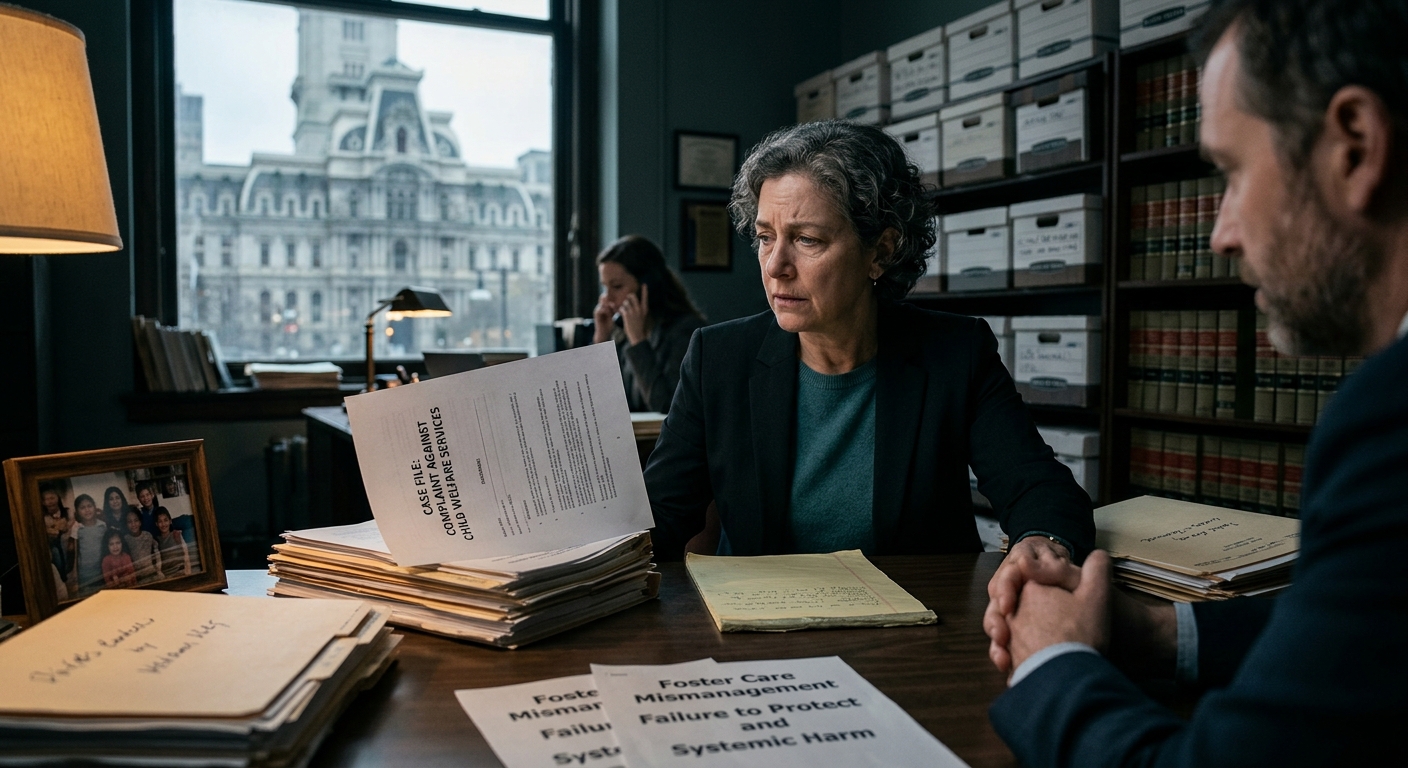
The Hidden Crisis in State Custody
When a state government removes a child from a dangerous, abusive, or neglectful home environment, it makes an implicit and legally binding promise: to provide a safer, more stable, and nurturing environment. Unfortunately, for thousands of children placed in the custody of state child welfare agencies—often operating under the banner of the Department of Children and Families (DCF)—this fundamental promise is routinely broken. Instead of a safe haven, the foster care system frequently becomes a secondary source of severe emotional and physical trauma.
Across the United States, systemic failures within these state-run organizations have reached critical mass, prompting a significant surge in high-stakes civil rights litigation. Advocacy groups and legal defense funds are increasingly taking state governments to federal court, arguing that these massive agencies are actively violating the constitutional rights of the vulnerable youth they are mandated to protect. These complex class-action lawsuits are not merely about seeking financial compensation for past wrongs; they are sophisticated legal mechanisms designed to force comprehensive, structural reform upon deeply entrenched bureaucratic systems that have failed to prioritize the well-being and safety of children.
The Breaking Point: What Drives Litigation Against Child Welfare Agencies?
The decision to file a federal lawsuit against a state’s child welfare department is never taken lightly or made in a vacuum. It typically follows years of documented negligence, horrific individual tragedies, and a persistent refusal by state legislatures to adequately fund, monitor, or manage their foster care programs. At the absolute heart of these lawsuits is a catastrophic and ongoing shortage of appropriate foster homes. When there are not enough licensed, vetted families available to take in abused or neglected children, the entire system begins to collapse under its own weight .
One of the most distressing symptoms of this severe shortage is the controversial practice of ‘night-to-night’ placements. In failing systems, children are often kept in state agency office buildings until late in the evening, only to be transported to a temporary hotel room, a short-term shelter, or even forced to sleep on the office floor because no permanent bed is available anywhere in the county. The next morning, the grueling cycle repeats. Furthermore, children are frequently bounced between dozens of temporary placements within a single calendar year. This extreme instability completely severs a child’s connection to their local community, their school system, and any semblance of a reliable support network. Advocates and civil rights attorneys compile these harrowing placement statistics to demonstrate that the state is not just struggling, but operating a fundamentally broken apparatus that exposes its dependents to an unreasonable and unconstitutional risk of harm.
The Constitutional Imperative for State Care
The core legal foundation for suing a state child welfare agency relies heavily on the Fourteenth Amendment of the United States Constitution, specifically the powerful concept of substantive due process. In landmark interpretations of constitutional law, federal courts have firmly established that when a state takes a person into its custody and holds them there against their will—as is the case with children involuntarily removed from their biological parents—the Constitution imposes an affirmative duty on the state to assume responsibility for that individual’s safety, medical care, and general well-being.
In the context of the foster care system, if a child is removed from a dangerous biological home only to be placed in a state-licensed foster environment where they are sexually assaulted, physically abused, or denied essential medical and mental health interventions, the state has actively violated their constitutional rights. Civil rights organizations leverage this strict legal standard to file massive class-action lawsuits on behalf of all children currently in a state’s custody. By filing a class action rather than individual tort claims, plaintiffs can bypass certain sovereign immunity defenses and demand broad injunctive relief. Injunctive relief means the federal court orders the state agency to fundamentally change its behavior, alter its internal policies, and redistribute its resource allocation. The legal arguments assert that isolated mistakes do not cause these constitutional violations, but rather deliberate indifference by high-level state officials who are fully aware of the systemic deficiencies yet continuously fail to implement necessary corrections.
The Mechanics of a Failing Bureaucracy
To fully grasp why these extensive lawsuits are desperately necessary, one must critically examine the day-to-day mechanics of a failing child welfare system. The dysfunctions are multi-layered, heavily interconnected, and often deeply exacerbated by chronic legislative underfunding.
- Caseworker Overload and Burnout: Social workers are the frontline defenders of children in the foster system. They are solely responsible for vetting foster families, conducting mandatory home visits, facilitating biological family visitations, and ensuring children receive prompt medical care. However, in heavily criticized DCF systems, caseworkers are frequently assigned caseloads that are double or triple the nationally recommended limits. When a single worker is responsible for forty or more highly vulnerable children, thorough oversight becomes physically impossible. Crucial home visits are skipped, warning signs of abuse within the foster home are entirely missed, and children tragically fall through the cracks of the bureaucracy.
- Unnecessary Institutionalization: When state agencies fail to actively recruit and retain specialized therapeutic foster homes for children with emotional or behavioral challenges, they often default to placing these youth in highly restrictive, institutional settings. Children who could potentially thrive in a supported family environment are instead warehoused in locked psychiatric facilities, crowded group homes, or juvenile detention centers simply because the agency has nowhere else to place them.
- The Failure to Support Older Youth: Thousands of teenagers ‘age out’ of the foster care system every single year without finding a permanent family, without securing a high school diploma, and without being taught basic independent life skills. Lawsuits frequently highlight how the state’s total failure to provide transitional support directly pipelines these young adults into chronic homelessness and the criminal justice system.
The Psychological Toll of Chronic Instability
The devastating human cost of these systemic administrative failures is primarily measured in the rapidly deteriorating mental health of the children involved. According to comprehensive data from the Centers for Disease Control and Prevention (CDC) regarding Adverse Childhood Experiences (ACEs) and various systematic reviews published by the National Institutes of Health (NIH), children in the foster care system exhibit exponentially higher rates of severe psychiatric disorders compared to the general pediatric population . While the initial trauma of parental abuse or profound neglect is undeniably a significant factor, the subsequent, prolonged trauma inflicted by a chaotic and unpredictable foster care system heavily compounds these complex behavioral health issues.
Children subjected to constant placement disruptions are violently denied the fundamental opportunity to form secure, trusting emotional attachments with adult caregivers. This chronic instability frequently manifests as severe post-traumatic stress disorder (PTSD), paralyzing anxiety, major depressive disorder, and oppositional defiant behaviors. Instead of receiving highly specialized, trauma-informed therapy and consistent psychiatric care to address these root causes, these children are far too often subjected to the dangerous over-administration of heavy psychotropic medications. In many failing systems, powerful drugs are utilized as an inappropriate method of chemical behavioral control rather than as a legitimate, closely monitored medical treatment. When civil rights groups take a state to court, they heavily emphasize the state’s ongoing failure to provide adequate psychological screenings and community-based therapeutic interventions, arguing persuasively that the system is actively destroying the cognitive and psychological foundation of the children it claims to protect.
Federal Data: Uncovering the Truth
Federal data collection plays an absolutely indispensable role in holding elusive state agencies publicly accountable. The Adoption and Foster Care Analysis and Reporting System (AFCARS), diligently managed by the Administration for Children and Families under the U.S. Department of Health and Human Services, strictly requires all states to submit comprehensive demographic, case-related, and detailed service information on every single child in their care .
When preparing for massive litigation, civil rights attorneys and data scientists rely heavily on this AFCARS data to mathematically prove undeniable patterns of systemic negligence. This robust data routinely exposes shockingly high rates of maltreatment occurring within licensed foster homes, dismal adoption finalization rates, disproportionate minority representation in the system, and severe, ongoing delays in achieving permanency for older youth. Because this vital data is federally mandated and ultimately reported to the public, state officials cannot simply feign ignorance or dismiss the accusations as isolated anecdotes. The hard numbers provide an undeniable, objective baseline that clearly demonstrates a state’s complete failure to meet even the bare minimum federal standards of care, thereby significantly strengthening the legal argument that heavy-handed court intervention is the only viable path to achieving real reform.
The Anatomy of Legal Reform: What Does Winning Look Like?
When a complex class-action lawsuit against a state child welfare system reaches a successful and highly publicized conclusion—often resulting in a comprehensive settlement agreement or a strict federal consent decree—the actual, grueling work of systemic reform finally begins. But what exactly do these hard-fought legal victories entail in practical terms?
A federal consent decree effectively strips the state agency of its unilateral, unchecked authority to manage the failing aspects of its foster care program. Instead, it forcefully places the agency under the binding, continuous oversight of a federal judge and a team of independent, court-appointed monitors. The state must then adhere to a strict, legally enforceable, multi-year roadmap for measurable improvement. Typical court mandates include implementing absolute maximum caps on caseworker caseloads to ensure manageable working conditions and adequate child supervision. They also routinely involve a total, non-negotiable ban on utilizing state agency offices, commercial hotel rooms, or unlicensed emergency shelters for overnight child placements. Furthermore, the state is hit with aggressive, financially backed mandates to recruit, train, and adequately compensate therapeutic foster families to drastically reduce the system’s over-reliance on institutional group homes.
The state’s progress is continuously and rigorously evaluated by the neutral monitor, and any failure to meet the agreed-upon benchmarks can easily result in the state being held in contempt of federal court. These powerful decrees often last for several years, or even decades, ensuring that implemented changes survive turbulent shifts in political administration and resulting in a permanently safer environment for all children involved.
Conclusion
The modern foster care system is inherently complex, dealing daily with the most tragic and deeply complicated aspects of family breakdown. However, the immense complexity of the task does not in any way absolve state governments of their strict constitutional obligations to keep vulnerable children out of harm’s way. Lawsuits driven by dedicated civil rights organizations remain a crucial, if sobering, tool in the ongoing fight for true child welfare. By boldly dragging systemic administrative darkness into the glaring light of a federal courtroom, advocates ensure that the long-ignored voices of abused and neglected youth are finally heard, forcing broken, apathetic systems to transform and ultimately saving countless lives in the process.
Frequently Asked Questions
Why do civil rights organizations sue state child welfare agencies?
Organizations sue state agencies to legally force systemic reforms when there is a highly documented pattern of severe negligence. This includes placing children in dangerous or unvetted foster homes, subjecting them to extreme placement instability, and broadly failing to provide necessary medical or trauma-informed mental health care.
What is a class-action lawsuit in the context of foster care?
A class-action lawsuit is filed collectively on behalf of all children currently in, or at high risk of entering, a state’s foster care system. It strictly seeks broad, structural changes to the agency’s overarching policies and daily operations rather than just seeking individual financial payouts for a handful of plaintiffs.
How does placement instability affect a foster child’s mental health?
Frequent, unpredictable moves completely prevent children from forming secure, healthy attachments and severely disrupt their education and community ties. This constant instability is scientifically linked to significantly higher rates of PTSD, clinical depression, severe anxiety, and long-term behavioral issues.
What role does a federal consent decree play in child welfare reform?
A consent decree is a powerful, legally binding agreement approved by a federal judge that mandates highly specific systemic reforms, such as strict caseload limits and new placement rules. It usually involves independent, third-party monitors who rigorously ensure the state complies with the required improvements over a set period of several years.
References
- Adoption and Foster Care Analysis and Reporting System (AFCARS) — U.S. Department of Health and Human Services (HHS), Administration for Children and Families. 2024-03-13. https://www.acf.hhs.gov/cb/data-research/adoption-foster-care
- A Systematic Review of Mental Health Disorders of Children in Foster Care — National Institutes of Health (NIH) / PubMed. 2020-07-20. https://pubmed.ncbi.nlm.nih.gov/32686634/
- About Adverse Childhood Experiences (ACEs) — Centers for Disease Control and Prevention (CDC). 2026-03-02. https://www.cdc.gov/violenceprevention/aces/about.html
Similar Articles








Read full bio of medha deb


